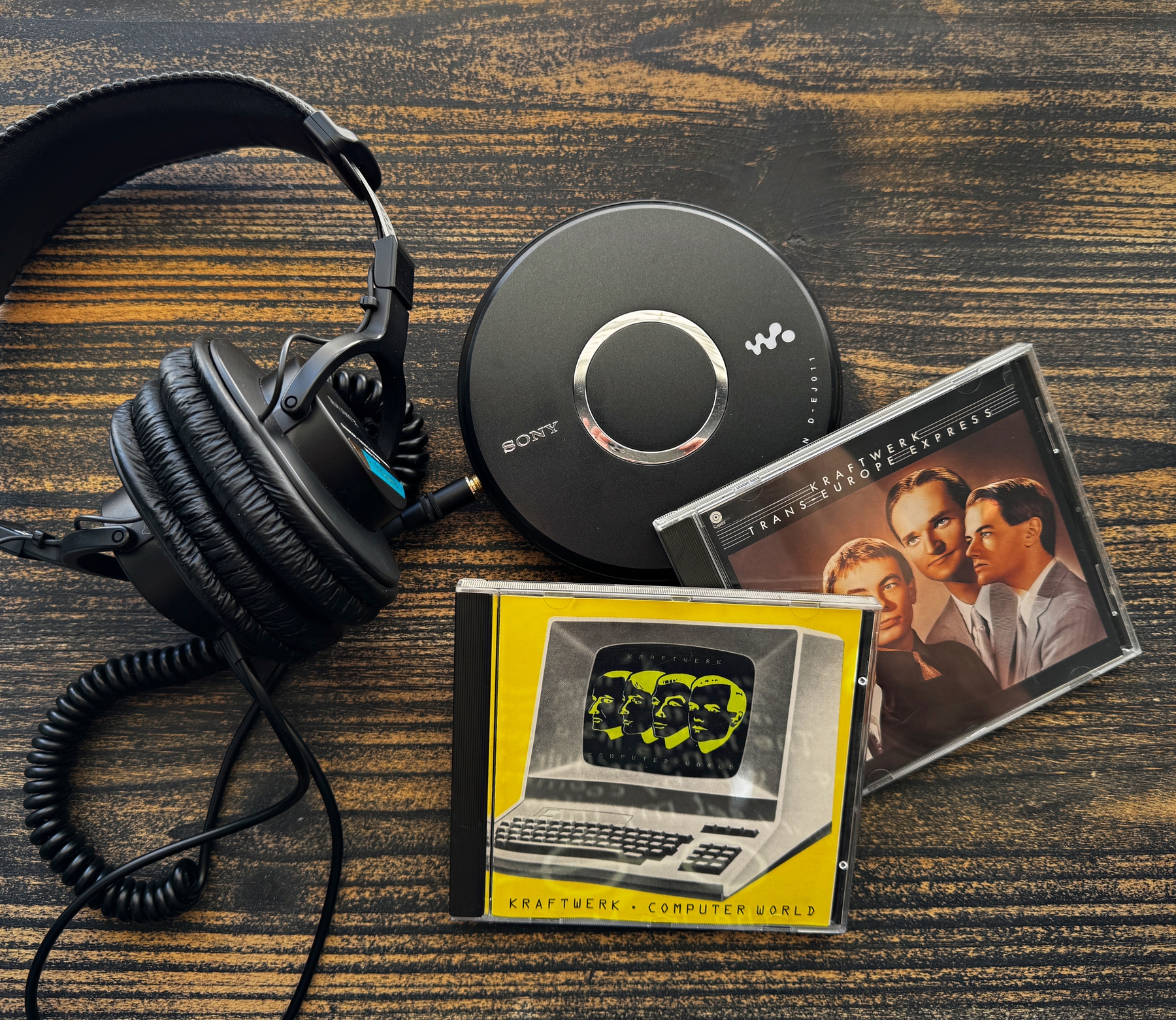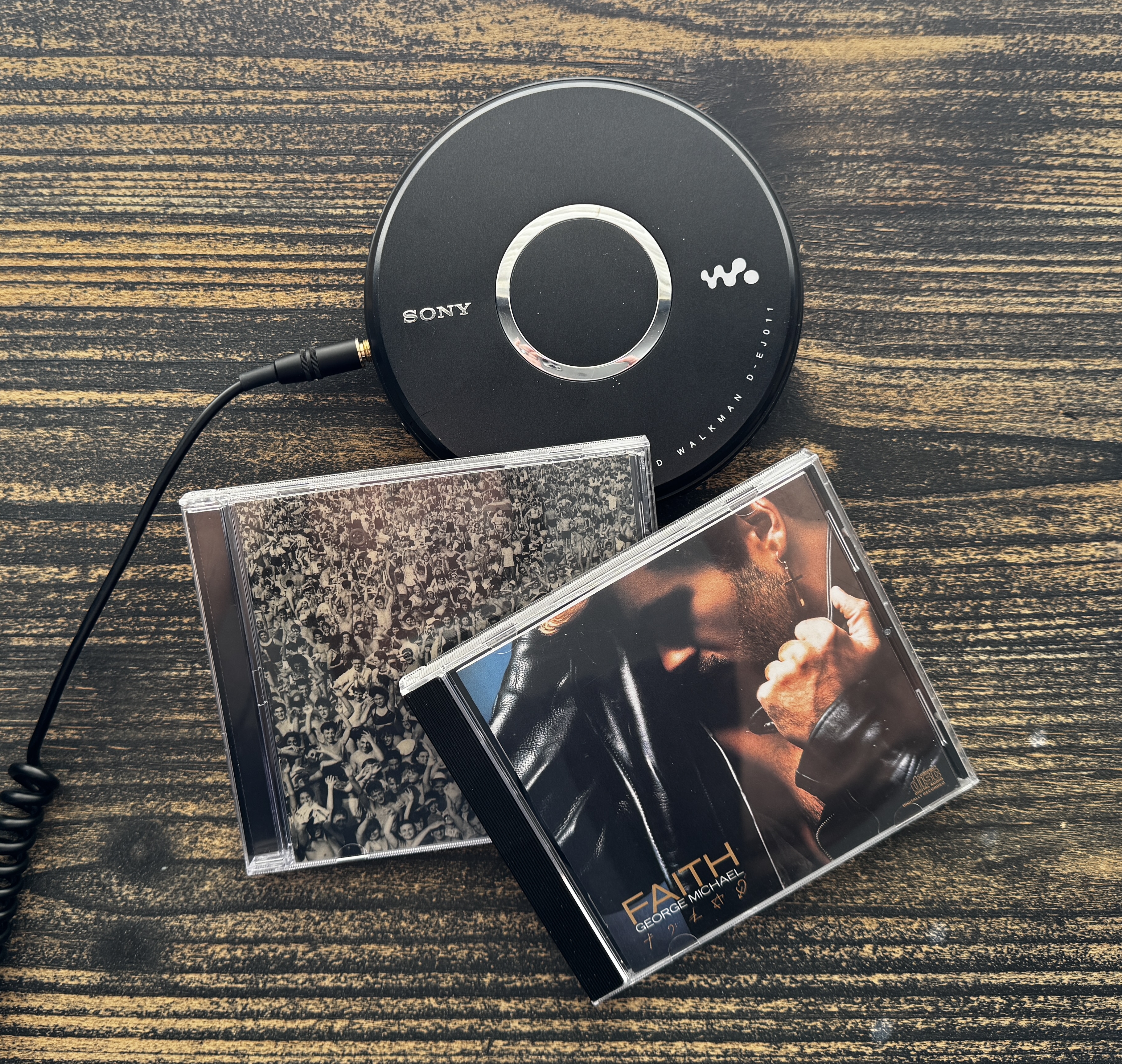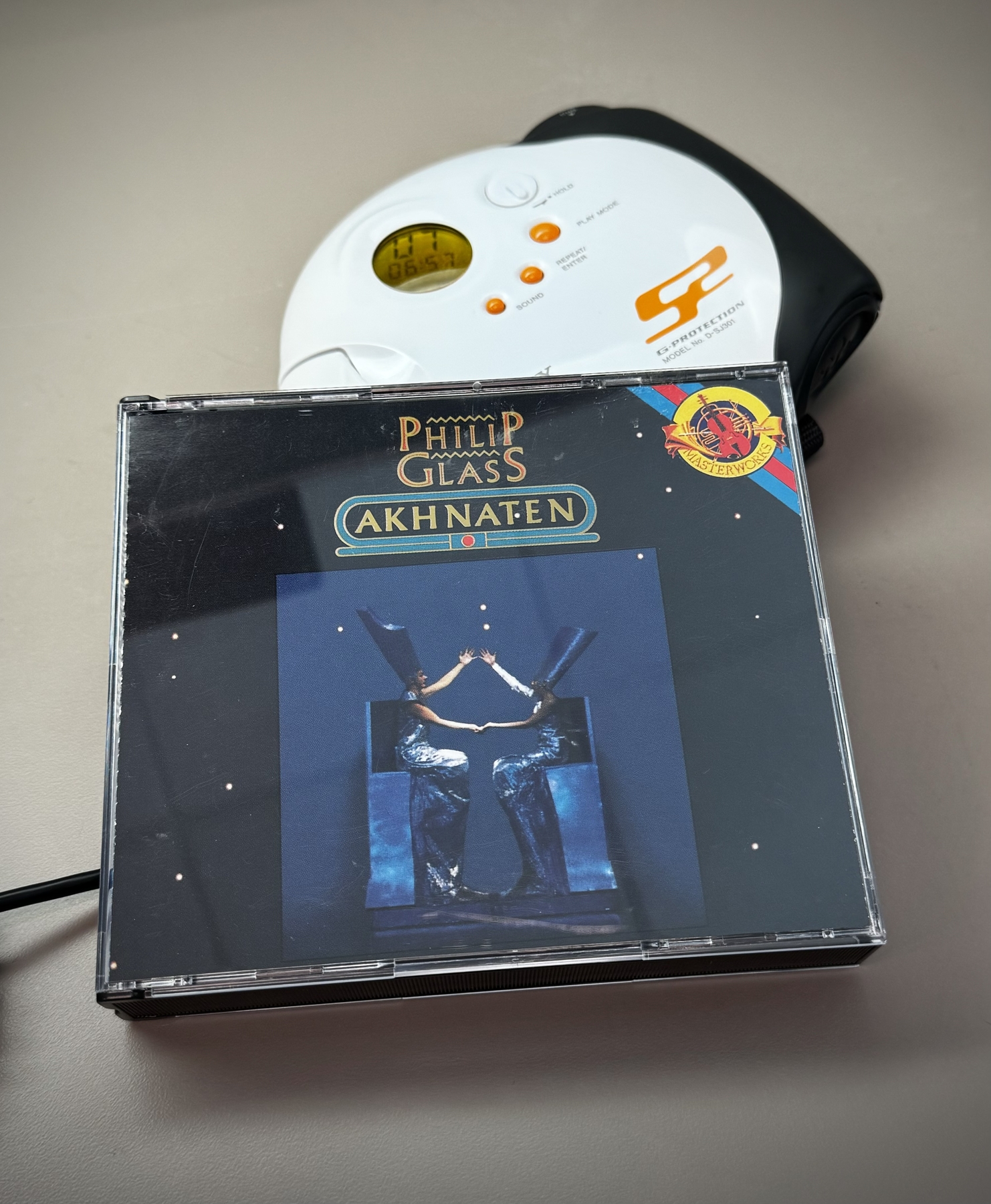
Happy Anniversary You Crazy Shiny Discs!

The first commercial Compact Disc was created 43 years ago, today — nearly one billion CDs were shipped per year in early 2000’s

By

CDs are still popular with some music fans, despite the rise of digital streaming platforms.
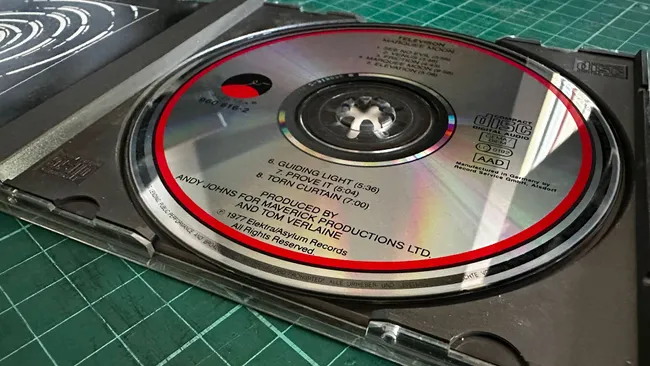
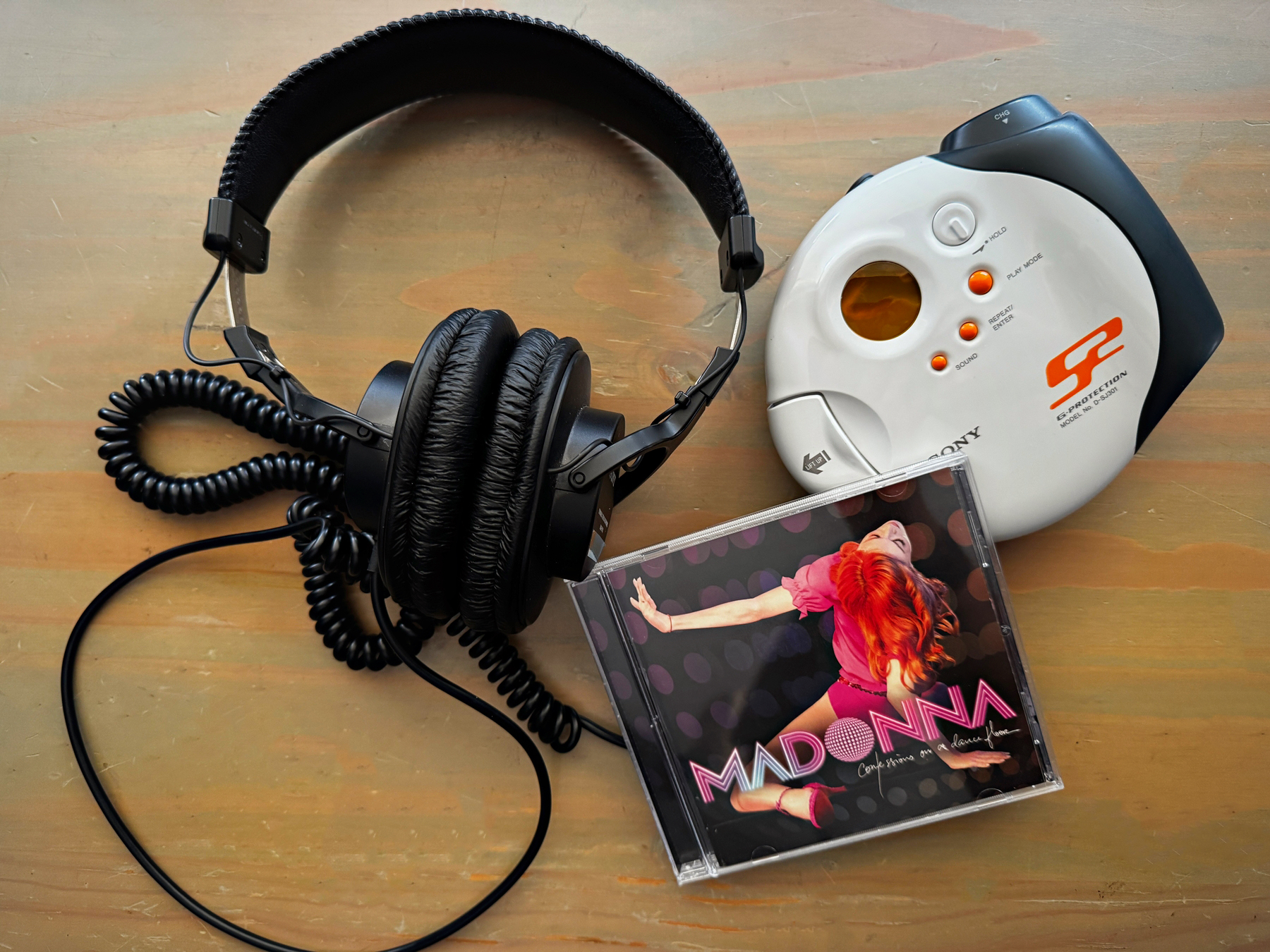
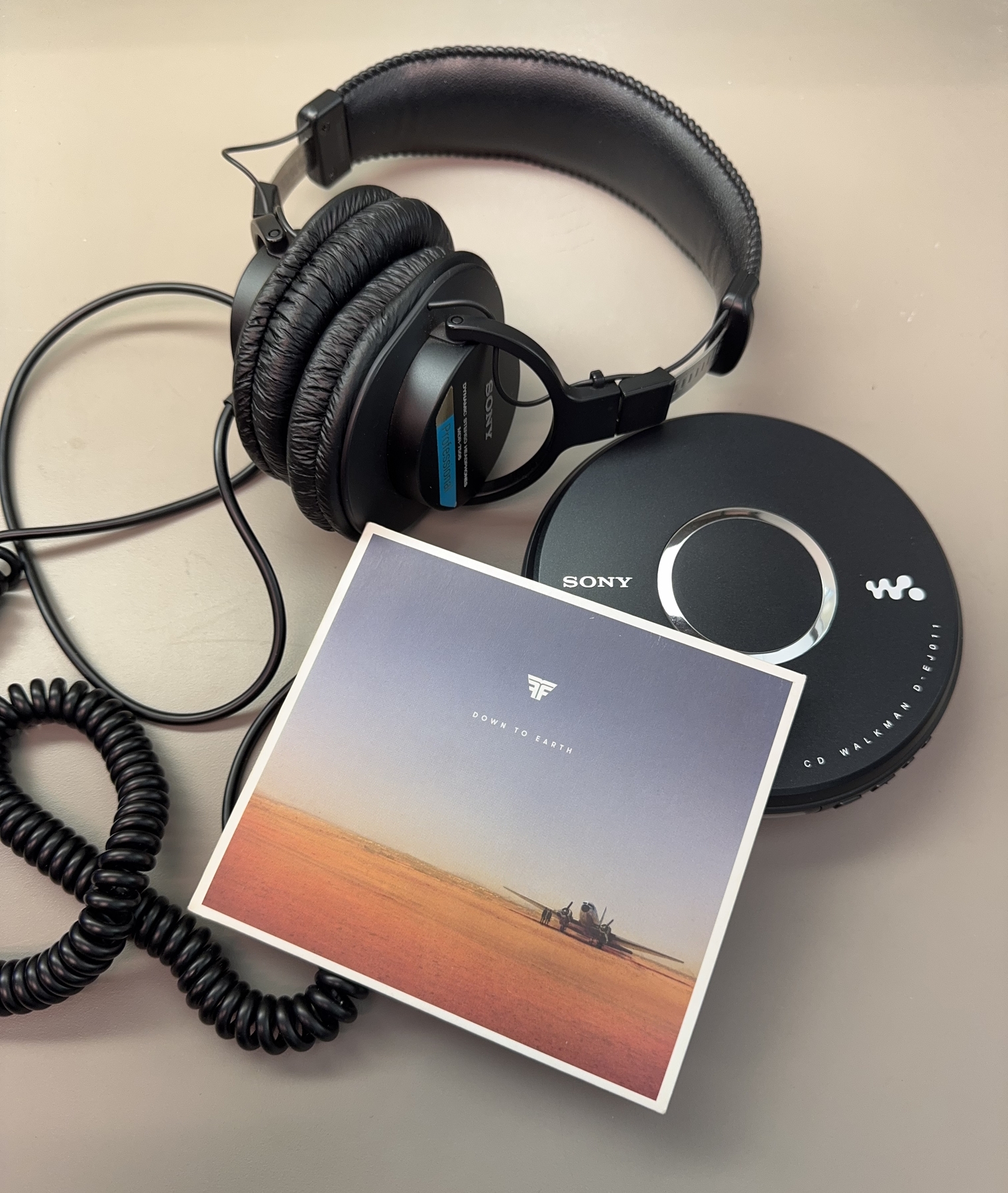
Today marks 43 years since the first commercial Compact Disc (CD) pressing. Polygram in Germany is credited with pressing the first copies of Abba’s The Visitors on this date, back in 1982. The CD format would take off in a direction which would have been highly unexpected at the time, ending up as a foundation of the Multimedia PC age. However, CDs didn’t kill the audiophile thirst for vinyl, and, on the flip side, some artists are still releasing CDs, even in the 5G and fiber digital streaming age.

While the first commercial CDs were factory pressed some 43 years ago, the discs were in development for quite some time ahead of this date. According to various sources, Sony and Philips clubbed together in 1979 to create a digital music disc.

Beethoven’s influence?

Among the first prototype CDs, a format with an 11.5cm diameter which was capable of storing an hour of music was an early front-runner. Philips apparently had a production line ready for such silver coasters. However, the final 12cm diameter and 74 minutes capacity was apparently favored as it was sufficient for a complete recording of Beethoven’s 9th Symphony – Sony president Norio Ohga’s favorite musical opus.

We must note that there are conflicting 74m CD audio origin stories, though. Another credits the desire for this particular uninterrupted audio duration to famed conductor Herbert von Karajan. Similarly, the Wilhelm Furtwängler’s 1951 recording of Beethoven’s 9th (74 minutes long) is said to be the reason for this time target.

By June 1980, the CD audio Red Book standard was finalized. Abba’s The Visitors entered production in Aug 1982, though wouldn’t hit retail on its new fangled format until March 1983. Meanwhile, the first CD album released in the U.S. is thought to be Bruce Springsteen’s Born In The U.S.A., released in September 1984.

According to Statista, CD album sales peaked in the year 2000, with around 943 million sold in the U.S., alone. The format’s fall from grace has been pretty fast since then, but things have recovered a little since the 2020 low.

Computers and optical media

For computing enthusiasts, like us, the announcement of the CD Yellow Book standard is probably more important than the audio standard. This new standard, which would reach the market in 1985, added binary data to CD storage.

Yet another significant change came in 1988, however. In this year, the ISO 9660 standard came into being, defining a file structure for CD-ROMs. CD burners, which created another huge ripple in the PC pond, began to first become available to the public in 1992. But it would take until the latter half of the 90s, when pricing, interfaces, and software began to democratize CDs as digital storage, archiving, and sharing essentials for everyone.

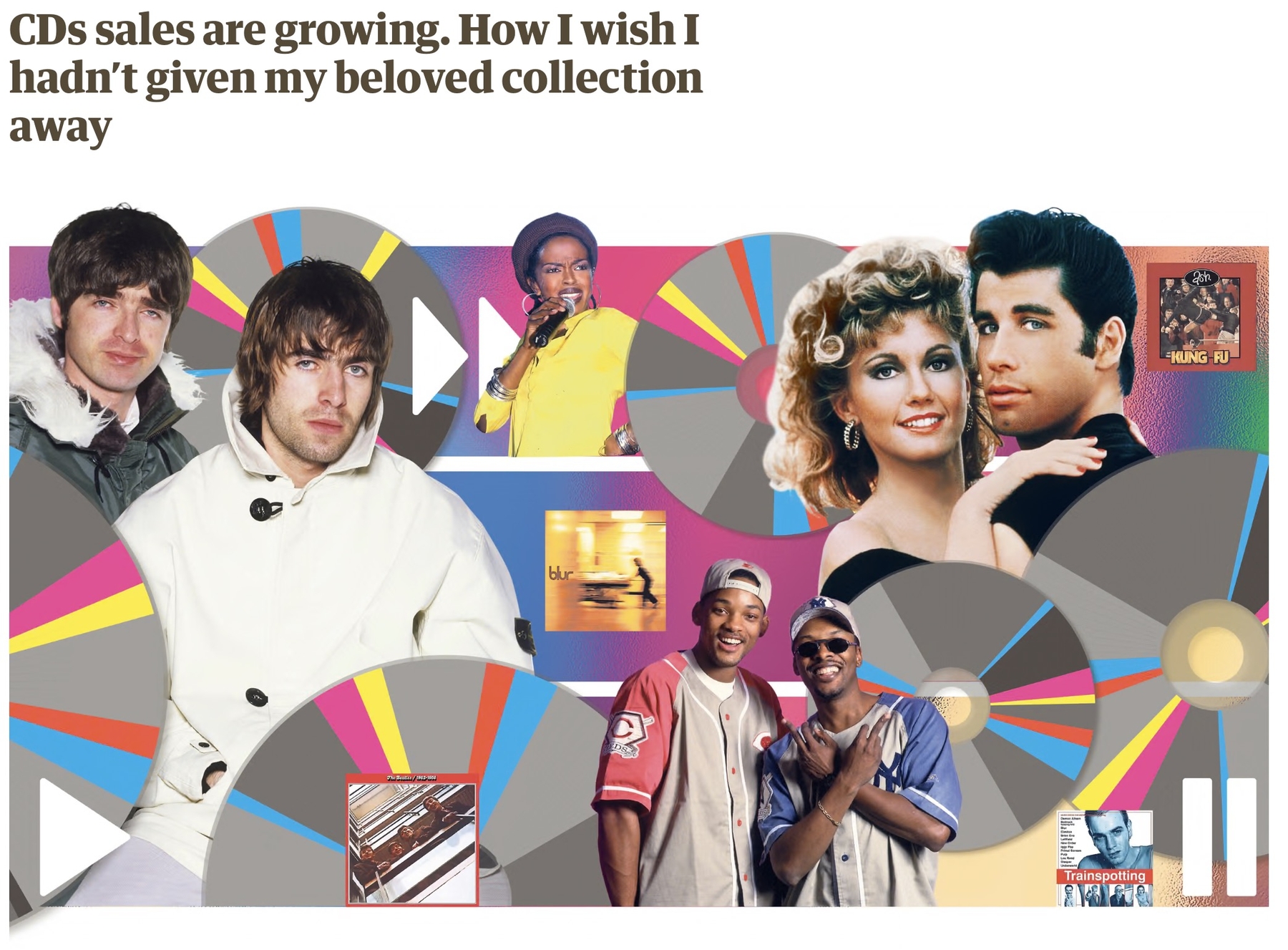
Reading about people using CDs with computers in 2025, as almost as archaic sounding as the use of floppy disks. Nevertheless, some music fans still prefer physical CDs to digital platforms (and the vinyl) such desires have probably spurred the likes of Taylor Swift to release almost 20 physical variations of her latest release, The Tortured Poets Department – including CDs, LPs, and even cassettes. If you count digital variants, there are 36 editions of this album you could buy.

I still maintain access to CDs and DVDs, and the ability to write various optical formats, using a simple external USB optical drive like this one from LG, at $27 on Amazon.com. There are plenty of cheaper, lesser known brand alternatives, too. It is great for looking through old archives and so on, as well as (re) ripping choices from the old music collection.
Guts


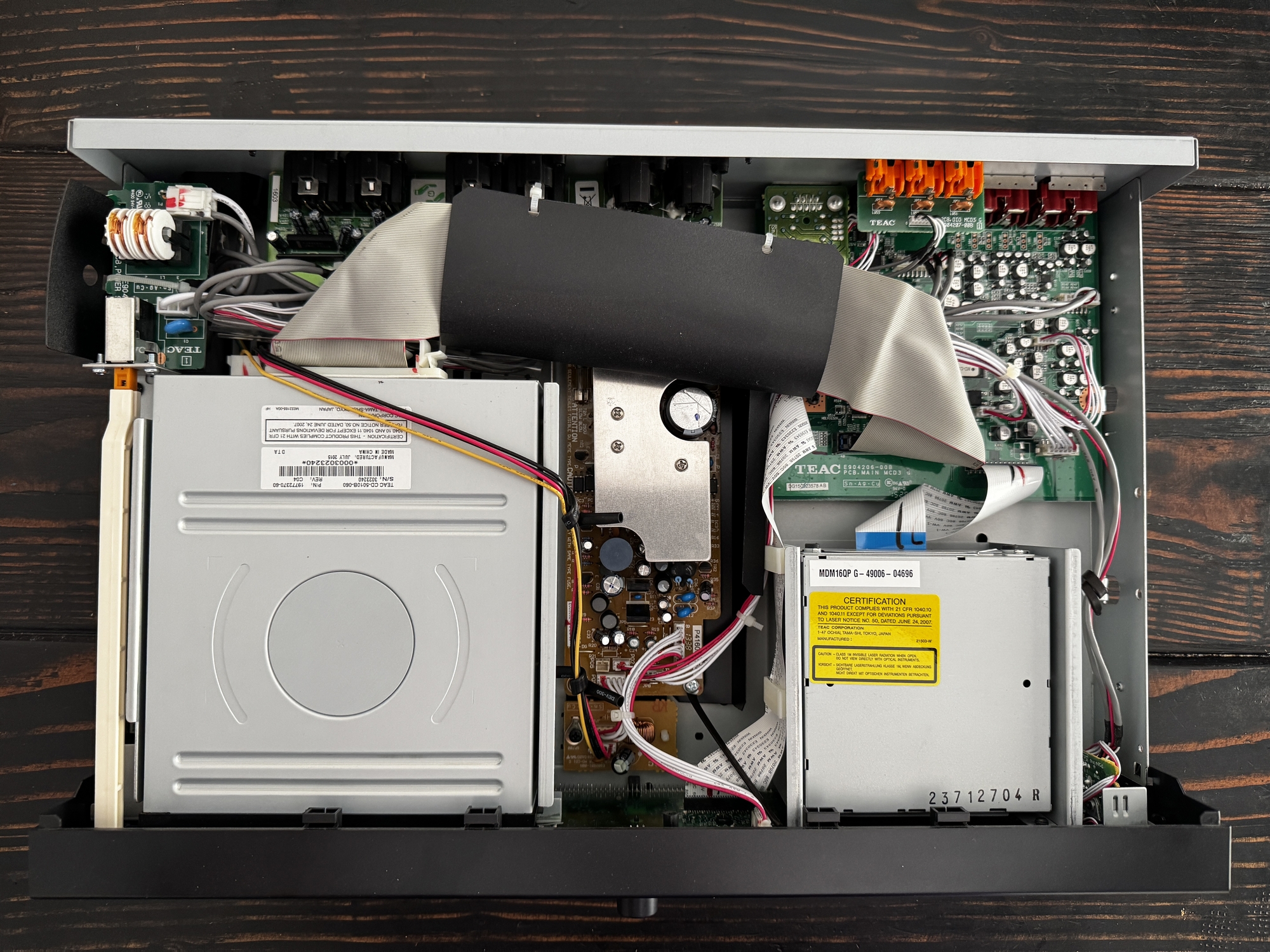
I’ve loved this stuff since I was a teenager and first got into HiFi. Those shiny manufacturer brochures touting the advantages of their design over the competition, resplendent with cutaway diagrams and photos of the inside of the gear they were selling were an endless source of fascination. When my buddy who got me into this initially would return from the Chicago CES each year, laden with shopping bags full of brochures, we’d sit in his room and pour over all of it for hours, daydreaming that one day we’d own some of it.

I was kind of surprised that a cursory internet search for photos of the inside of my new Tascam deck were nowhere to be found. Fuck it, I thought. I’ll make my own. So I disconnected everything, popped the cover, and snapped a photo worthy of a product brochure.

Even though I already knew (from having the Service Manual) that there was no audiophile-grade CD mechanism in this deck, but instead just a standard Teac (parent company of Tascam) IDE CDROM drive like you’d find in a desktop or tower computer of the era, it was still kind of surprising to actually see it. And the 2015 date stamp on the drive was another surprise, confirming that I’d gotten one of the units from the last year they were in production.

I Lucked Out On This One

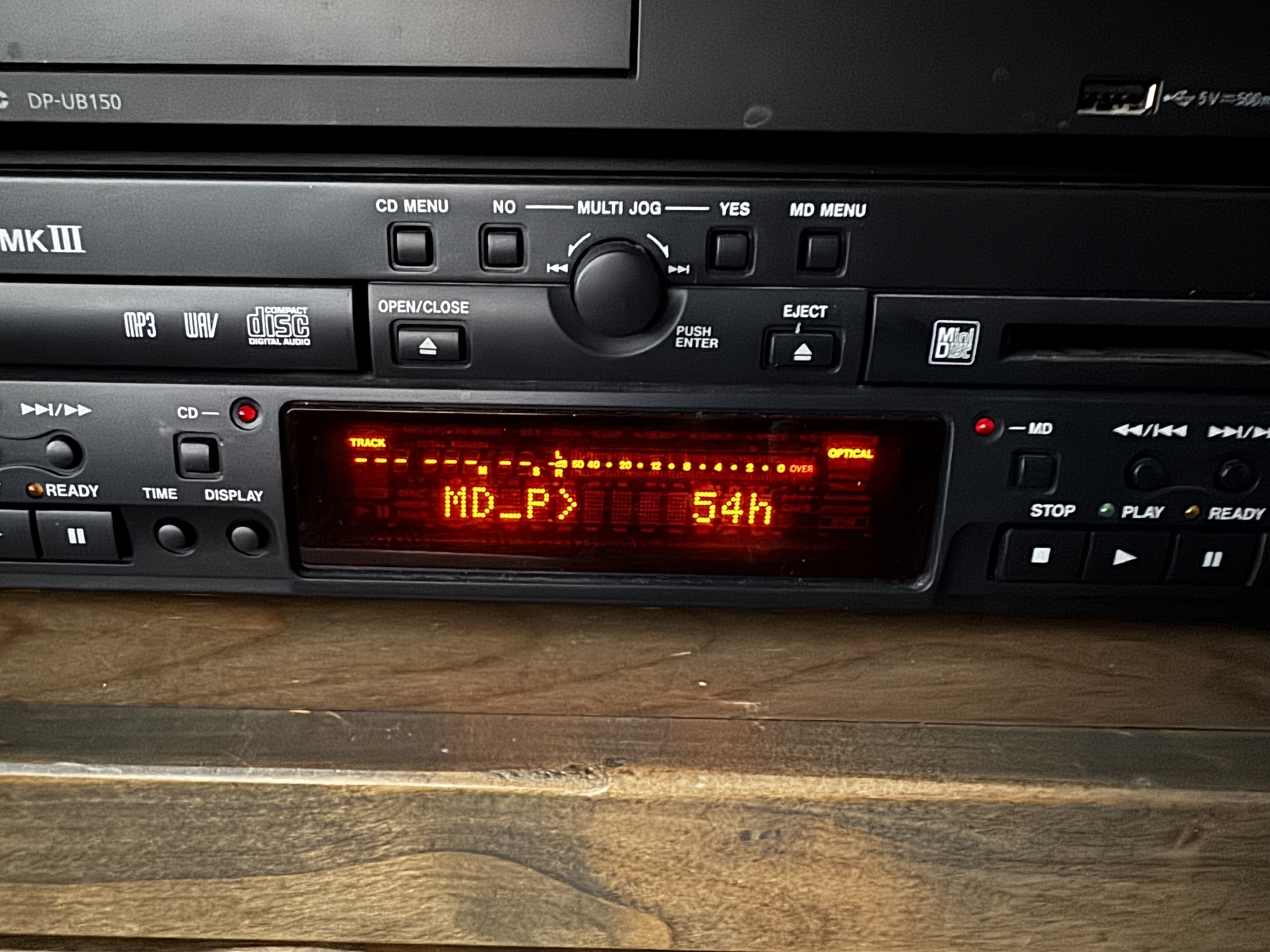
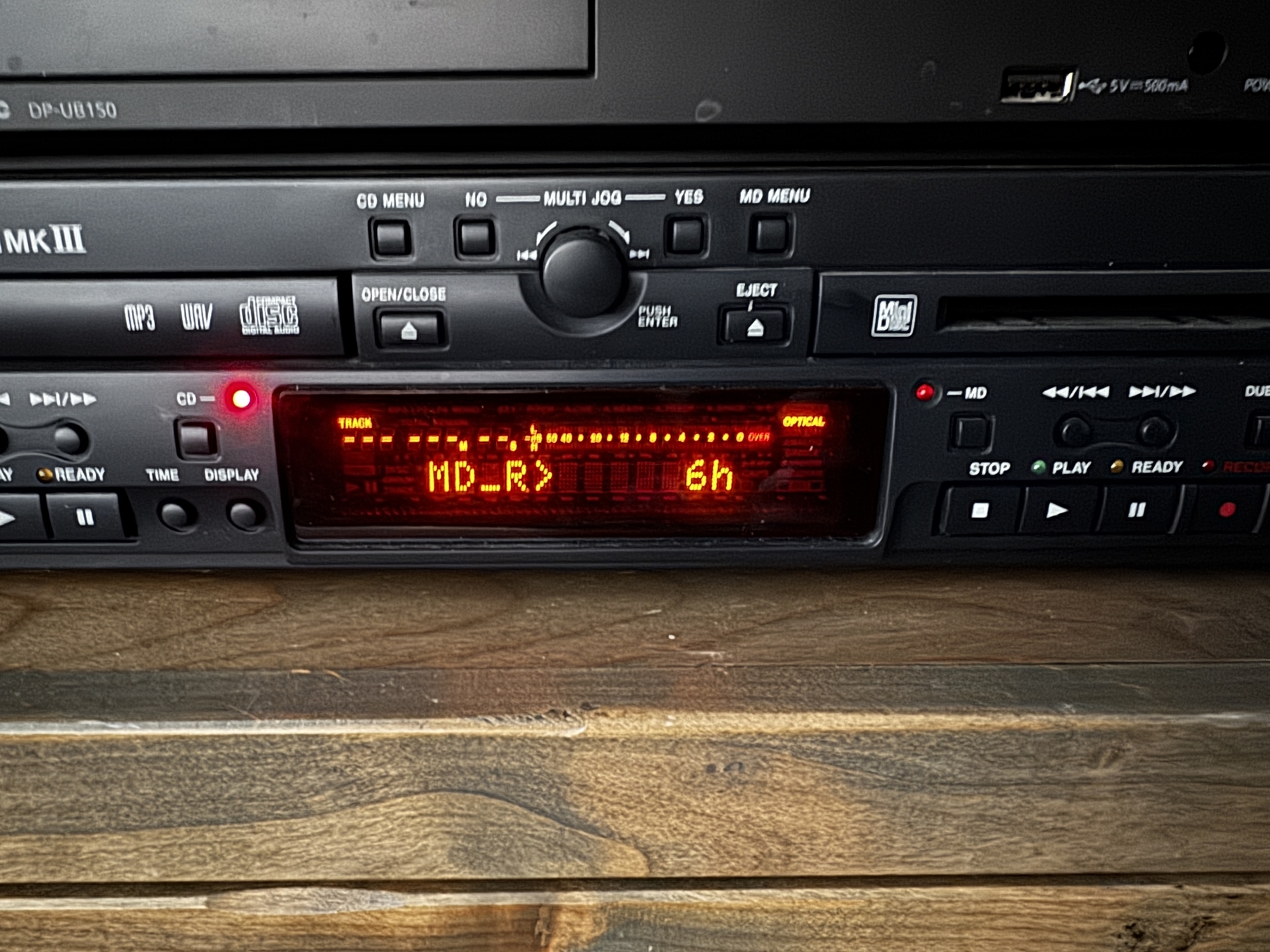
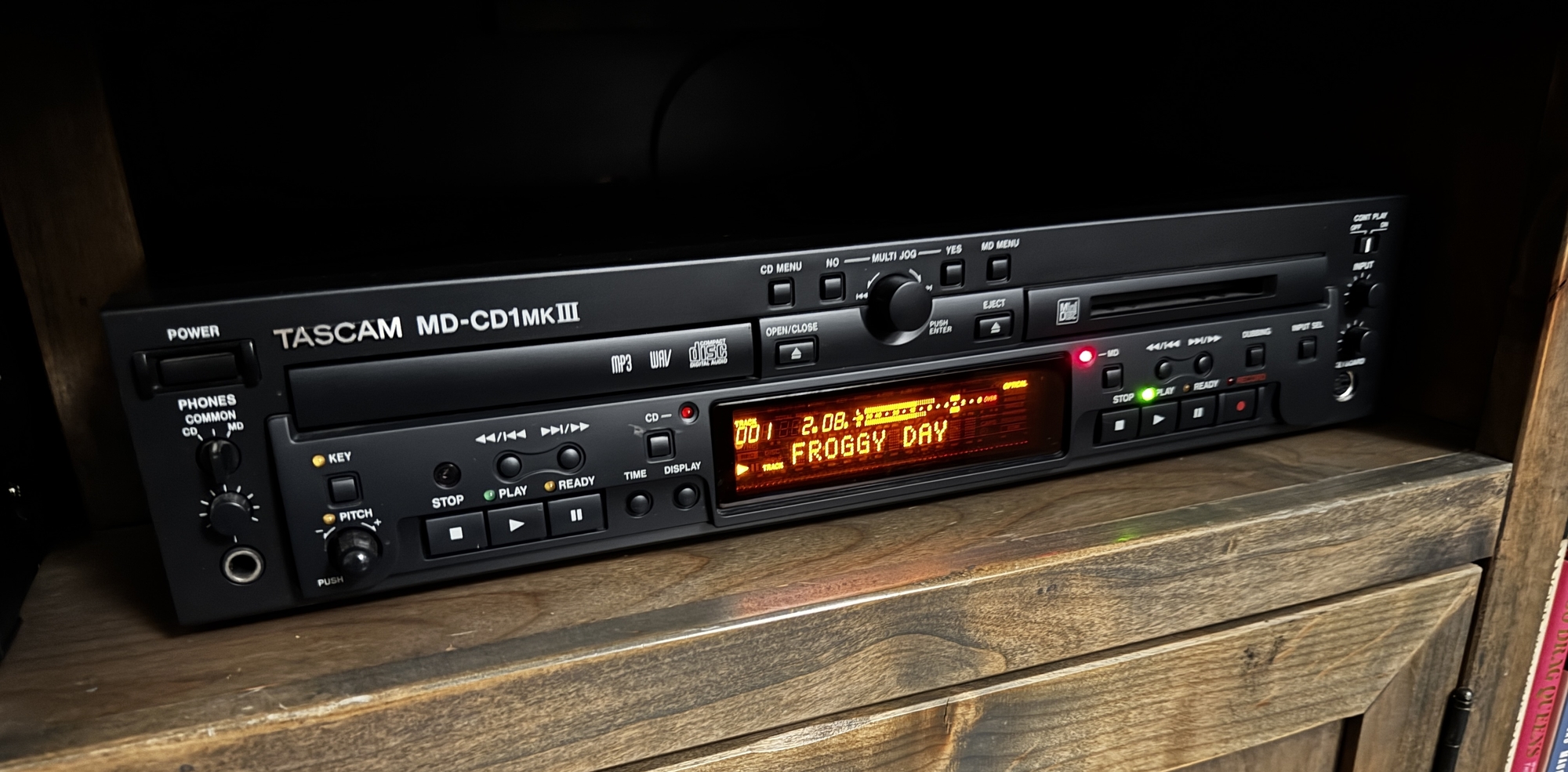
Okay, when I bought this Tascam MD-CD1MKIII deck I knew it looked mint, but until I started digging in the menus I never realized it had so few hours on it as well!

CD Playback – 26 hours total
MiniDisc playback – 54 hours total
MiniDisc Recording – 6 hours total

Damn, this thing was hardly touched!

This Guy Gets It

Nostalgia. It’s a hell of.a drug. I’ve said it before.

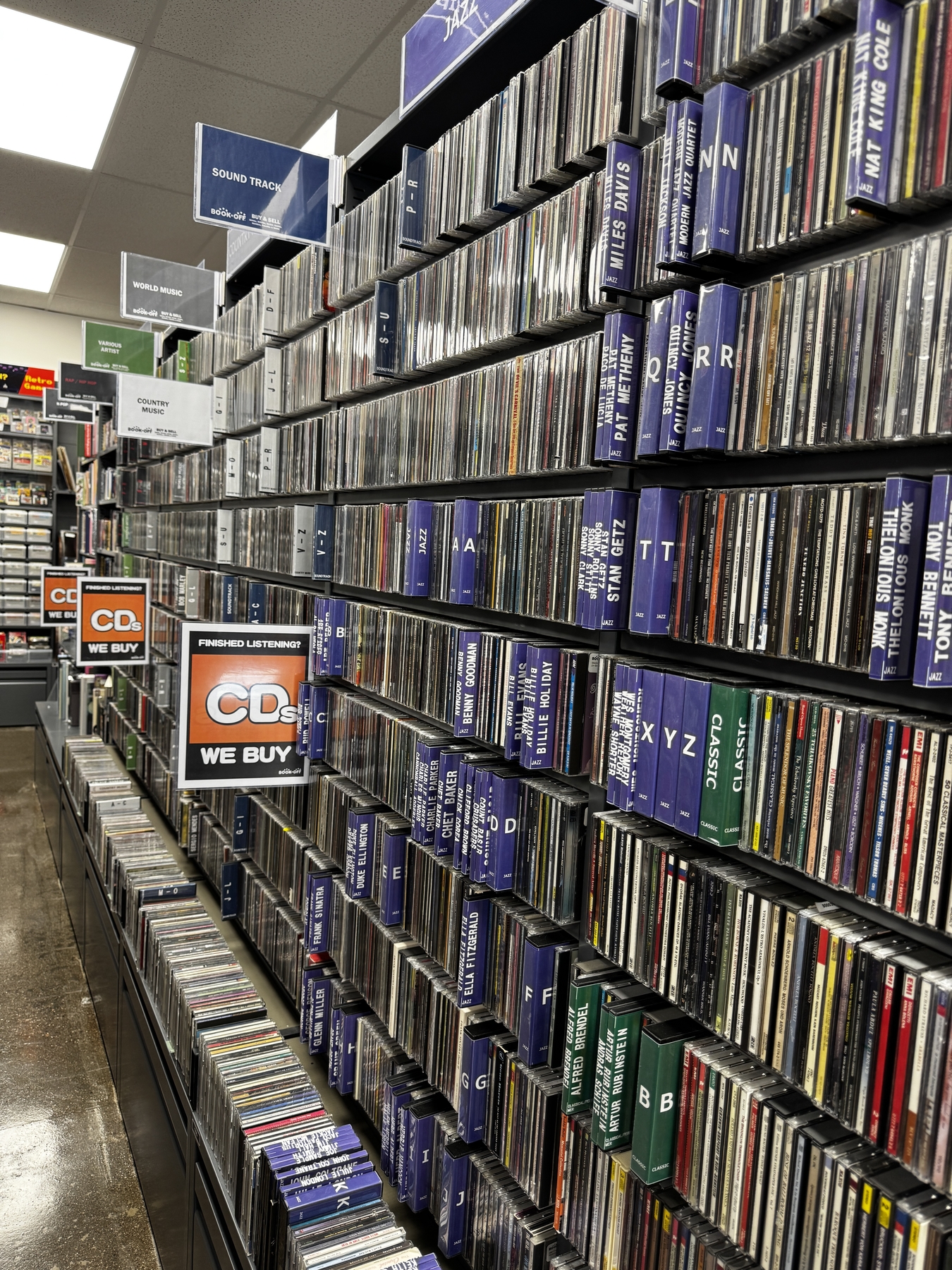
Randy gets it, and is the first person I’ve seen so succinctly sum up what I feel whenever I put on a CD or rip a new MiniDisc. It just feels good. And as a collector, the dopamine rush of walking into a thrift store or our local Hard-Off, not knowing what I may find lurking on those shelves, or when a new-to-me piece of gear that I probably overpaid for arrives in the mail is exactly as he points out.

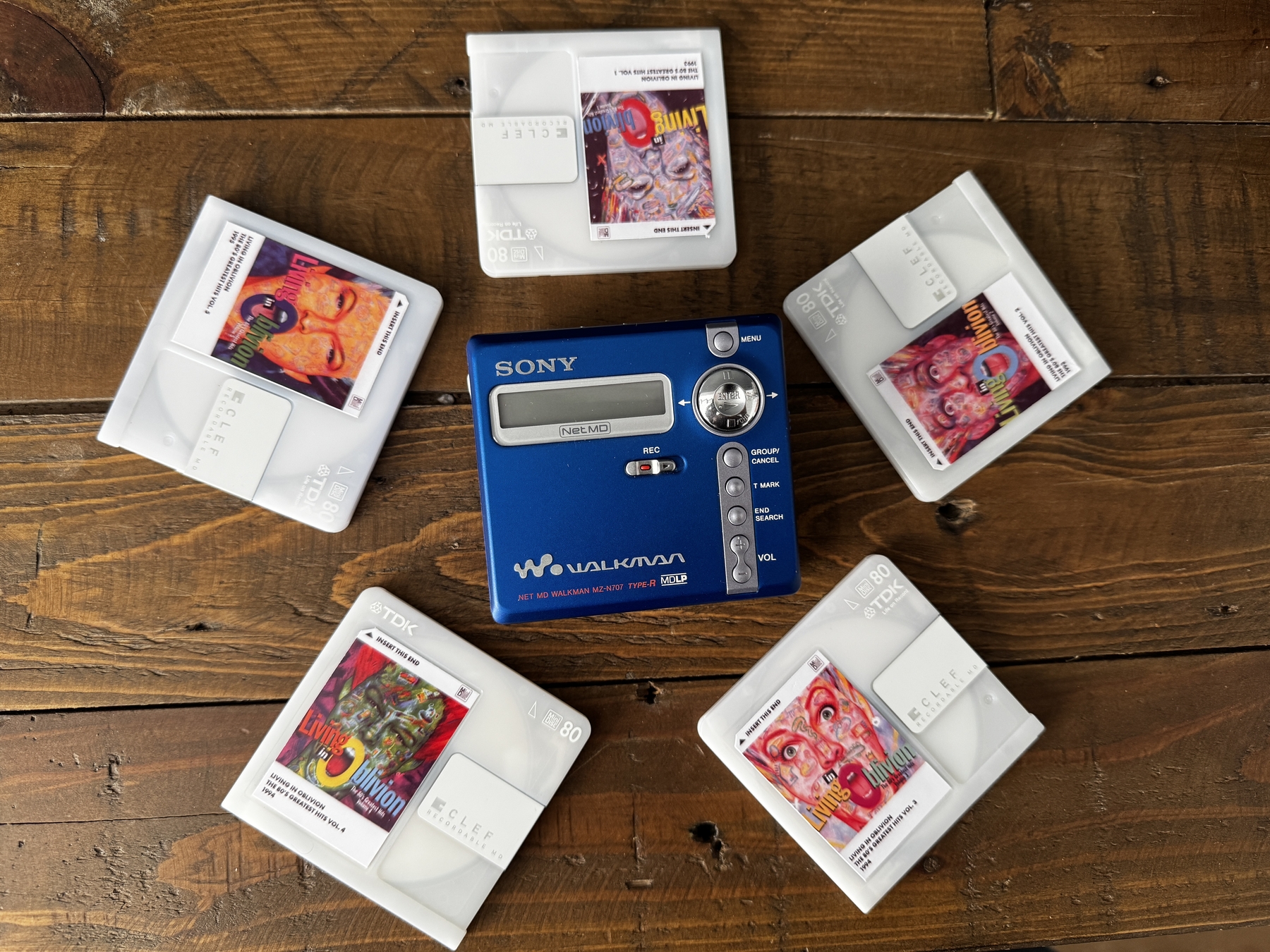
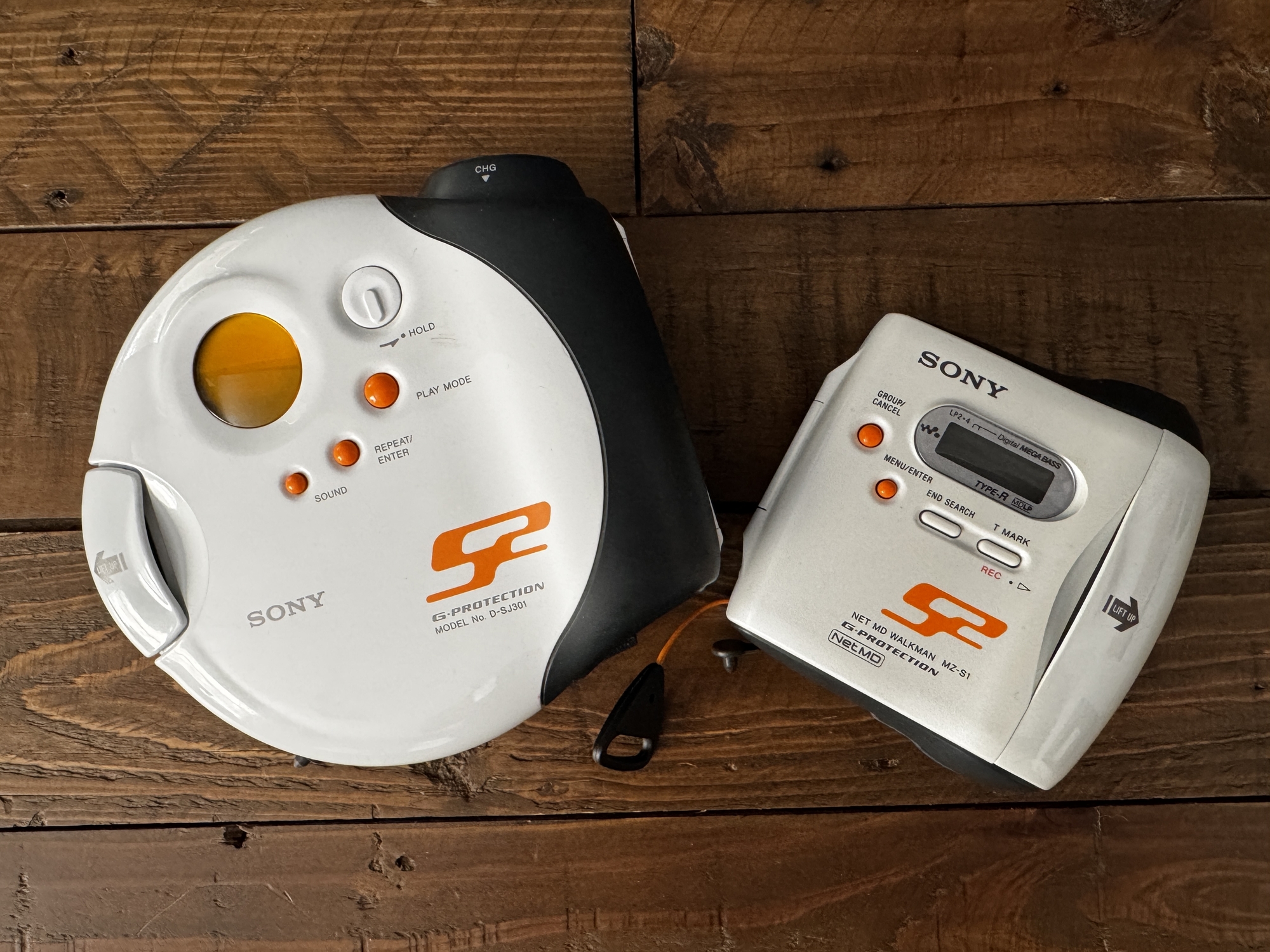
I grew up with vinyl as a teenager, spent my 20s and 30s with the arrival and peak market of CDs (I remember to this day the smell when you walked into Tower Records), and ended my 30s and spent my 40s with MiniDiscs. Even though the whole cancer thing occurred when I was deep into MD (I remember having my Sony MZ-S1 at the hospital, listening to whoever was on my radar at the time) I still have so many fond memories associated with the format.

I look at my music collection and think, “That’s me. That’s my vibration.” And even though my tastes have expanded over the years, every one of those recordings is a part of who I am.

And since everything I buy is used from individuals, it gives a stiff middle finger to the orange felon’s tariff madness.

This Place Could Be Dangerous

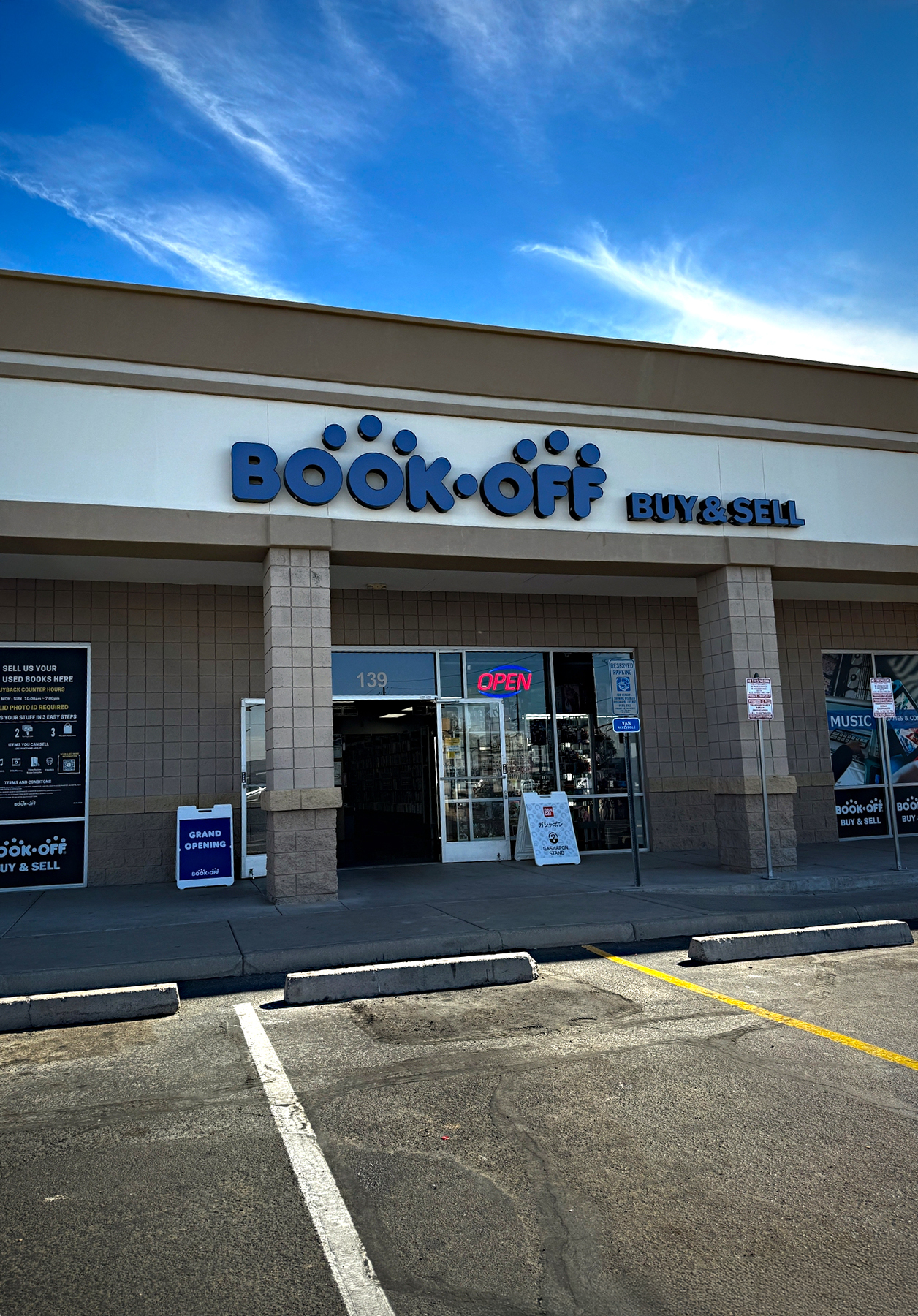
The Hard●Off chain of stores (including Book●Off) are a well known brand in Japan. (Something I learned while researching MiniDisc on YouTube.) They’re expanding into the US market with a handful of stores, the most recent being the one in Phoenix that just opened a few weeks ago.

Recommended Series!

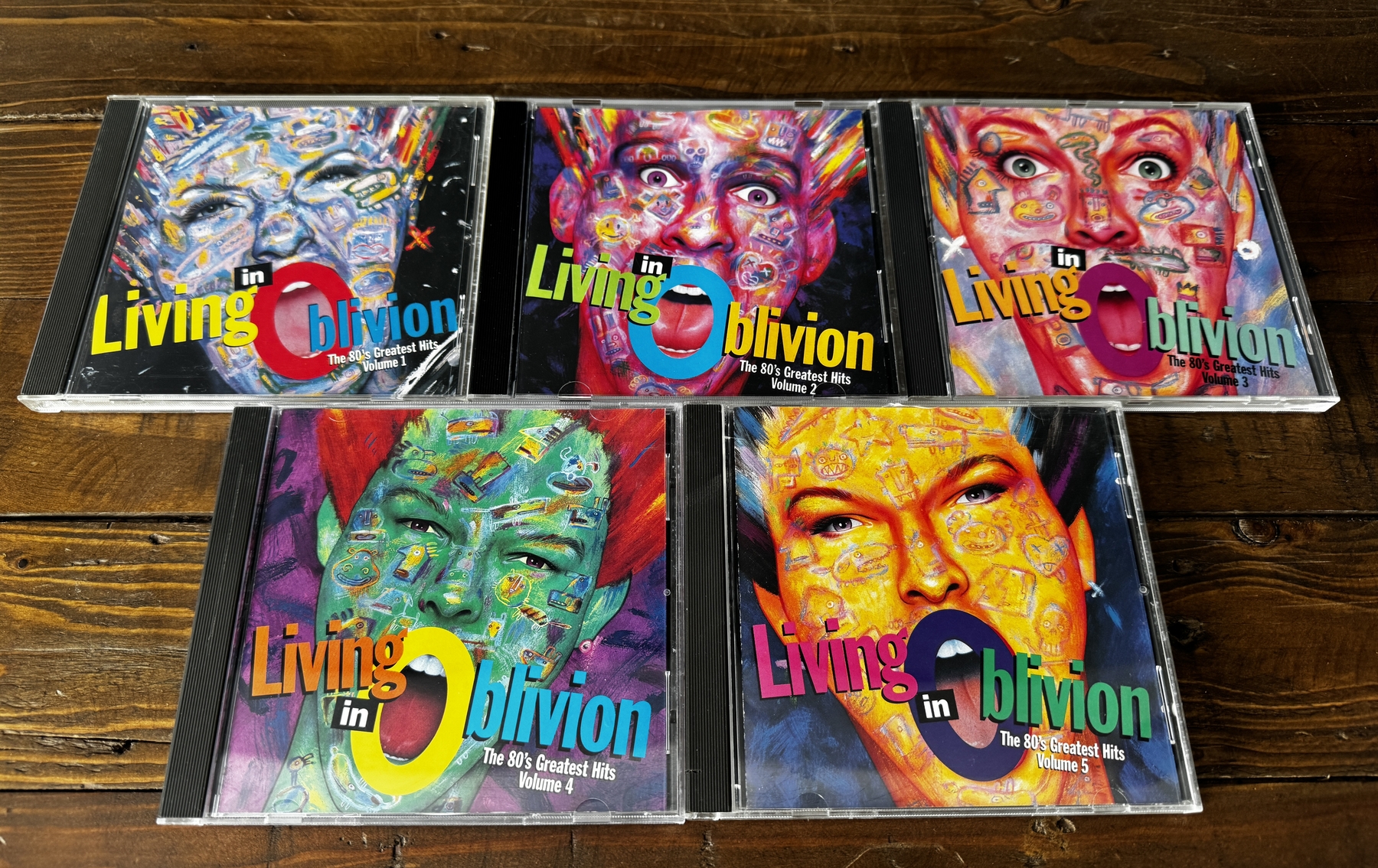
You can find the CDs new on Amazon, but used copies are much cheaper on Discogs, even when you factor in shipping. I picked up near-mint copies for around $3-4/disc (not including shipping).

Interestingly, when I had these in my collection prior to the purge, I didn’t rip them in their entirety to iTunes—something I now regret (and now has been corrected) since I’ve gotten them back in my collection.
Thrills and Chills

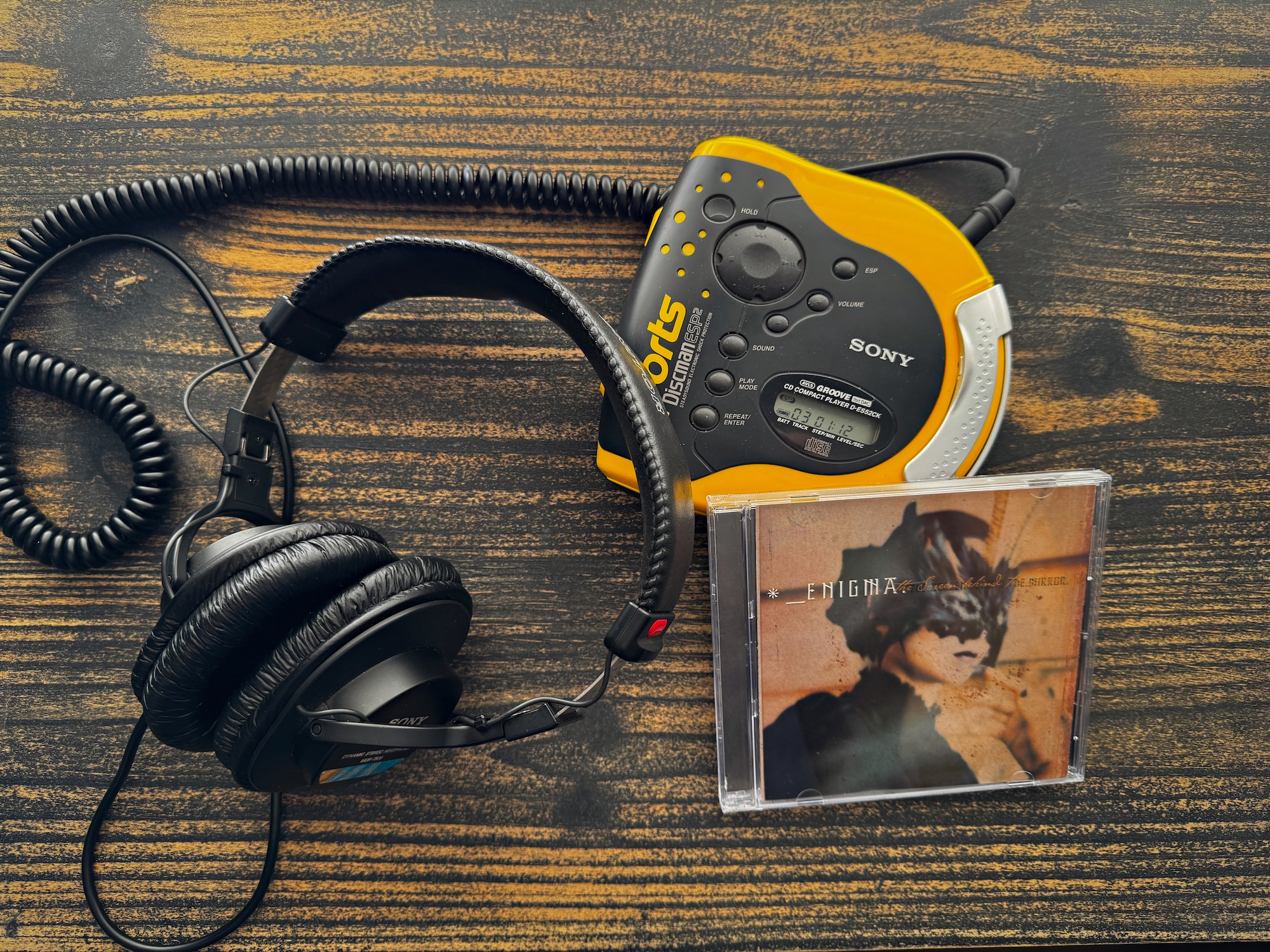
Enigma: Screen Before The Mirror (2000)

I’ve been a fan of Enigma since they arrived on the scene thirty four (!) years ago. As I’ve written before, one of my most profound memories of Engima was their debut disc playing in my headphones as I took the 24 Divisadero Bus to The Lion’s Pub on rainy San Francisco night a little over a month after the passing of my first partner in 1991.

Screen Before the Mirror, probably my favorite Enigma release, gives the astronomer geek in me chills from the very first track with the emotionless, disembodied female voice quietly reading off the astrometric statistics of Mars and those chills continue through the remainder of the album.

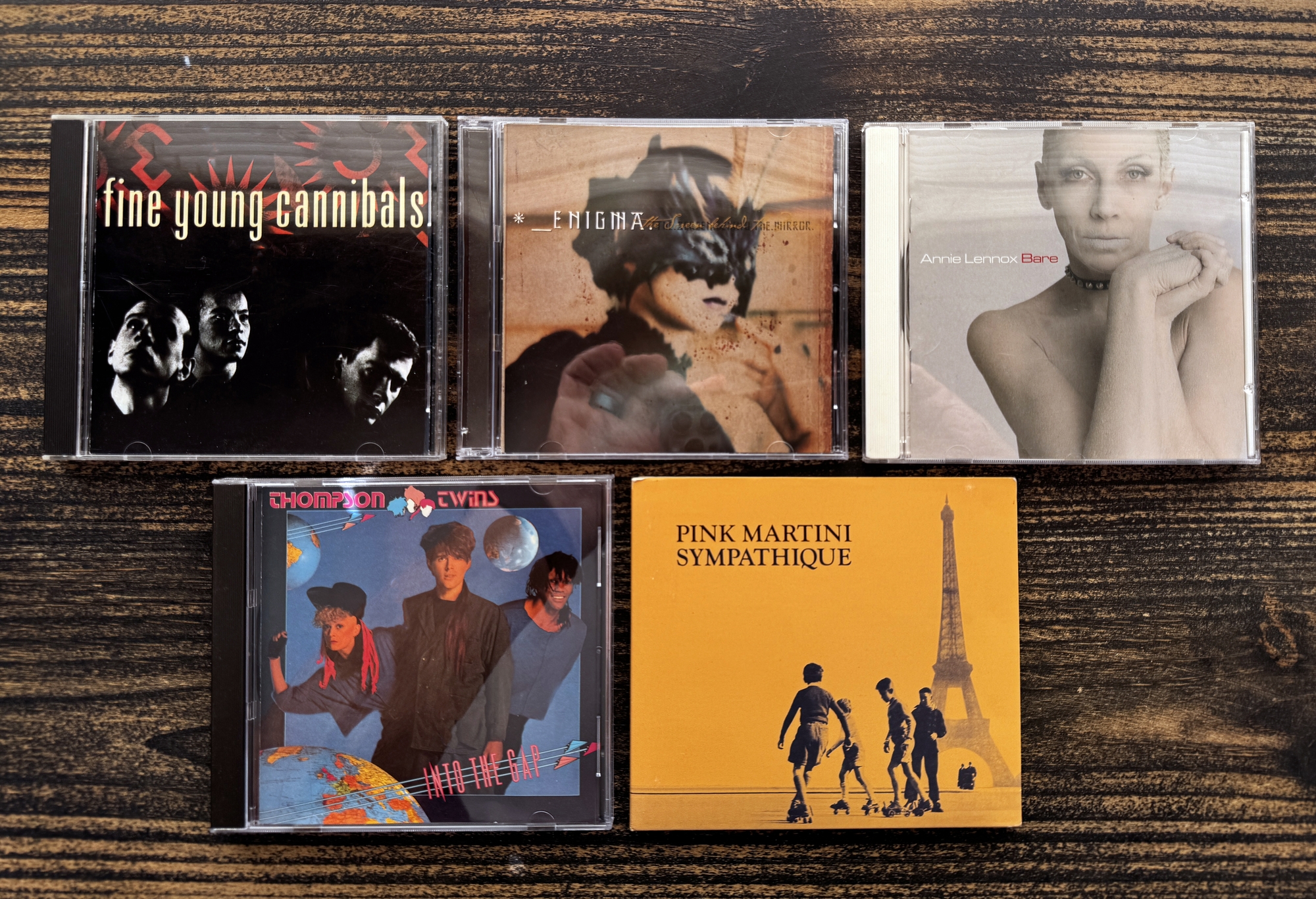
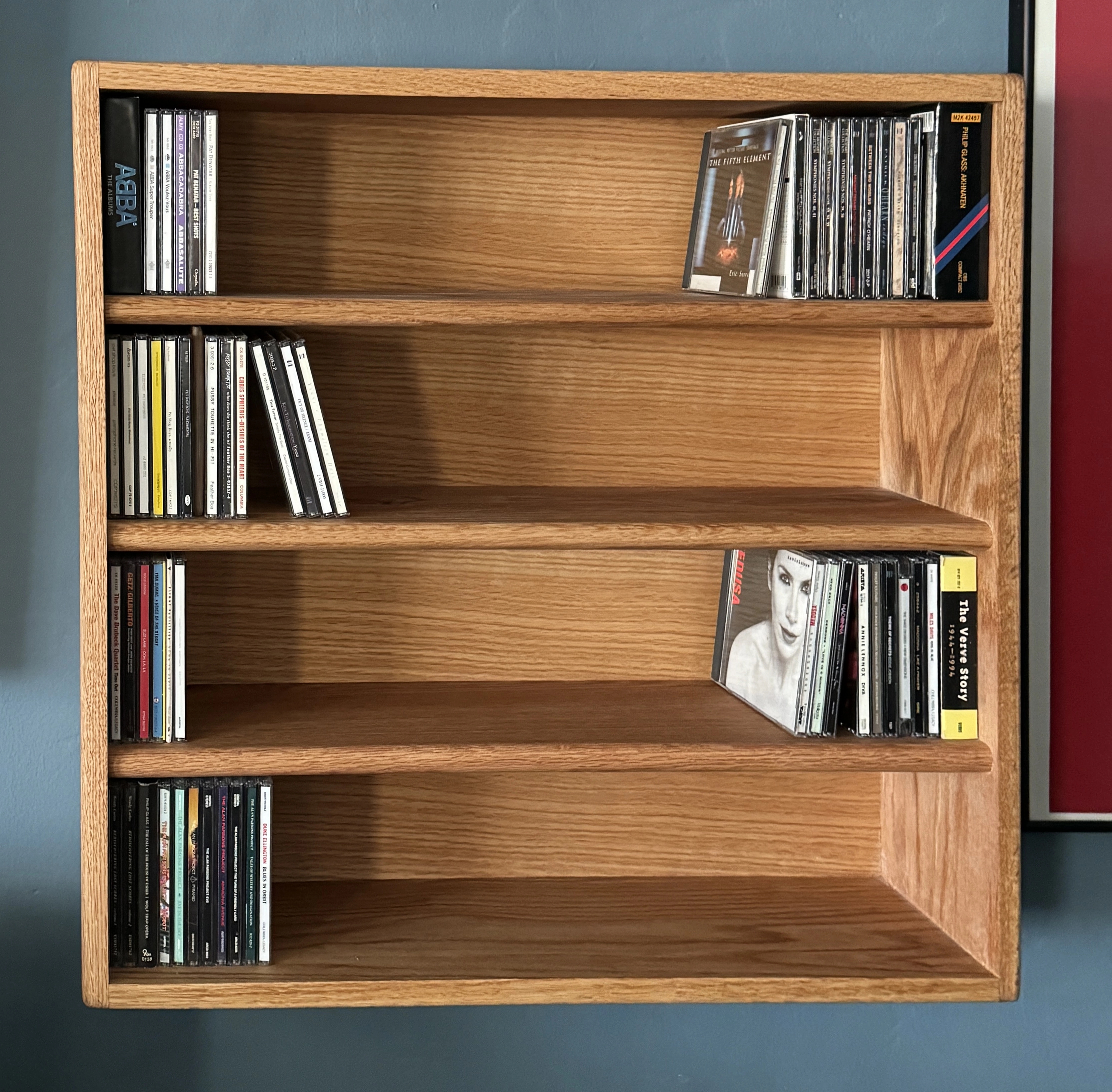
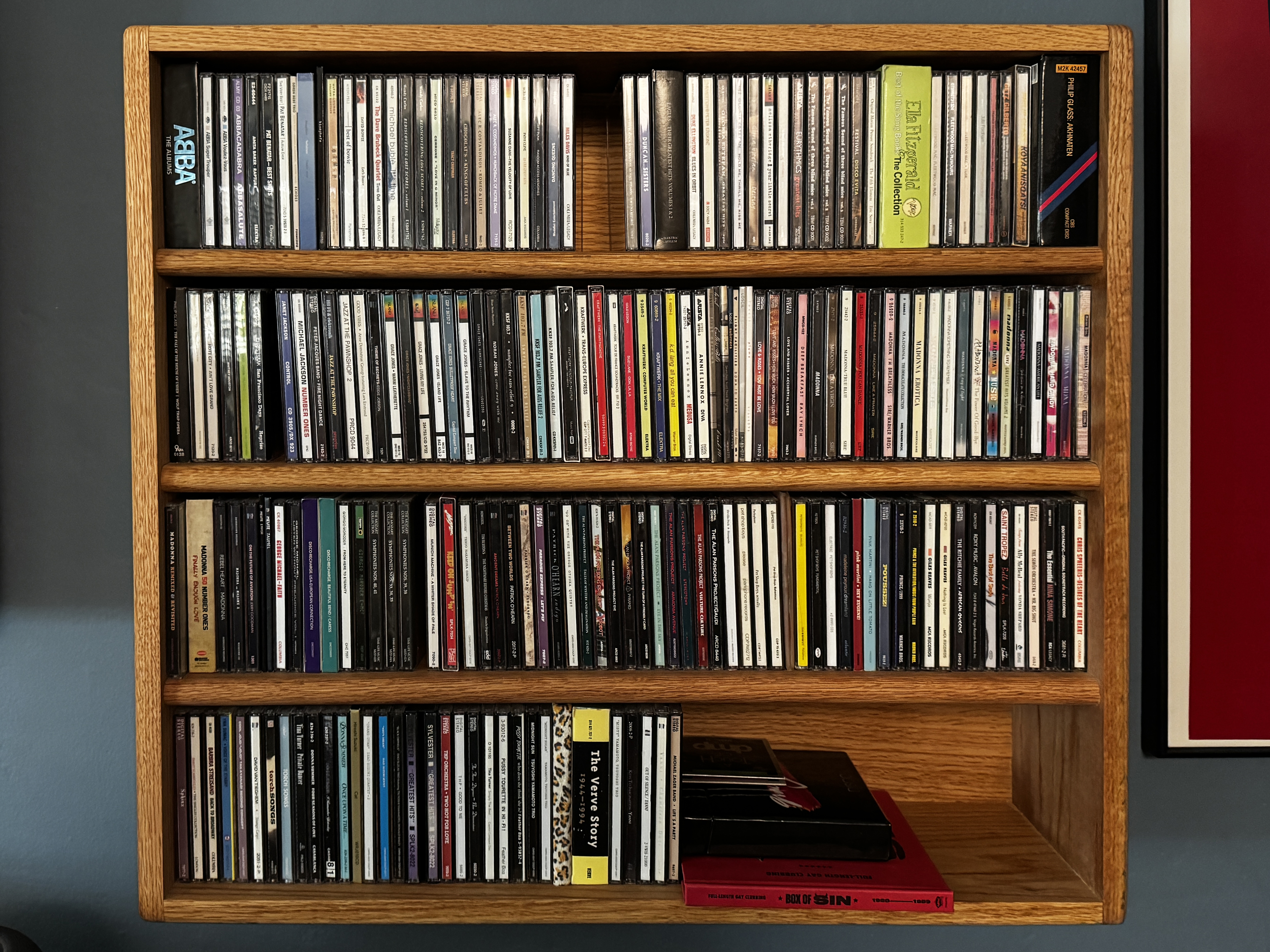
When I set out to rebuild my CD collection two years ago I really didn’t have a roadmap set out of what to replace. My inventory of what I’d owned was catastrophically out of date, and while it had all been ripped to iTunes, discerning which of those 2200 albums in there had come from my original CD collection, were ripped from vinyl, or had been aquired from “other sources” was impossible to sort out.

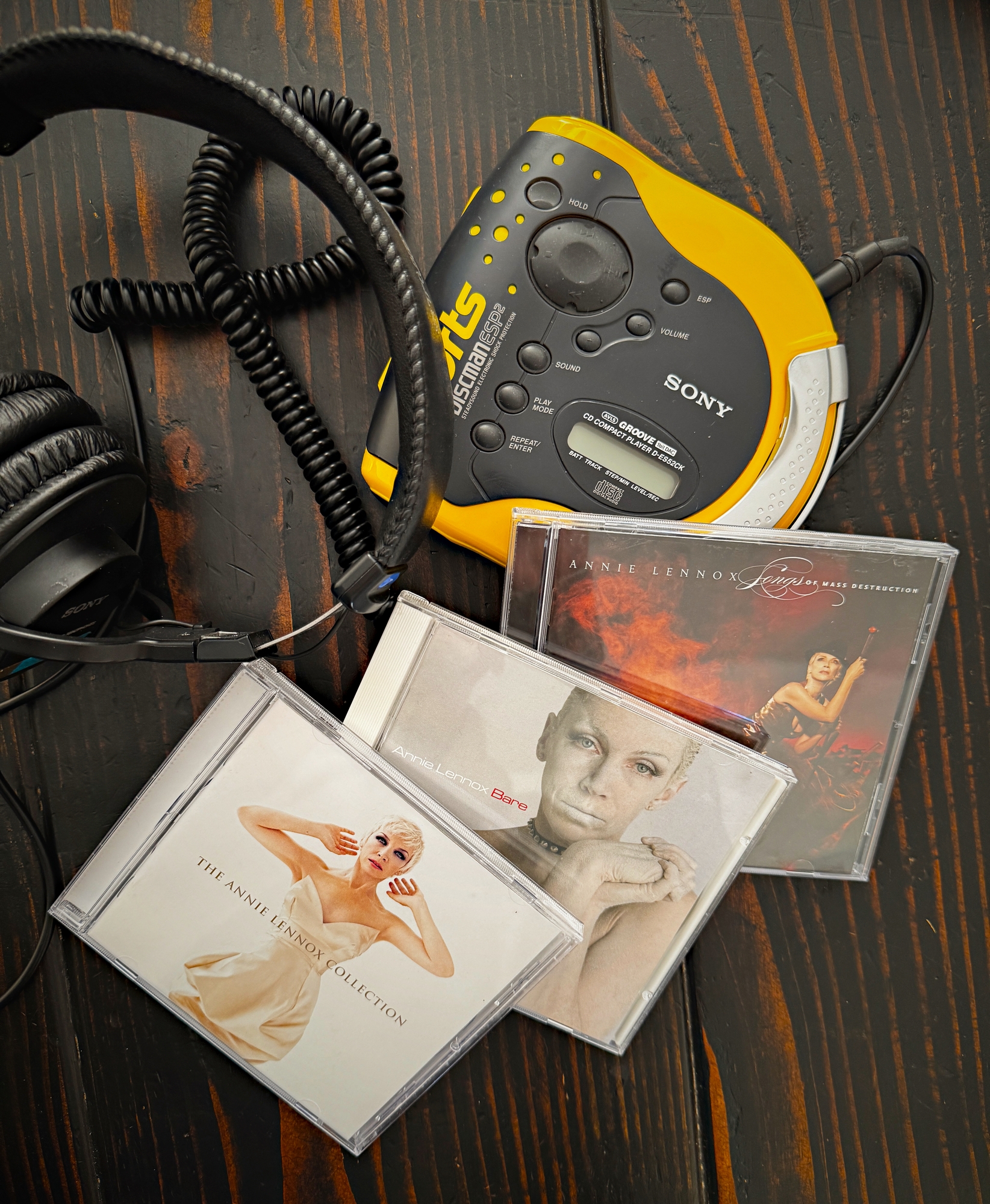
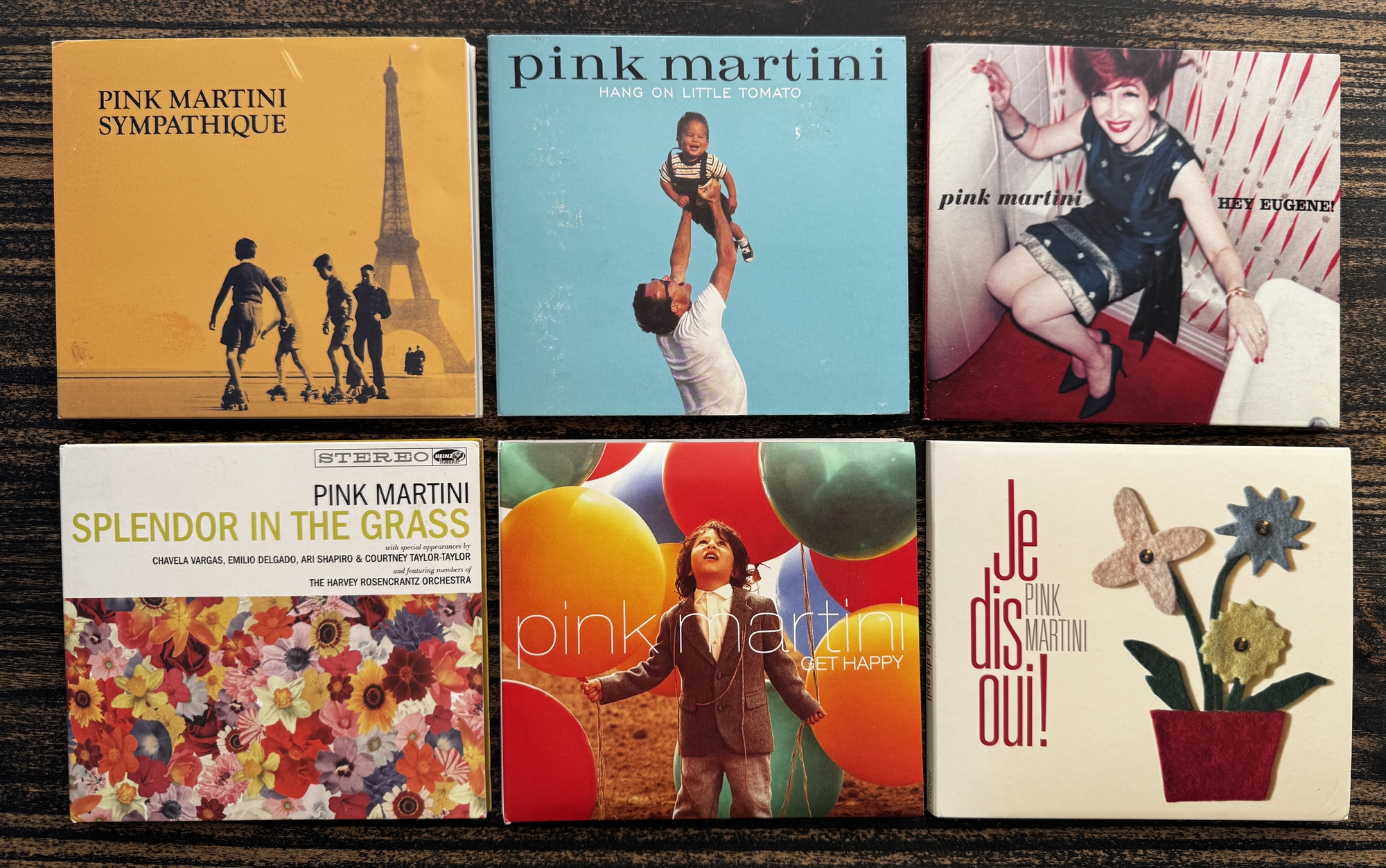
My original inventory was a good jumping off point, but as I’ve learned over the past twenty four months or so, there are a lot of discs that I didn’t realize were missing until I saw them on Amazon, eBay, or Discogs…or just out in the wild. So that’s where this latest haul comes from. With the exception of Sympathique and Bare, none of these were in my records, but I knew I’d owned them all at some point.

It Lives!

Well…not really. Try as I might, I was unable to resuscitate the nugget. So I bought another one [tapping forearm to locate a vein] that was already working and I’m not the least bit disappointed.

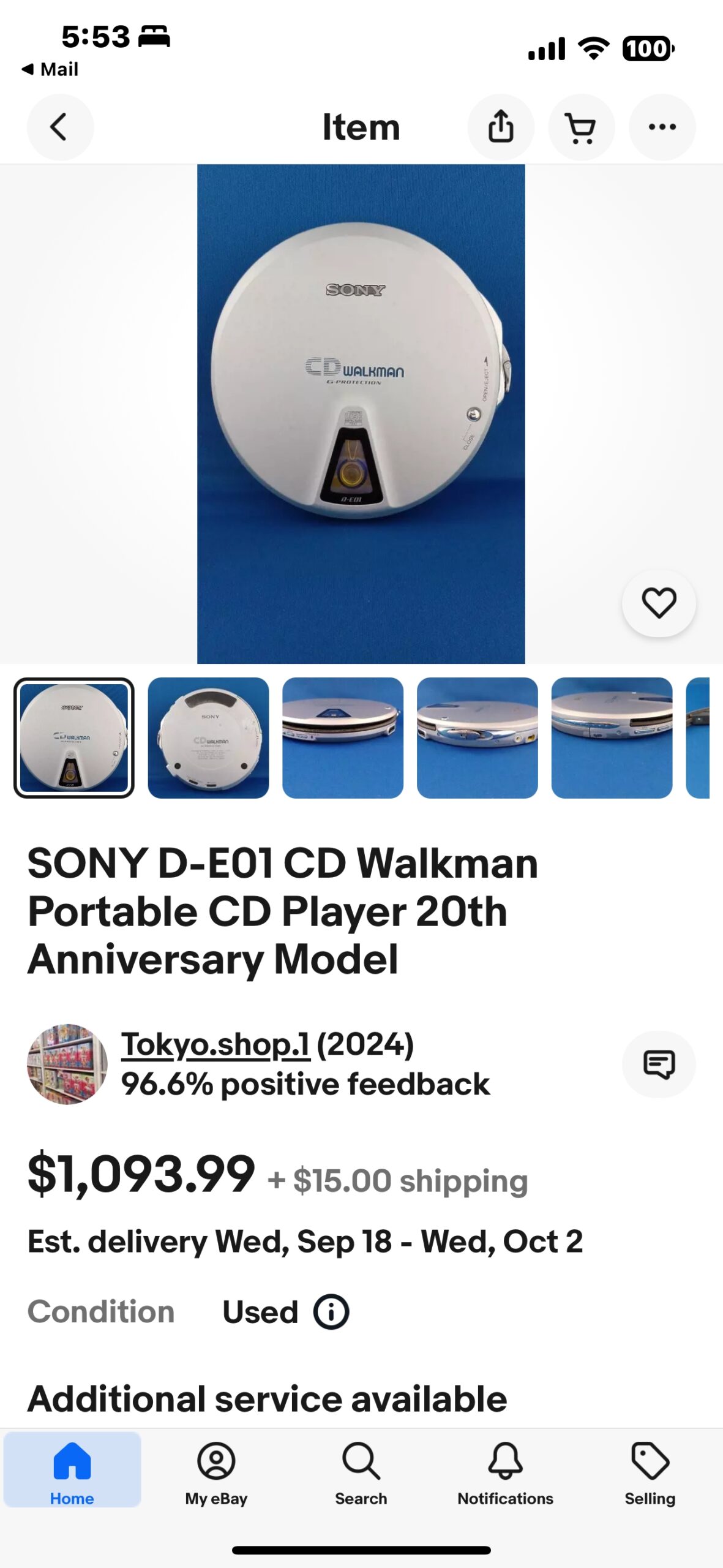
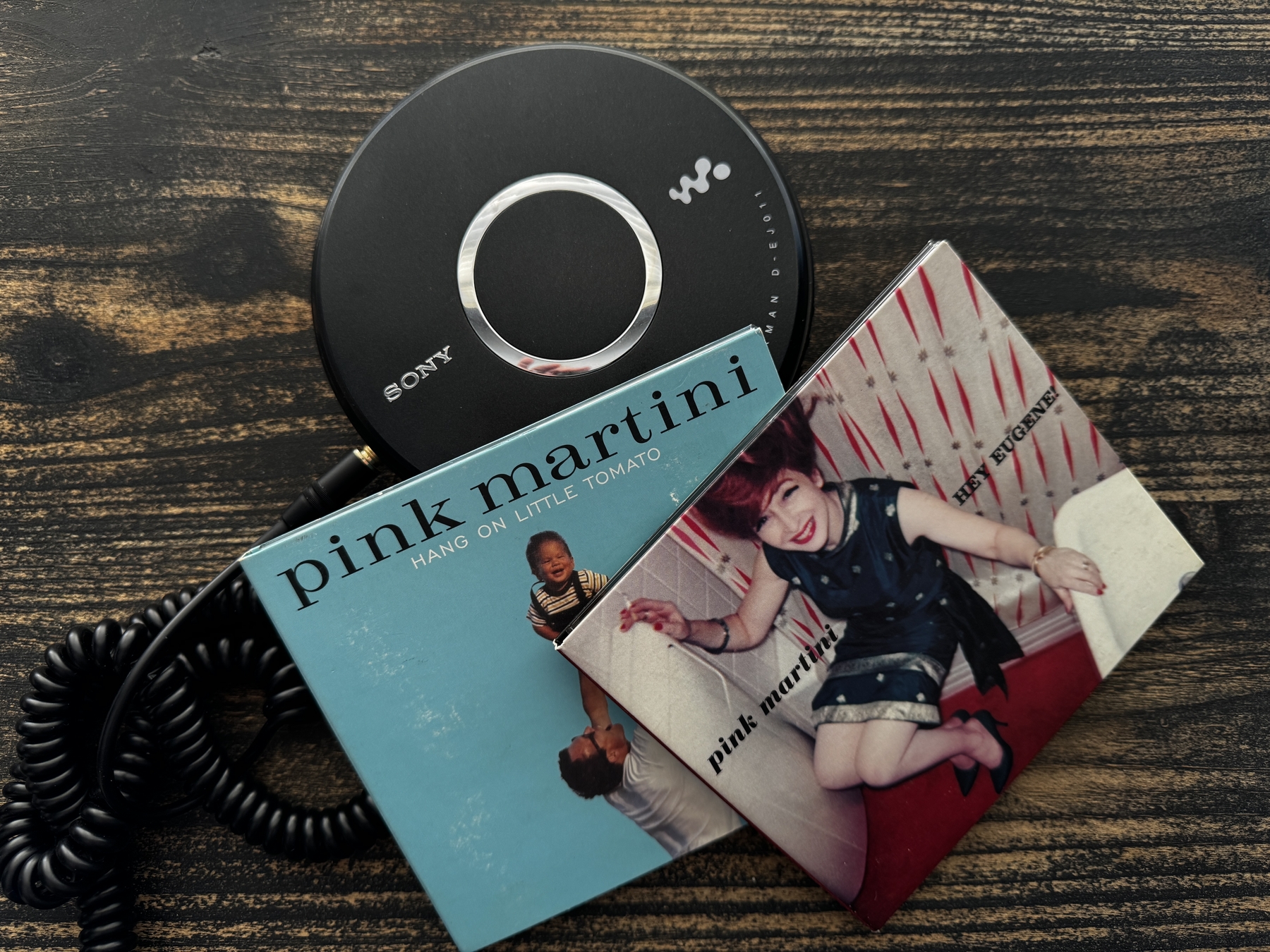
I sold the D-10—the one that started this whole obsessive journey—at a substantial loss last week, so despite the fact it was at a loss, I’m strangely glad to be rid of it at the same time (so much for “keeping it for many years to come,” eh?). I don’t consider myself a collector, but honestly—but how many of a thing is considered a collection?

He’s Dead, Jim

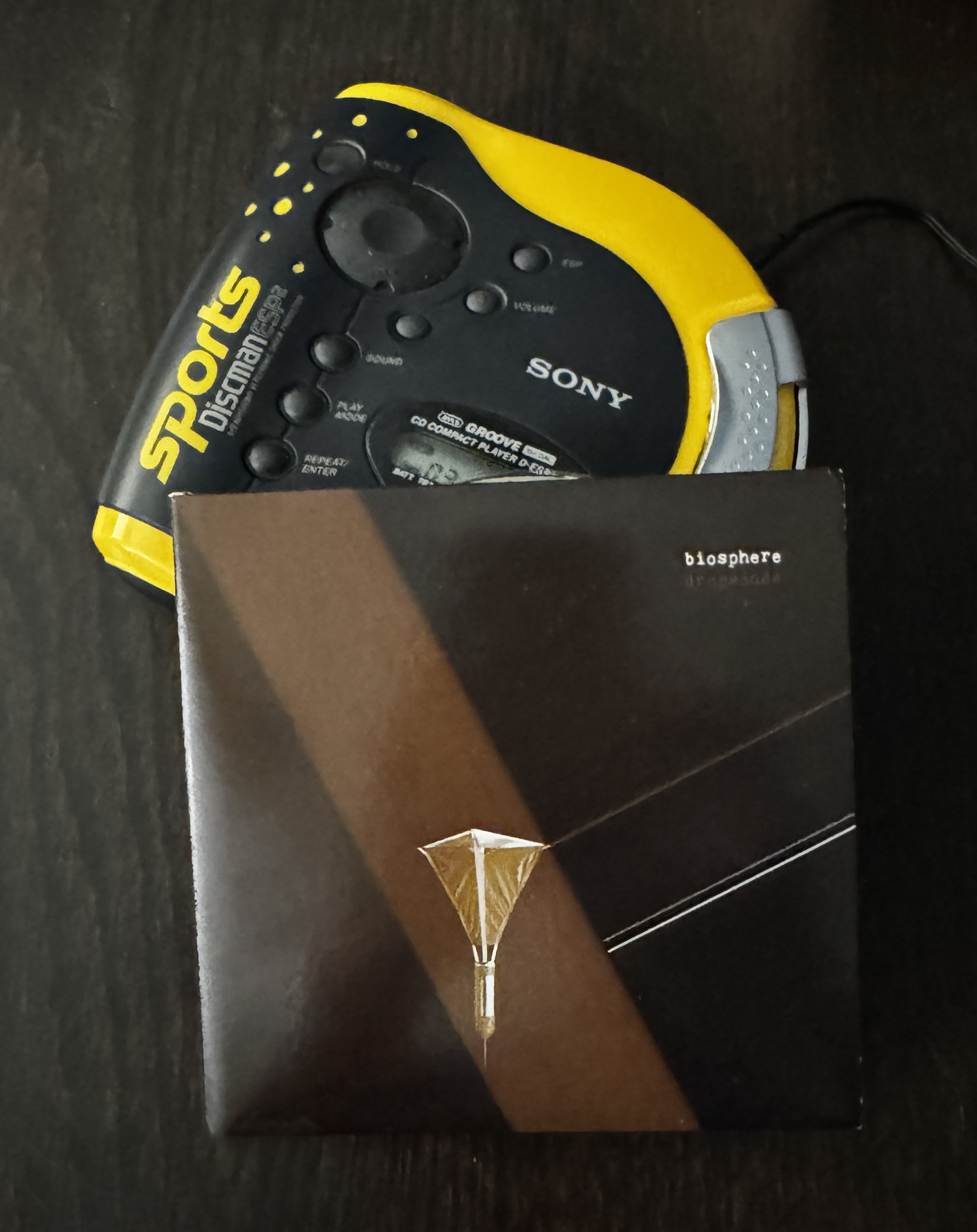
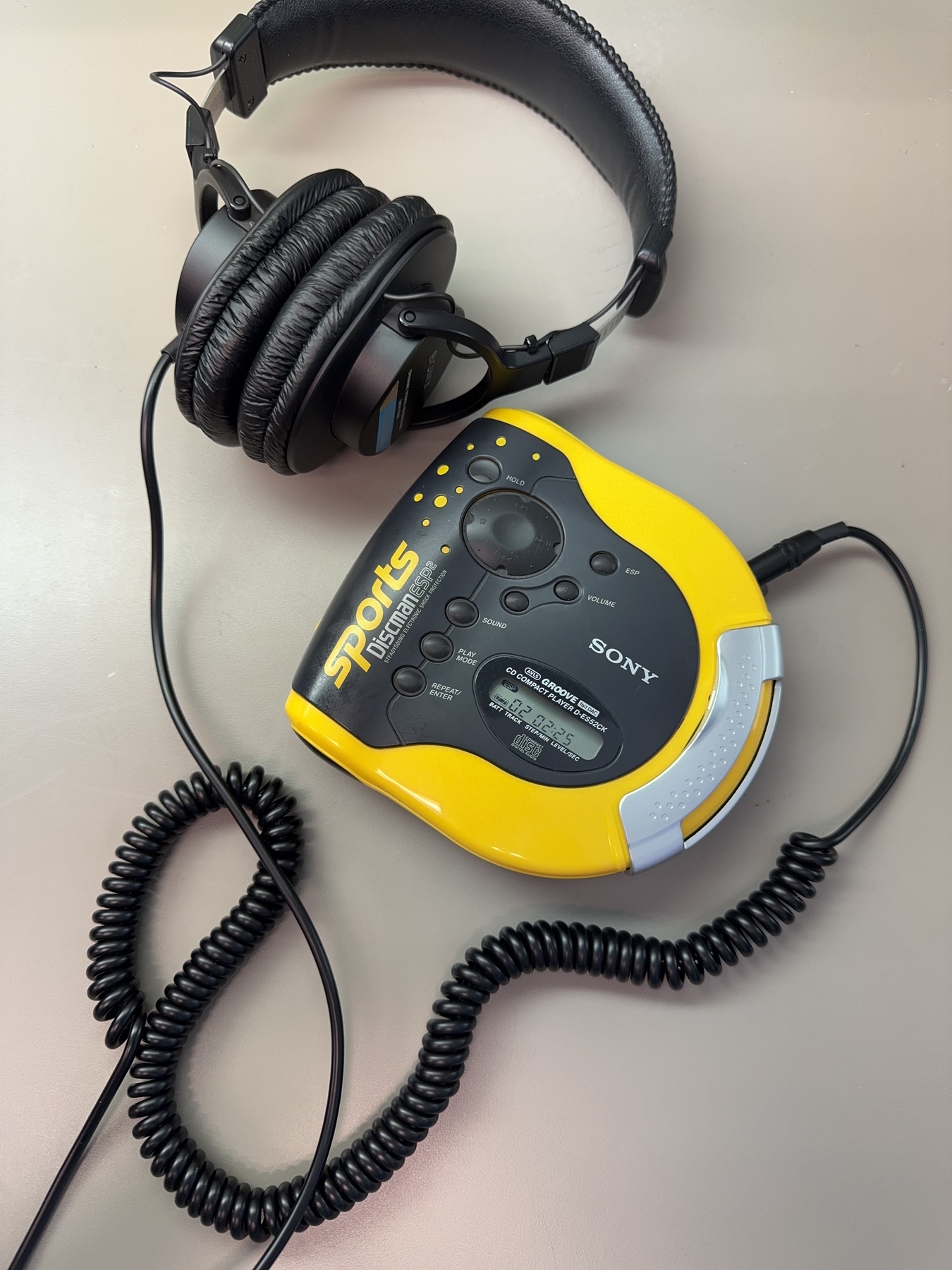
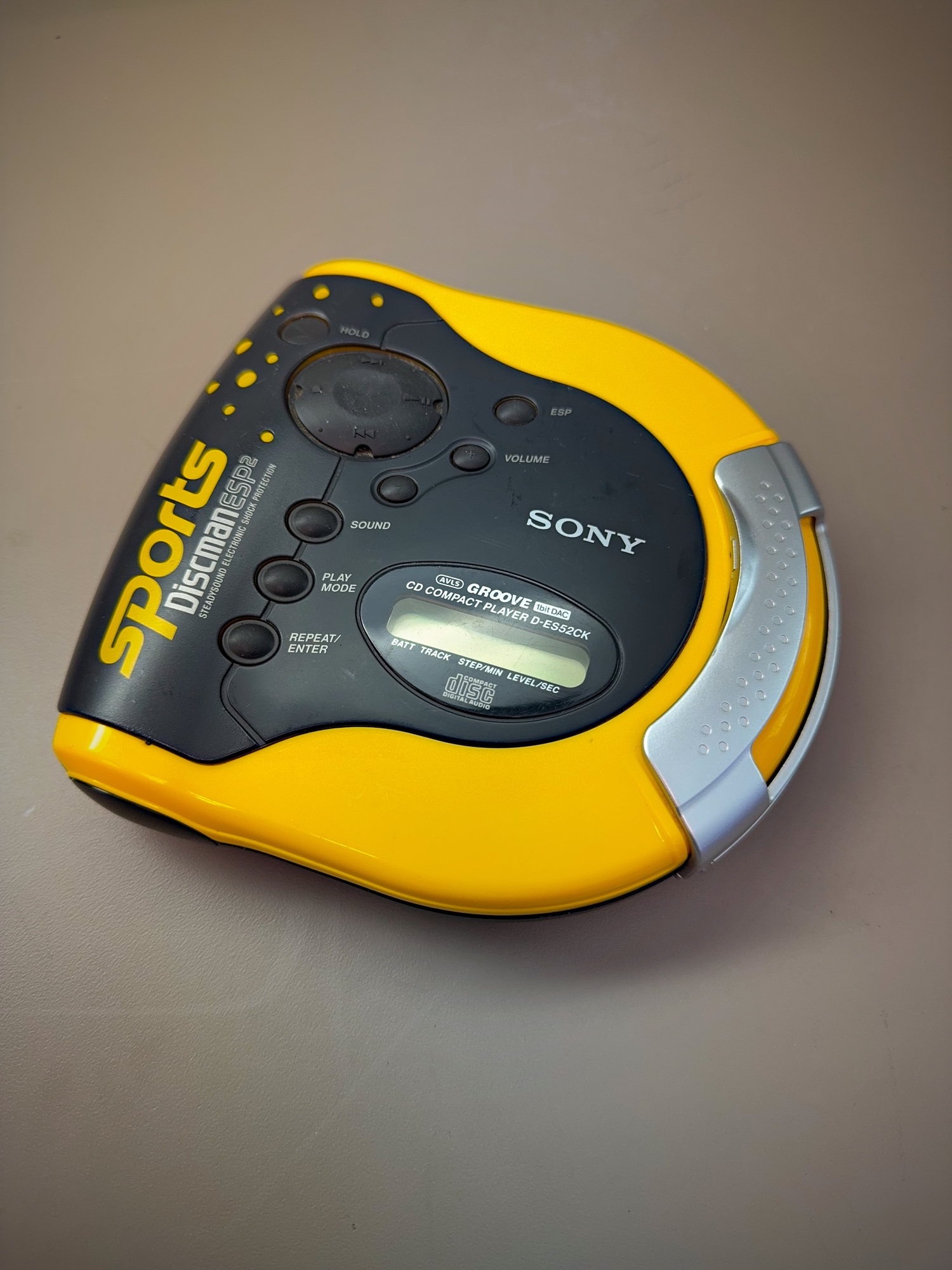
Sony D-ES52CK

I knew what I was getting into when I bought it. Seller noted it as non-functional with a “no disc” error, but it was cheap and I thought why not give repairing it a shot? I’ve seen enough YouTube videos to know that the fix for the “no disc” error was simple – just some basic cleaning and a bit of tweaking of the laser’s potentiometer. Hell, one video I watched even had this exact model and the numbers on the multimeter I needed to match to get it working.

Unfortunately, even after attaching a meter and mirroring what was shown in the video (and afterward a whole lot of playing around with other values), it still stubbornly refuses to read discs. The laser and the transport mechanism is verified as working (it moves normally and attempts to focus), but so far I’ve had no luck resuscitating it.

I did note that someone else had already been into it. The screws that hold the top plate of the bottom half of the unit in place all but fell out when I went to remove them, so who knows what’s been fucked around with? (Says the guy who’s fucking around with it.)

I’m half-tempted to seek out a working unit and just throw this one in the donate pile. I do rather like the styling of this lil’ nugget.

As My Friend John Says…

…someone has a out-of-control coke habit if they think they’re gonna get anywhere near that much money for that.

(Okay, it is on the “rare” side, but mint, still-in-the-original-packaging players of this model typically sell for only $100-300.

I Don’t Know What to Think of This One…

THIS RETRO OPEN-FRONT CD PLAYER ALSO HAS AN AMBIENT LAMP, FM RADIO, AND BLUETOOTH SPEAKER

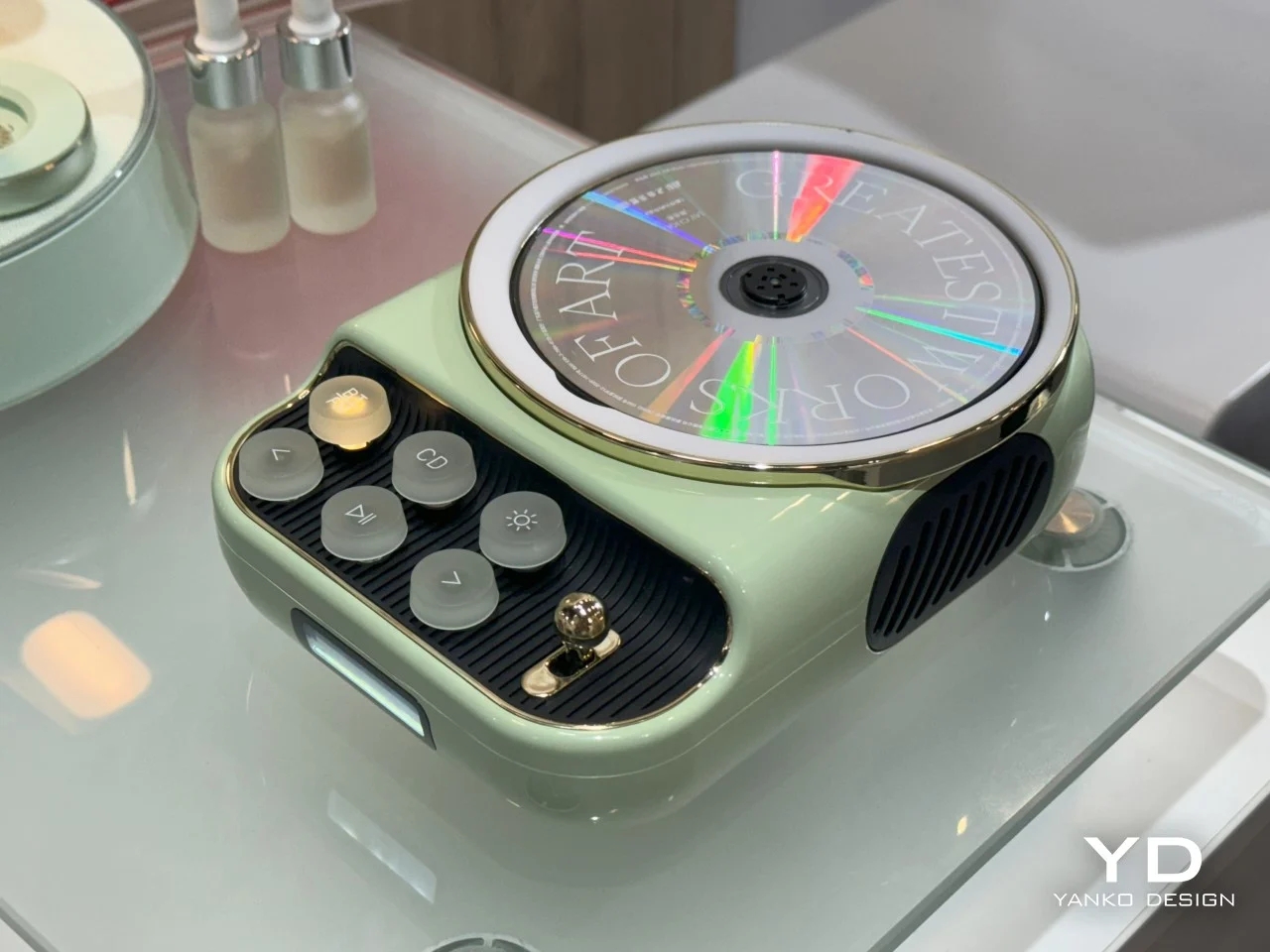
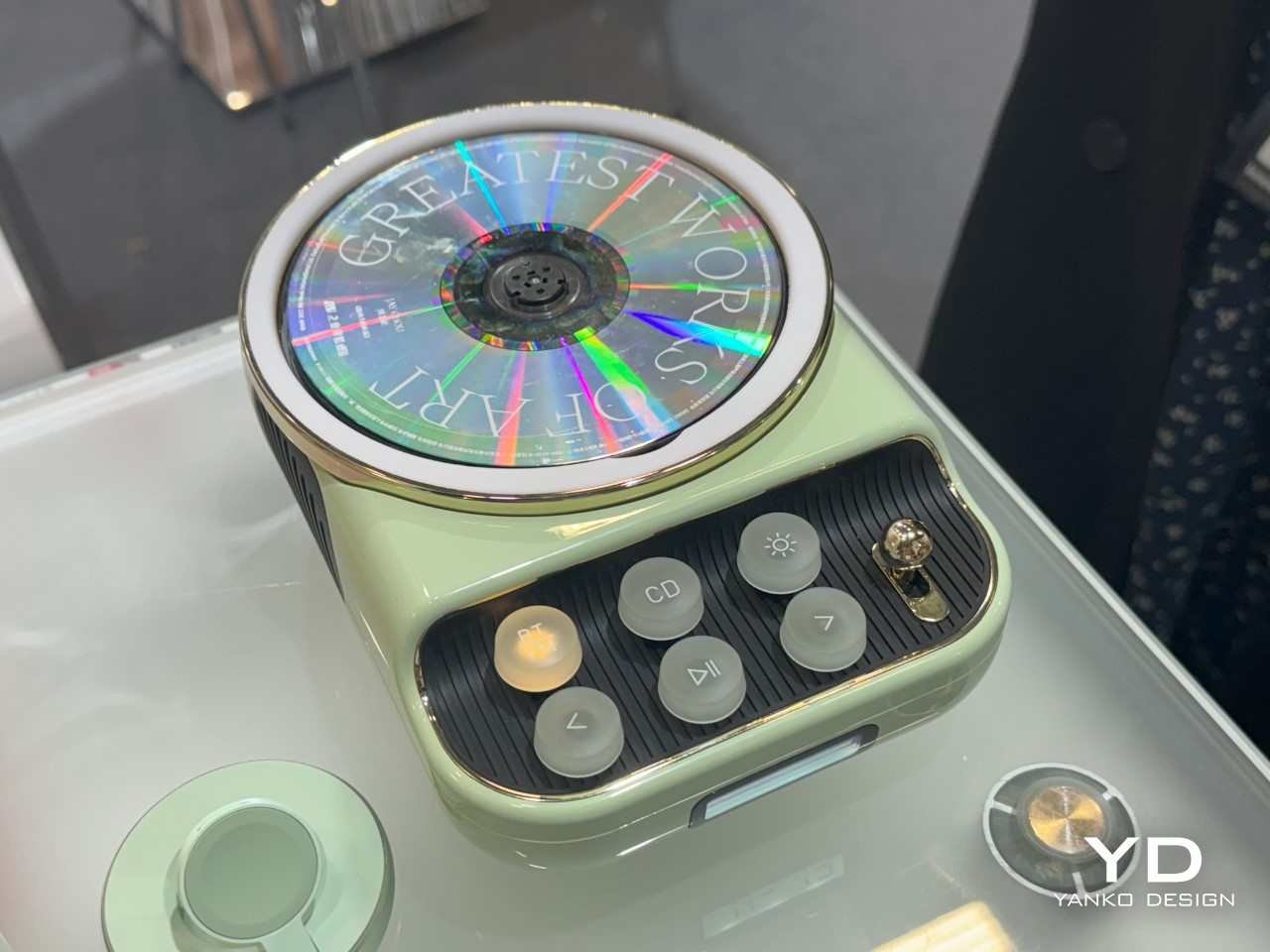
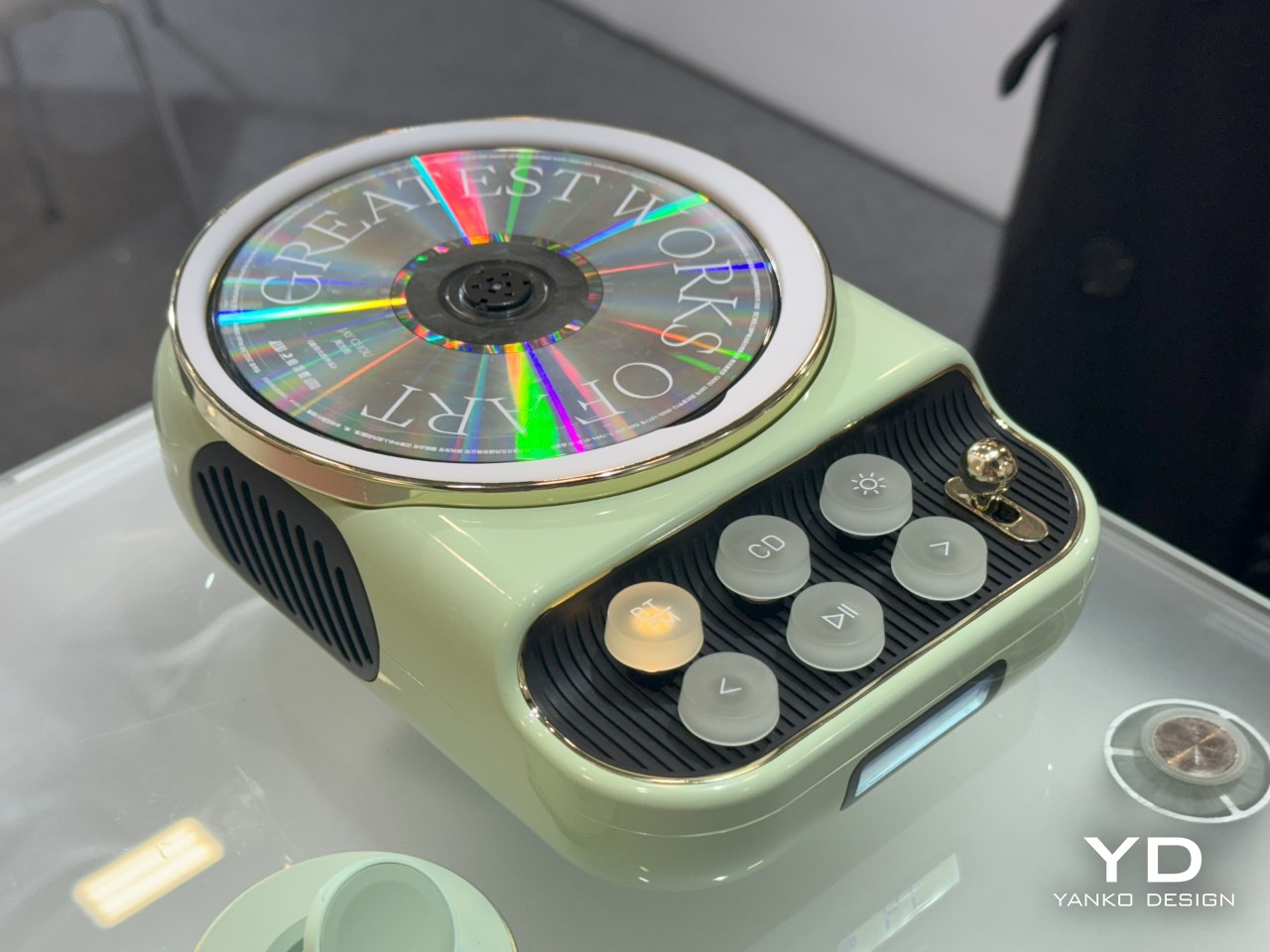
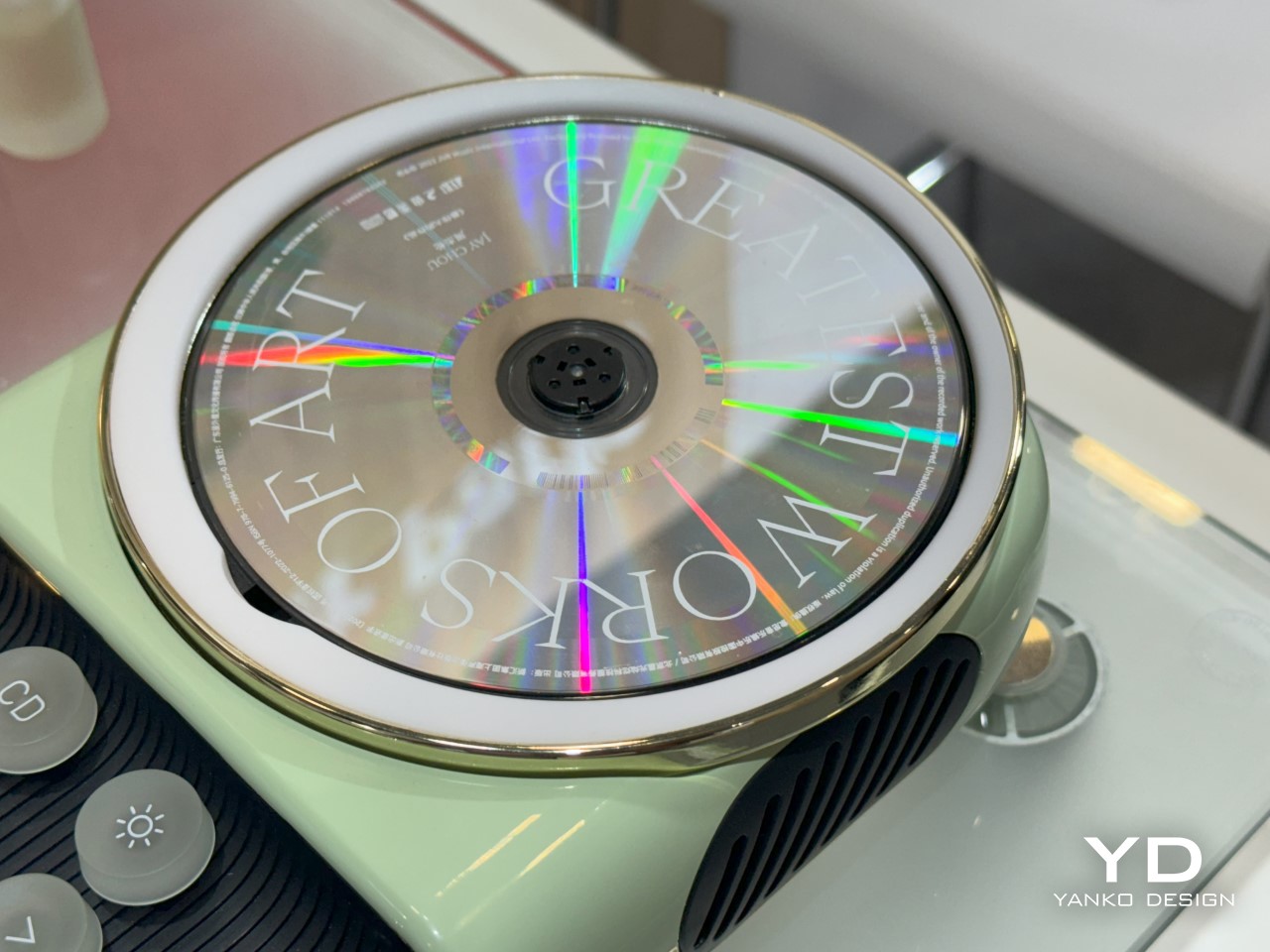
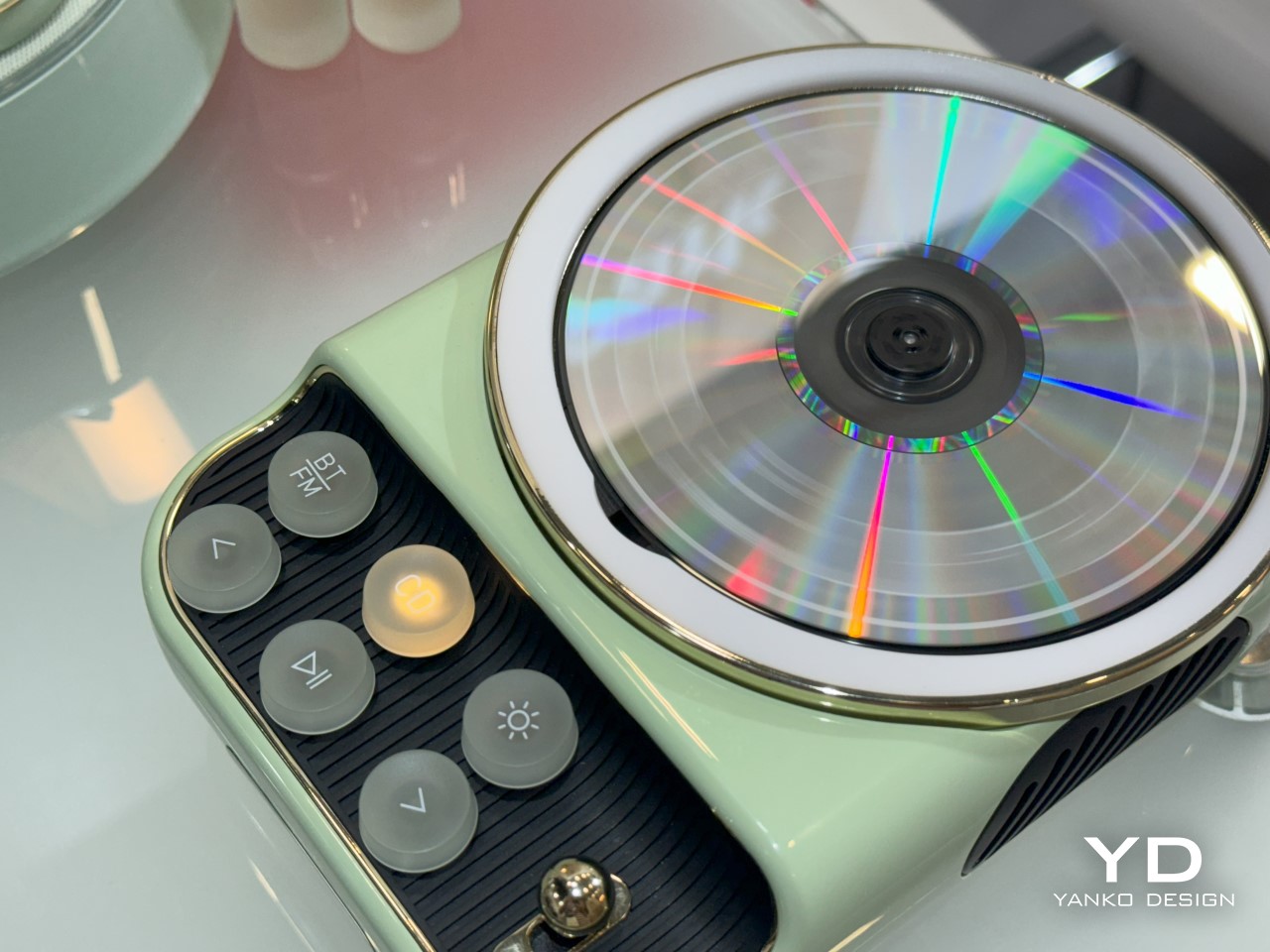
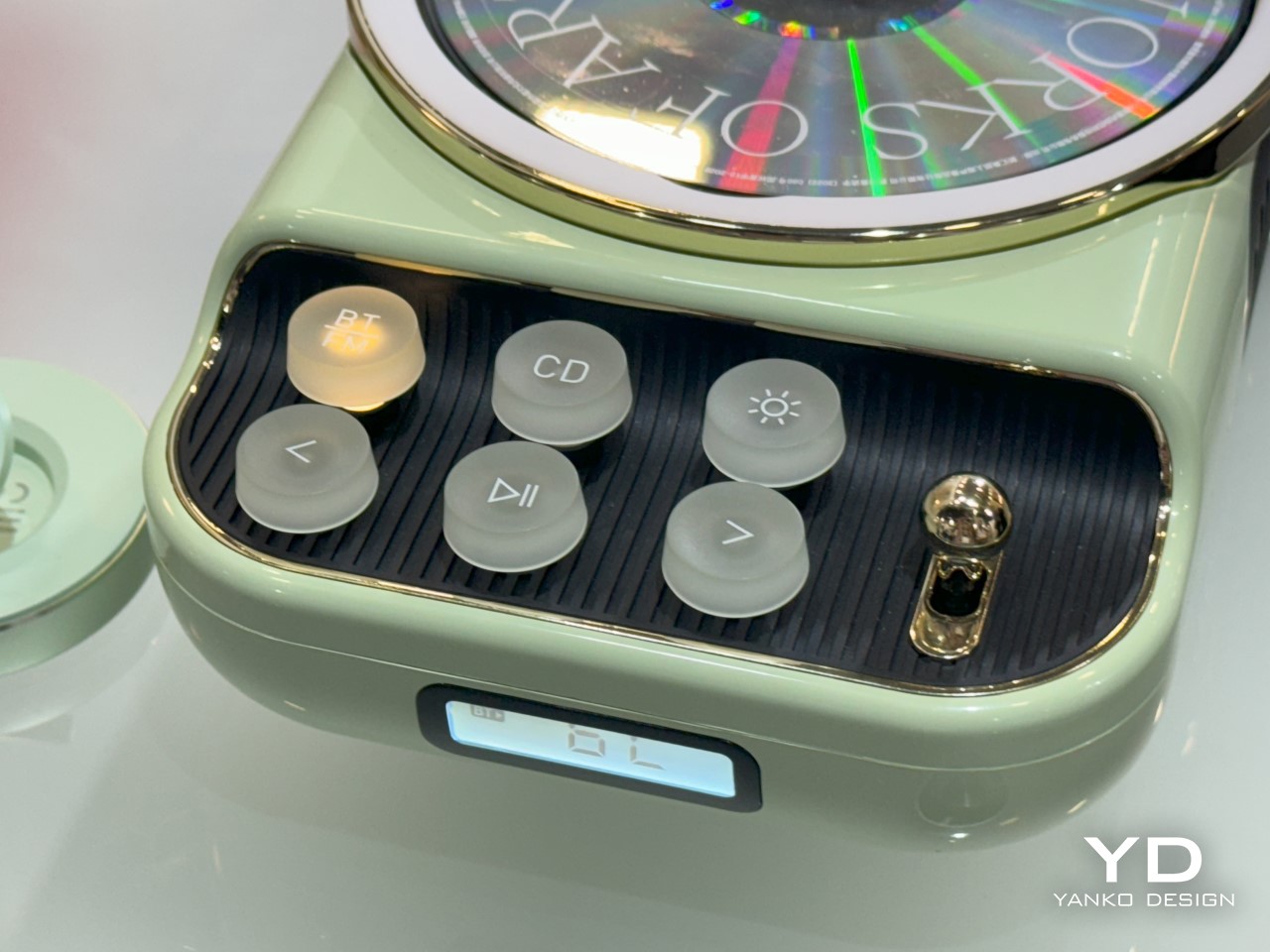
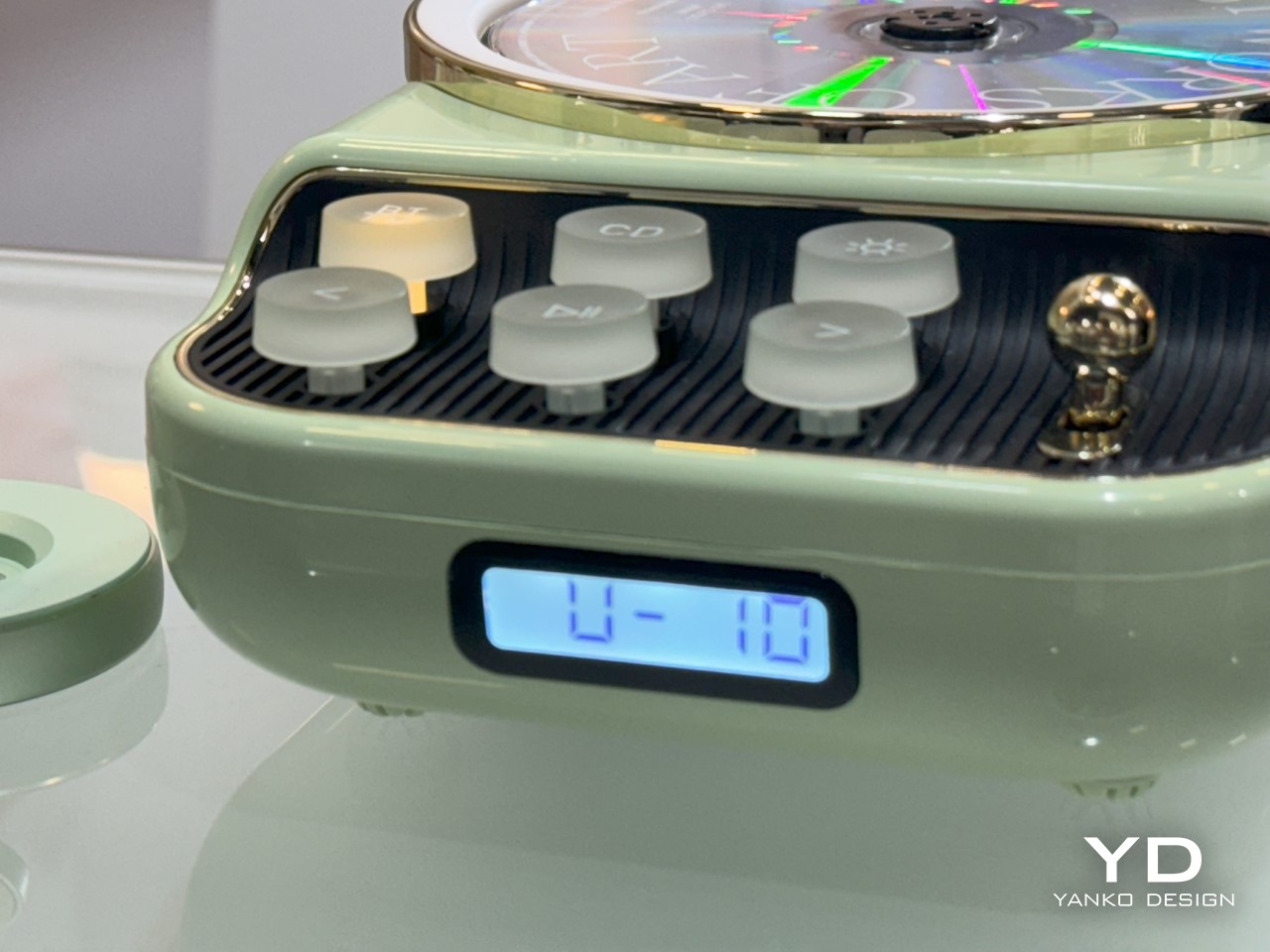
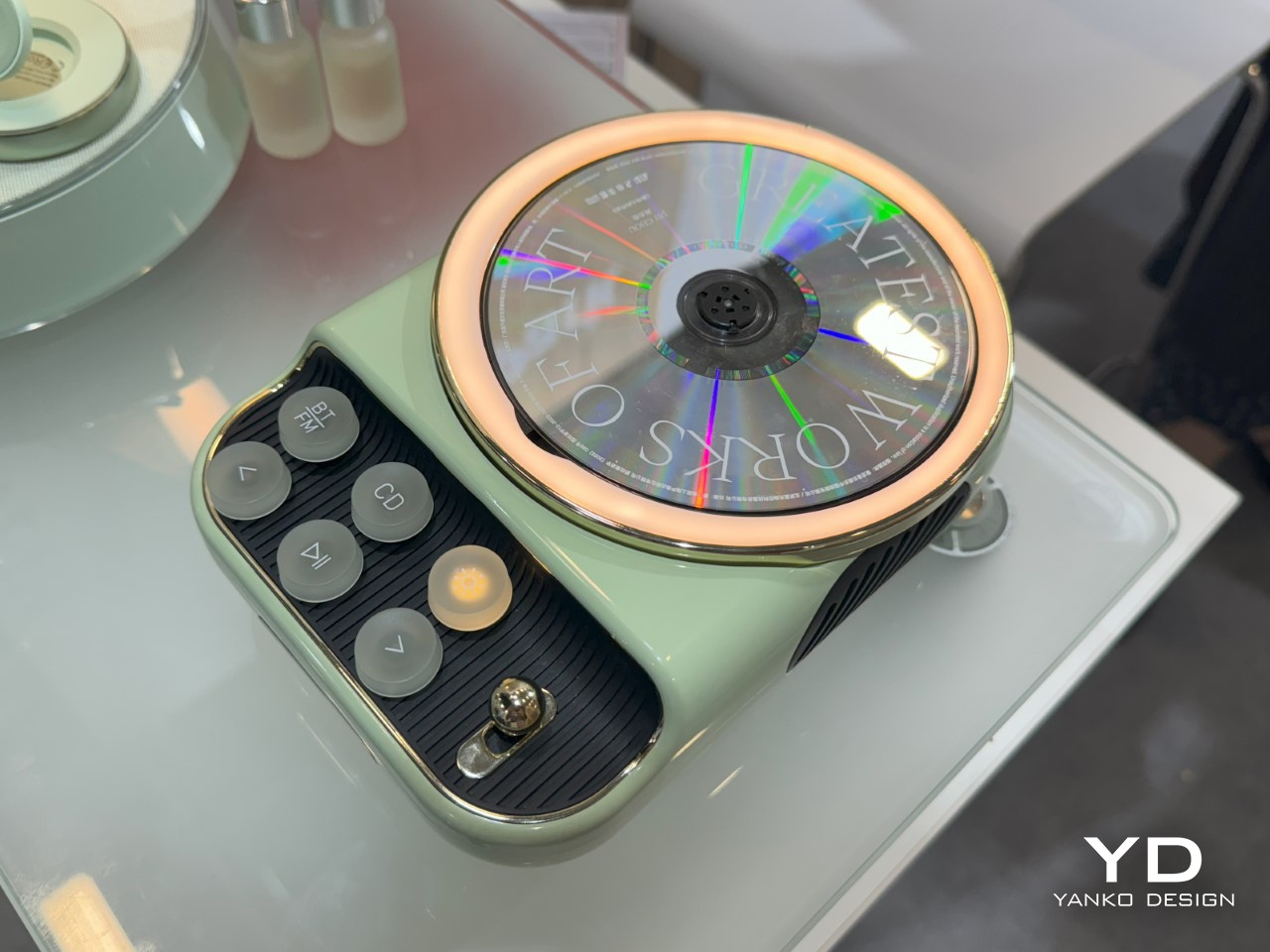
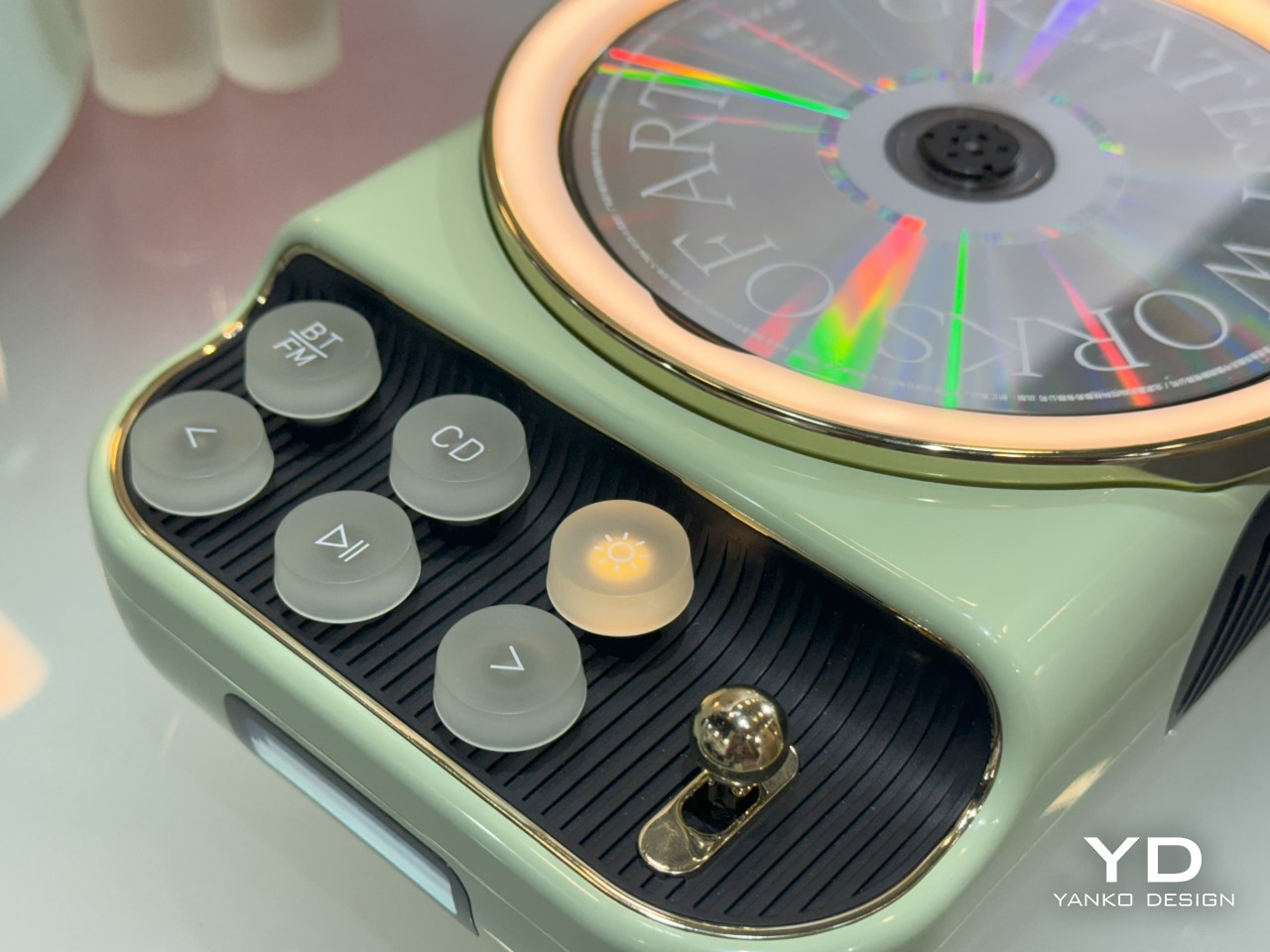
They say history always repeats itself. Vinyls are making a comeback right now, which means in a few years cassettes and CDs will make a resurgence all over again, and when compact discs do enter the mainstream, you’re going to be glad you had this cute CD player from Semetor. Spotted on the floor at IFA 2024, the K8 is a playfully retro CD player that embraces the design aesthetic of European appliances in the 50s. Designed with an open top that allows the CD to sit on its platter like a vinyl on a gramophone, the K8 comes with a few translucent typewriter-inspired buttons that let you control music playback. But wait, it’s 2024, and just being a CD player obviously won’t cut it… which is why the K8 also has an FM radio, a Bluetooth-enabled wireless speaker, and even an ambient lamp built into its adorable design.
Designer: Semetor

The K8 isn’t a cutting-edge CD player… but it’s cute. It has the adorable demeanor of one of lofree‘s older products, with its retro aesthetic that’s brought about by its rounded form and use of pastel shades. What instantly grabs your eye first is the open-top CD player. While most players usually conceal the CD within a casing, this one does not. You see the CD spin as you play music, and the disc’s radial spectral finish looks absolutely gorgeous.
Playback is easy. For running a CD, just hit the CD button on the panel, and use the controls below to play/pause, or skip tracks. A BT/FM button lets you toggle the Bluetooth player or FM radio. Backlights in the button glow to let you know which mode you’re in, and a seven-segment LCD screen on the bottom allows you to see things like track number (for CDs) or radio station (for FM). A gold-plated ‘gear’ on the right side lets you switch on or off the K8.

If all that wasn’t enough, the K8 also packs a warm glow-light for ambient lighting. Hit the button on the top right and a halo around the CD player lights up. It isn’t enough to light a room, but it does bestow a warm wash of golden light in the immediate vicinity, perfect for late-night listening. Pair it with a nice soft jazz CD and you’re absolutely set!

[Source]