






2 comments

Shitposting since 2005
2 comments
From Hillary’s speech (via Cosmo):
1. “Donald Trump’s ideas aren’t just different—they are dangerously incoherent. They’re not even really ideas—just a series of bizarre rants, personal feuds, and outright lies.”
2. “This is not someone who should ever have the nuclear codes—because it’s not hard to imagine Donald Trump leading us into a war just because somebody got under his very thin skin.”
3. “We cannot put the security of our children and grandchildren in Donald Trump’s hands. We cannot let him roll the dice with America.”
4. “He says he doesn’t have to listen to our generals or our admirals, our ambassadors and other high officials, because he has—quote—’a very good brain.””
5. “He says he has foreign policy experience because he ran the Miss Universe pageant in Russia.”
6. “It’s no small thing when he calls Mexican immigrants ‘rapists and murderers.’ We’re lucky to have two friendly neighbors on our land borders. Why would he want to make one of them an enemy?”
7. ” There’s no risk of people losing their lives if you blow up a golf-course deal. But it doesn’t work like that in world affairs. Just like being interviewed on the same episode of 60 Minutes as Putin was, is not the same thing as actually dealing with Putin. So the stakes in global statecraft are infinitely higher and more complex than in the world of luxury hotels. We all know the tools Donald Trump brings to the table—bragging, mocking, composing nasty tweets—I’m willing to bet he’s writing a few right now.”
8. “And I have to say, I don’t understand Donald’s bizarre fascination with dictators and strongmen who have no love for America. He praised China for the Tiananmen Square massacre; he said it showed strength. He said, ‘You’ve got to give Kim Jong Un credit’ for taking over North Korea—something he did by murdering everyone he saw as a threat, including his own uncle, which Donald described gleefully, like he was recapping an action movie. And he said if he were grading Vladimir Putin as a leader, he’d give him an A. Now, I’ll leave it to the psychiatrists to explain his affection for tyrants. I just wonder how anyone could be so wrong about who America’s real friends are. Because it matters. If you don’t know exactly who you’re dealing with, men like Putin will eat your lunch.”
9. “A Trump presidency would embolden ISIS. We cannot take that risk. This isn’t reality television — this is actual reality.”
10. “So it really matters that Donald Trump says things that go against our deepest-held values. It matters when he says he’ll order our military to murder the families of suspected terrorists. During the raid to kill bin Laden, when every second counted, our SEALs took the time to move the women and children in the compound to safety. Donald Trump may not get it, but that’s what honor looks like. And it also matters when he makes fun of disabled people, calls women ‘pigs,’ proposes banning an entire religion from our country, or plays coy with white supremacists. America stands up to countries that treat women like animals, or people of different races, religions, or ethnicities as less human.”
11. “What happens to the moral example we set—for the world and for our own children—if our president engages in bigotry? And by the way, Mr. Trump—every time you insult American Muslims or Mexican immigrants, remember that plenty of Muslims and immigrants serve and fight in our armed forces. Donald Trump could learn something from them.”
12. “Now imagine Donald Trump sitting in the Situation Room, making life-or-death decisions on behalf of the United States. Imagine him deciding whether to send your spouses or children into battle. Imagine if he had not just his Twitter account at his disposal when he’s angry, but America’s entire arsenal. Do we want him making those calls—someone thin-skinned and quick to anger, who lashes out at the smallest criticism? Do we want his finger anywhere near the button?”
13. “This election is a choice between two very different visions of America. One that’s angry, afraid, and based on the idea that America is fundamentally weak and in decline. The other is hopeful, generous, and confident in the knowledge that America is great—just like we always have been.”
And she hasn’t even gotten started.
1 comments
From The Rogue Columnist:
In an otherwise interesting essay entitled, “The Price of Perpetual War,” we find this perplexing paragraph:
The United States did not choose this era of perpetual war. It is the price of living in a world where, for the first time, terrorist groups and malevolent individuals can reach the United States and wreak havoc from virtually any corner of the world. That threat was literally brought home by al Qaeda on 9/11 and reinforced all too recently by the terror attacks in Paris, Brussels, and San Bernardino.
Does anyone believe this is so? Alas, millions of Americans. But to make a quick list…
…We chose to give a blank check to Saudi Arabia to run one of the world’s most repressive regimes while spreading extremist war-on-the-infidels Islam throughout the Middle East and beyond. One doesn’t have to subscribe to conspiracy theories to acknowledge that Osama bin Laden and 15 of the 19 hijackers on 9/11 were Saudi citizens. And what has our kowtowing to the kingdom given us? The House of Saud’s oil, to fuel our “non-negotiable” (and already heavily subsidized) car-based sprawl lifestyle. Most oil needs to stay in the ground if we are to avoid destroying the planet even more—and between “making different arrangements” and domestic oil, we don’t need OPEC anymore…
…We chose an even closer connection to Israel, Riyadh’s quiet ally, whether this was in America’s national interest or not. And with the oppressive and increasingly extremist regime of Benjamin Netanyahu is it increasingly not. Indeed, increasing Jewish settlements on Palestinian land and injustices against the Palestinian people committed by Israel blow back on the United States, which has long ago lost its credibility as an honest broker in the Middle East. It has inflamed Islamic and Arabic anger against us. And for what? To please the powerful donors of AIPAC and older Jewish voters in the swing state of Florida?…
…We chose to invade Iraq, a nation that had nothing to do with 9/11 terrorism nor did it possess weapons of mass destruction. In toppling a distasteful but secular strongman, we unleashed the furies of sectarian strife going back to the death of Muhammad in 632. Our stupendously bungled occupation (Don “Stuff Happens” Rumsfeld, Paul Bremer) made it much worse; ISIS can be traced to these critical early blunders. The conflagration has spread throughout the region. And for what? To validate the Project for a New American Century, secret Cheney oil deals, and show how “The Vulcans” made their own reality? Real reality had other plans and millions blame America for the blood of the Iraqi people and a “war on Islam.” This was done in our name. We did this…
…We chose to antagonize Russia, first by expanding NATO into the former Warsaw Pact countries — despite strong evidence this violated a 1990 promise made to Moscow. We continued to do so by supporting the EU’s reckless attempt to embrace Ukraine, which had been part of the Russian Empire for centuries, then enacting sanctions against Moscow for annexing Crimea, which had never been historically part of Ukraine. We choose to ignore Russian exceptionalism. To wealthy Republican John Sidney McCain III, the land of Tolstoy and Tchaikovsky, whose people conquered a continent and crossed to take Alaska, is “a gas station masquerading as a country.” And for what? To keep the Military Industrial Complex well funded? Our actions have stoked Russian nationalism and taken the heat off [the real-estate developer’s] bromance object, Vladimir Putin…
…We choose to maintain an alliance system left over from the Cold War without even a peep of reflection. Uncle Sucker is left holding the bag. Why is the Middle East our problem rather than that of our NATO allies, who won’t even spend the minimum on their own defense? Why does British Prime Minister David Cameron get to eviscerate the Royal Navy yet profit from global commerce protected by the U.S. Navy? And he is only one free-rider. Why is North Korea our problem and not that of Beijing? Perhaps it’s better to have Japan under the American nuclear umbrella than having Tokyo develop its own nukes. But is George Kennan’s containment theory, specific to the Soviet Union, really applicable to China? Who benefits? The arms makers — America is the world’s largest exporter of military hardware. But who named us world police?
No, perpetual war in not inevitable. And the choice is not between the status quo and Charles Lindbergh-style isolationism.
The opportunity costs of our choices are enormous and mounting. Not least among our choices has been the GOP religion of tax cuts. Now our National Parks face a maintenance backlog of $11.5 billion. They must compete in an “American Idol-style” contest for a pittance of private grants. While every advanced, urbanized nation on the planet has high-speed rail (good for the climate too, vs. passenger jets), Amtrak struggles with a minimal network and most speeds lower than a century ago. The GOP response is to attempt to kill its inadequate $1.4 billion subsidy. The F-35 Joint Strike Fighter program, producing an unreliable jet, has cost $1.5 trillion. (Our subsidies of sprawl and single-occupancy automobiles would amount to many trillions).
But to hell with addressing climate change, building 21st century infrastructure, protecting the people’s priceless natural inheritance, or even funding real defense needs and attending to legitimate national interests. The GOP can’t keep cutting taxes and fretting over debt and deficits — and also continue massive military spending. The fretting over red ink will stop the minute a Republican becomes president. And as for the rest? Stuff happens.
Think about that when you make a choice in November, not just for the White House but every race from city council on up.
1 comments
0 comments

Because god knows you can’t wake up, much less leave your house without apps! I need to brush my teeth—WAIT! There’s an app for that! I want my feet massaged—WAIT! There’s an app for that! I need to take a dump—WAIT! There’s probably an app for that as well!
Future generations are going to look back at us and either laugh hysterically or recoil in horror.
3 comments

0 comments
0 comments

And of course, Michelle Gregg is a Christianist who refuses to accept any responsibility for her lack of attentiveness saying only, “God protected my child until the authorities were able to get to him…Accidents happen.”
No, bitch. BAD PARENTING HAPPENS.
If your invisible-friend-in-the-sky really wanted to protect your spawn, perhaps he/she/it wouldn’t have let the child into the enclosure in the first place.
0 comments














0 comments














0 comments

0 comments
0 comments
1 comments
1 comments

1 comments

1 comments
Ben and I were heading home the other day and as we were driving down Lincoln and crossed 22nd Street, I was reminded of a time—a lifetime ago, it seems—when my family almost bought a house in that neighborhood.
It was during eighth grade—or perhaps shortly after I’d graduated. Dad was rightfully proud of the work he’d recently done for Hallcraft on their new Biltmore Highlands subdivision, so one sunny Saturday we headed over to what seemed at the time to me like the far east side of the valley to check it out. I don’t know how the talk started, but before I knew it we went from looking at the model homes to being shown one house in particular a few streets over that my parents were actually considering buying. It was a large, beautiful three bedroom, two bath place with a courtyard entrance, a spacious kitchen and a large family room with a fireplace. The bedroom that was to be mine was significantly larger than my current room, eliciting no small amount of excitement on my part. The room also had two windows instead of one.
My enthusiasm was tempered somewhat by the fact that it would now actually cost to phone my best friend (apparently calling from certain Phoenix exchanges to certain Glendale exchanges back in the day incurred wasn’t free).
This move also meant that my sister and I would be transferring to a new school district, something I think caused my parents’ eventual decision to bail on that house and that particular subdivision.
We did end up moving into a new home a few months later, actually only about a half mile south of where we had been living, so the seed had definitely been planted. I’m sure economics were also a factor; we got a much larger house for less money in Hallcraft’s Bethany Heights than we would’ve gotten if we’d moved to Biltmore Highlands.
Ironically, even though my best buddy and I now actually lived closer to each other than we had previously with this move, after high school started we drifted apart and each went our separate ways. (I found out many, many years later that Neal—whom I’d known since 4th grade—transitioned to Angela sometime in our twenties. He’d always told me he’d felt like a girl trapped in a boy’s body, so this did not come as a huge surprise.)
What does all this have to do with the title of this post? Well, I got to thinking how different (or perhaps not) my life would’ve been had we actually moved to Biltmore Highlands and my sister and I had been forced into a new school district.
Obviously, I would never have met the people or made the friends I did if I’d gone to a different school than the one I did, but I wonder if life post-high school would’ve actually been that different. I’d still have undoubtedly gone to the University of Arizona in Tucson and had similar experiences. Or would I?
A currently popular idea in cosmology is that there are an infinite number of universes, each one calving off and growing on its own, depending upon what choices are made. And not just your choices, but multiply that by the billions of other souls on this rock and it boggles the mind. Multiply that by the number of possible planets and potentially sentient beings in the universe, and it truly becomes an unimaginable number.
So it’s always an interesting “what if” game to play. What if I’d actually gone to ASU instead of UofA, stayed in school and gotten my degree? What if I’d kept on going the night I walked out of The Joshua Tree and never met Dennis? What if Bernie and I never visited San Francisco—much less moved there?
I suppose there’s a certain satisfaction in knowing that if this multiverse idea is in fact reality that somewhere, maybe as close as the orbit of an electron—there are universes where Hitler was never born; where JFK was never assassinated; where you are just as likely to be President of the United States as you are to be living in a cardboard box under an overpass; a world where the Dark Ages never occurred and Christianity never gained a foothold; a world where you actually bought that Apple stock in the 90s; a world where mankind has already colonized the solar system and is moving out to the stars…
0 comments
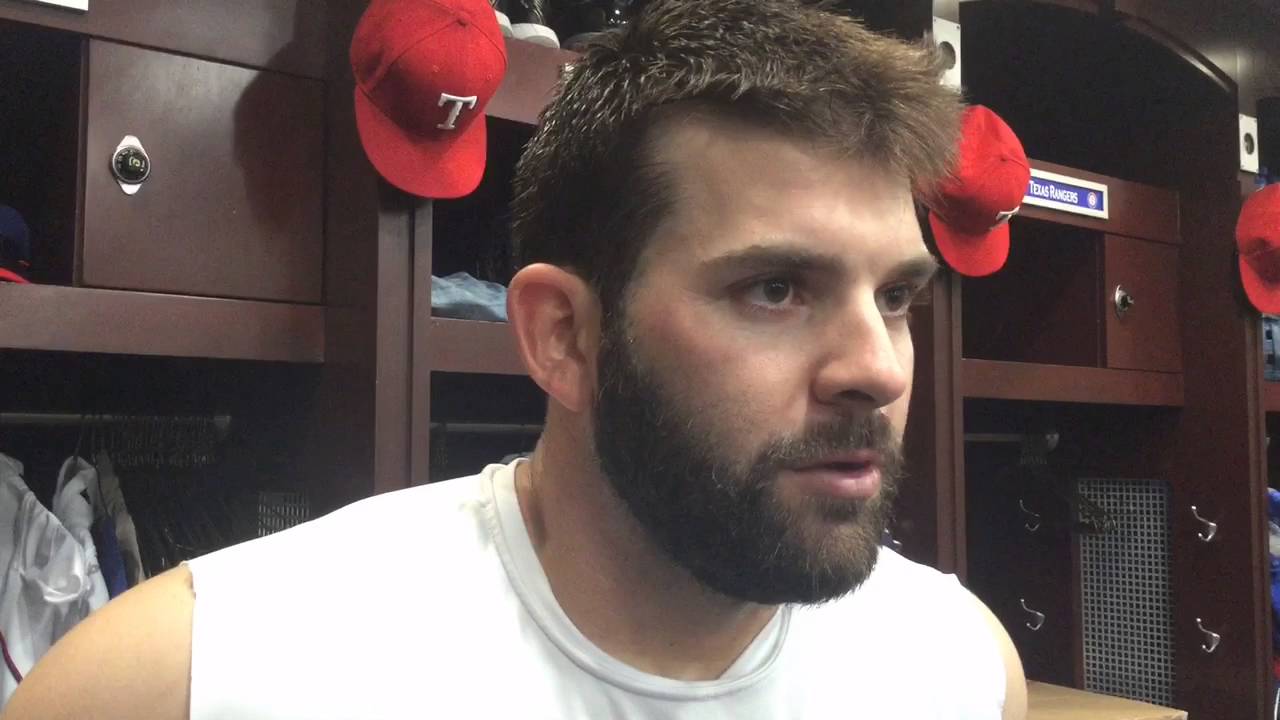
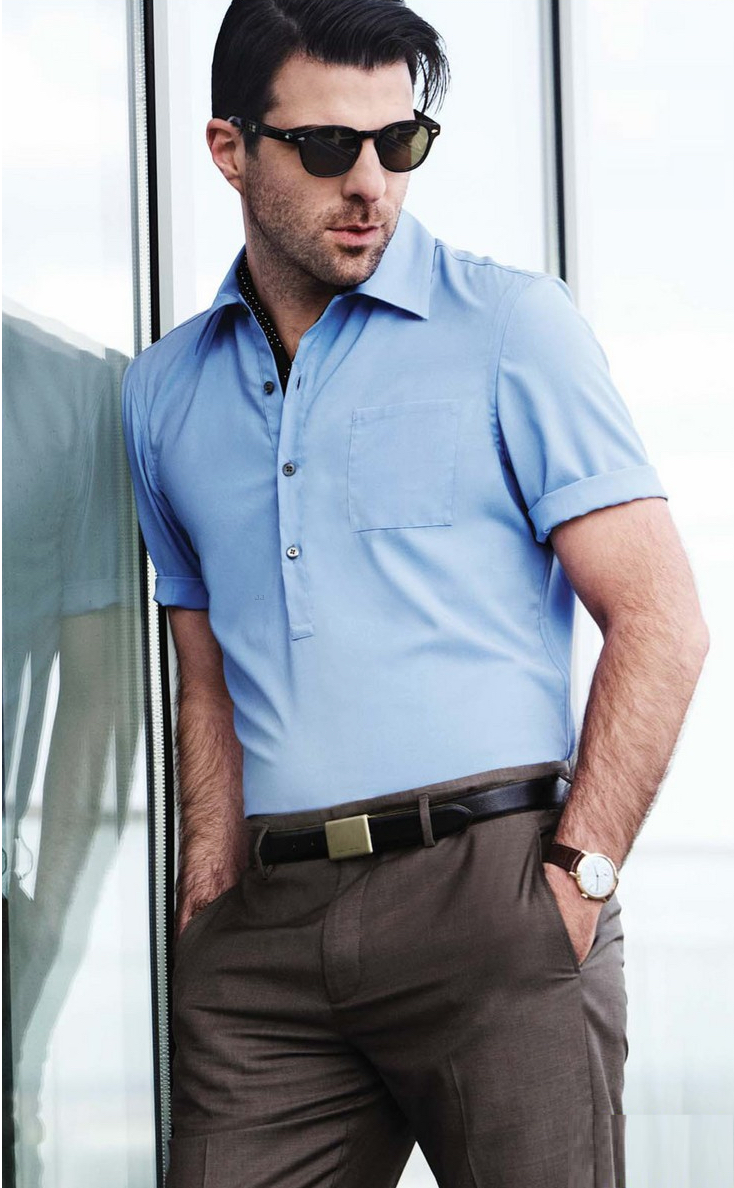
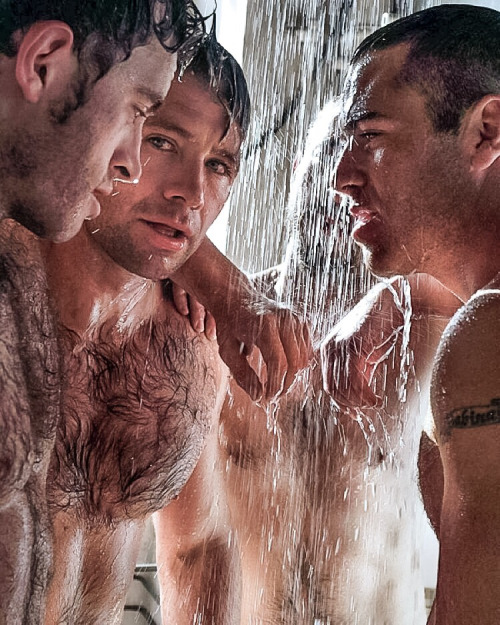
Where were the guys who looked like this when I was that age? I guess they were probably out there, but didn’t even register since I was so busy looking for Mark Hamill clones…
0 comments
1 comments
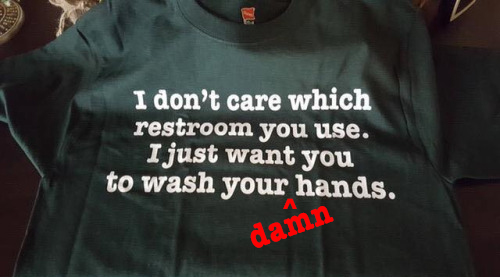
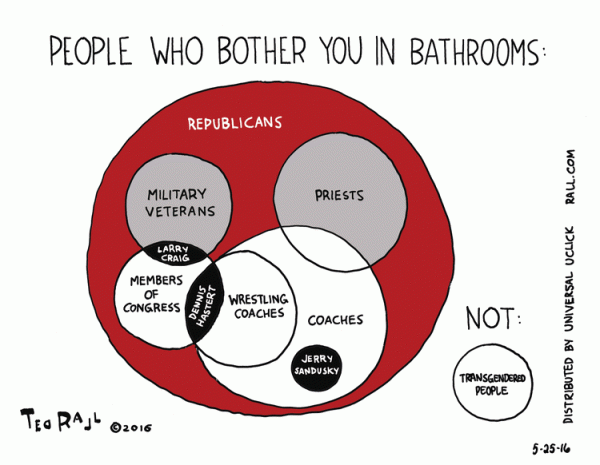
Stop worrying about Target’s bathrooms and start looking in your own damn churches, you motherfucking kiddie-fucking assholes!
From Towleroad:
TEXAS. Bureau of Investigation arrests two pastors for seeking sex with underage girls: “Jason Kennedy, 46, who held the role of children’s pastor at Grace Baptist Church in Knoxville, and Zubin Parakh, 32, who is listed as the creative pastor at LifeHouse Church, were both nabbed in the undercover investigation. According to a police report seen by WVLT Kennedy had agreed to pay $100 for a half hour with two girls, one of whom was 15. Kennedy faces patronizing prostitution and trafficking charges—and could land in prison for up to 60 years. Kennedy has lost his job at Grace Baptist Church as a result of the investigation.”
0 comments

0 comments

2 comments
1 comments
0 comments
 That sense of noblesse oblige disappeared somewhere during the past generation, when the newly global employer class cut regular working stiffs loose, forcing them to compete with billions of foreigners without rights or political power who would eat toxic waste for five cents a day.
Then they hired politicians and intellectuals to sell the peasants in places like America on why this was the natural order of things. Unfortunately, the only people fit for this kind of work were mean, traitorous scum, the kind of people who in the military are always eventually bayoneted by their own troops. This is what happened to the Republicans, and even though the cost was a potential Trump presidency, man, was it something to watch.
If this isn’t the end for the Republican Party, it’ll be a shame. They dominated American political life for 50 years and were never anything but monsters. They bred in their voters the incredible attitude that Republicans were the only people within our borders who raised children, loved their country, died in battle or paid taxes. They even sullied the word “American” by insisting they were the only real ones. They preferred Lubbock to Paris, and their idea of an intellectual was Newt Gingrich. Their leaders, from Ralph Reed to Bill Frist to Tom DeLay to Rick Santorum to Romney and Ryan, were an interminable assembly line of shrieking, witch-hunting celibates, all with the same haircut—the kind of people who thought Iran-Contra was nothing, but would grind the affairs of state to a halt over a blow job or Terri Schiavo’s feeding tube.” ~ Matt Taibbi, writing for Rolling Stone
1 comments