Check Ignition and May God’s Love Be With You

RIP David Bowie, 1947-2016

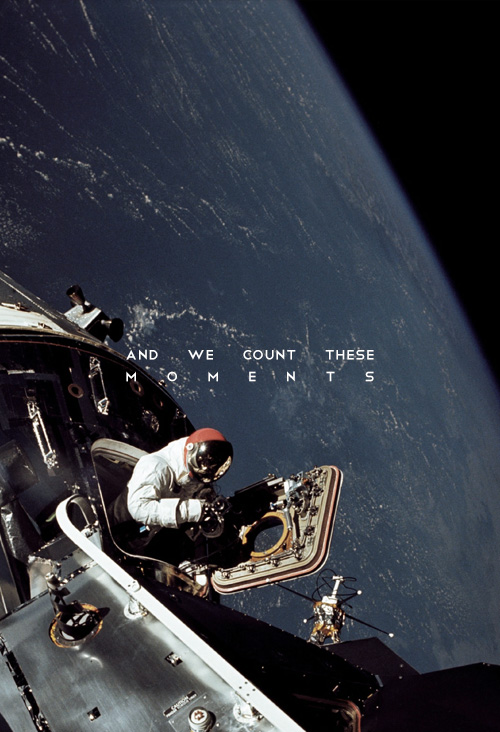
Ground Control to Major Tom
Take your protein pills and put your helmet on
Ground Control to Major Tom (Ten, Nine, Eight, Seven, Six)
Commencing countdown, engines on (Five, Four, Three)
Check ignition and may God’s love be with you (Two, One, Liftoff)

This is Ground Control to Major Tom
You’ve really made the grade
And the papers want to know whose shirts you wear
Now it’s time to leave the capsule if you dare
“This is Major Tom to Ground Control
I’m stepping through the door
And I’m floating in a most peculiar way
And the stars look very different today
For here
Am I sitting in a tin can
Far above the world
Planet Earth is blue
And there’s nothing I can do

Though I’m past one hundred thousand miles
I’m feeling very still
And I think my spaceship knows which way to go
Tell my wife I love her very much she knows
Ground Control to Major Tom
Your circuit’s dead, there’s something wrong
Can you hear me, Major Tom?
Can you “Here am I floating round my tin can
Far above the Moon
Planet Earth is blue
And there’s nothing I can do.”

0 comments

Memories…

I ran across this online today while searching for something else. I had to pass it on.

You Lived in Phoenix in the 60s, 70s, and 80s If…

You remember when Bell Road (especially through Glendale) was the considered edge of civilization. There was nothing there but tumbleweeds and prairie dogs. Now, it’s where you go to run all your errands. Or if you were traveling eastbound on Bell Rd. the sign that said “Scottsdale- 21 miles.”

You needed to pack a lunch to drive to Sun City.

Your parents took you to Legend City, the only theme park in Phoenix.

Afternoons were spent watching The Wallace and Ladmo Show.*

You remember when Beardsley Road was a seldom traveled, two-lane blacktop. Now, it’s the eastbound frontage road for the Loop 101 freeway.

Before there was Target, there was Gemco. Now, most of the old Gemco stores are Targets.

You remember the original Cine Capri theater at 24th Street and Camelback. You also waited for hours in a line that wrapped around the building to see the original Star Wars there.

You remember stores like Yellow Front, Woolco, Newberry’s, McCrory’s, TG&Y, Fedmart, Sprouse Reitz, Wards and Yates.

You remember when Metrocenter Mall had an underground ice skating rink. Watching skaters from the overlook above was the best way to escape the summer heat.

Metrocenter also had a Farrell’s ice cream parlor. No Farrell’s trip was complete without getting to see two waiters run though the restaurant with a sundae resting on a stretcher, while lights and sirens whirred in the background. Sometimes, the ice cream would fall off the stretcher. Don’t forget the trip thru their candy store.

You were bummed when Farrell’s closed. The space was later occupied by ‘Round the Corner, a burger and sandwich place similar to Red Robin.

You saw a concert at Compton Terrace when it was attached to Legend City.

Your folks subscribed to the Phoenix Gazette (afternoon newspaper) and the Arizona Republic on Sunday.

You remember when the Brass Armadillo antique mall was Angel’s—a building supply warehouse similar to Home Depot.

You remember when you got your building supplies from O’Malley’s, Entz-White or Payless Cashways.

You remember when the Phoenix Suns were the only professional sports team in the state, and they played their games at Phoenix Memorial Coliseum.

Your groceries came from Alpha Beta, AJ Bayless, Basha’s, Lucky’s, Neb’s Market or Smitty’s. Smitty’s even had a little coffee shop attached to it. Smitty’s sold everything.

A night out consisted of family dinner at the Lunt Avenue Marble Club. Their French Onion Soup and deep fried mushrooms were the best. (I’m here to witness, let me tell you!)

You remember when eastbound I-10 ended at Dysart Road. In order to continue east, you had to take McDowell or Thomas Road 15 miles to I-17 and head south. I-10 started up again somewhere east of downtown.

You remember when the Chili’s at 20th Street and Camelback (recently demolished) was The Jolly Roger.

You ate breakfast at Sambo’s or Bob’s Big Boy.

You drove to Central and Thomas to have strawberry pie at Big Boy’s because it was a car hop and they brought it to your car.

You remember when most houses were built with carports instead of garages. Roofs were covered with wood shakes or asphalt shingles instead of stone tiles.

You remember home builder’s billboards that advertised interest rates of 5%.

Your aspirin and cough syrup came from Skagg’s, SuperX, Revco, Thrifty’s, or Drug Emporium.

Your shoes came from Buster Brown.

For cafeteria-style French Food, you went to Café Casino at 24th Street & Camelback.

For some of the best Mexican food in town, you went to La Cucaracha at 7th Street and Indian School.

You remember when CBS was on Channel 10, ABC was on channel 3, and channels 5 and 15 were independent. Now, CBS is on Channel 5, FOX is on Channel 10, ABC is on Channel 15, and Channel 3 no longer has a network affiliation. NBC and PBS are the only ones that stayed on their original stations (channel 12 and 8, respectively).

You accompanied your dad to the True Value Hardware store in Westown in hopes of getting to stop at Baskin Robbins afterward.

You shopped at Valley West Mall before it became a ghost town, and was ultimately torn down.

You shopped at Phoenix Spectrum Mall when it was known as Chris-Town. Broadway was on the east end and Montgomery Wards was on the west. In the 80s, the mall was extended south at the west end and Bullocks anchored the southwest end. The movie theater was on the second floor of the east end of the mall.

You remember when Park Central was actually a full-fledged mall. You bought clothes at Goldwaters and Diamond’s.

You woke up to Bruce Kelly in the morning on KZZP. Before that—Jonathon Brandmeier and his ‘loons!’

You remember Phoenix’s only real rock and roll stations were KRIZ and KRUX in the 1960s.

You rode the ‘Tico’ to Park Central.

You remember quality local programming like Open House with Rita Davenport or Sun Spots with Jan DiAtri.

You accompanied your dad to the LaBelle’s catalog showroom to buy your mom’s Christmas present and where you drooled over hi-fi equipment.

Before he was governor, you remember Evan Mecham as the owner of a Pontiac dealership in Glendale.

You remember when Castles-n-Coasters was known as Golf-n-Stuff.

You remember when the entire state of Arizona only had one area code. Now, there are three in the Phoenix area alone.

You remember when Scottsdale Fashion Square was an outdoor mall with Goldwater’s, Bullocks and Leonard’s luggage being the only stores.

You remember when Goldwater’s was bought out by Robinson May who was then bought out by Macy’s.

You remember when Diamonds was bought out by Dillards.

You remember when Diamonds box office was the only place to buy concert tickets.

You remember when it hit 99℉ and that was considered HOT.

You remember when Big Surf water park was the place to go to beat the heat. Then hitting the drive in theater to see movie across the street.

You remember when best ice cream was found at Thrifty’s Drug Store, where $0.85 cents would get you three scoops.

You remember when you wrote all your information down on a piece of paper and then your drivers license was mailed to you. It was very easy to change the 1968 to 1965 (because it was still in your hand writing) so that you could go to Devil House drinking because the drinking age was 19 years old.

You remember when you could go to Devil House for dancing after hours which was from 1am – 3am.

You remember going to see Rocky Horror Picture Show at midnight on Mill Ave.

You remember when 44th Street and Thomas was Thomas Mall.

You remember when 40th Street and Thomas was Tower Plaza, and there were a few people that climbed to the top and threaten to jump.

You remember when there was a canal at 48th.

If you are of a certain sexual orientation, you remember Miss Matty’s Attic, Maggies/HisCo Disco, The Connection, The Forum, and Hotbods.

You remember when driving up Pima Road and you could see for miles and miles because there was nothing east or north of Shea Blvd. And it was very dark and scary.

You remember when the only way to get to Shea Blvd. was thru Dreamy Draw Park and there weren’t any streetlights. Squaw Peak was the name of a mountain, not a highway.

You remember going to concerts at Graham Central Station because the band was not popular enough to fill Mesa Amphitheater.

You bought vinyl at Odyssey Records and Circles Records & Tapes. At circles you had to pass through what seemed like a hermetically sealed passageway to get to the classical section.

You lusted over high-end audio at Jerry’s Audio and Bruce’s World of Sound.

You remember Terminal 1 at Sky Harbor.

You remember Sky Harbor before it was Sky Harbor International.

You remember being able to go out on the observation deck above Terminal 2 to watch planes arrive.

You ate lunch at McDonalds on Central under actual golden arches (one of the original designs). A Big Mac cost 55 cents.

You got your hair cut at Long Hair Inc. and maintained it with Conceived By Nature Shampoo, Creme Rinse and Conditioner.

You and your family ate at Sirloin Stockade, Guggy’s, or Hobo Joes. If it was a very special occasion, you went to Beefeaters on Camelback.

The smell of orange blossoms permeating the air everywhere in the spring.

You bought model kits at Webster’s Hobby Shop and ate lunch at the lunch counter of McCrory’s in Uptown Plaza.

You remember KXTC Disco 92 and their silver mylar bumper stickers.

You remember when the Colonade was an actual enclosed mall, with Sears on the east end and Rhodes Department Store on the West.

You shopped at West Plaza. You bought your pool and backyard fun supplies at Paddock. You bought plastic models from Hobby Lobby (no affiliation to the current behemoth).

*My sister and I were actually on the show one afternoon after our names had been selected from cards we’d mailed in.

2 comments

The Obligatory End of Year Post

As 2015 rapidly spins down into memory, I figured it was a time to take quick stock of the past year.

It’s been an interesting one, that’s for sure. I don’t think either Ben or I anticipated moving back to Phoenix—at least not this year—and yet that’s exactly what happened. I wish I could say it was a bittersweet departure from Denver, but I can’t. On the other hand, I also have no regrets about the past four years we spent there. We wanted an adventure, and that’s exactly what we got in Colorado.

As for the two resolutions I’d made a year ago, I managed to fulfill both of them. What a shock! I’ve taken a a lot more pictures than I did in 2014, and I got the hell out of DISH.

Now if only the next chapter in my employment saga would start, I’d be a happy guy.

In March, we visited Ben’s cousin and his partner in Atlanta, then drove to Columbia to spend a day with our friend John. At the end of May, we saw Bianca Del Rio’s Rolodex of Hate, and last month we saw Chris Hardwick’s Funcomfortable show.

Next year I’m looking forward to taking more photographs and seeing Donald Trump’s campaign (and by extension the entire republican slate) implode, wither and die. And then there’s the whole getting a job thing that needs to happen sooner rather than later.

A large winning lottery ticket would also be nice. But I guess we’d have to play in order to win…

1 comments

What Gay Agenda?

The one thing that stands out to me the most after pouring over the few remaining gay blogs out there where authors actually write, is how incredibly normal, and dare I say—boring—our lives actually are. As human beings we all want the same things: food, shelter, to be loved, a means of making a living, a safe place to call home, and a modicum of happiness—however we choose to define it. That’s what angers me the most about those on the right who are constantly screeching in fear of “the other,” whether it be people of the same sex wanting to get married, or families fleeing war-torn Syria. We all want the same things, and—despite what certain harpies would have you believe—those things are not finite. There is plenty to go around once we let go of the “all for me and none for thee” mindset. “We are more alike than we are different” is so obvious. It’s really too bad that more people don’t get it.

1 comments

Reflection and Vision

Stolen:

It’s that Monday. The last Monday of the year.

For me this is a day of reflection and a day of vision. What did I do this past year? What didn’t I do? Did I forget something? What was unexpected? What did I accomplish? Where did I go? What was learned? Any regrets? Do I owe an amends that I may have missed? Have I properly expressed gratitude? Have I forgiven? Did I love? Did I laugh? Where do I want to go? What do I wish to accomplish? Who do I need to spend time with? Who do I want to meet? How can I best invest my time? What do I need? What do I want?

Today as I go about life, I will contemplate. Twenty sixteen will be a great year. I will have a good vision. With vision comes inspiration. With inspiration comes motivation.

“Twenty years from now you will be more disappointed by the things that you didn’t do than by the things you did do. So throw off the bow lines. Sail away from the safe harbor. Catch the trade winds in your sails. Explore. Dream. Discover.” ….H Jackson Brown Jr. 

0 comments

15 Fundamental Differences Between Bernie Sanders and Hillary Clinton

1. Sanders has served as an elected official for over 34 years. Clinton has not.

2. Sanders has supported gay rights since the early ‘80s. Clinton has not.

3. Sanders wants to end the prohibition of marijuana. Clinton does not.

4. Sanders wants to end the death penalty. Clinton does not.

5. Sanders wants to raise the minimum wage to $15 an hour. Clinton does not.

6. Sanders wants to break up the biggest banks. Clinton does not.

7. Sanders voted against the Wall Street bailout. Clinton did not.

8. Sanders introduced legislation to overturn Citizens United. Clinton did not.

9. Sanders refuses to accept money from super PACs. Clinton does not.

10. Sanders supports a single-payer healthcare system. Clinton does not.

11. Sanders refrains from waging personal attacks for political gains. Clinton does not.

12. Sanders considers climate change our nation’s biggest threat. Clinton does not.

13. Sanders opposed the Keystone XL Pipeline since day one. Clinton did not.

14. Sanders voted against the Patriot Act. Clinton did not.

15. Sanders voted against the war in Iraq. Clinton did not.

I will also add the differences in their support of the TPP. Bernie has lead the opposition to the TPP, while Hillary has been a major supporter until just a couple of months ago.

(Source)

2 comments

Sleep

It’s the one thing I miss most from my youth. I long for the days when I can actually sleep in past 6:30 or 7 am, not to mention actually being able to stay awake past 10 pm without constant stimulation.

0 comments

Adventures of an Aging Audiophile

When I first sat down to write this post, I envisioned it as a little trip through the Wonderland that has been my relationship with high-fidelity equipment over the years. Little did I realize it would also be a depressing catalog the thousands of dollars I’d thrown at this hobby as I recalled the various costly misadventures in my quest to find great sound.

I blame Ken, one of my best friends from high school. He was the one who got me hooked.

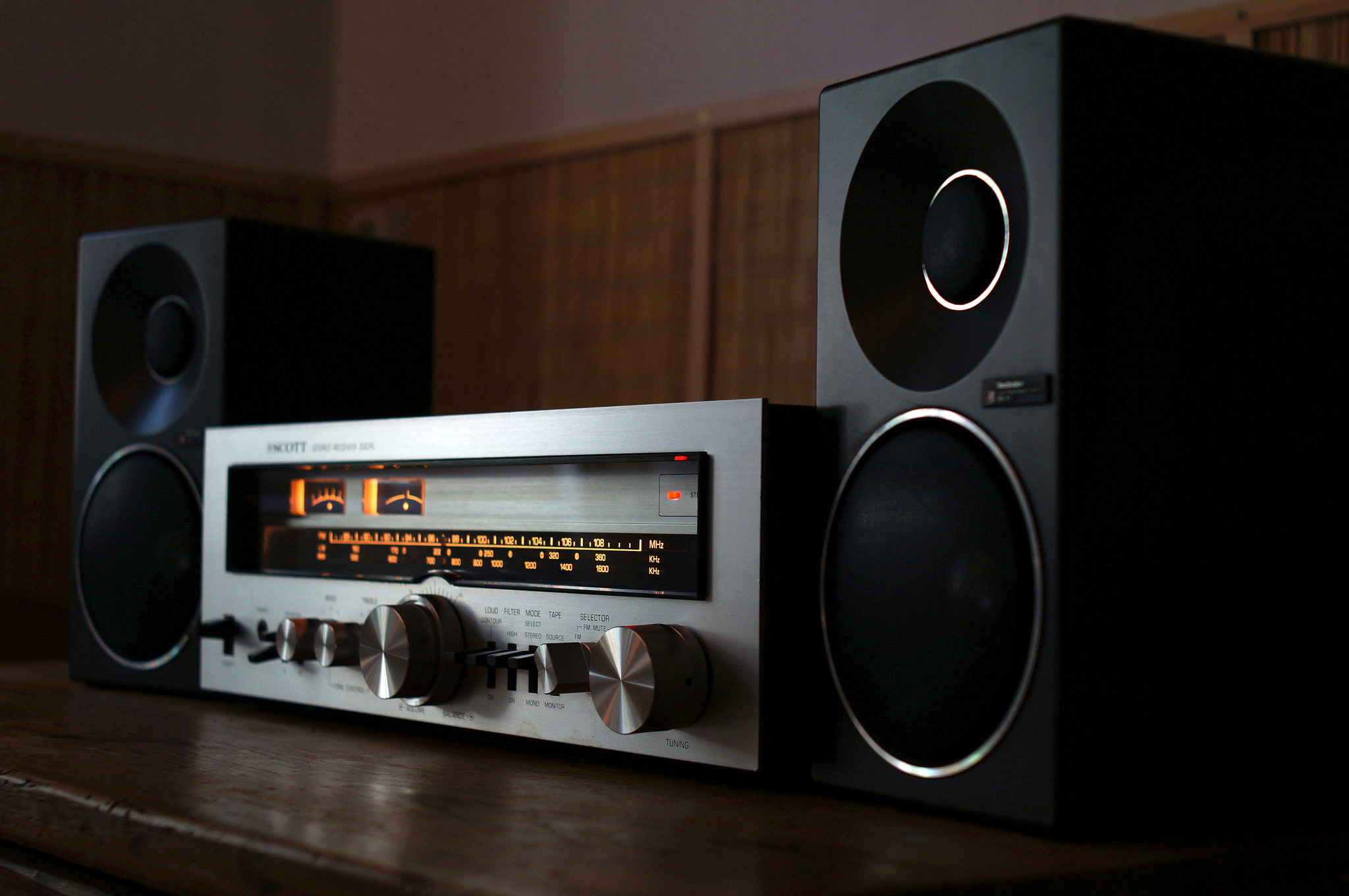
Pioneer, Sansui, Kenwood, Aiwa, Yamaha, Technics…names that were to become synonymous with what audiophiles today affectionately refer to as the age of big iron, when manufacturers were at the top of their R&D and design game, in an arms race to build those most sonically accurate and enticing consumer audio equipment possible. The late 70s and very early 80s: it was a time when visiting those now long-gone sealed off listening rooms and dedicated audio salons was almost a spiritual experience.

Before the Dark Times. Before stamped metal and black plastic.

Vinyl was king and cassettes were nipping at its heels while manufacturers were pushing the limits of chemistry and physics to transform a format that was never intended to be high fidelity into just that.

My first “hi-fi” purchase was a Philips GA212 belt drive turntable in 1972. Because I was a budding gadget freak, the reason I chose the Philips over a more mainstream Dual (like what Ken had) or Thorens table (Technics really hadn’t taken entered the mainstream yet), was because of the touch controls.

Philips GA-212

It was a decent piece of gear, even if I had it mated with a less-than-high-fidelity Panasonic 8-track AM/FM receiver. Yes, 8-track. IT WAS THE 70s FOR CHRISSAKE!

Unfortunately, I sadly learned that the functioning of the touch controls was inexorably dependent upon the light bulbs under those controls working. When the bulbs went out, the sensors went out and there was no Fry’s Electronics or internet where you could go to find replacements. It required a trip to a dedicated repair facility. Sadly, this desire to always be on the cutting edge has stung me more than once as my hi-fi adventures continued.

A year or so later, shortly after I started having problems with the touch controls on the Philips, Ken brought home a shiny, newly-released Technics SL-1300 direct drive turntable. (He would go to CES in Chicago every summer and it seemed he aways came back with some new toy—if not bags and bags of product literature). I was in awe. At the time I think it was the most beautiful piece of tech I’d ever seen. I was definitely guilty of breaking the Tenth Commandment where this turntable was concerned.

Technics SL-1300

When I’d finally saved up enough money to buy my own, that particular model had been retired and replaced with the SL-1600. The 1600 was all the best parts of the 1300 plus IC speed control, a redesigned tonearm and a new floating suspension system that cut down on unwanted vibrations.

Technics SL-1600

Shortly after Ken and I graduated from high school, I finally bought my first hi-fi amplifier with some of my graduation money: a Sony TA-5650. Why did I go with an integrated amp instead of a full-fledged receiver like many of my friends were buying at the time—especially since this particular amp came with a premium price tag? Because V-FETs. Japanese engineers had come up with a new power transistor design that combined the best parts of solid-state transistors and vacuum tubes, producing a open, transparent sound quite unlike any other. Sony was the first to market them, followed soon by Yamaha and Hitachi. After hearing that V-FET amp, I was hooked and wanted nothing less.

Sony TA-5650

I mated it with a pair of Infinity 1001A loudspeakers. My friend Gary had this particular model, and while they were on the low-end of Infinity’s price range and people wondered why I was pairing them with that amp, they still sounded damn good. And frankly, after paying a premium for the Sony amp I didn’t have a lot of funds left over.

The Sony ran hot. VERY hot. But the sound. OMG. It was as if Heaven had opened and the angels were singing.

Three months later, it died.

The unit was designed to run hot. That wasn’t the issue. As is well-understood among aficionados of this series now, the trouble was the bias diodes in the power amp stage had a serious proclivity to self-destruct, and in self-destructing they would take the main V-FETs with them. This happened me twice while the unit was still under warranty, so it was more an annoyance (i.e. being without any music for weeks at a time while waiting for parts) than anything else. The third time it cost around $80 (in 1978 dollars) to get it repaired.
When it went out for the fourth time, I said fuck it, and I went shopping.

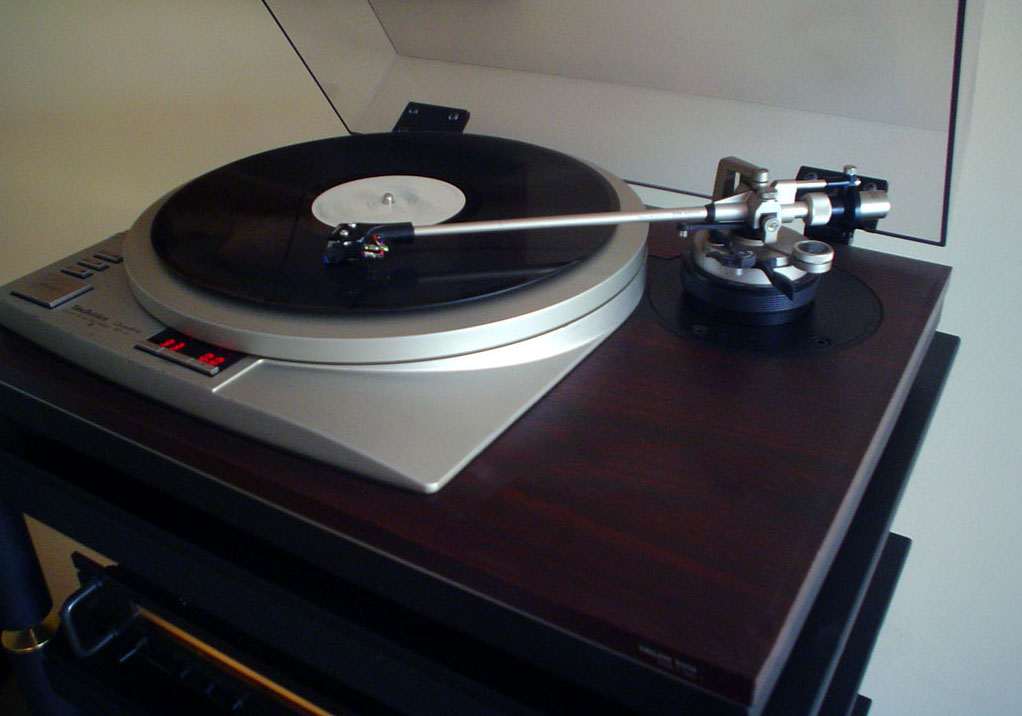
Technics—who was now a major player in the field—had just brought out a set of beautiful engineering marvels they called the “Micro Series.” It was a trend starting to sweep the industry, but in my opinion, no one nailed it the way Technics did. They packed the all the power and functionality of full-sized components into units that were about a foot wide and only two inches high. The fit and finish was amazing. And they were fuckin’ sexy.

Technics ST-C01 tuner, SU-C01 preamp, and SE-C01 power amp

But as inspiring and technologically advanced as they were (I mean, LED power meters!), and on paper the specs were very similar in regards to power and distortion as the Sony (minus the V-FETs of course) the power amp just didn’t sound as good as the Sony. I sent the Sony out for repair one more time, and vowed it would be the absolute last time—no matter how good the damn thing sounded—hoping against all odds that the problem would finally be fixed once and for all. The repairs held for nearly two years, during which time I sold the Technics components (something I regret to this day)—and when the Sony self-destructed for the fifth time, I left it in the laundry room of my apartment building and walked away from it.

Shortly before the Micro Series components came out, Technics also brought out a new set of turntables, dubbed their MK2 series. Whereas the 1600 was a relatively minor redesign of the 1300, the 1300Mk2 was a entirely new beast from the ground up.

One of the major problems that plagued turntables from day one was maintaining a steady, unwavering speed. Small variations would cause unwanted deviations in pitch. Quartz-lock technology (tying speed control to a fixed-frequency quartz crystal) was introduced in the late 1970s, and all but eliminated the problem, but sacrificed the ability for DJs and other professional musicians to intentionally vary the pitch of the records they were playing.

Technics stepped up to the problem with the introduction of the Mk2 series, putting quartz-locked pitch control in the hands of several new, highly integrated circuits. Now you could vary pitch by precise 0.1% increments up to plus or minus 9.9% from standard speed. I saw one for the first time in the DJ booth at HisCo Disco where my friend Steve worked. Push buttons, high-tech integrated circuits, LED readouts! I was like a fish to water.

I remember receiving the glossy, fold-out brochures in the mail and spontaneously orgasmed.

Six months later, I brought home a shiny new SL-1300Mk2 from Bruce’s World of Sound. It was my second purchase on credit (the first having been my truck) because there was no way I was making enough money to shell out $500 (in 1979 dollars) in one lump sum.  I remember picking it up at lunch, bringing it back to the office, unpacking it, and showing it to one of the architects I worked with. He said it was the most beautiful thing he’d ever seen, and I couldn’t have agreed more.

Technics SL-1300Mk2

But as is wont with most of my early-adopter high-tech purchases, about nine months later the poor thing lost its mind. It would spin uncontrollably fast, rendering it useless. It went in for repair.

Three months later it was still sitting in the shop. Though it was an authorized Technics repair facility, they were having difficulty obtaining the replacement IC from Panasonic. It was indefinitely backordered and they had no idea when they’d be receiving it.

I had been three months without music. Desperate times called for desperate measures. I went shopping for a new turntable, fully intending to sell it when I got the 1300Mk2 back.

I had been hoping to get a 1500Mk2 (the fully manual version of the 1300). I didn’t want to spend a lot since this was just a temporary thing, but to my dismay the initial Mk2 series had already been replaced—undoubtedly due to supply chain trouble obtaining parts!

So I ended up with one of the new Mk2 series, a 1700Mk2. It was semi-automatic (the arm would return at the end of the record but you’d have to set it down to start) for  “only” $300, and since I was now making significantly more money than I was when I got the 1300Mk2, it was a purchase outright that I could handle. I remember my parents shaking their heads in disbelief that I was buying yet another turntable, especiallly since I’d given my old 1600 to my sister (who would’ve happily let me use it for the duration), but I wanted the shiny and new.

SL-1700Mk2

I was never particularly enamored of the 1700Mk2. It was a good table, incorporating all the latest tech that Technics had put into the also recently released 1200Mk2 (yes, that 1200Mk2, the one Technics turntable that outlived all of them after vinyl “died”). But it no longer had the digital pitch control. It was still quartz-locked, but now possessed a continuously variable analog system and it just seemed a step backward to me. The tonearm, however, was far and above an improvement over the initial Mk2 series (something that would become painfully obvious as the initial Mk2 series aged).

As I recall, another month or so passed with no movement from the repair facility, I contacted Panasonic directly, and after retrieving the unit from the repair shop, I shipped it off to the coast for repair. When it was returned a few weeks later, no one was at home to receive it, so it was left with our next-door neighbors—with whom my parents had an ongoing bad relationship. No one was home there except their two pre-teen boys, and you can well imagine the rest of the story. It was destroyed.

I was heartbroken, but an important life lesson was learned: Never become too enamored of a thing.

We filed a claim with UPS (even though it was delivered in perfect condition) and after speaking with Panasonic, they instructed me to send it back and they would make things right. A week passed and I received another 1300Mk2. I don’t know if they’d salvaged parts from mine and built some kind of frankenstein monster, or sent me a completely different refurbished unit, but it seemed it just never worked the same. I sold it several years later (which was a bit of a problem because the unit Panasonic had returned to me had no serial number), and I never looked back.

I had every intention of continuing this story—probably in multiple installments—until I actually sat down and made a list of every piece of equipment I’d purchased over the years.

It was depressing. Sure, a lot of it was justified, but there was a period in the early 2000s, just after I’d discovered eBay and sold some original Frank Lloyd Wright blueprints that my father had found many years earlier on a job site that they were remodeling, that I developed a problem. I wouldn’t call it hoarding, per se—if only because I never held onto the stuff more than few weeks or months—but when I think of the volume of crap that passed through my hands it was obvious I was trying to make up for some emotional hole in my life and had a problem. I justified this at the time by saying that since I’d come into a little bit of money through the sale of those blueprints, I could afford to buy a lot of the stuff I only dreamt of owning when I was younger—especially since it was going so cheap on eBay back then.

The entire list as near as I can recreate:

Philips GA-212 turntable
Shure M-95E phono cartridge (2)
Sony TA-5650 integrated amplifier
Infinity 1001A loudspeakers (pair)
Technics SL-1600 turntable (2)
ADC ZLM phono cartridge
Technics SL-1300MK2 turntable (3)
Technics SL-1700MK2 turntable (3)
Technics SU-C01 preamplifier (3)
Technics ST-C01 tuner (3)
Technics SE-C01 power amplifier (4)
Sony TA-AX5 receiver
Sony TCK-555 cassette deck (2)
Yamaha CD-400 CD player
Yamaha A-700 tuner (2)
Yamaha T-700 integrated amplifier(2)
Yamaha K-540 cassette deck
Yamaha CDX-730 CD player (2)
Phase Tech PC-60 loudspeakers (pair)
Phase Tech PC-50 subwoofer
Sony STR-GX5 receiver (2)
ADC SS-315 equalizer
Technics SA-800 receiver
Technics SA-700 receiver
Pioneer TX-7500II tuner
Pioneer SA-7500II integrated amplifier
Kenwood KR-7400 receiver (2)
Technics SL-1301 turntable (2)
Technics SL-1400Mk2 turntable (2)
Pioneer CTF-9191 cassette deck
Technics RSM-02 cassette deck (2)
Technics RSM-04 cassette deck
Pioneer SX-535 receiver
Technics SL-P2 CD player (2)
Quadraplex 450R receiver
Ortolan Nightclub S phono cartridge
Technics ST-C04 tuner
Sony MDS-JE630 minidisc deck
Technics ST-C03 tuner
Technics SA-5370 receiver
Technics SA-505 receiver
Pioneer CTF-750 cassette deck
Cambridge Soundworks New Ensemble III loudspeaker set
Technics M24 cassette deck
Technics LED power meter
Technics SL-PG440 CD player
Sony MDS-JE480 minidisc deck
Sony DVP-5350 DVD/CD player
Shure V-15 Type 4 phono cartridge
Shure M97x phono cartridge

To be honest, several items on the list were bought as gifts, and some items were purchased just to clean up and resell, but the vast majority that was purchased post 2000 was to fill that emotional need. Right now all that remains is a system I settled on a decade ago and still serves me well today. It consists of ONE Kenwood KR-7400 receiver, ONE Technics SL-1300Mk2 turntable, the Shure V-15 Type 4 and M97x phono cartridges, and the Infinity 1001A loudspeakers.

1 comments

Childhood’s End

“Two possibilities exist: either we are alone in the universe or we are not. Both are equally terrifying.” ~ Arthur C. Clarke

Now that SyFy’s 3-part miniseries based on the iconic book Childhood’s End has concluded, here are some thoughts (spoilers ahead):

As I wrote a couple days ago, my biggest fear was that the network was going to screw it up. They did not. Being one of my favorite disturbing sci-fi books, the last thing I wanted to see was a big-budget raping of the original material.

What we did see these past three nights was a thoughtful updating and augmentation of the original source material. My only quibble with the changes SyFy introduced was that the original timeline was so radically reduced, but I understand why it was done. In the book, an entire generation passed before the Overlords revealed their physical form to humanity; not a mere ten years as in the adaptation.

And for good reason:

While even a generation’s time would not completely erase the emotional baggage associated with the Overlord’s appearance, I feel a mere ten years would provide no psychological buffer whatsoever.

The fact that the Overlords’ “demonic” appearance conjures such primal fear raises the question as to what traumatic encounter the Overlords had with Humanity in the distant past to prompt such a reaction. But as it was explained, the fear experienced by Humans was not due to a racial memory, but a racial premonition of their role in humanity’s metamorphosis.

(I also had envisioned the Overlords’ ships more in the style of what was presented in the “V” miniseries, but that’s a very minor point.)

While a myriad of small details were changed from the original story (such as the hotel suite where Stormgren—who was actually the head of the United Nations in the book, and not a mere “blue collar emmisary” in the miniseries—finds himself during his initial encounters with Karellen), SyFy still did an excellent job of bringing Clarke’s book to life, retaining the overall plot and all the major themes. Even when new facets were added to the story to make it more timely, they were integrated seamlessly and logically. So good was the storytelling that I actually had to go back and read the novel again to see what had been changed (apart from what I had remembered) and discovered I actually liked what SyFy had done in many cases.

The only other thing I have to add to this is that based on what’s happening in our world today, IMHO the Overlords cannot arrive soon enough and will close this with some gratuitous Mike Vogel as Ricky Stormgren for your viewing pleasure, because why the hell not?

1 comments

Impure Thoughts

I was going to write a short review of the first part of SyFy’s Childhood’s End today, but while watching it again this morning I was distracted by how well Mike Vogel’s beautiful ass does cowboy boots and skinny jeans.

Just sayin’, Mike. Just sayin’.

That being said, what I can say so far is that I’m not at all disappointed with what I’ve seen. My biggest fear was that SyFy was going to totally screw up one of the most iconic and revered stories in science fiction. While it’s not a word-for-word adaptation of Clark’s original material, they seem to have done an admirable job of moving the 60 year-old material into the 21st century while staying true to the author’s vision. There are a few differences so far between screen and book (mainly the role of the character played by Mr. Vogel and the span-of-time between the Overlords’ arrival and their physical reveal), but these changes still work, (you wouldn’t even know if you hadn’t read the book) and I liken the overall feel to how the network rebooted Battlestar Galactica.

3 comments