


Rawr.
Once a legitimate blog. Now just a collection of memes 'n menz.
Rawr.

This should be required viewing for everyone at my workplace. I can’t tell you how many times I’ve gone to a desktop and opened up IE to see one quarter of the screen taken up by toolbars. “I don’t know how those got there!” And they wonder why shit doesn’t work…

(click for full size)



Oh. My.




…someone is gonna have to clean that up.






(click for full size)
Stolen from a post on Facebook:
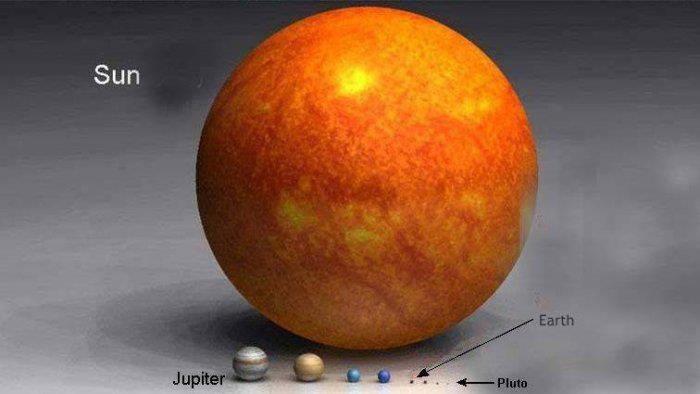
SCALE MODEL OF THE SOLAR SYSTEM
How big is the solar system? Scientists have placed the edge of the solar system at the Kuiper Belt or the Oort Cloud. The Kuiper Belt is an asteroid belt beyond Pluto (today, Pluto is categorized as a member of the Kuiper Belt) and about 60 times as massive as the asteroid belt between Mars and Jupiter. The Oort Cloud is the theoretical mass of comets, asteroids and other debris beyond the Kuiper Belt. This puts the solar system’s diameter at roughly 1.5 light years across, or about fifteen trillion kilometers.
In order to put this scale to a size that can be better related to, the Sun will be represented by a bowling ball about eight inches across. About 7.6 meters from the bowling ball is Mercury, represented by a pinhead. Another 6.9 meters is Venus, represented by a peppercorn, and Earth is 5.3 meters further, represented by another peppercorn (the moon is about 6.1 centimeters from the Earth, represented by a pinhead). At this point, Earth is almost 20 meters from the Sun. Continuing past the Earth 10.7 meters is find Mars, a second pinhead.
Between Mars and Jupiter is the asteroid belt. The asteroid belt is about 41.5 meters from the Sun. However, the asteroid belt is mostly empty space. Thirty one meters past the asteroid belt, or 72.4 meters past Mars, is Jupiter, represented by a chestnut. To put this scale into perspective, Jupiter is 102.9 meters from the Sun and more than a city block from Mars.
After Jupiter are the rest of the outer planets: Saturn, Uranus, and Neptune, represented by a hazelnut, a coffee bean, and a peanut, respectively. Saturn is 85.3 meters past Jupiter, with Uranus 189.7 meters past that and Neptune 214.1 meters past Uranus. Finally arrive at Pluto, represented by a pinhead 184.4 meters past Uranus. This point is one kilometer from the Sun. At this distance, the bowling ball is no longer visible, not even with binoculars. Less than a millimeter past Pluto are the Voyager probes.
Of course, while the planets do not stay in a straight line (the Voyager probes used a unique aligning of the outer planets to their advantage), they generally stay about the same distance from the Sun and from each other. So, while Jupiter and Saturn can be as close as 85 meters together in this model, they can be as far as 391 meters apart when they are on opposite sides of the Sun from each other.
The nearest star to the Sun is Proxima Centauri, at 4.2 light years. On this model, it is a whopping 6,759 kilometers from the bowling ball that represents the Sun. The star Arcturus, which is 58,996 kilometers from the bowling ball – about four and a half times the width of the Earth – would be five meters across, longer than a standard pickup truck. Rigel, which is over a million kilometers from the bowling ball – three times further away than the moon – would be ten meters across, about the length of a standard school bus. Betelgeuse, the red giant in the constellation Orion, would be about 158 meters across – twice the size of an American football field. Yet, in this model, the Earth is just the size of an ordinary peppercorn.
– R. Atkinson







Just when you think this series can’t get any more bizarre than it was last season…

In other words, I love it.
…in 1969 and then be all surprised some forty years later when he’s disgusted with the state of manned space exploration.
…but he obviously is not at all shy about getting naked in front of a camera.








TURN OFF YOUR FUCKING CAPS LOCK, BEYOTCH!
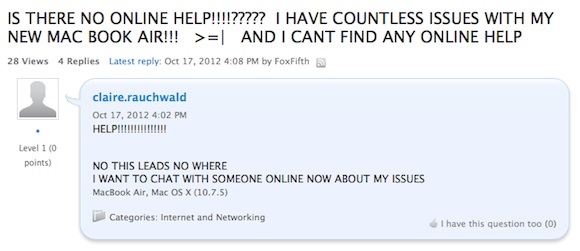
But then I’m a heartless bastard who’s been doing tech support far too long and has very little patience left for whining users.
Freakish!
I went out at lunch today and took some pictures because all this color is probably going to be gone within a week.









From Business Insider:
At first blush, Microsoft’s entry-level Surface tablet seems like a good value compared to the iPad and other tablets. That’s because you get double the storage (32 GB versus 16 GB) for the same price as the iPad, US$499 (C$519).
But the reason Microsoft started the Surface at 32 GB instead of 16 GB is because the operating system,Windows RT, takes up approximately 12 GB of space.
Those numbers come from a Reddit AMA session with members of Microsoft’s Surface team. When asked how much space Windows RT takes up, Microsoft’s Surface test manager, Ricardo Lopez said there will be about 20 GB of free space after Windows RT, Office RT, and “a bunch of apps.”
It’s not a straight answer, but it’s pretty clear Windows RT is a massive operating system. For reference, Apple’s iPad operating system takes up less than 1 GB. If Microsoft had made the entry-level Surface a 16 GB device, you’d only have about 4 GB free to play around with.
Remind me again why I should care about anything Microsoft does?
No surprise there. Until about a year before I left my previous place of employment, all the fetal monitors in the patient rooms had no anti-virus software whatsoever.
From Ars Technica:
Drug-resistant bacteria aren’t the only pernicious bugs that hospitals need to worry about. MIT’s Technology Review reports that hospitals’ computerized equipment—such as patient monitoring systems, MRI scanners, and nuclear medicine systems—is dangerously vulnerable to malware, and many systems are in fact heavily infected with viruses.
That’s because many of these systems run on older versions of Windows—such as Windows 2000. Medical equipment manufacturers often won’t support security patches or operating system upgrades for their systems, largely out of concern about whether such changes would require them to resubmit their systems to the Food and Drug Administration for certification.
The scope of the problem was the topic of a panel discussion (PDF) at a National Institute of Standards and Technology (NIST) Information Security and Privacy Advisory Board on October 11. Mark Olson, the Chief Information Security Officer at Boston’s Beth Israel Deaconess Medical Center, told attendees that malware had infected fetal monitors in his hospital’s high-risk pregnancy ward, to the point where they were so slow they couldn’t properly record data.
“Fortunately, we have a fallback model,” Olson said. “They are in an (intensive care) unit—there’s someone physically there to watch. But if they are stepping away to another patient, there is a window of time for things to go in the wrong direction.” The systems have since been replaced with new ones—based on Microsoft’s Windows XP.
“The systems have since been replaced with new ones—based on Microsoft’s Windows XP.” Oh, that’s reassuring…


Dummer Esel!
So the folks over at iFixit (the guys who snap up each new piece of hardware Apple releases and immediately tear it apart) have their panties in a bunch because the EPEAT (Electronic Product Environmental Assessment Tool) recently announced that Apple’s retina MacBook Pro meets their gold standard when it comes to environmental performance—and they are not amused.
While some of iFixit’s concerns may be legitimate, their latest screed reads like so many sour grapes. They’ve had a unapologetic bias against the Retina MacBook Pro since they first tore one apart and haven’t let up since.
Apple announced they were leaving the EPEAT registry soon after they released a slew of new laptops this summer, including the MacBook Pro with Retina display. We wondered why it was the first Apple laptop in recent memory not listed in the EPEAT registry: when we took it apart, we learned it was glued together and completely non-upgradeable. The RAM was soldered in, the SSD storage used a proprietary interface, the battery was secured to the case with impressively strong glue, and the case was held together using proprietary screws.
We know that Apple’s products aren’t green: iPods routinely fail after a couple years. Just about everyone I know has a dead iPod in a drawer somewhere. Apple’s design trend is toward glued-together products with batteries that may fail after 12-24 months—they make repair so difficult that people rarely replace the batteries, opting instead to buy a replacement device.
Creating products designed to require replacement every couple years has a substantial impact. Apple publicly discloses that 61% of their environmental impact comes from manufacturing—everything from mining the coltan in smartphones and the rare-earth elements in computers to factory workers cleaning display glass with toxic chemicals. The process of manufacturing electronics is incredibly damaging to the environment. The more products Apple makes, the larger its impact.
Given their penchant for throwaway product design, it seemed inevitable that Apple would leave the green computer registry. But when they announced their withdrawal, it sparked a fierce backlash. Institutional purchasers, including the City of San Francisco, announced they were banning the purchase of Apple laptops. During a recent trip to Washington, DC, I heard from reliable sources that numerous federal government agencies, including the Department of Defense, were prepared to ban procurement of Apple products.
In a nutshell, it seems they’re whining because you can’t open the RMPB up with a philips head screwdriver, swap out the internals or recycle the parts and because Apple might have “greased the wheels” of EPEAT in order to get the certification. Well guys, people who want to mess around with their devices don’t buy Retina MacBook Pros. They also don’t buy MacBook Airs. People buy these products because they’re thin and lightweight—and you’re not going to get that using off-the-shelf, swappable components.
Further, I dare say the majority of people who buy Apple products have no desire whatsoever to tinker with their equipment after the purchase. If you want to swap out RAM or processors, or upgrade your storage to the latest and greatest, you buy a Dell, or some other piece of disposable plastic crap—or build your own from parts—and then congratulate yourself and thump your chest for keeping the thing alive beyond the typical life span these things are designed for. That’s all well and good for a lot of people and I in no may mean to belittle that hobby (lord knows I did it for decades), but I’m now so far past any desire to do those kind of calisthenics in order to write, or do photo editing, or read my email or look at LOLcats I can’t be bothered. Give me something that works and will provide me 3-5 years of service and I’m happy. When the software progresses to the point it won’t run on the hardware I have (or you wow me with something new that’s so incredible I’m compelled to upgrade) then I’ll sell it and move on. The equipment I’ve outgrown could be someone else’s dream.