
The first commercial Compact Disc was created 43 years ago, today — nearly one billion CDs were shipped per year in early 2000’s
By Mark Tyson
CDs are still popular with some music fans, despite the rise of digital streaming platforms.
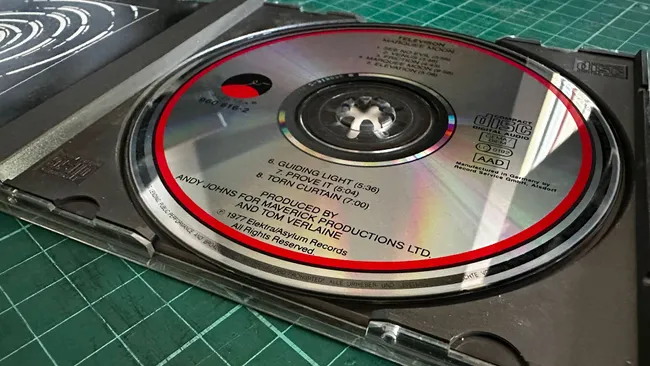
Today marks 43 years since the first commercial Compact Disc (CD) pressing. Polygram in Germany is credited with pressing the first copies of Abba’s The Visitors on this date, back in 1982. The CD format would take off in a direction which would have been highly unexpected at the time, ending up as a foundation of the Multimedia PC age. However, CDs didn’t kill the audiophile thirst for vinyl, and, on the flip side, some artists are still releasing CDs, even in the 5G and fiber digital streaming age.
While the first commercial CDs were factory pressed some 43 years ago, the discs were in development for quite some time ahead of this date. According to various sources, Sony and Philips clubbed together in 1979 to create a digital music disc.
Beethoven’s influence?
Among the first prototype CDs, a format with an 11.5cm diameter which was capable of storing an hour of music was an early front-runner. Philips apparently had a production line ready for such silver coasters. However, the final 12cm diameter and 74 minutes capacity was apparently favored as it was sufficient for a complete recording of Beethoven’s 9th Symphony – Sony president Norio Ohga’s favorite musical opus.
We must note that there are conflicting 74m CD audio origin stories, though. Another credits the desire for this particular uninterrupted audio duration to famed conductor Herbert von Karajan. Similarly, the Wilhelm Furtwängler’s 1951 recording of Beethoven’s 9th (74 minutes long) is said to be the reason for this time target.
By June 1980, the CD audio Red Book standard was finalized. Abba’s The Visitors entered production in Aug 1982, though wouldn’t hit retail on its new fangled format until March 1983. Meanwhile, the first CD album released in the U.S. is thought to be Bruce Springsteen’s Born In The U.S.A., released in September 1984.
According to Statista, CD album sales peaked in the year 2000, with around 943 million sold in the U.S., alone. The format’s fall from grace has been pretty fast since then, but things have recovered a little since the 2020 low.
Computers and optical media
For computing enthusiasts, like us, the announcement of the CD Yellow Book standard is probably more important than the audio standard. This new standard, which would reach the market in 1985, added binary data to CD storage.
Yet another significant change came in 1988, however. In this year, the ISO 9660 standard came into being, defining a file structure for CD-ROMs. CD burners, which created another huge ripple in the PC pond, began to first become available to the public in 1992. But it would take until the latter half of the 90s, when pricing, interfaces, and software began to democratize CDs as digital storage, archiving, and sharing essentials for everyone.
Reading about people using CDs with computers in 2025, as almost as archaic sounding as the use of floppy disks. Nevertheless, some music fans still prefer physical CDs to digital platforms (and the vinyl) such desires have probably spurred the likes of Taylor Swift to release almost 20 physical variations of her latest release, The Tortured Poets Department – including CDs, LPs, and even cassettes. If you count digital variants, there are 36 editions of this album you could buy.
I still maintain access to CDs and DVDs, and the ability to write various optical formats, using a simple external USB optical drive like this one from LG, at $27 on Amazon.com. There are plenty of cheaper, lesser known brand alternatives, too. It is great for looking through old archives and so on, as well as (re) ripping choices from the old music collection.
2 comments
My very first CD was purchased in the mid-eighties and it was the Diana Ross and The Supremes Anthology released by Motown. It was incredible to hear the classic hits sounding so clear and crisp, just glorious!! Especially enjoyed the post-Ross recordings too like Up The Ladder To The Roof and Stoned Love. To this day, my love affair with CDs has continued and it’s my main music format. I will never give them up.
Surprisingly, I don’t remember what my first CD was. At this point—forty years on—I have no memory of actually buying my first player, although I know where I purchased it. This alone gives me some clue as to what that first disc might’ve been; undoubtedly something on the Private Music label.
The first disc I bought that does stand out in memory was The Alan Parsons Project Ammonia Avenue. Similarly two Christmas gifts from my ex, shortly after we’d moved to SF: Yanni’s Keys To Imagination and Patrick O’Hern’s Ancient Dreams.
Over the years as I converted evertything to MP3s I sold off my collection and about a banker’s box full of discs that I kept for sentimental reasons (those two discs included) were lost after the fire in 2020—which surprisingly prompted my rediscovery of the format and my buying binge over the last five years.
I’ve since replaced almost everything I once had and have expanded the collection significantly to include original copies of discs I’d copied from the library back in the day.
Yeah, MiniDiscs sound good, but even my aging ears can hear a difference (albeit subtle) when I put a CD into my dedicated deck and press play.