It’s Not That Hard!

Question: “How will I explain gay couples to my children?”

Answer: If you can explain to your children that an immortal man in a red suit who lives at the north pole travels around the entire world on one night every year on a sleigh carried by magical flying reindeer, I think itll be easy enough to tell them two people are in love.


Somewhat Disheveled and Weary From a Long Flight

Somewhat disheveled and obviously weary from a long flight, he was still a vision in his Galactic Survey uniform. He was near my age, probably twenty-six or twenty-seven standard, a bit taller than me with dark tussled hair, two-day stubble, and a small hoop earring worn. As he entered the small onboard cafeteria, he put his bottle of ale down while he stopped to light a cigarette. As he struck the match, our eyes met and he smiled. An electric shock coursed through me. And those eyes—dark, midnight blue, almost black. He walked toward me as if he intended to join me at my table, and as I caught sight of his name badge—Danot—he smiled again, nodded, and kept walking. I turned around to see if he had stopped, but only saw him leaving through the rear door.

The Galaxy Presented Itself as a Narrow Glittering Ribbon Cutting Across the Night Sky

One warm evening I decided to pay a visit to the city’s old northern waterfront, a vast array of piers and overgrown parkland nearly a hundred fifty kilometers away from downtown and almost always deserted.  I had heard it was a popular meeting spot for trysts, but I hadn’t gone there with that in mind.  I had been feeling very homesick and what I wanted most was to simply get away from the noise of the city, away from the crowds, away from the lights, and just stare up into a dark night sky.  Short of flying out to one of the barrier islands, the waterfront was the perfect choice, despite its other reputation.

Olyxas’ brilliant double companion sun was in conjunction with the primary, two of it’s three moons would not rise until after midnight, and the third—the smallest—would not be rising for an hour or more after my arrival, so the night was, indeed, very dark.  As I powered down the speeder, parked, and walked out onto one of the piers, I looked up to see the hazy band of the galaxy stretching overhead in the western half of the sky from northern to southern horizon.  And hanging in front of that glittering tapestry, forming a huge arc like a string of brilliant blue-white diamonds, six nearby supergiant stars curved eastward across the sky.  In a later life, on a different world, I would call three of them Alnitak, Alnilam and Mintaka, but the names I used for them then eluded me.  Despite my best efforts, I was still unable to trace out any meaningful constellations upon this strange night sky, and in fact wondered exactly what constellations would’ve grown out of legends and mythology if an indigenous sentient race had arisen on—instead of been transplanted to—this world.

I finally gave up trying to correlate any of the stars I saw overhead with ones I knew from home.  Obviously, many of them were the same, but now in such radically different locations with equally radical brightnesses that it was futile to try locate particular stars.  And since the Olyxan system lay within the galactic plane and not far above it as my home world did, the galaxy presented itself as a narrow glittering ribbon cutting across the night sky, not as the hemisphere-filling vortex I had known before.  Still, when the pangs of homesickness struck as they did that particular night, these were minor issues and didn’t prevent me from trying to spot my native suns, even if I didn’t know exactly where they fell upon this canvas—or, if, in fact, they were even visible to the naked eye at all.


The tide was out, but the incoming waves still broke noisily against the pilings as I stood against the railing, looking out over the dark waves below.  My mind wandered, and memories of my desert birthplace returned: the unrelenting heat, the years passing without a single drop of rain and the twin suns burning like two brilliant yellow arc lamps in the wheat-colored sky.

I could not have chosen a more disparate environment in which to emigrate.

It Seemed Like I Blinked and 20 Years Passed

“Inside every older person is a younger person—wondering what the hell happened.” ~ Cora Harvey Armstrong

When did I start turning into an old man?

Okay, so I’m not old, as in driving a golf cart around a retirement community old (or even anywhere near it), but old as in realizing that many of the people I work with could be my children if I were straight and had married and produced offspring at the “usual” age for doing such things. I also learned the other day that my recruiter had referred to me as “an older gentleman” to one of the other contractors. Older gentleman?

Fuck me.

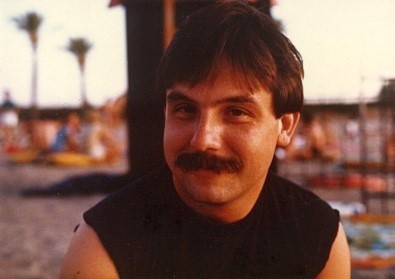
It is kind of funny, because while I still envision myself being near that age and more or less feel like I did in the picture (from 1984) below, it’s only when I happen to catch my reflection somewhere that I realize I sure as heck don’t look it anymore. And more often than not, when I stop to actually gaze into a mirror I find myself asking, “Who the hell are you, and how did you get into this house?”

Of course, that’s a question I’ve been asking myself since long before the picture to the right was taken, but it now has a totally different thrust behind it.

Definitely well into “middle age,” I’ve now been forced to confront that my hair has for the most part completely disappeared (and is never coming back—I’ve often wondered if I should just start shaving it regularly—and get it over with), the morning puffiness under my eyes does not spontaneously disappear as I wake up, and I’ve been wearing monocular contact lenses (one for distance, one for reading) for years now. Lastly, where did all that added poundage come from? At the time that photo was taken I thought I looked fat. Oh, that I were so fat now!

Along the same lines, when did all my friends get so old?

At least we’re all wondering these same things together, and can freely discuss them without feeling too—I dunno—silly. Because of the AIDS epidemic however, we lost almost the entire first generation of openly gay men who could’ve answered so many of our questions and become the role models in whose footsteps we followed. They might’ve helped us define what it meant to be a middle-aged—and ultimately elderly—out gay man in America. But sadly, we are left to find our own paths, and with so many of my own generation lost in the 1990s, even those resources are not as boundless as they might’ve been.

These Aren’t the Droids You’re Looking For

I was scanning some old negatives into the Mac a few days ago and ran across a photo I’d taken of my bedroom at my folks’ house back in 1979. On the shelf above my stereo was a book I’d long forgotten, Splinter of the Mind’s Eye by Alan Dean Foster. This was the first of the Star Wars novels to come out after the initial film, sometime in 1978. I no longer have the book, but I tracked down a copy at the library and have been reading it again.

Resoundingly trashed by the critics even then, it’s still a fun read. Even moreso now, because it takes place in what would definitely be considered an “alternate” Star Wars universe. Coming out as it did two years before The Empire Strikes Back, all of the familiar, now-established Star Wars lexicon and mythology simply do not exist. Darth Vader is not Luke’s father. Leia is not his sister (good thing too, considering some of the romantic stirrings going on between the two of them in the book). Yoda does not exist (although the planet the duo crash land on in the book does bear a striking resemblance to Dagobah, and the old woman who enlists their help does have many of Yoda’s Force-wielding qualities). I’ve pretty much forgotten the book’s entire story line since it’s been twenty-five years since I last read it, so it’s been interesting to glimpse into a decidedly different “long time ago, in a galaxy far, far away…”

Popozogolu!

1. What is your favorite movie of all time?
Personal Services, the fictional account of notorious English madam Cynthia Payne, who became the darling of the English press after several arrests in the mid 1980’s.

2. How often do you watch this movie?
At least once a year.

3. What’s your favorite line out of the whole movie?
(Listen here.) “If I’d known he’d been out there all that time I’d have asked him in for a cup of tea!”

4. Who’s your favorite character from this movie?
Christine Painter, the main character.

5. What scene do you love the most?
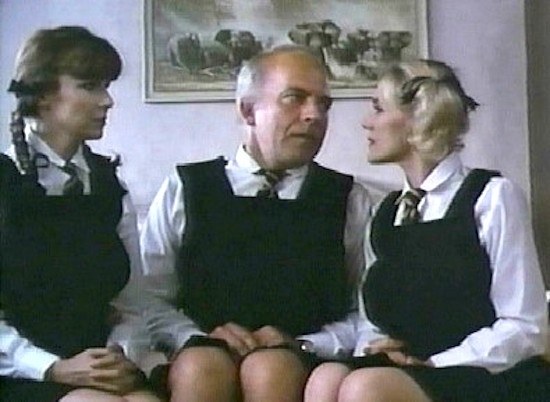
Christine, Shirley, and Lionel, all dressed in gym slips (English schoolgirl uniforms), playing out Lionel’s particular fantasy.

Shirley: “You’re a lesbian, aren’t you?”
Lionel: “Yes…yes, I am.”
(long pause as they turn and look at Christine)
Christine: “Me too.”
Shirley: “Polly Parrot!”

“Tell Me of Your Homeworld, Usul.”

1. What is your favorite book of all time?
That’s an easy one, especially for anyone who knows me. It’s Frank Herbert’s DUNE.

(A close second is Richard Bach’s Illusions, but we’ll save that for another time.)

2. How often do you read this book?
I make my way through the whole sequence of Herbert’s original six books about once every five years or so.

3. What’s your favorite quote from the whole book?
The Bene Gesserit Litany Against Fear:

I must not fear.
Fear is the mind killer.
Fear is the little-death that brings total obliteration.
I will face my fear. I will permit it to pass over me and through me.
And when it has gone past I will turn the inner eye to see its path.
Where the fear has gone there will be nothing.
Only I will remain.

4. Who’s your favorite character from this movie?
Paul Atreides, a.k.a. Muad’Dib.

5. What scene do you love the most?
Paul’s first confrontation with the Reverend Mother Helen Gaius Mohaim.

6. Why is this your favorite book?
It’s because it’s the most intricately crafted, completely alien—yet human—universe I’ve ever encountered in fiction. Just learning the language was an effort the first few times I read it. And now I can’t help wonder if Herbert himself was a bit prescient. If you substitute “oil” for “spice”, “Iraq” for “Arrakis”, and lastly “The United States” for “The Empire”, the parallels are uncannily striking, not to mention disturbing—especially when considering the hubris of the racist right-wing and their belief in the “invincibility” of our military.

Analog Rules!

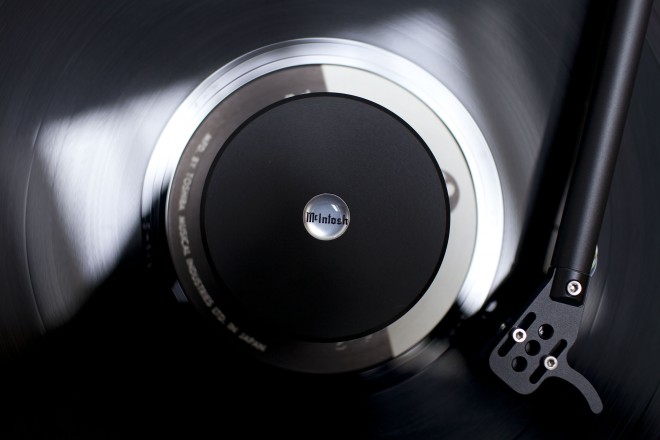
Like most everyone else who came of age in the 70s and 80s and had wrestled with record cleaning brushes, cartridge alignment tools, antistatic sprays and other manner of voodoo that was seemingly required to play vinyl records, I fell in love with compact discs: the convenience, the sound, the general coolness of the damned things…

And like everyone else, I bought into the marketing hype of the time. “Indestructable!” “Will Last a Lifetime!” and so forth and so on. Of course, reality has proven something quite different as we have all come to learn over the years. Scratch the wrong side of the disk (i.e. the label side) and you might as well play frisbee with the thing.

Years ago, when the news of “bit rot” (the tarnishing of the aluminum layer in commercial CDs and the fading of the dye layer in CDROMs rendering them both unreadable) came out, I thought, “Oh Jeez…my collection is disintegrating right before my eyes and I don’t even know it.”

But along about the same time, I rediscovered the joys of those big black analog vinyl platters. I don’t know whether it was prompted by an attempt to recapture some of my youth, or I missed the music (most of which has yet to be re-released), or that I could pick up a pristine copy of some recording for $1 on vinyl that would cost me $16 on CD, or simply because the act of playing a record was so damned satisfying, but I fell in love with music all over again and realized that no matter what happened to my CD collection, my vinyl collection would survive the ravages of time.

And surprisingly, many of those old vinyl records actually soundbetter than their shiny CD counterparts.

As Ted Rall so succinctly pointed out in a column several years ago, because of our rush into the digital age, not only are we at risk of losing some of the musical treasures of our time, we’re also at risk of losing most of the record of our culture in general. Even if bit rot weren’t a concern, we’re still facing the very real possibility that none of our digitalized history will even be readable in the years to come because of the ever-changing march of technology and the obsolescence it leaves in its wake.

And now, as we now start to abandon owning physical media altogether, trusting all our musical memories to bits and bytes in the cloud, I fear this problem has only grown exponentially. I’m not saying it’s a bad thing per se, and there’s certainly something magic about being able to carry—at least in the case of the classic iPod—60 days worth of music around in your pocket, but when I really want to be in my music, I pull out one of those black vinyl platters, plug my headphones into my 30 lb. wood-trimmed metal mid 70s receiver, and get lost in the sound…if only for a few brief minutes.

Makes you wonder if the ancients knew something we don’t. They carved into stone tablets not because they had to, but rather, because they wanted to ensure that their legacy lived on.

One thing I know for certain: as long as someone can affix some sort of pickup needle to a phono cartridge, centuries after the aluminum reflective layer in the last of my commercial CDs has tarnished, the dye on my home-grown CDROMs has faded to invisibility and my iPod is at the bottom of a land fill somewhere, whoever comes after me will still be able to play my records.