0 comments
Once a legitimate blog. Now just a collection of memes 'n menz.
0 comments

0 comments
0 comments
0 comments
0 comments
0 comments
0 comments
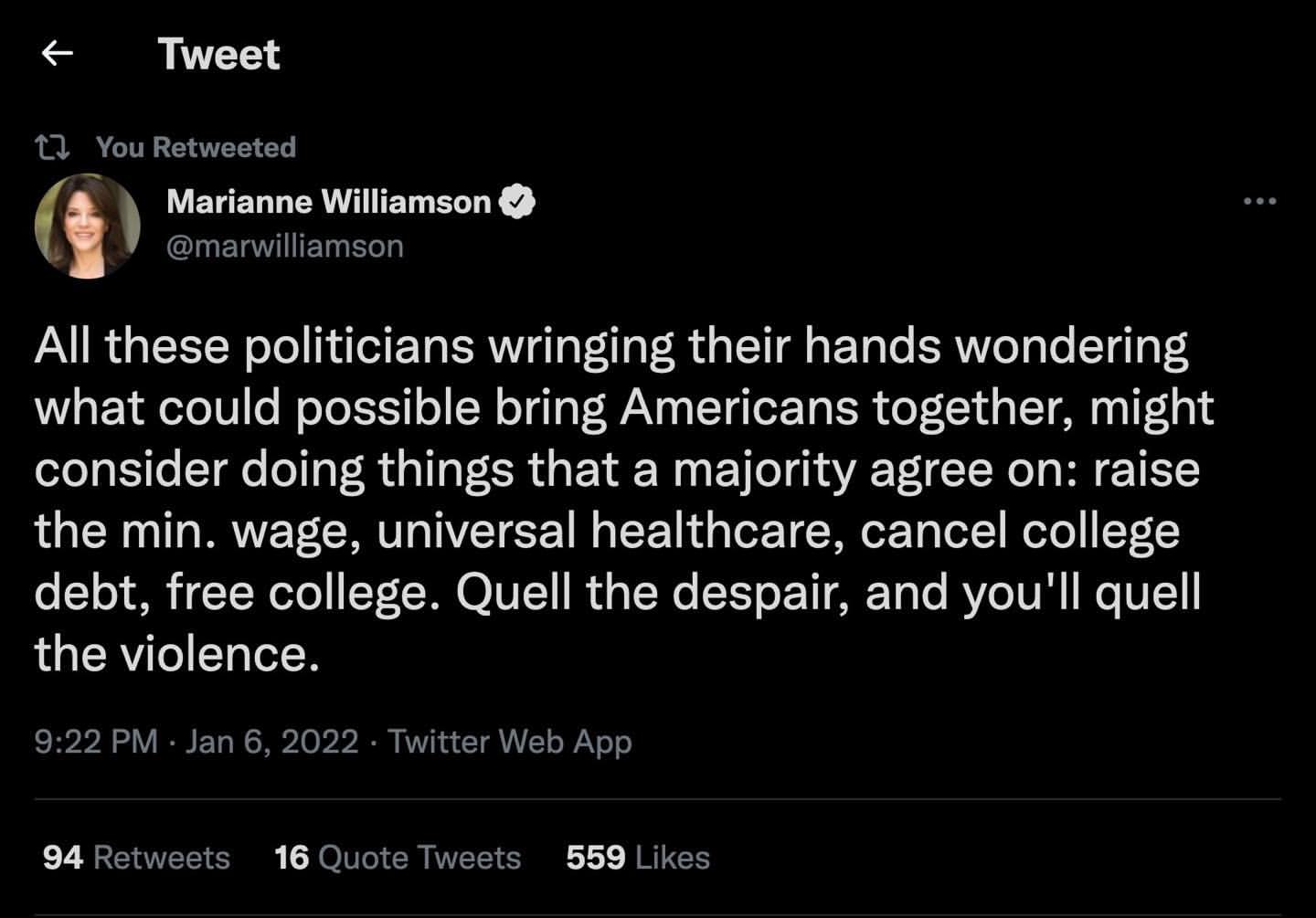
From Lady Bunny on Instagram:
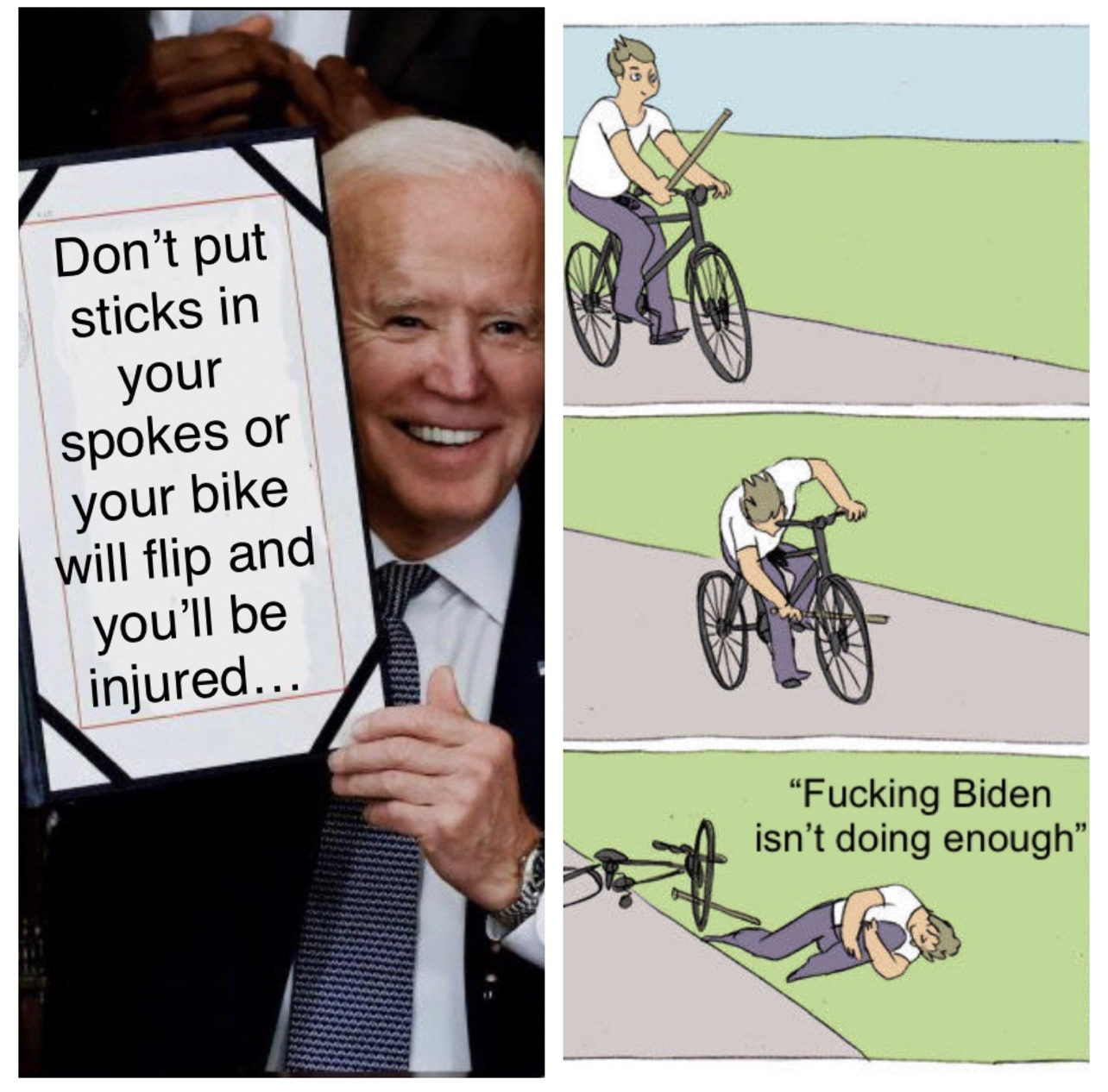
Former Dem presidential candidate Marianne Williamson on Twitter making the simple point that politicians should do things people like. Democrats campaigned on all she mentioned, yet after one year of controlling the White House, the House and the Senate, they’ve achieved none of them. It shouldn’t be necessary to point out that politicians should do what voters want to do because they (allegedly) represent us, but it is. For too many Democrats, simply bashing Trump and the GOP is considered better politics than doing what you campaigned on. Many of you will excuse Democrats’ inaction by claiming that the issue blocking Dems’ agenda is Joe Manchin or Kyrsten Sinema. It’s not. These conservative Dems have more in common with Biden and Pelosi/Schumer than they do Bernie/AOC. Biden and Pelosi unlinked the infrastructure bill with Build Back Better social spending bill, ensuring it’s failure. And Biden was pushed by those saying he could work well with the GOP. Yet he can’t even work with Republican lites like Manchin and Sinema in his own party.
0 comments
 Gods always behave like the people who created them.” ~ Zora Neale Hurston (1891-1960), American Folklorist
2 comments
0 comments
0 comments
0 comments
1 comments

2 comments
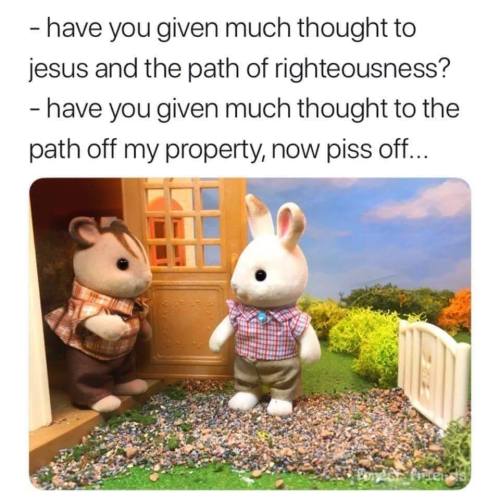
Sometimes when they approach you, you’re up for a little street epistemology, Boghossian-style: how do you know what you believe is true, do you think faith is a reliable way to know the world, do you think people can believe things on faith and never know they’re wrong, how do you know you’re not wrong, would you be willing to change your beliefs based on evidence, etc.
Sometimes you’re not interested and you just want to get your coffee/watch your program/masturbate in peace. Hell, you don’t even need an actual reason. At those times, “no, thank you” is sufficient. No explanations, no excuses are required. “No, thank you.” This is the end of the matter.
If they persist, the gloves come off. Anything after this is justified. My advice is not to give them anything. They’re looking to engage you, to create or find an opening to continue on. Don’t give it to them. They’re trying to drag you into their pseudo-reality on their terms.
Remind them that you politely declined, and now they are being rude and disrespectful by ignoring your wishes, so they can kindly fuck off.
“Aren’t you worried about your eternal soul?” No, I’m not. Fuck off.
“Have you heard the good news?” That you’re going to fuck off?
“The [scripture] says…” I don’t give a shit what your stupid book says, I give a shit about the fact I said no and you still haven’t fucked off.
“What could be more important than getting right with the Lord?” What better things I might have to do are really none of your business, but right now you’re keeping me from them so fuck off.
“Can we leave you with some literature?” No. I wouldn’t read it and it would go straight into the recycle bin, so you and it should just fuck off together.
Make a point of noting their names, their church (or whatever) and the date and time, and advise them that their faith leaders will be getting a formal complaint. Now fuck off.
[Source]
0 comments
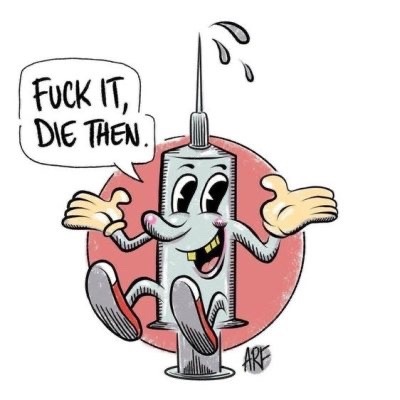
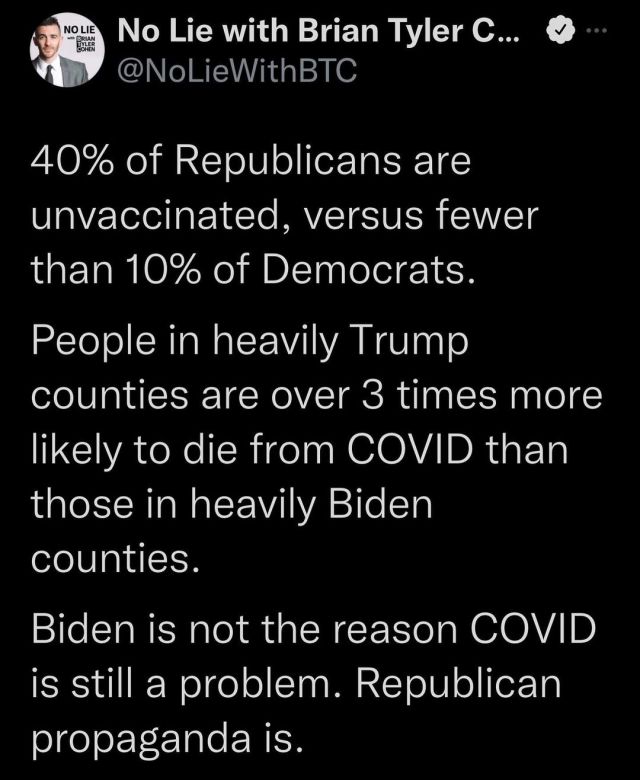
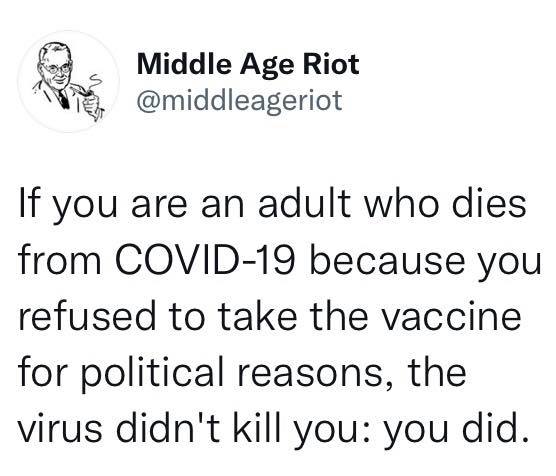
The website SORRYANTIVAXXER.COM lists pretty exhaustively all the antivaxxers who have contracted and/or died from the Trump-Virus. At first it seems devastating (and very, very white) seeing entry after entry of people who were easily manipulated into killing themselves to own the Libs, but then comes both boredom: Another asshole bites the dust, and good riddance.
Before you come at me (@ me?) for speaking ill of the dead, I’ll remind you that I spoke ill of them when they were above ground. I’m just going to say it: these people were selfish assholes who endangered all of us. Lining up to argue with a virus and then die from a preventable disease isn’t noble, it’s stupid. We’re better off without them infecting more people.
Do I feel bad for their families? Maybe in the short run, but these antivaxxer assholes endangered their own families, too. Their families are better off with them gone. Maybe they will get vaccinated and live to see another day.
Look, these assholes were babied, begged, and bribed to get the free, safe, and effective vaccines and they turned it down; so that’s not tragedy, it’s a farce. And in the end it is natural selection in action. Again, we’re better off without them.
You want to tell me that they were standing on their principles, and I’ll tell you that they are now buried with their principles.
I feel a great deal of satisfaction when reading about them (as Clarence Darrow once said). I never used to be this cold and callous towards people, but these selfish, ignorant a-holes have worn down both my patience (which I never had a lot of to begin with) and my empathy. I’m bone tired, both of this never-ending pandemic and the people who are making this pandemic never-ending.
[Source, paraphrased and augmented]
1 comments
0 comments

2 comments
0 comments
0 comments
0 comments

0 comments
0 comments
0 comments