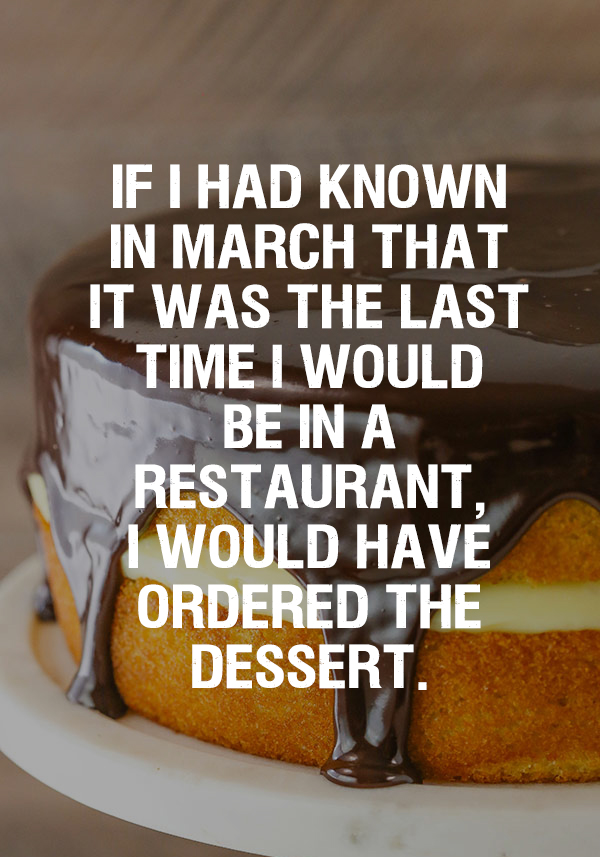
Exactly.
You’ve Also Got To Up Your Insults
Oh sah-NAP!
You’ve Really Got To Up Your Threats…
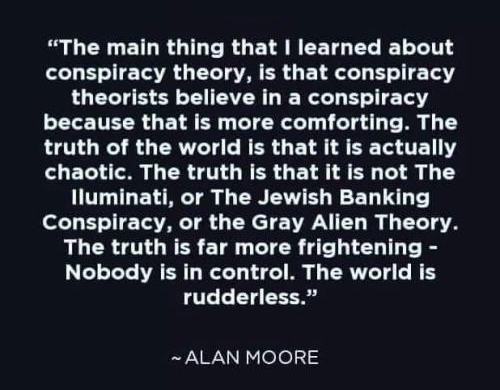
Quote of the Day
 What is it about President Obama that really gets under your skin? Is it because he’s smarter than you? Better educated? Made it on his own; didn’t need daddy’s help? Wife is more accomplished? Better looking? I don’t know, what is it? What is it about him? That he’s a black man that’s accomplished, became president? That he punked you on the whole birth certificate thing? What is it about him? Just wondering…” ~ Don Lemon
You Know It’s True
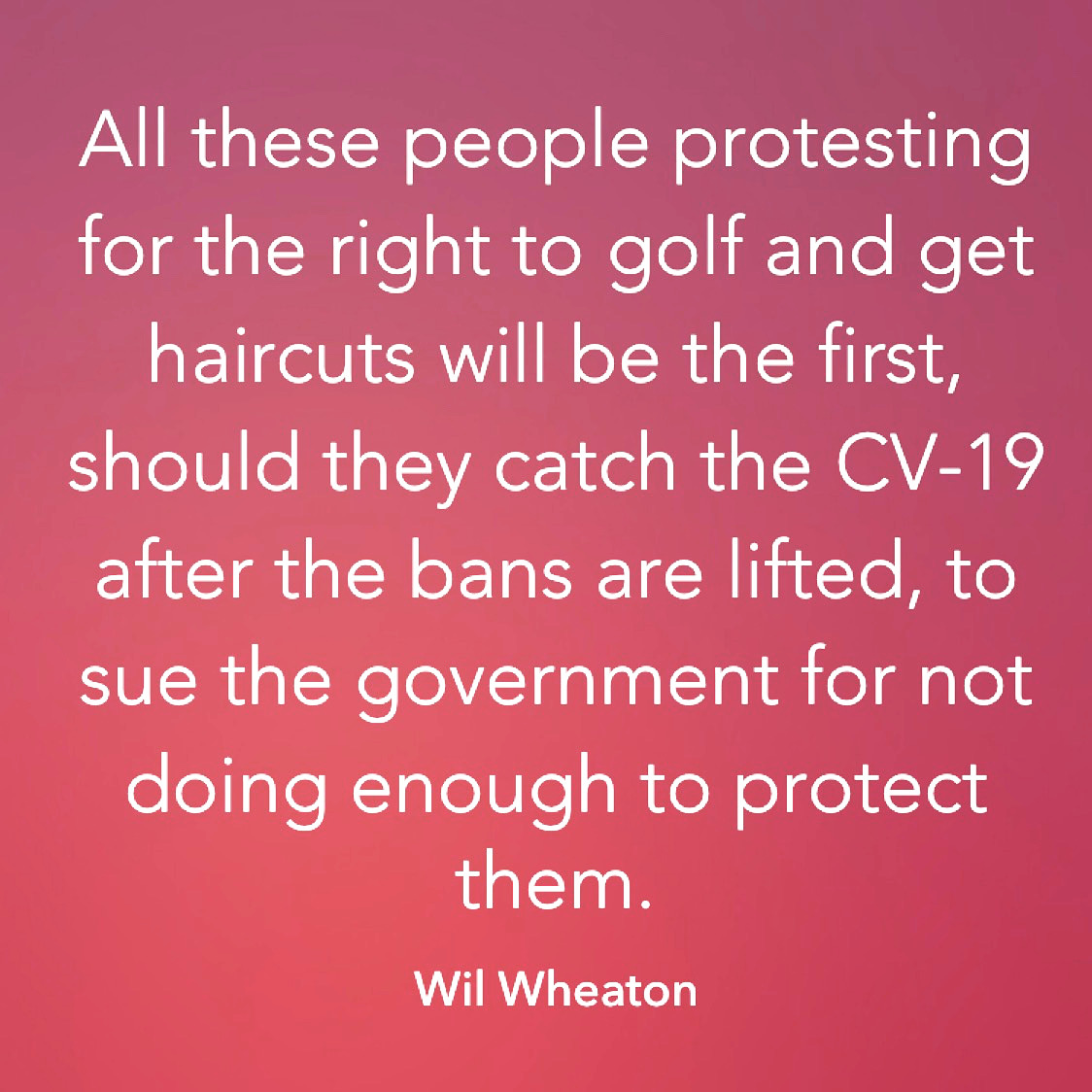
#truth
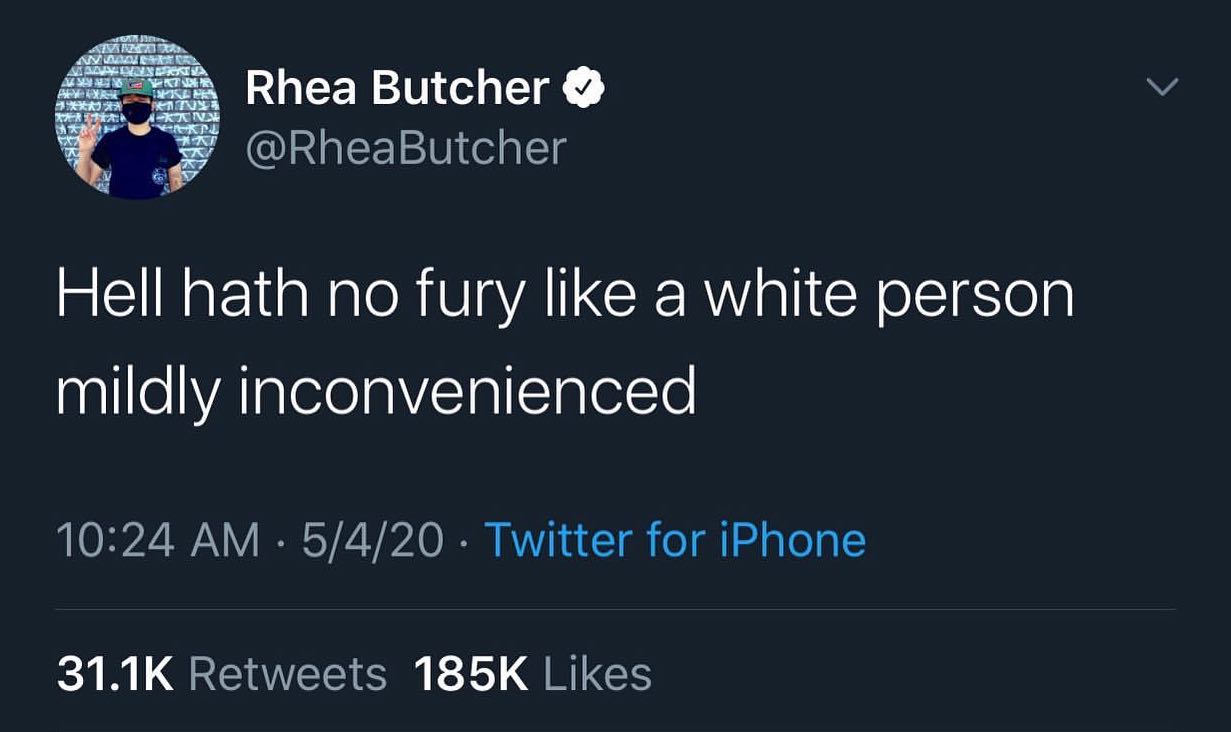
At the Risk of Endangering My Own Karma…
…I’m not going to voice what I hope happens to everyone in that crowd. But then, I don’t think I have to, do I?
This is what a cult looks like. They view everything through the lens of whether it’s good or bad for @realDonaldTrump, instead of whether it’s a good idea, a bad idea, or just plain insane. They reject facts & believe #COVID19 is a hoax. And they are likely spreading the virus. https://t.co/wvJaaJ1oJ5
— Ted Lieu (@tedlieu) May 5, 2020
Whatever He Says, Do The Opposite
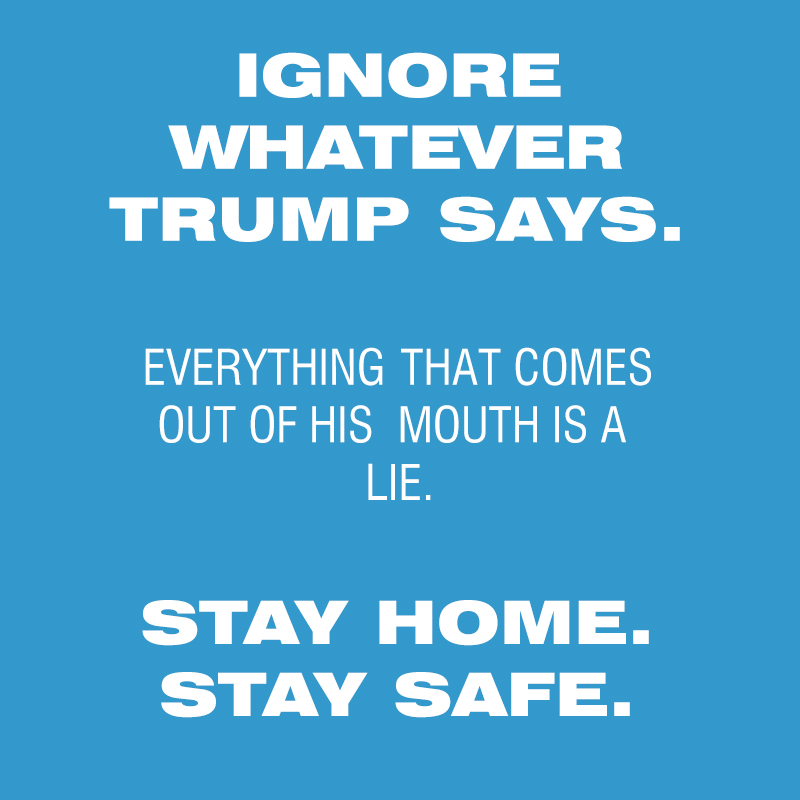
And if you do have to go out (and let’s face it, we all do from time to time whether it’s to pick up supplies or just to relieve cabin fever), maintain social distancing (as difficult as it can be since no one else seems to be), and wear a fucking mask.
Sit Down and STFU
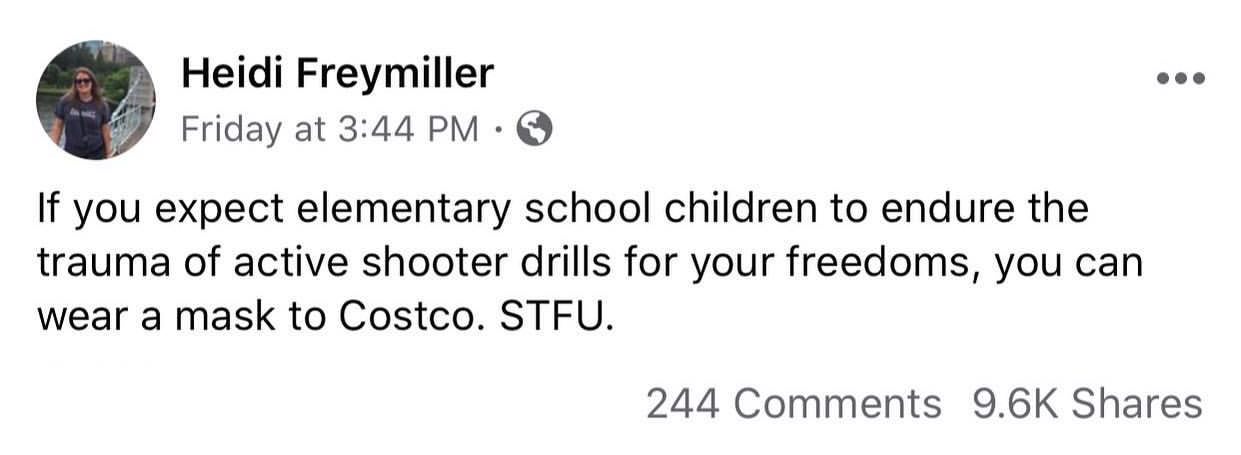
Fuck Trump
Let me be very clear here: We never had a “booming economy” if 80% of the population cannot afford to miss two paychecks.
Me, Opening My News Reader
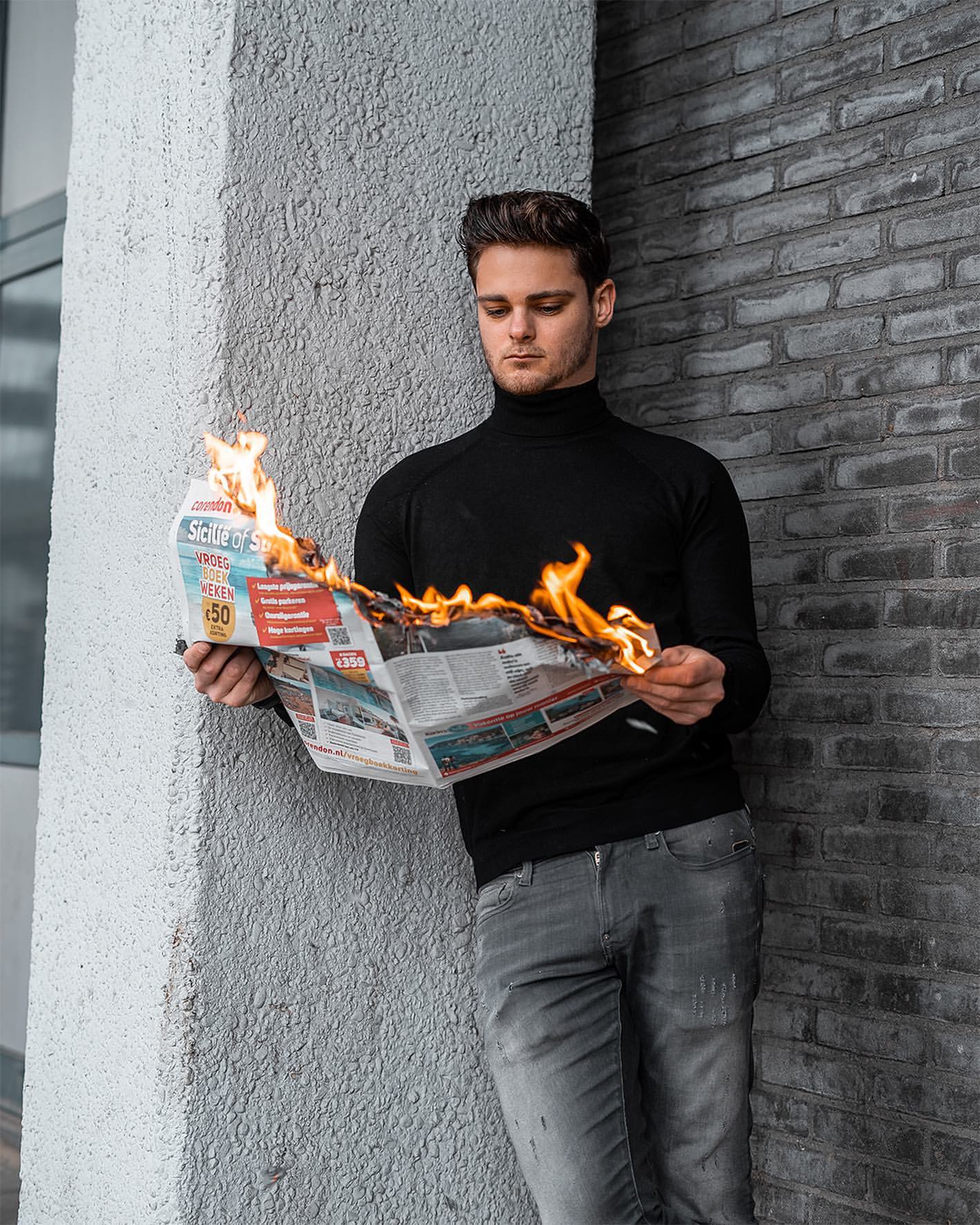
Every. Damn. Day.
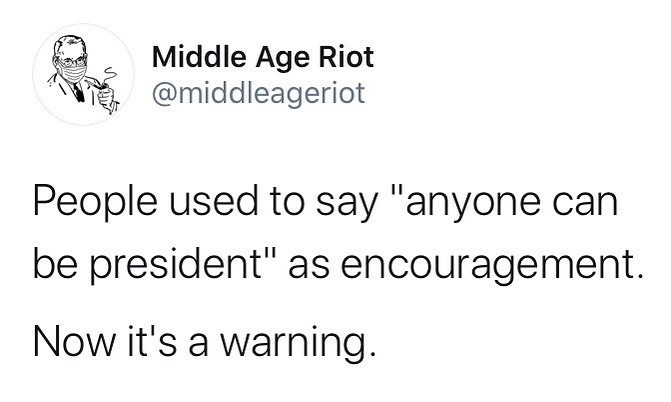
I Know…
…this is going to be a very unpopular opinion for bleeding heart liberals like myself, but after making a trip to the local Target for groceries today, I’m beginning to think that maybe the herd needs to be culled and humanity needs a purge after all.
Except for the store employees, myself and a very few others, no one was wearing masks. No one (including Target employees, who seem to insist on stocking the shelves when the store is busiest and blocking aisles in the process) was observing the 6-foot rule. I tried, but it seemed no matter where I stopped to look at my list or answer a text, some yahoo was standing next to me within a matter of seconds. And people were touching everything.
I asked three different employees the location of a particular item. I got three different responses, all incorrect. It was only when I opened up the Target app on my phone and searched myself did I find what I was looking for.
Like last weekend, the amount of Saturday traffic was near normal, indicating the people are not staying home except for essential trips out of the house. And it seems that during the four (six?) weeks of stay-at-home orders, most of the population has forgotten how to fucking drive.
If it takes a pandemic to rid the species of the willfully ignorant, then so be it. Let them congregate in their churches. Let them gather together on statehouse steps and scream that businesses be reopened. Hell, let Trump’s lickspittle Republican governors open their states and ensure that when a second wave of Corona hits in October, it will further reduce the number of the Orange Baboon’s voters; his “very fine people.”
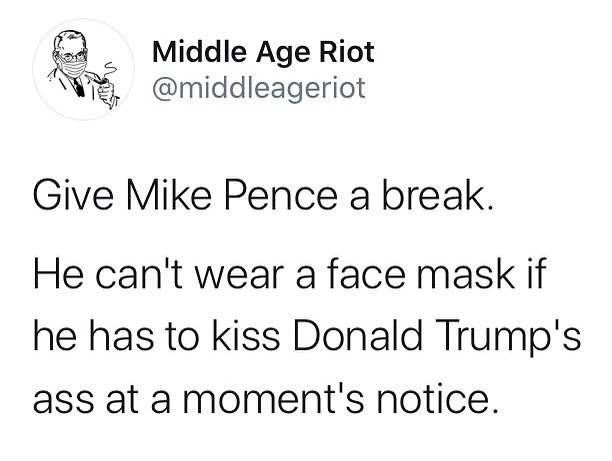
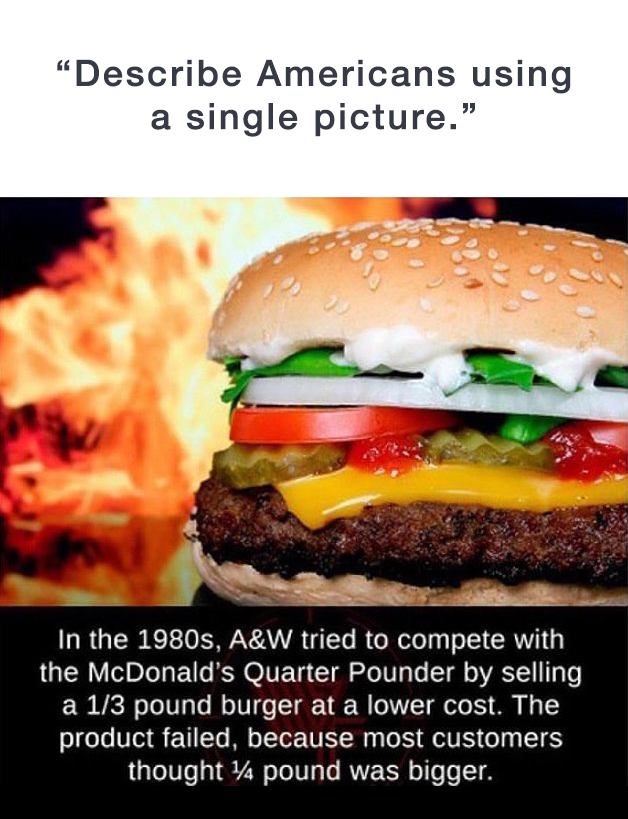
And this, my friends, is why the Orange Russian Wig Stand still has a 40% approval rating. Even now.
And That’s Exactly What History Will Say
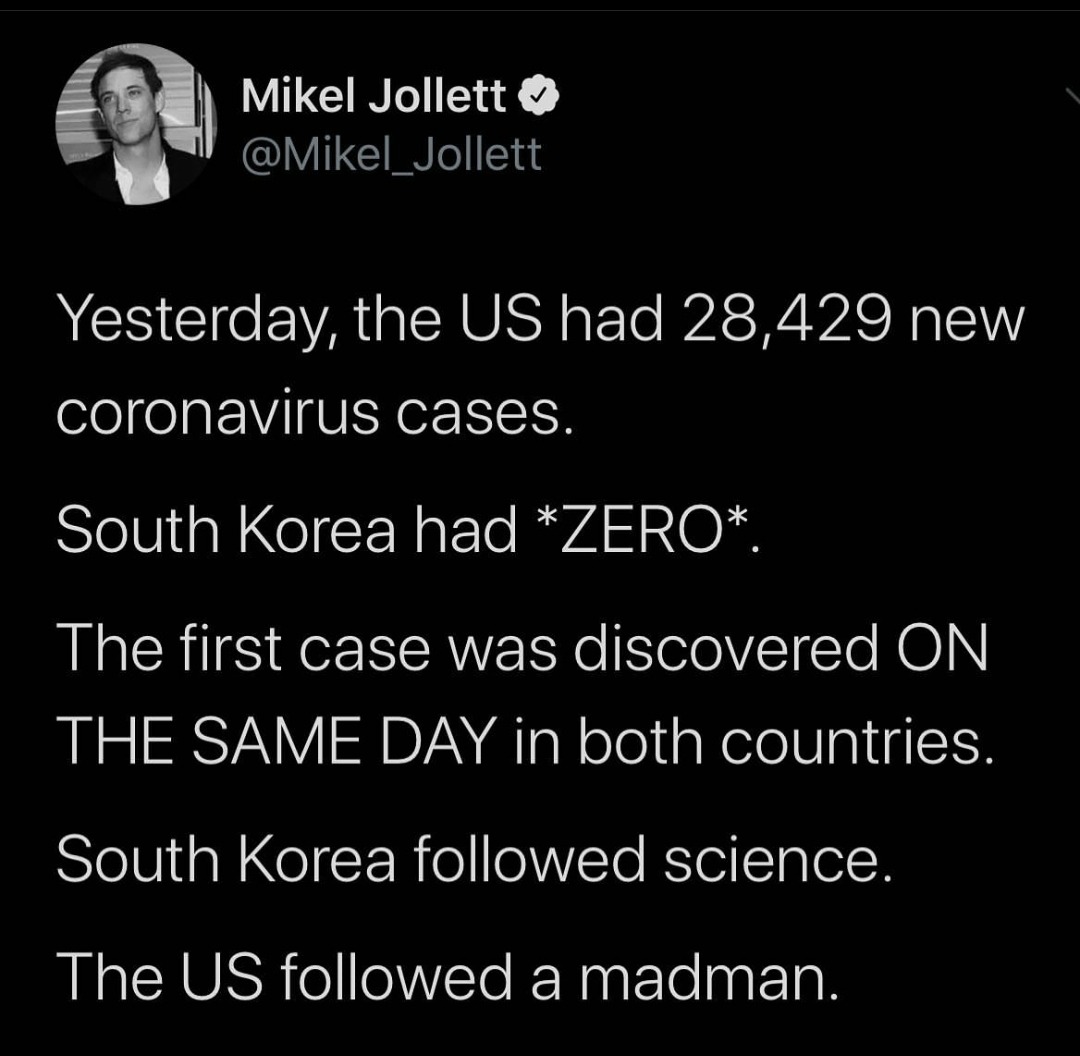
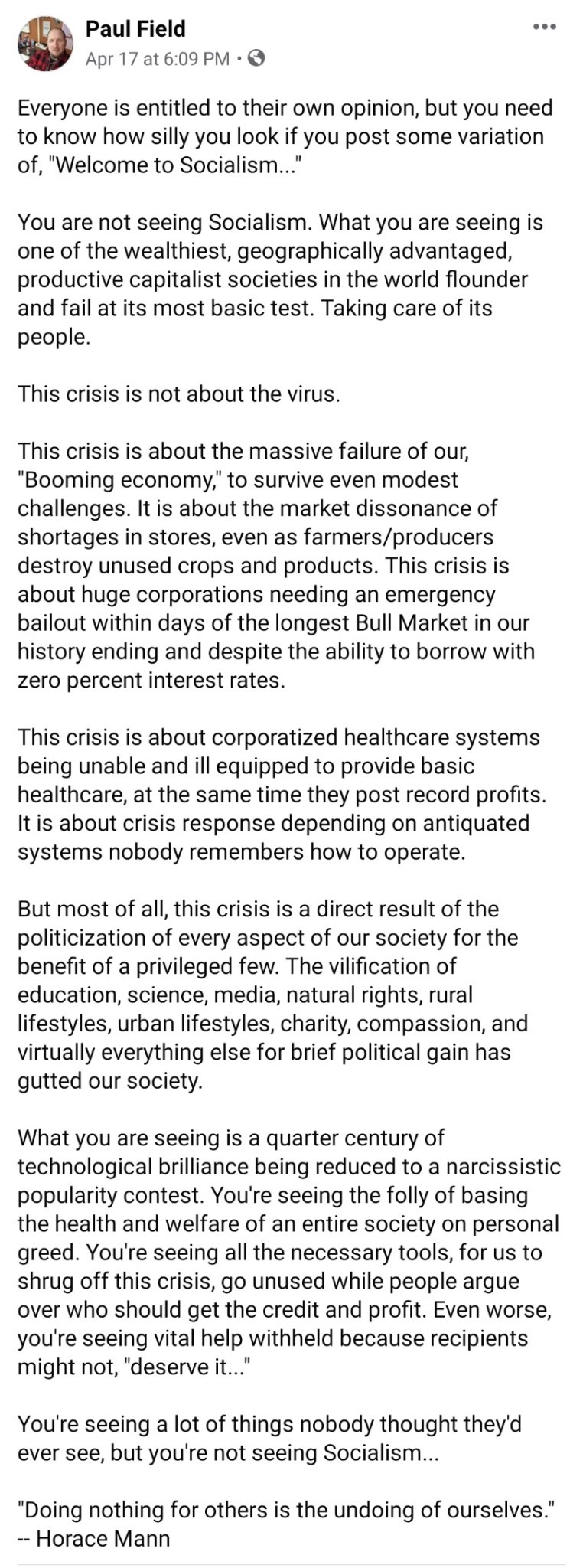
This is NOT Socialism. So Shut the Fuck Up.
Quote of the Day
Let me explain why I like to pay taxes for schools even though I personally don’t have a kid in school. It’s because I don’t like living in a country with a bunch of stupid people.” ~ John Green
Bat. Shit. Insane.
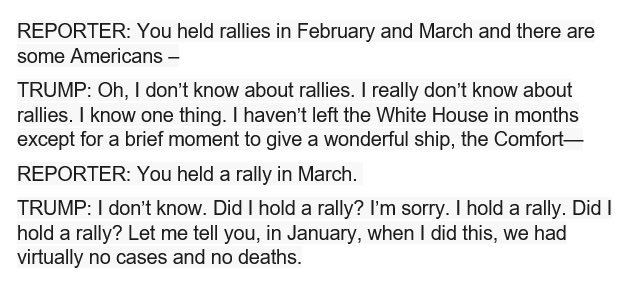
“VCR Head Cleaner”
“Define ‘Hypocrisy'” Part 2
You say it’s your right to protest, but you get angry when Kaepernick takes a knee.
You say your body is your own, but you get angry at a woman who demands the same.
You are against abortion, saying every life is precious, yet you are willing to sacrifice your parents and grandparents for the economy.
You claim coronavirus is fake, yet you wear a mask, gown, and gloves.
You say healthcare is a privilege, but want your covid-19 hospitalization covered.
You say socialism is bad, yet your hand is out for a stimulus check, unemployment benefits, and you wait in line at a food bank.
What you say confuses me.
Forgive me if I no longer care what you say.
[source]
A Gentle Reminder

Quote of the Day
Nothing could be worse than a return to normality. Historically, pandemics have forced humans to break with the past and imagine their world anew. This one is no different. It is a portal, a gateway between one world and the next.
We can choose to walk through it, dragging the carcasses of our prejudice and hatred, our avarice, our data banks and dead ideas, our dead rivers and smoky skies behind us. Or we can walk through lightly, with little luggage, ready to imagine another world, and ready to fight for it.” ~ Arundhati Roy
She gets it. And it makes my heart flutter.
San Francisco Had the 1918 Flu Under Control, and Then It Lifted Restrictions
History repeating…
From NBC News:
When the clock struck noon, the masks came off.
It was Nov. 21, 1918, and San Francisco residents gathered in the streets to celebrate not only the recent end of World War I and the Allies’ victory, but also the end of an onerous ordinance that shut down the city and required all residents and visitors to wear face coverings in public to stop the spread of the so-called Spanish flu.
A blaring whistle alerted gratified residents across the city and, as the San Francisco Chronicle reported at the time, “the sidewalks and runnels were strewn with the relics of a torturous month,” despite warnings from the health department to maintain face coverings. As celebrations continued and residents flocked to theaters, restaurants and other public spaces soon thereafter, city officials would soon learn their problems were far from over.
Now, amid the coronavirus pandemic, as President Donald Trump urges the reopening of the country and some states, such as Georgia, move to resume normal business even as new cases emerge, how officials acted during the 1918 flu pandemic, specifically in cities such as San Francisco, offers a cautionary tale about the dangers of doing so too soon.
Alex Navarro, the assistant director of the Center for the History of Medicine at the University of Michigan, which detailed historical accounts of the 1918-19 flu pandemic in 43 cities, told NBC News in a phone interview that officials often acted quickly at the time but restrictions were eased to varying degrees.
“There was a lot of pressure in pretty much all of these American cities to reopen,” said Navarro, whose research was done in conjunction with the Centers for Disease Control and Prevention. “When they removed those restrictions too soon, then many cities saw a resurgence in cases.”
The center’s research found that cities that used “early, sustained and layered” practices such as social distancing, closing public events and stay-at-home orders “fared better than those that did not.”
‘A lot of stock in masks’
Just two months earlier, in September, the first case of the so-called Spanish flu was identified in San Francisco and city health officials sprung into action.
Dr. William C. Hassler, the city’s health officer, ordered the local man who apparently brought the disease to the city after a trip to Chicago into quarantine to stop the disease from finding another human host, according to the center’s research of reported accounts.
But it was too late as the virus had already begun to make its way through the city. By mid-October, the cases jumped from 169 to 2,000 in just one week. Later that month, Mayor James Rolph put in place social distancing practices and met with Hassler, other health officials, local business owners as well as officials from the federal government to discuss a plan to close the city.
Some officials demurred at the idea, worried about damage to the city’s economy and the risk of causing public panic. Eventually, on Oct. 18, the city voted to shut down “all places of public amusement.”
City officials also strongly advocated for face coverings, which were at first optional and soon required by a mayoral order — the country’s first at the time, Navarro said.
“They were the one city that put a lot of stock in masks,” he said.
With the pandemic still raging across the globe during World War I, the mask also became a symbol of “wartime patriotism.”
“The man or woman or child who will not wear a mask now is a dangerous slacker,” a public service announcement from the American Red Cross said at the time, according to Navarro’s research.
That, however, did not stop people from defying the order — 110 people were arrested and given a $5 fine in one day in October shortly after the measure went into place, improperly wearing a mask or not wearing one entirely, according to the center’s research. Over time, the jails were overcrowded with people failing to adhere to the rules. However, most cases were later dismissed.
By the end of October, there were 20,000 cases and more than 1,000 deaths. However, as the days went on, the city saw a dip in newly reported cases, which prompted officials to begin to reopen the city and rescind the mask order. By the end of November, officials believed the city had stabilized.
ey were flattening that curve’
But three weeks after that celebration of removing their masks, the city saw a dramatic resurgence. Officials at first rejected the idea of reopening the city and suggested residents could voluntarily wear face coverings.
But shortly after the New Year in 1919, the city was hit with 600 new cases in one day, prompting the Board of Supervisors to re-enact the mandatory mask ordinance. Protests against the mandate eventually led to the formation of the Anti-Mask League. The detractors eventually got their way when the order was lifted in February.
San Francisco’s ambivalence to quarantine measures ran counter to other U.S. cities, though. Navarro said Los Angeles, for instance, implemented strict social distancing and face coverings about a week before San Francisco did and its measures stayed in place for weeks longer.
Navarro said that many cities often became complacent once they saw a dip in cases, and when a resurgence happens residents often question the public health guidance.
“They were flattening that curve; they just weren’t realizing it,” Navarro said. “A lot of people thought, ‘Well, what did we go through that for? It did have an impact, they just didn’t know it.”
As Dr. Anthony Fauci, the nation’s top infectious disease expert, put it in March, “If it looks like you’re overreacting, you’re probably doing the right thing.”
Back during the Spanish flu, San Fransisco’s failure to take swift action and the decision to ease restrictions after only a few weeks had huge ramifications. With 45,000 cases and more than 3,000 deaths, the city was reported to have been one of, if not, the hardest-hit big city.
Roughly a century later, the San Francisco Bay Area imposed the nation’s first stay-at-home order and other restrictions when coronavirus cases were rapidly growing, placing a spotlight on its pandemic response again. Those aggressive actions are credited with saving lives, avoiding the scale of the tragedy found in New York City.
Mayor London Breed said she took heed of history and implemented an order last week requiring anyone setting foot on the streets of San Francisco, outside their homes, to wear a face covering.
Breed told MSNBC’s Chris Hayes in an appearance in mid-April that she has considered the city’s history with past pandemics, such as the HIV/AIDS crisis and the Spanish flu when deciding to ease restrictions.
“Just because San Francisco is being praised for flattening the curve, we’re not there yet,” she said. “And so we cannot let up just because for some reason we believe that we’re in a better place.”
[Source]
It’s Amazing, Isn’t It?
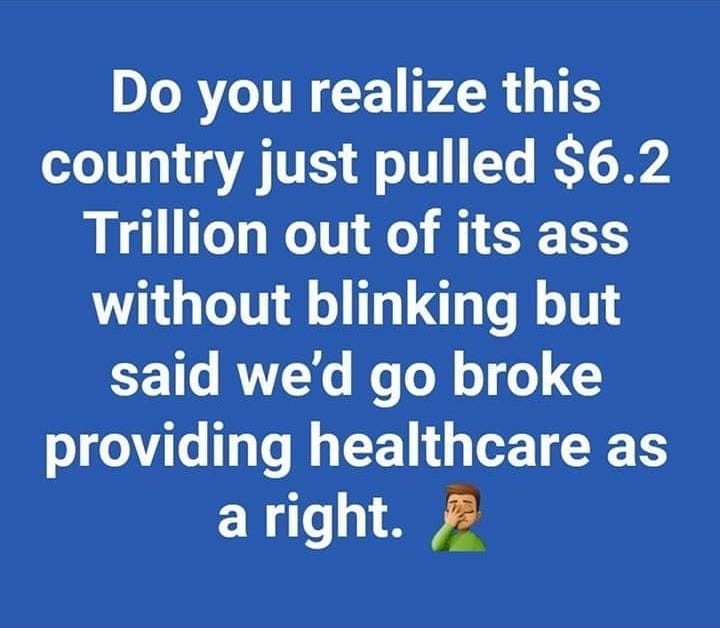
Why We Can’t Build
Ezra Klein, writing at Vox, on Marc Andreeson’s “It’s Time to Build” call to arms:
Which goes to a problem that afflicts governance at all levels of America: If you live in a vetocracy and one of your two political parties actively wants the government to work poorly, the government will work poorly. And so it does.
I don’t think that’ll be enough. So let me end with my answer to Andreessen’s question: What should we build? We should build institutions biased toward action and ambition, rather than inaction and incrementalism. […] At the federal level, I’d get rid of the filibuster, simplify the committee system, democratize elections, and make sure majorities could implement their agendas once elected. As I’ve argued for years, we should prefer the problems of a system where elected majorities can fulfill the promises that got them elected to one where elected majorities cannot deliver on the promises that the American people voted for. The latter system, which is the one Americans live in now, drives frustration and dysfunction.
Full-throttled endorsement for this basic notion from me—knowing full well that political tides ebb and flow. Let the party in power try new things. If they turn out to be unpopular, the tide will change and so too will the laws and policies. Conduct politics more like we do science: try new ideas and see what happens.