0 comments
Shitposting since 2005
0 comments
0 comments
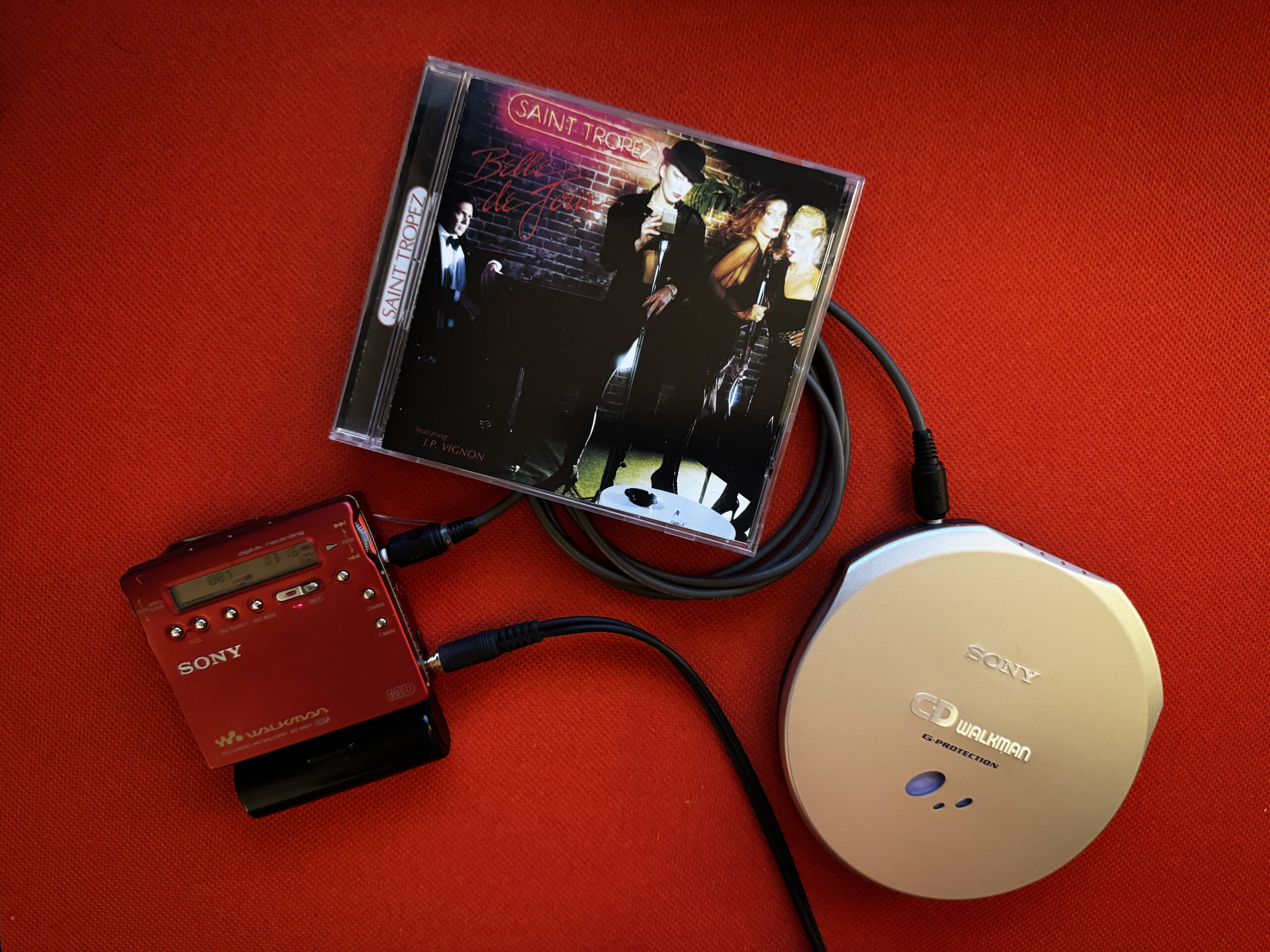
I’d been a fan of Saint Tropez since their initial release, Je T’aime in 1977. It was sexy, slow-dancing disco, and in fact the main track from that album, Violation was the first time I’d ever slow danced with another man, David Martinez.
Belle de Jour is one of my favorite disco records from 1979 and one of only two album covers I have framed.
After I heard Belle De Jour the first time that night back in ’79, I left the club, gave up my prime parking spot and drove downtown to Circles Records. Firstly because if anyone in town had this record, it would be them, and secondly—well, they were open until midnight…
Sadly, they didn’t yet have it in stock, so I drove back to the club and was rewarded later that evening by the DJ playing the track a second time.
I did finally get a copy not too long after that and—like J’Taime—acquired a copy of its own translucent pink vinyl version via Discogs about ten years ago.
0 comments
0 comments
0 comments
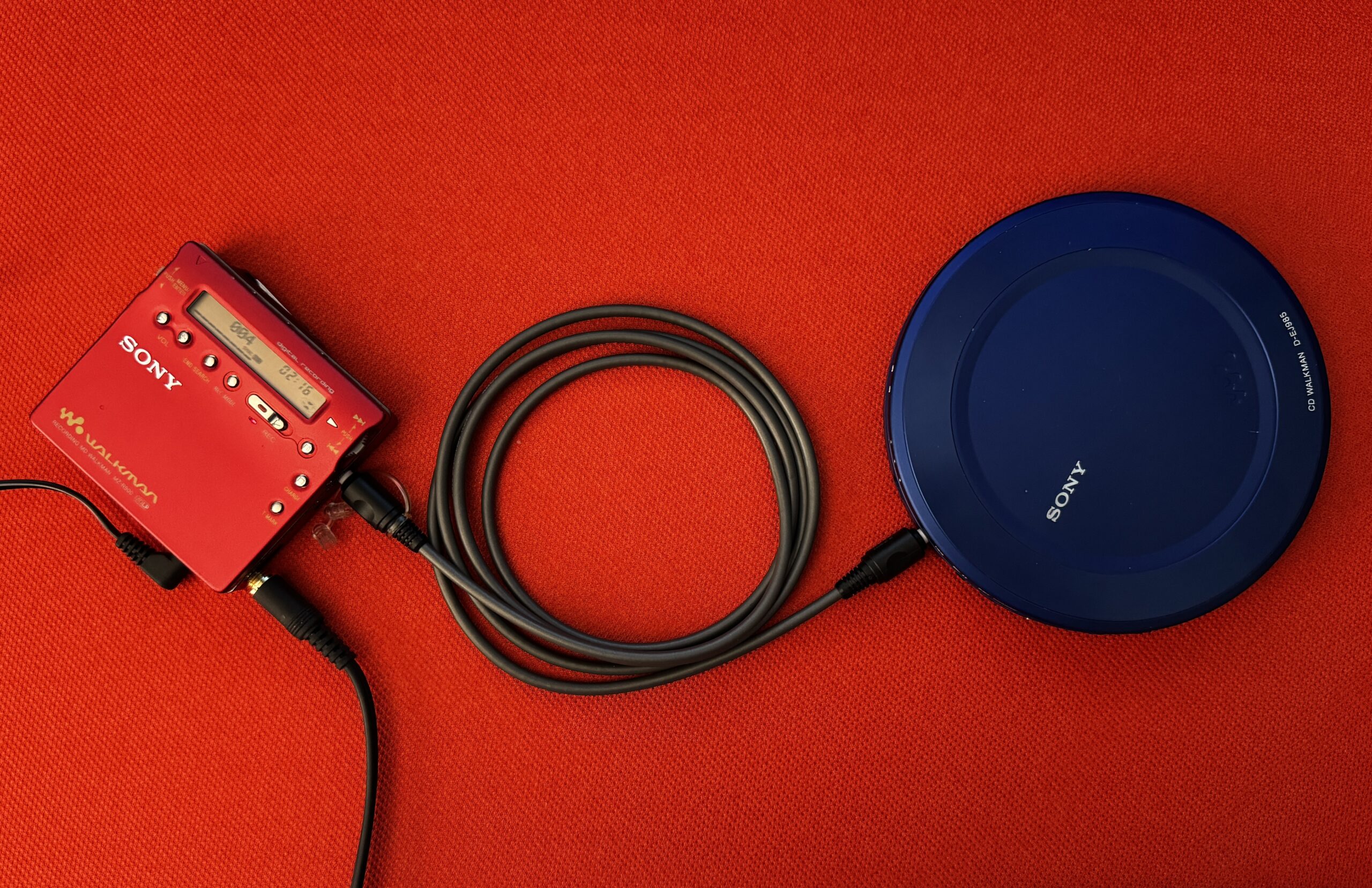
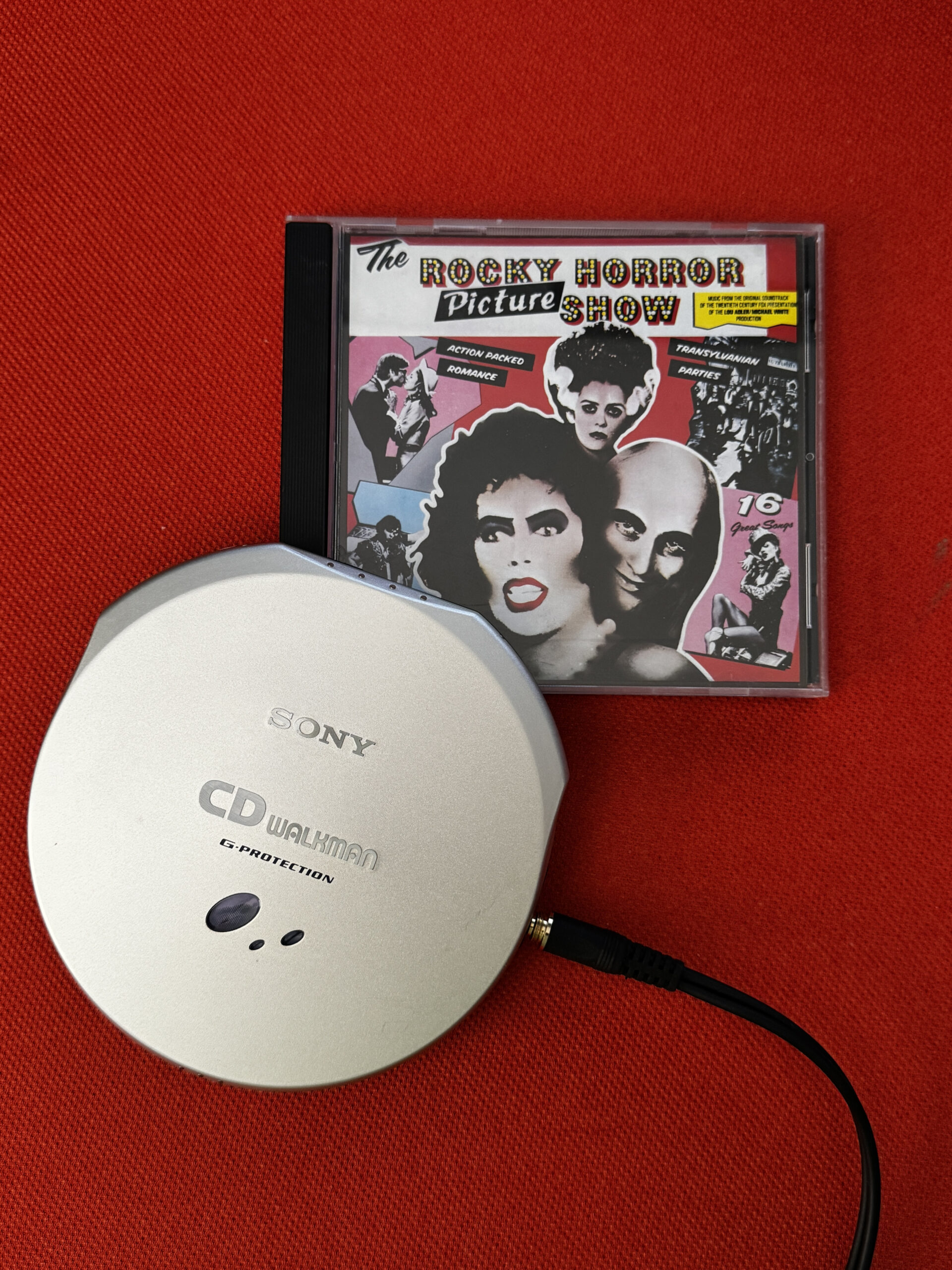
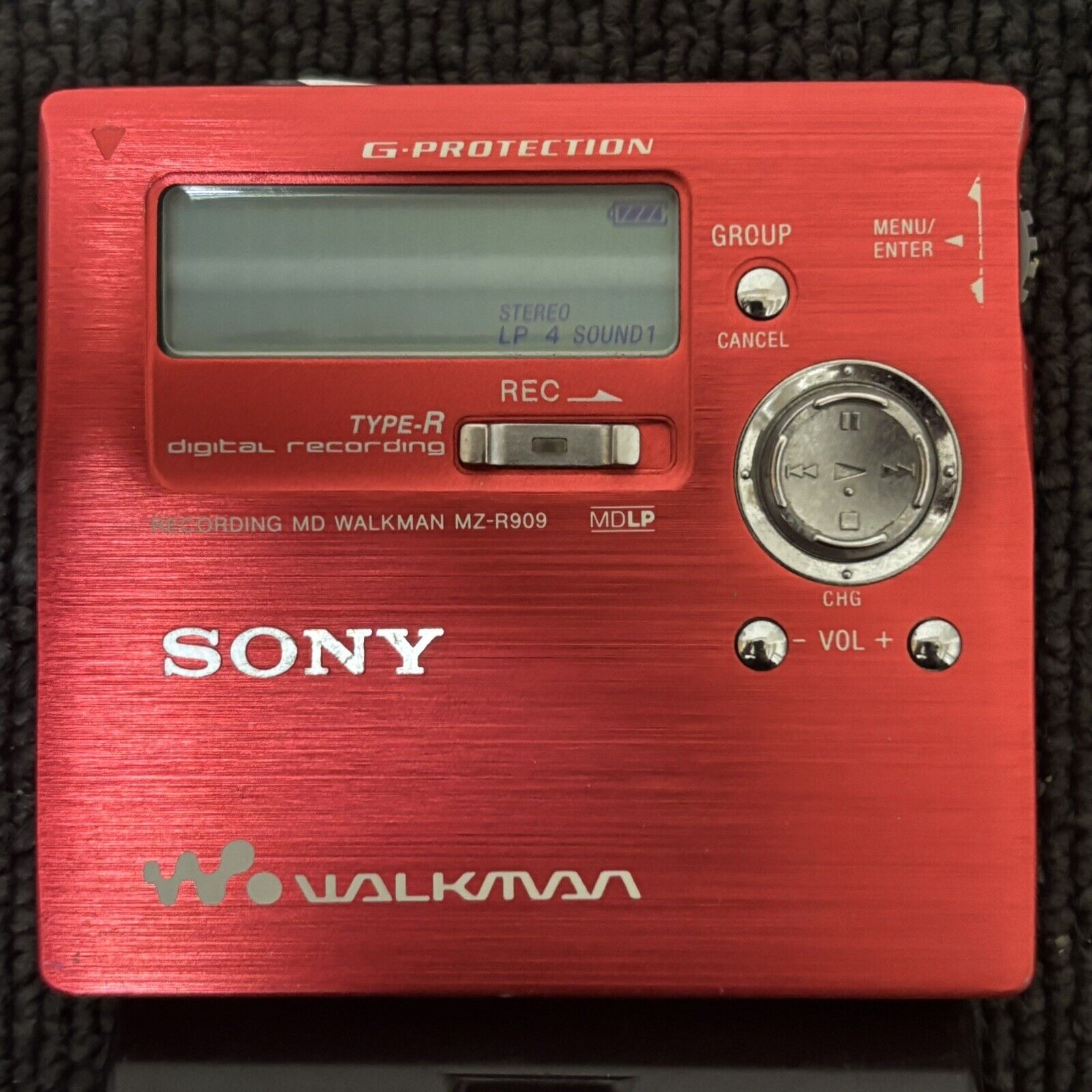
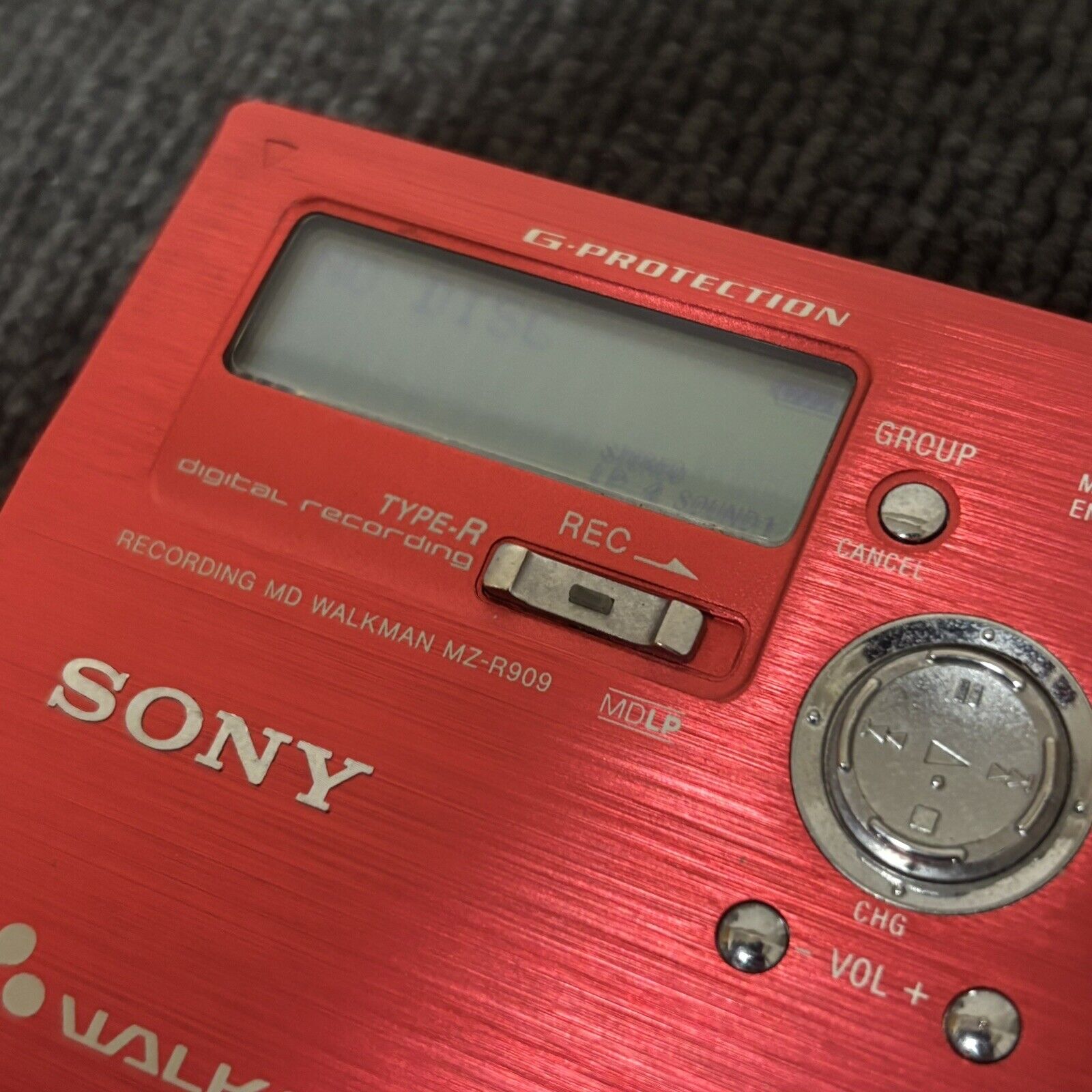
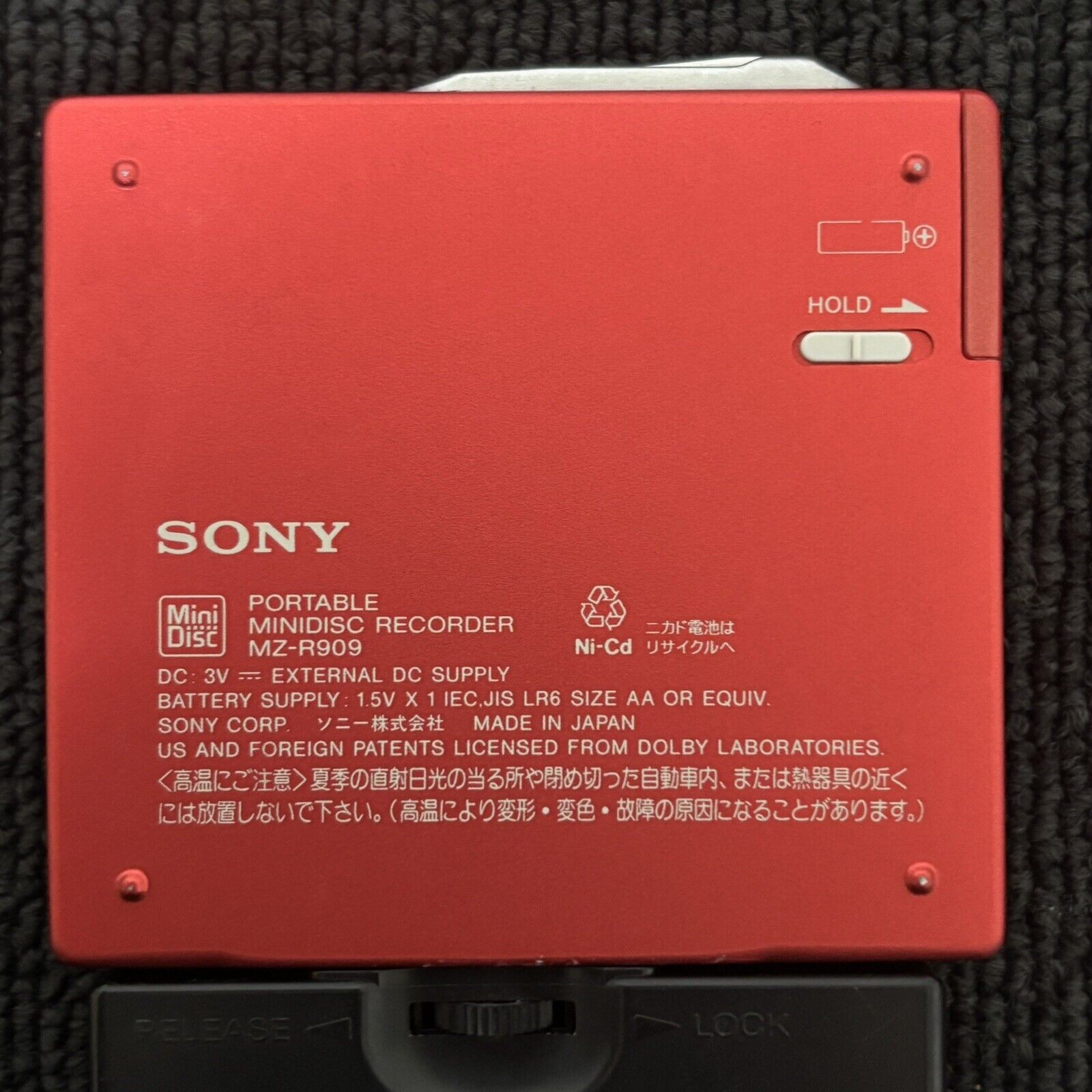
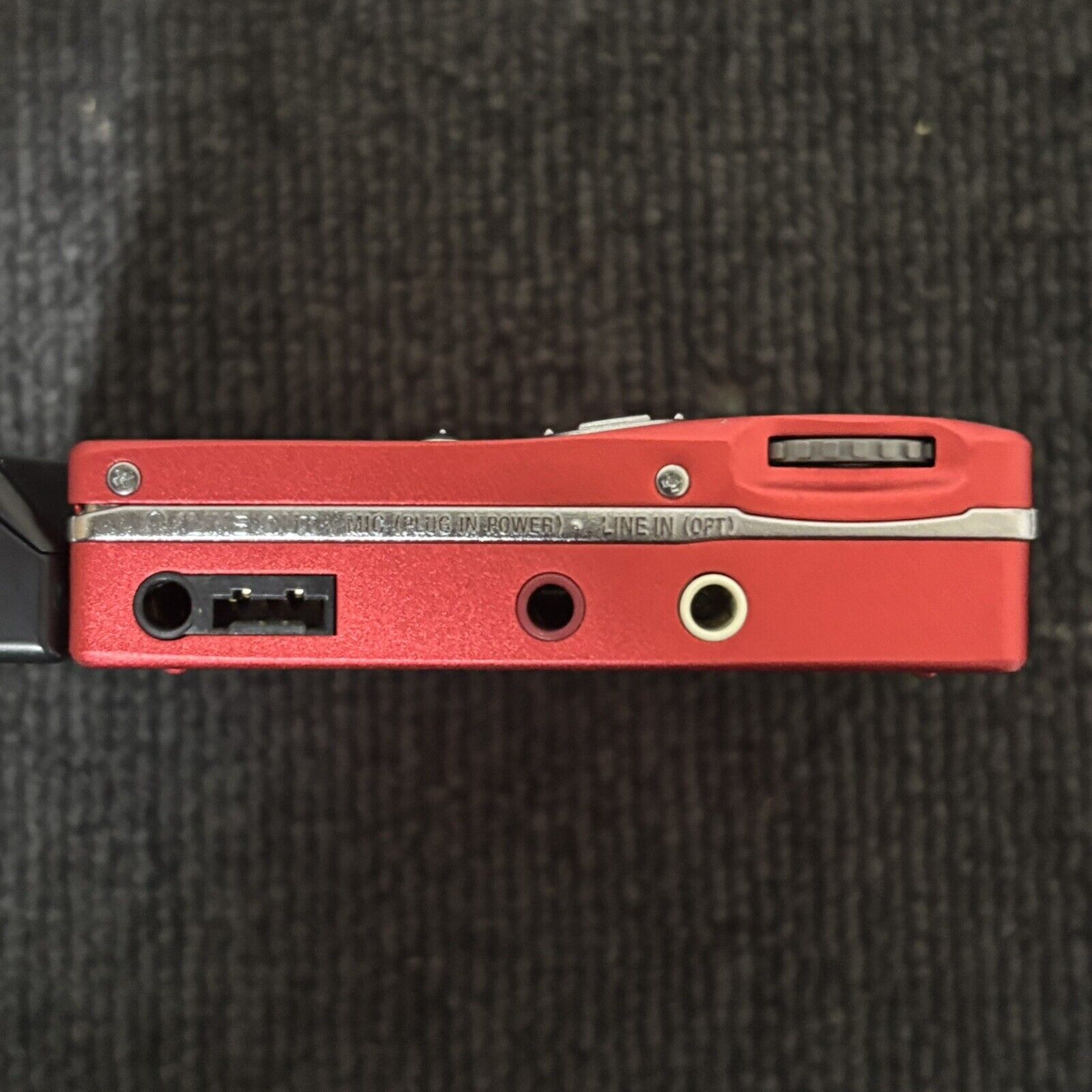
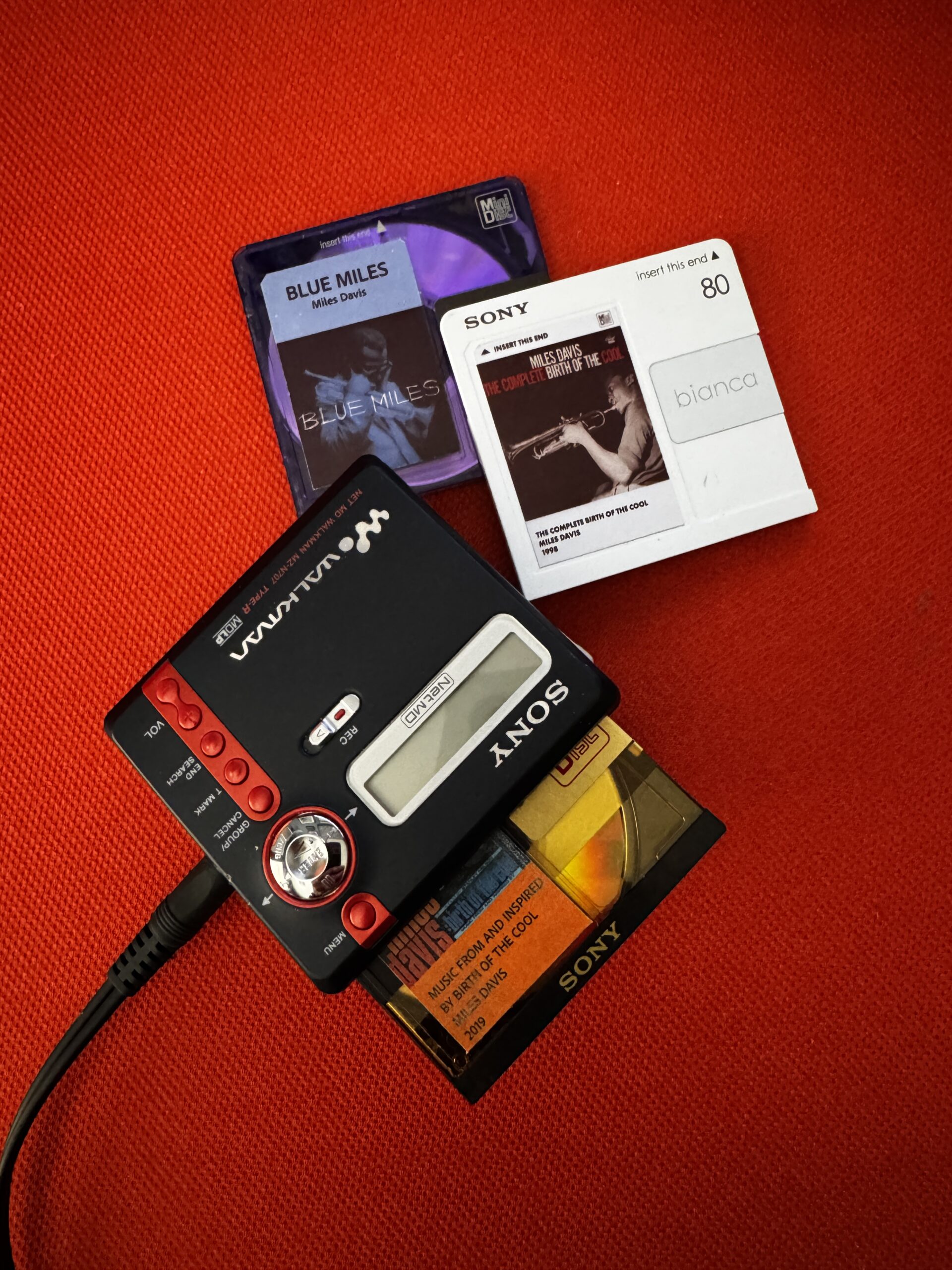
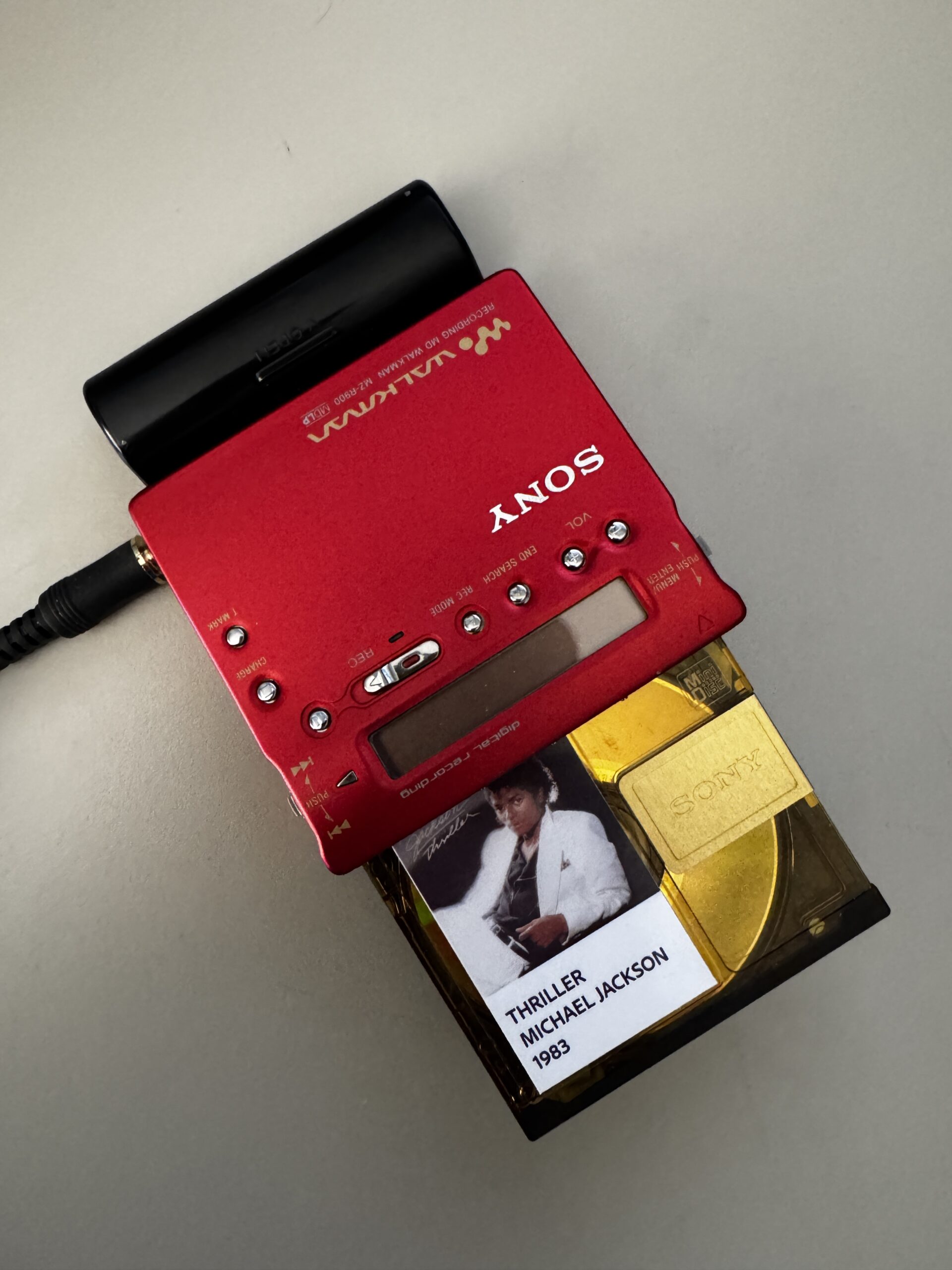
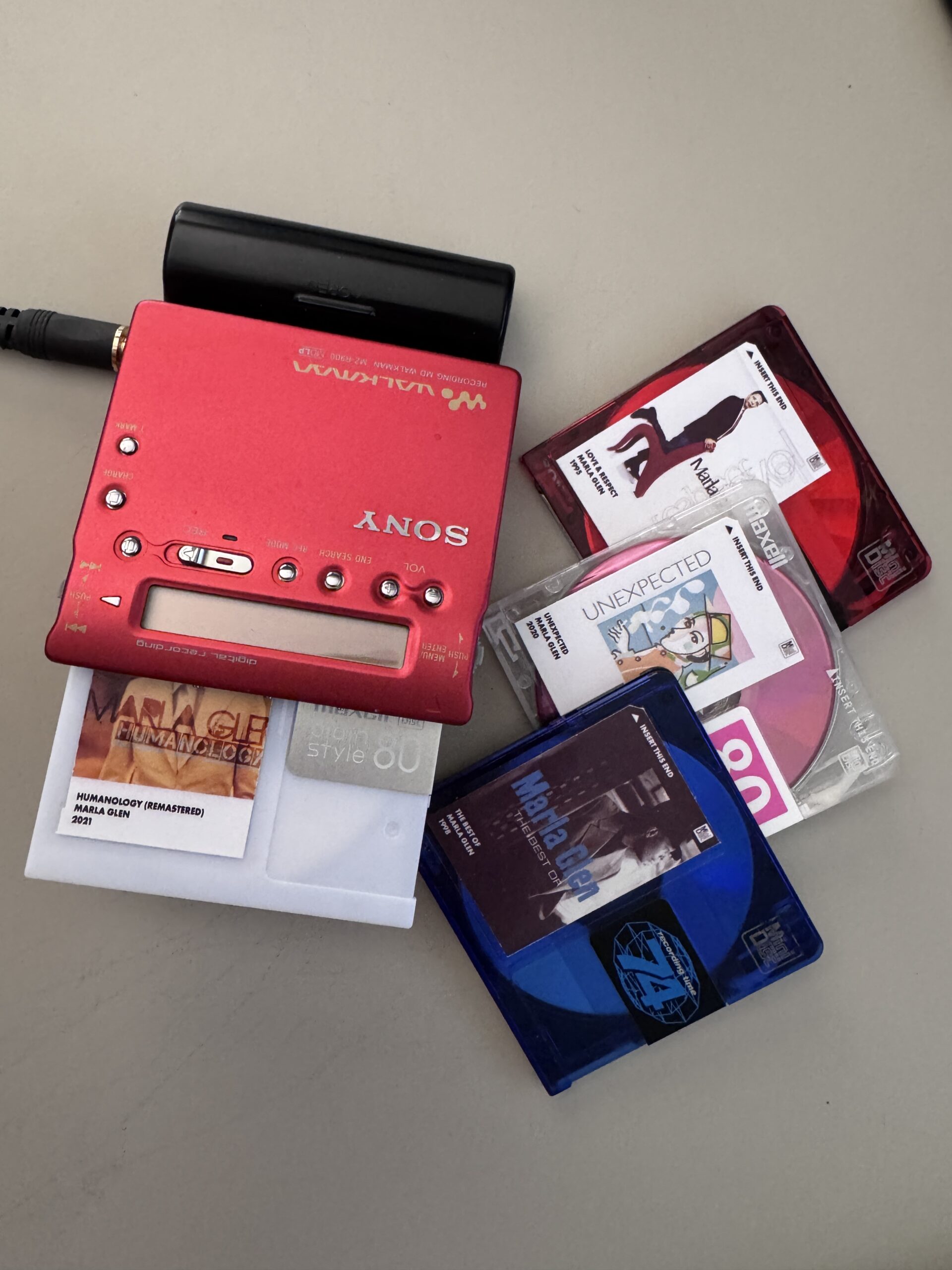
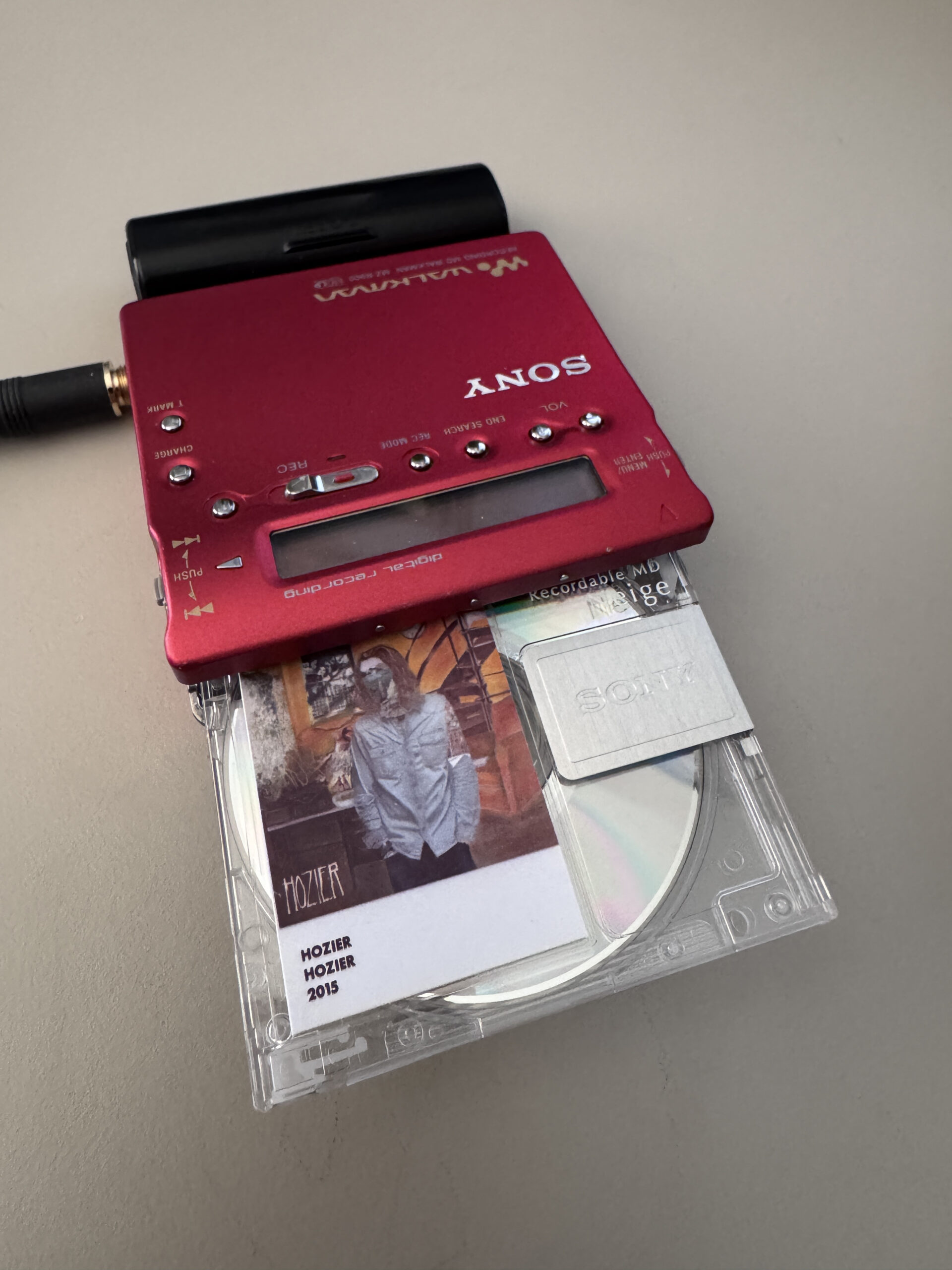
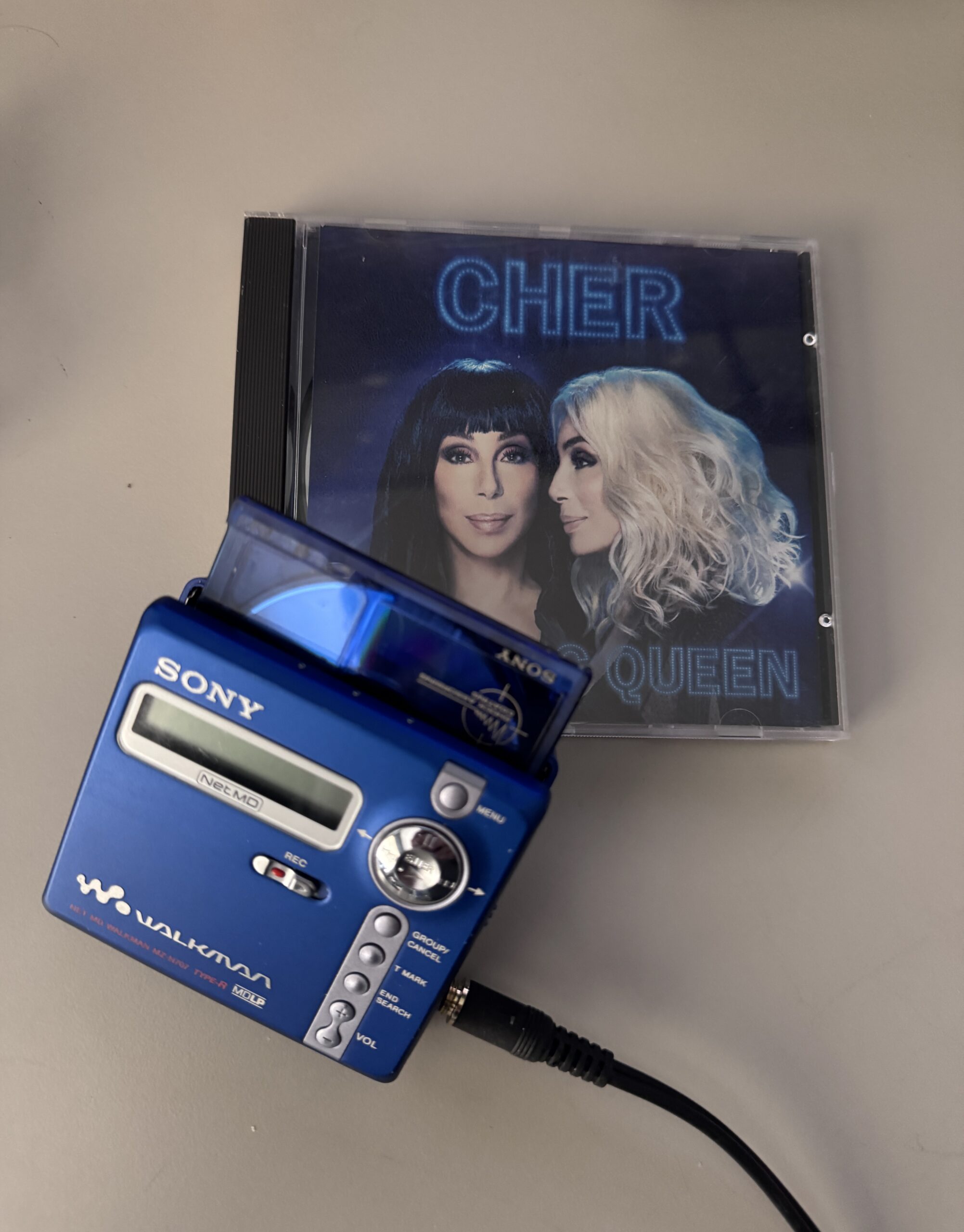
I’ve never dubbed this way before. Probably because I didn’t have the proper cable. Digitally dubbing via portables is easier than deck-to-deck. (That’s deck, you perverts!) Transfers track marks and everything.
I found a brand new, unopened original Sony OEM optical cable on eBay for less money than buying an Amazon Essentials.
And I’m loving my new desk mat.
0 comments
0 comments
0 comments
0 comments
0 comments
0 comments

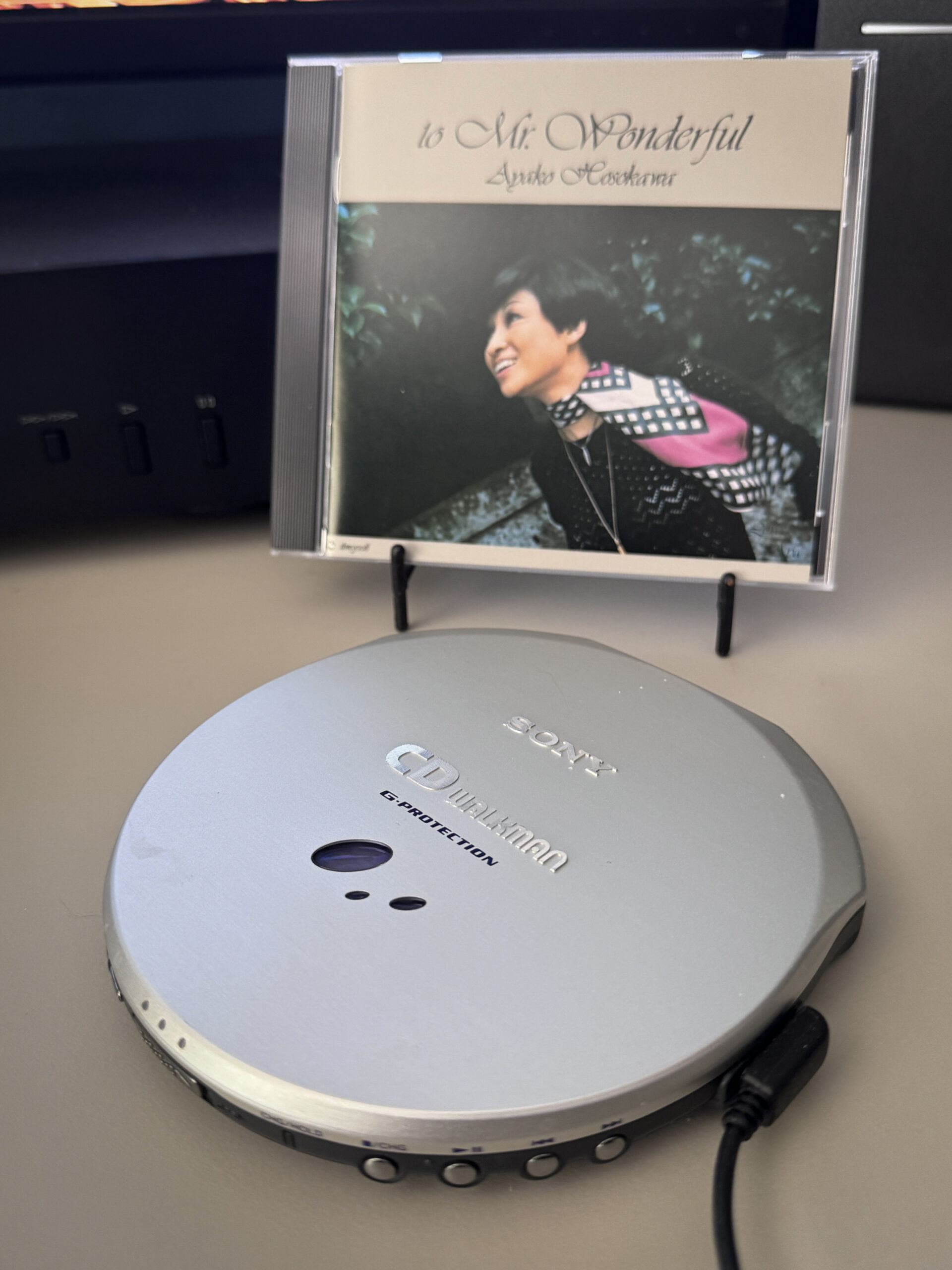
Almost every time I post one of Sony’s early Walkman models, someone asks why the company cannot simply bring them back. I understand why. There are stories almost every week announcing that cassettes and CDs are back, and several manufacturers now sell new players for both formats. From the outside, it can look as though Sony only needs to choose one, update a few things, and put it back into production.
Akira Tanaka, who spent years designing Walkman at Sony, says it would be much closer to starting over.
Tanaka is a former Sony mechanical engineer whose published project list spans four types of Walkman: five cassette models, eight CD models, two MiniDisc models, and ten generations of file-based players. He was project manager for the camera-equipped MZ-DH10Pand the MZ-RH1, Sony’s final Hi-MD Walkman. He later served as mechanical engineering manager for several digital Walkman generations, including the A820 and X1000 series.

He remained at Sony until taking early retirement in February 2025. Today, he owns more than 70 Walkman products and 279 catalogs, and he writes about the machines he helped create almost every day.
Tanaka is probably my favorite person to follow online. I eagerly wait for anything he has to say about Walkman history because nobody else has his combination of firsthand experience, technical knowledge, and personal archive. He has answered my questions, looked at my work, and helped me with the Obsolete Sony archive. I think of him as my Walkman senpai, and I am still slightly amazed that I get to talk with someone who helped make the products I spend so much time documenting.
In a recent post, Tanaka gave six reasons Sony would have difficulty reissuing its cassette, CD, or MiniDisc Walkman models. His explanation reveals how much of the world that produced the Walkman has disappeared.
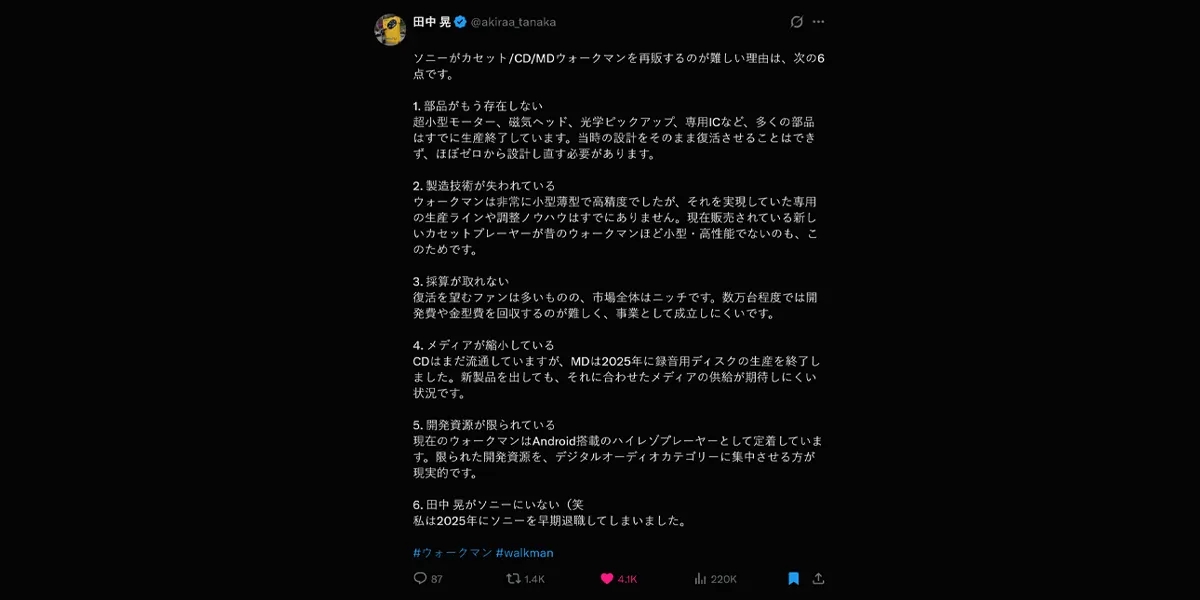
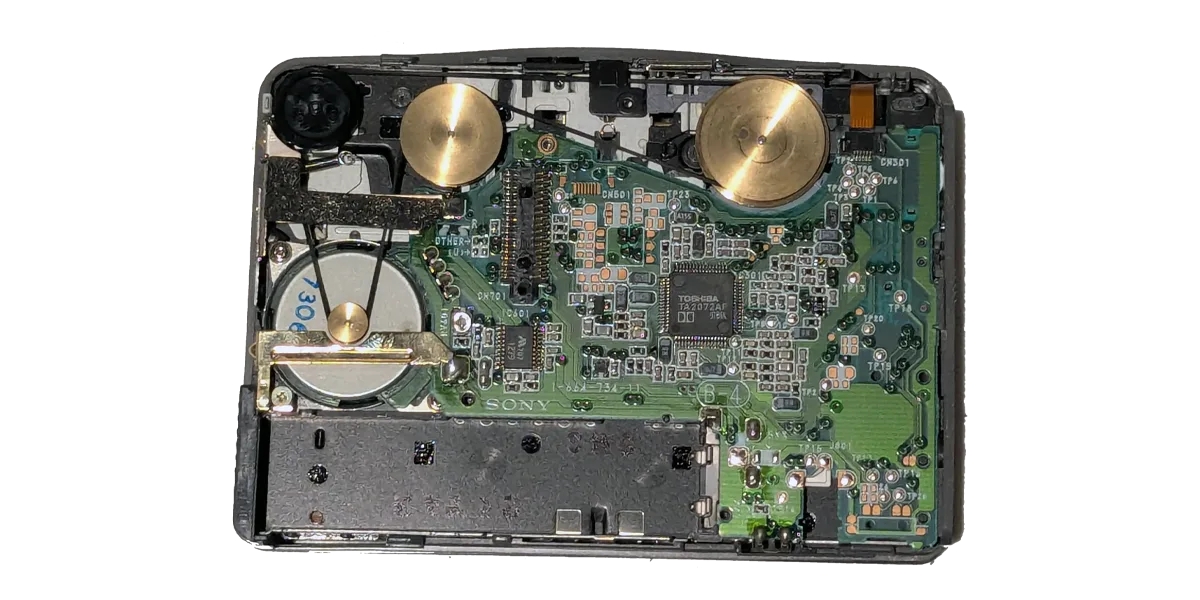
The miniature motors, magnetic heads, optical pickups, and proprietary integrated circuits used by these players have gone out of production. Sony cannot pull an old bill of materials from its files and order everything again. Suppliers moved on, production equipment was retired, and some companies may no longer be in those businesses. A working WM-EX2000 can make this difficult to believe, but any drawings still held by Sony describe components that nobody manufactures today.
Replacements could be designed, but nearly everything around them would need to change. A new cassette Walkman would need a transport, motor, head, control system, power supply, tooling, and housing built around components available now. A CD Walkman would need a new optical assembly and disc mechanism. A MiniDisc player would add a magnetic recording head, signal processing, and software. Sony can do all of this, but each format would require a new development program.
Later Walkman models were extremely small, thin, and precise. Sony reached those dimensions by designing each part around the others. Motors became flatter, circuit boards wrapped around moving assemblies, clearances almost disappeared, and the exterior casing sometimes became part of the structure.
That work depended on dedicated production lines and adjustment procedures. Drawings can record dimensions and tolerances, but they do not always record how a line was tuned after the first few thousand units, which jig solved an alignment problem, or which adjustment stopped a mechanism from wearing too quickly. Much of that knowledge stayed with the engineers and factory workers who used it.
This is why a new cassette player can be larger and mechanically worse than a Walkman sold more than 30 years ago. The factories making portable cassette mechanisms today are serving a small, inexpensive market. During the Walkman’s peak, shaving another millimeter from the body could justify a new motor and new tooling. That level of spending ended with the mass market.
Plenty of people say they want a new cassette or MiniDisc Walkman, but the total market is still small. Collectors and physical-media fans are active online, which can make demand look larger than it is.
According to Tanaka, even sales in the tens of thousands might not recover the development and tooling costs. Low production volume would also raise the price of every specialized component. By the time Sony covered manufacturing, warranty service, and support, the player would be far more expensive than the simple reissue many fans have in mind.
CDs are still widely available, and cassettes continue to be manufactured in smaller quantities. MiniDisc is different. In January 2025, Sony announced that it would end production of all recordable MiniDisc media the following month, along with MD Data discs, MiniDV cassettes, and recordable Blu-ray media. Sony also said there would be no successor products.
A new MD Walkman would arrive after Sony stopped making blank discs for it. Used and unopened media will remain available for years, but the supply can only decline. Relaunching the hardware would make little sense unless Sony also restarted the media.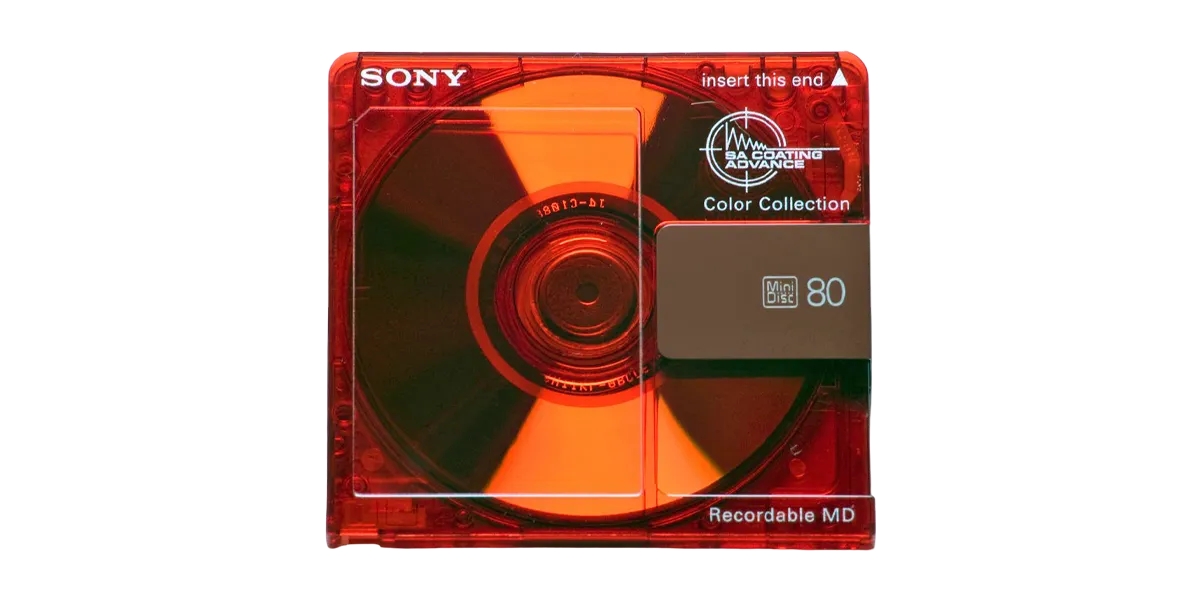
Sony still develops Walkman. They are Android-based Hi-Res players built for local files and streaming, and that is where Tanaka believes the company can realistically concentrate its limited engineering staff and development budget. These players may have little in common with a cassette Walkman beyond the name and the fact that both play music through headphones. Sony chose to continue Walkman as a digital audio category and retire the cassette, CD, and MiniDisc mechanisms.
Tanaka makes his own departure the sixth reason. His joke points to another loss: Sony still has drawings, reports, patents, and test data, but it no longer has every engineer who remembers why a part was changed, which prototype failed, or how a production problem was fixed.
Some of that knowledge was passed to younger engineers, as Sony’s interview with Tanaka about the NW-X1000 shows. Once Sony stopped making mechanical Walkman models, however, there was no reason to keep passing along every detail of how to manufacture one.
Most of Tanaka’s six reasons are easy enough to guess. I still found it special to hear them from him. Sony has always been a company in motion. It launches the next thing and rarely explains why the old one can no longer be made. The Walkman moved from cassette to CD, MiniDisc, flash memory, and eventually Android, while the people, suppliers, tools, and knowledge behind each generation scattered.
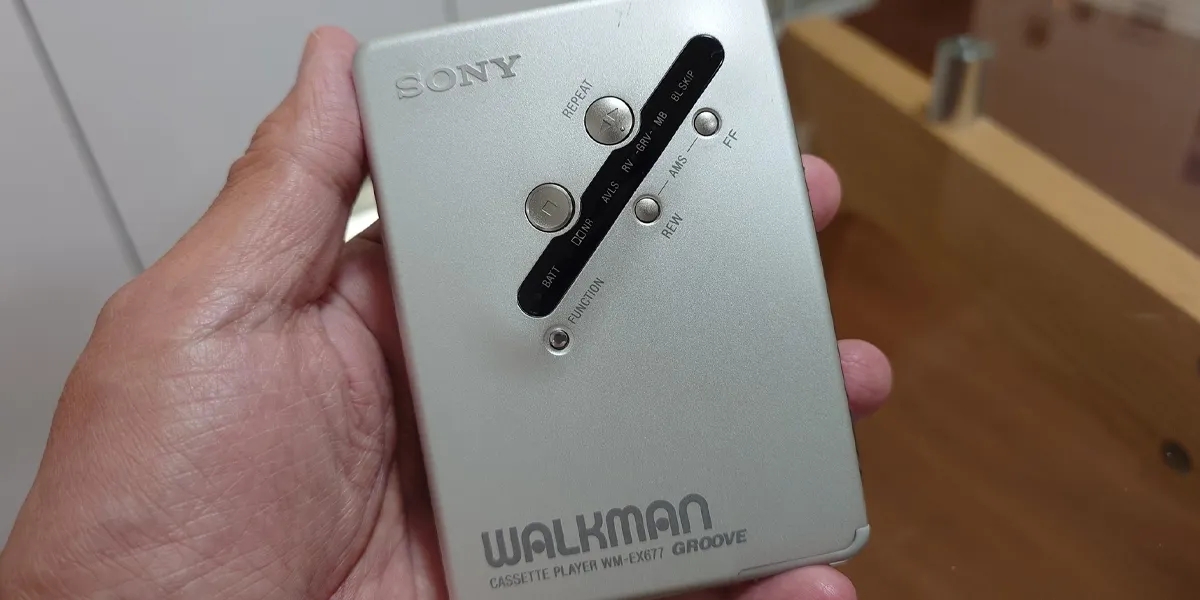
Tanaka was close enough to this history to know what disappeared along the way. Sony will probably never publish a formal explanation of why those old Walkman models cannot come back. His post may be the closest answer we will ever get.
Make sure to follow Akira Tanaka on X, where he continues to share firsthand stories from Sony’s portable audio history.
0 comments
0 comments
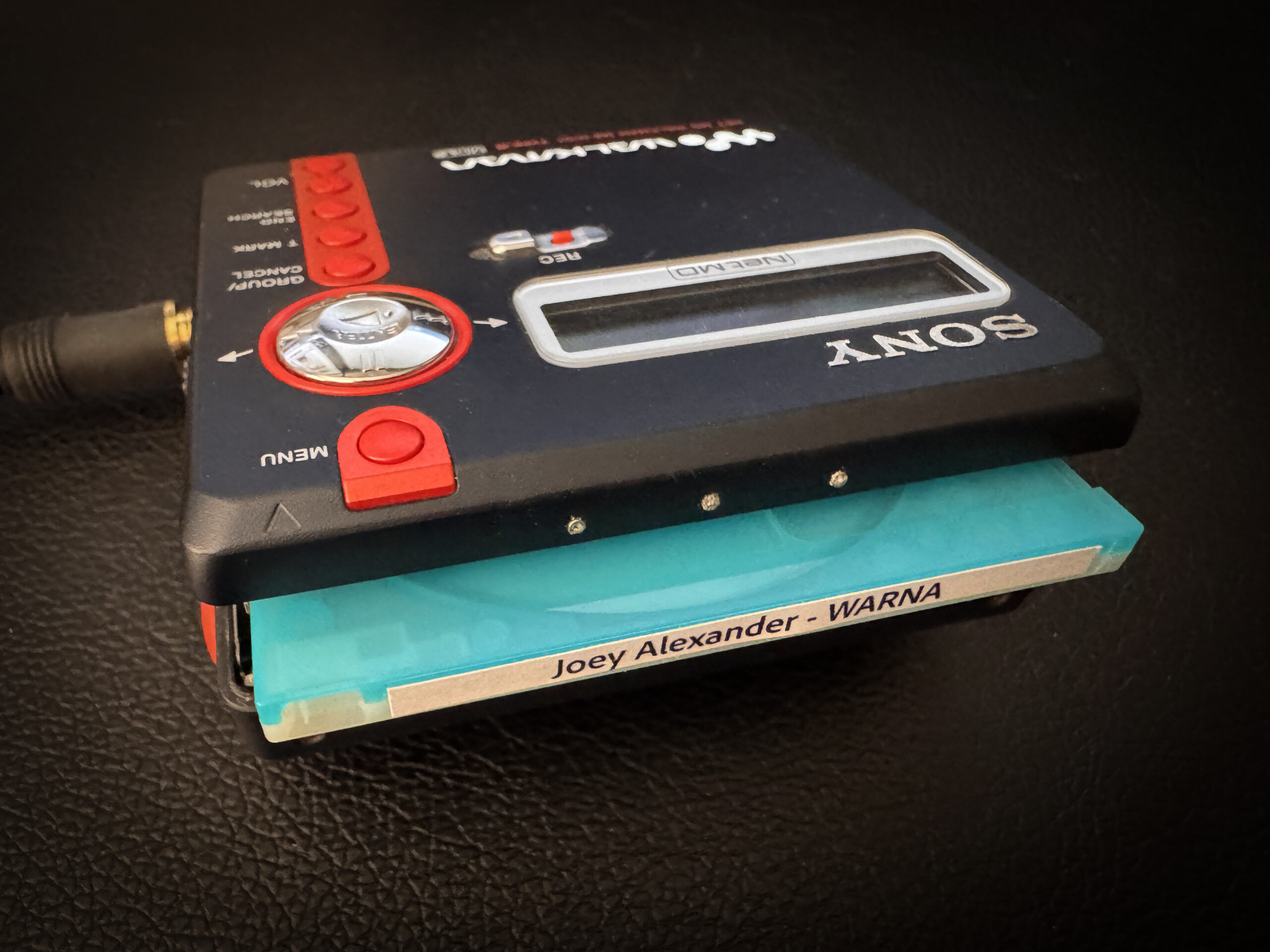
Joey Alexander – Warna (2019)
And believe me, it’s needed.
I took Sophie in for her annual shots this morning.

She was such a good girl however, that we stopped for a pup cup on the way home.
Prior to leaving this morning, I was about to do my usual breakfast routine, but discovered I was out of the Kate Farms solution (haven’t received my monthly supply from the healthcare distributor and my most recent order from Amazon hadn’t arrived yet), so I combined my iced coffee with two cartons of isosource. All was well and good until right before I left for the vet and the most horrific reflux hit. Apparently I overdid it on the volume and my stomach didn’t like it one bit.
The worst part of not being able to swallow is when you get reflux. If everything were functioning properly, I’d whip up a glass of baking soda solution, swallow it, and everything would be right as rain. Unfortunately, that’s no longer an option. Yeah, I can still do the baking soda solution via the g-tube (after using the tube to drain the excess stomach contents) to quiet my stomach, but there’s no way of immediately relieving the burn left in my throat from the reflux. And of course there was a certain amount of aspiration, so my O2 (after being 98-100% for weeks now) took a—thankfully brief—nosedive to under 90%. It’s since recovered to the mid 90s, but damn…it wiped me out and I wanted nothing more upon returning home than to take a nap.
That’s passed now, but it’s still going to be a very low-key, quiet afternoon and Joey Alexander is a perfect accompaniment for that.
0 comments
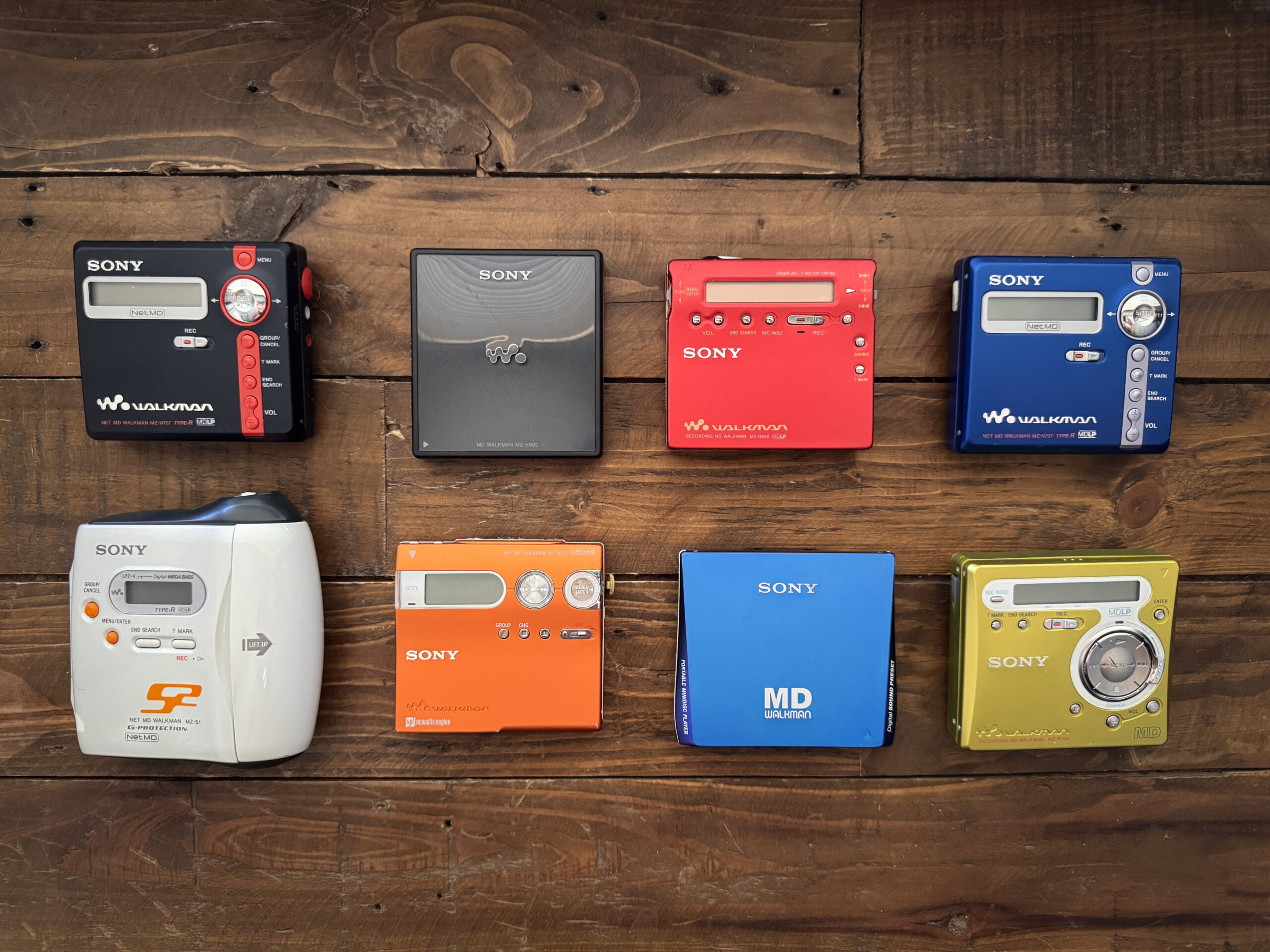
Famous last words.
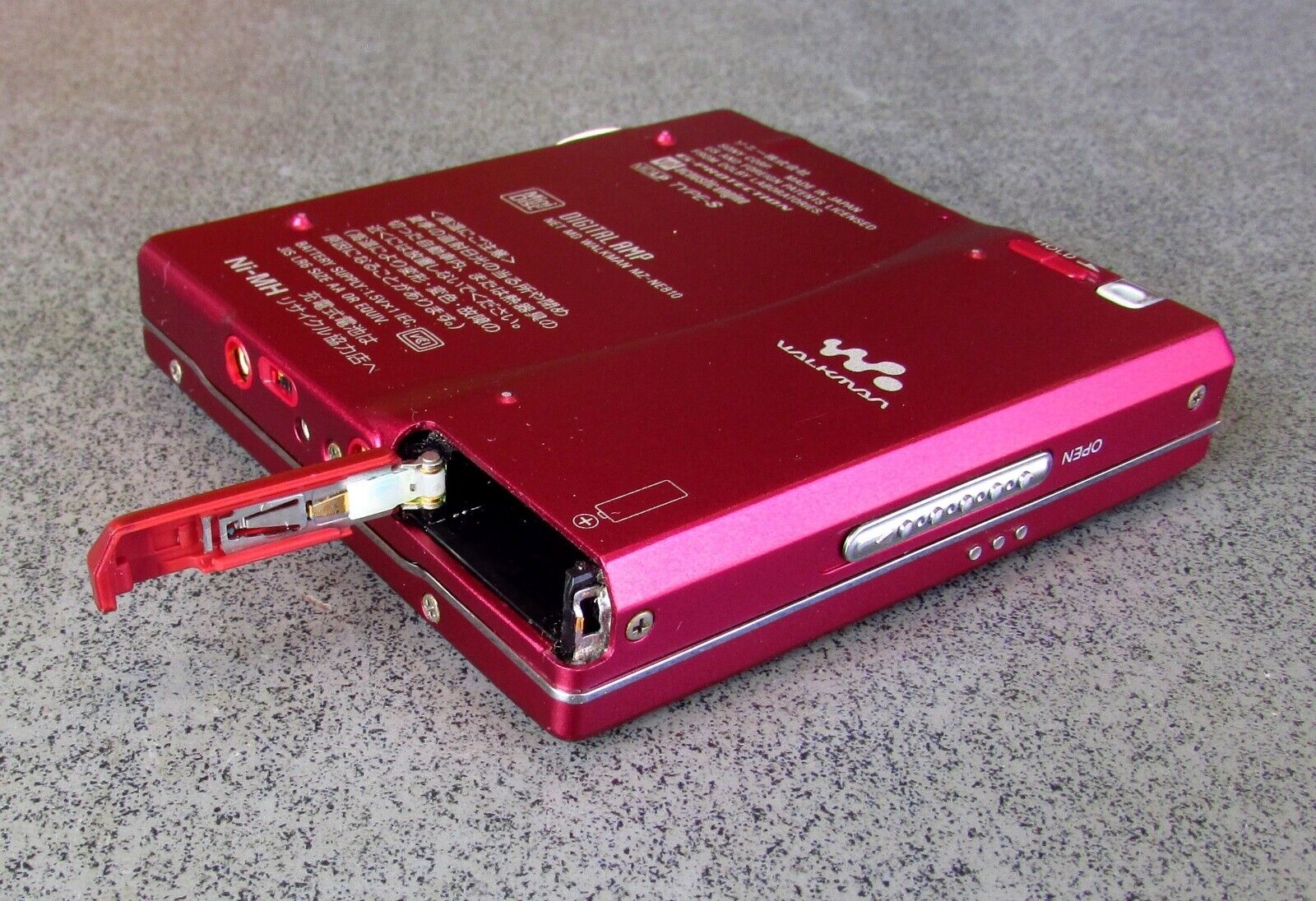
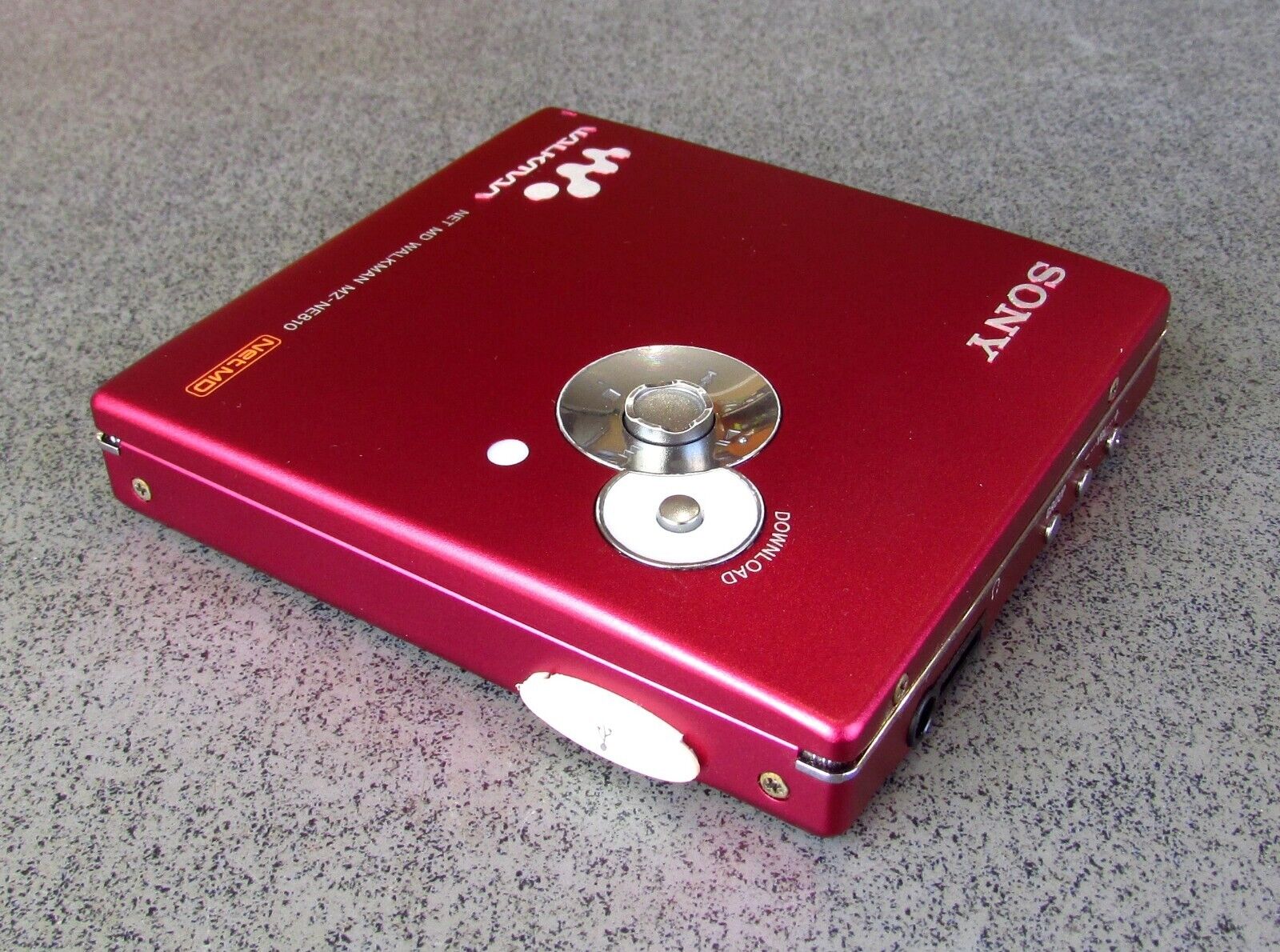
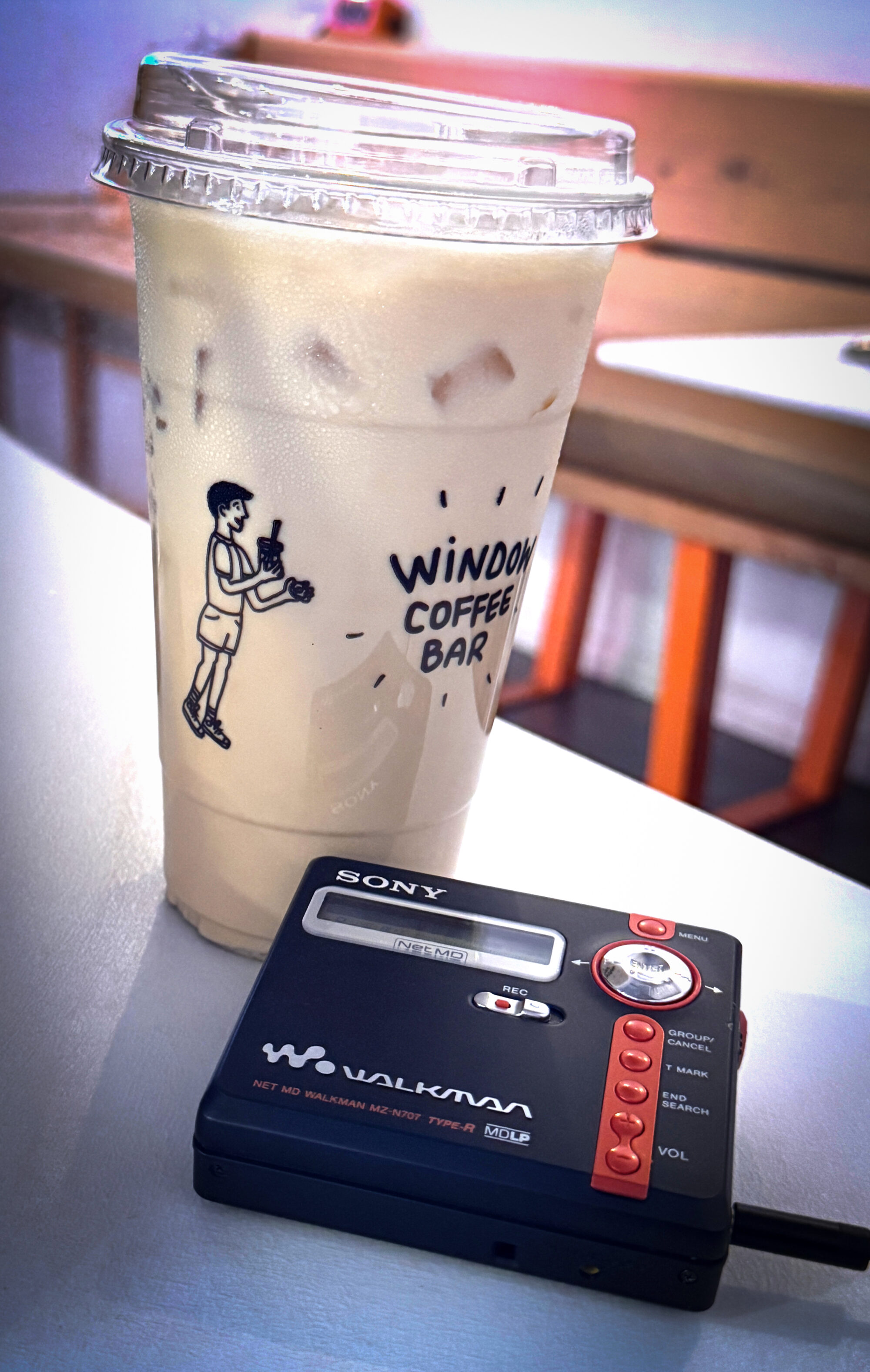
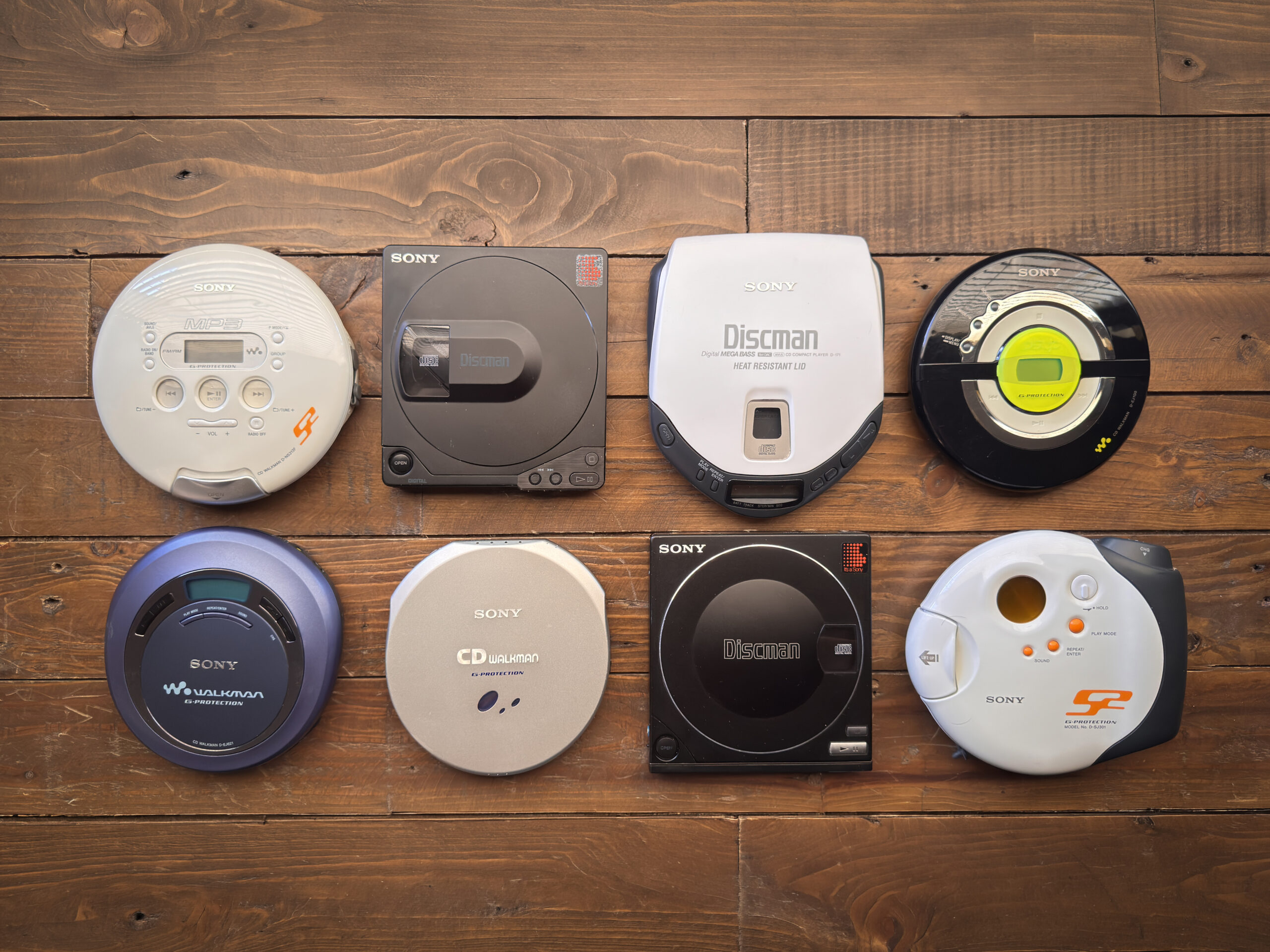
I suppose there are worst things to spend my money on, but collecting shit is a fun hobby no matter what you collect, be it antiques, Hummel figurines, Beanie Babies, Candlewick glassware (in the case of my sister), or in my case, portable CD/Minidisc players.
Yeah, I know I should be saving, saving, saving with all the uncertainty in the world right now, but let’s face it: with that madman in the White House everything could go up in a mushroom cloud at any moment because someone disrespected his fragile ego one too many times and the only solution in his addled brain was to start WWIII. And even if it doesn’t get that crazy, none of us has any guarantee of tomorrow—especially if you’re dealing with ongoing health issues—so find joy in what and where you can.
And these little nuggets bring the geek in me much joy.
I’ll admit there is a fine line between collecting and hoarding, however. Fortunately I don’t think I’ve crossed that line, nor have any of my living relatives. My late father, however, was not a collector. He was a hoarder, and no matter how many times we tried to help him declutter (or even so much suggesting that he move into a new apartment) we were met with incredible resistance to the point of outright meltdowns. When he went into skilled nursing and we knew he’d never be going home again, I spent a couple days cleaning his place while I was in town and ended up filling an entire residential dumpster. After he passed it was a Herculean task for my sister (I was back in Denver at the time) to clean the rest of his place out and get it ready for sale.
I hope that when my time comes, whoever has to go through all my shit doesn’t feel like I had crossed the line.
0 comments
Madonna: True Blue (1986)
From Behind the Grooves: (sadly, link is broken as of 2026)
“True Blue”, the third album by Madonna is released. Produced by Madonna, Patrick Leonard and Stephen Bray, it is recorded at Channel Recording in Los Angeles, CA from December 1985 – April 1986. After the massive whirlwind success of the “Like A Virgin” album and “The Virgin Tour”, the pop superstar does not rest on her laurels, beginning work on the crucial follow up at the end of 1985. Working with long time collaborator Stephen Bray and new producer Patrick Leonard (Michael Jackson, Jody Watley), the album is praised upon its release as her strongest effort to date, and is widely regarded today as one of the best albums of her career. It spins off five top five hits including “Live To Tell” (#1 Pop), “Papa Don’t Preach” (#1 Pop), “Open Your Heart” (#1 Pop) and the title track (#3 Pop). “True Blue” also marks the beginning Madonna’s long association with famed fashion photographer Herb Ritts who shoots the LP’s iconic cover photo. The original LP package also includes a poster of the album cover shot. As a promotion for the album, MTV sponsors the “Make My Video” contest, inviting viewers to submit their own visual interpretations of the title track. The winning entry comes from Angel Gracia and Cliff Guest, whose black & white clip is rotated heavily on the video channel. The pair are awarded a check for $25,000 by the pop superstar herself at MTV’s New York studios. The alternate video directed by James Foley, featuring Madonna with close friends actress Debi Mazur and fashion designer Erika Belle is shown largely outside the US. Madonna also supports the album with the worldwide “Who’s That Girl Tour” beginning in June of 1987. It is remastered and reissued on CD in 2001, with the extended 12″ mixes of “La Isla Bonita” and the title track included as bonus tracks. The vinyl LP is reissued in Europe in 2012, including the original inner sleeve lyric sheet and poster featured in the original release. In October of 2016, a limited edition release of the LP pressed on blue vinyl, is issued as exclusive through the European supermarket chain Sainsbury’s. “True Blue” spends five weeks at number one on the Billboard Top 200, and is certified 7x Platinum in the US by the RIAA.
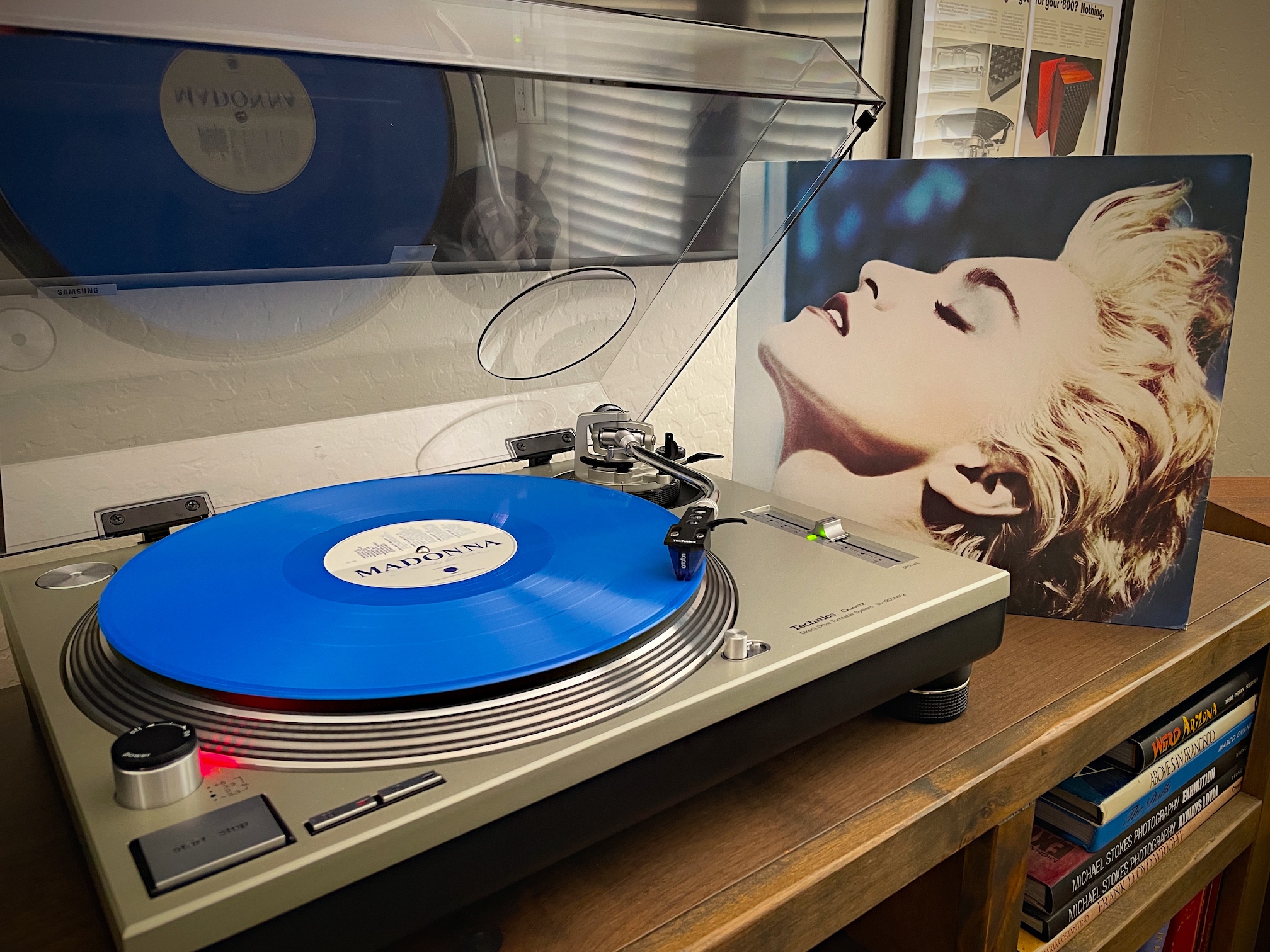
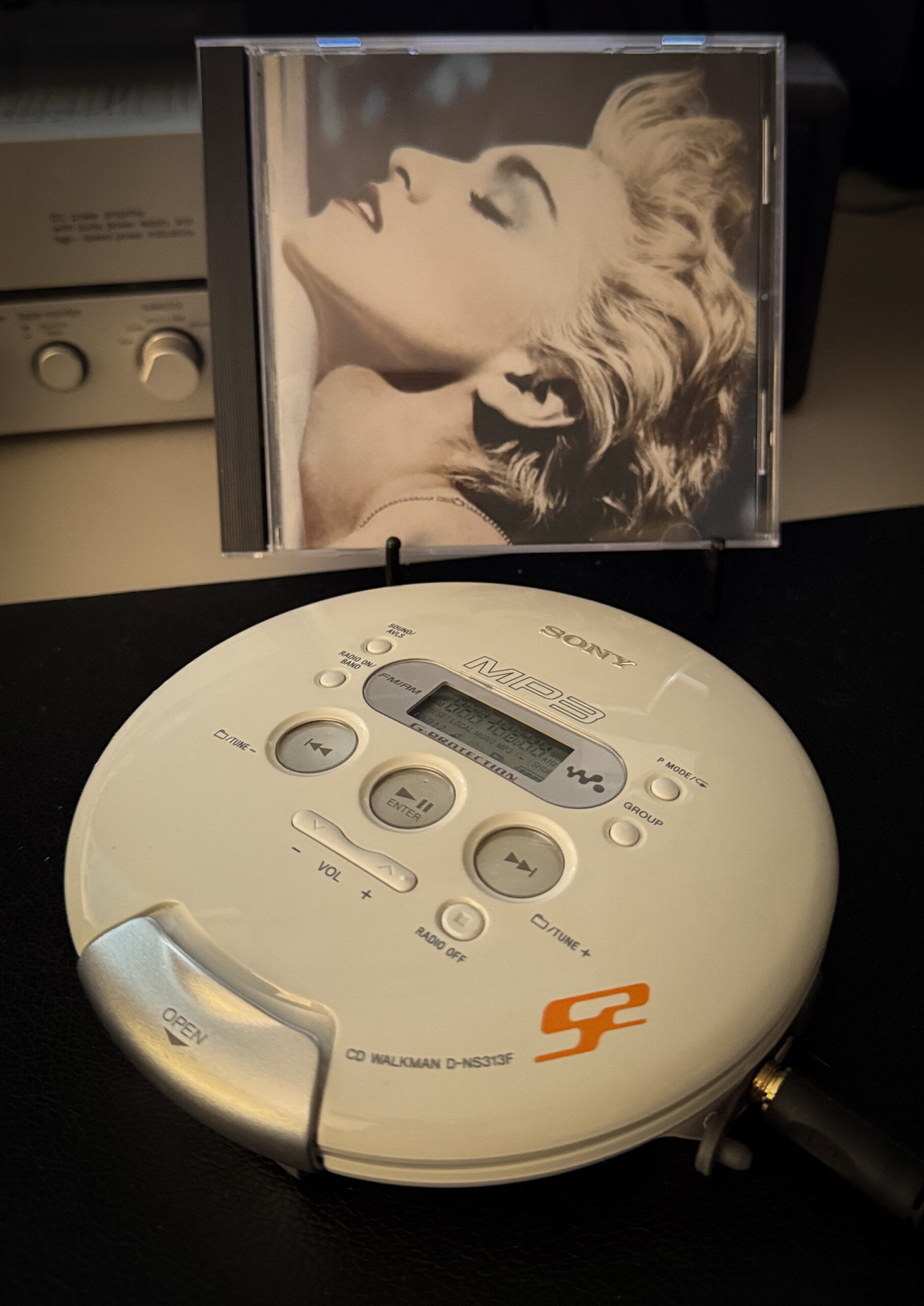
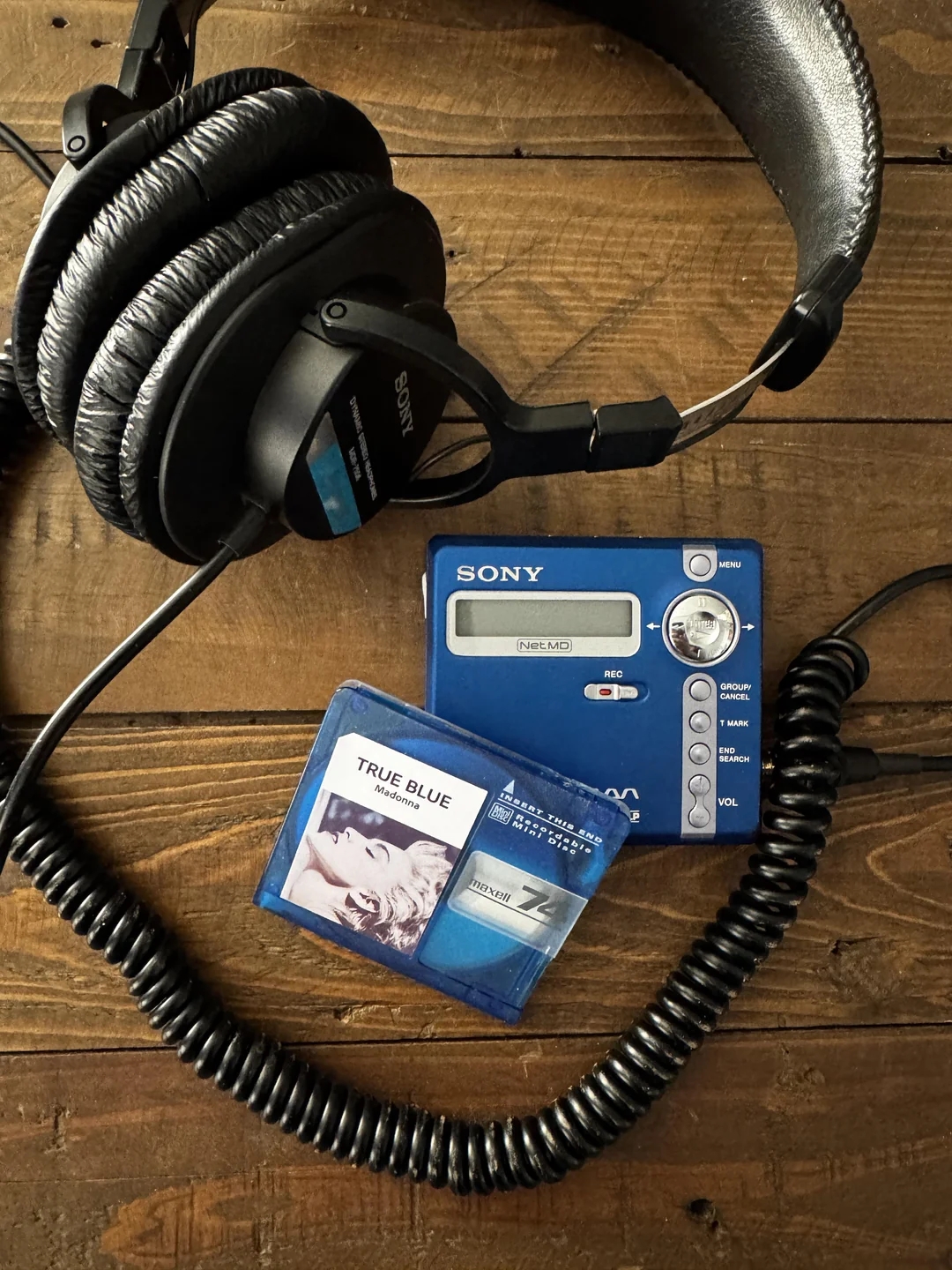
I mean, the whole album is bangin’ and deserves to be played at 1 am disco-packed-with-big-sweaty-menz volume, but the title track especially moves me. It’s one of those songs that when it comes on I have to stop what I’m doing, crank the volume to angelic heaven-is-a-disco, make your ears bleed volume and DANCE. La Isla Bonita is a close second in that category.
My unbridled love for this album and the accompanying quest to acquire it on “true blue” vinyl has been well documented on this blog, so I won’t add anything more and instead will sign off and go listen to it.
0 comments
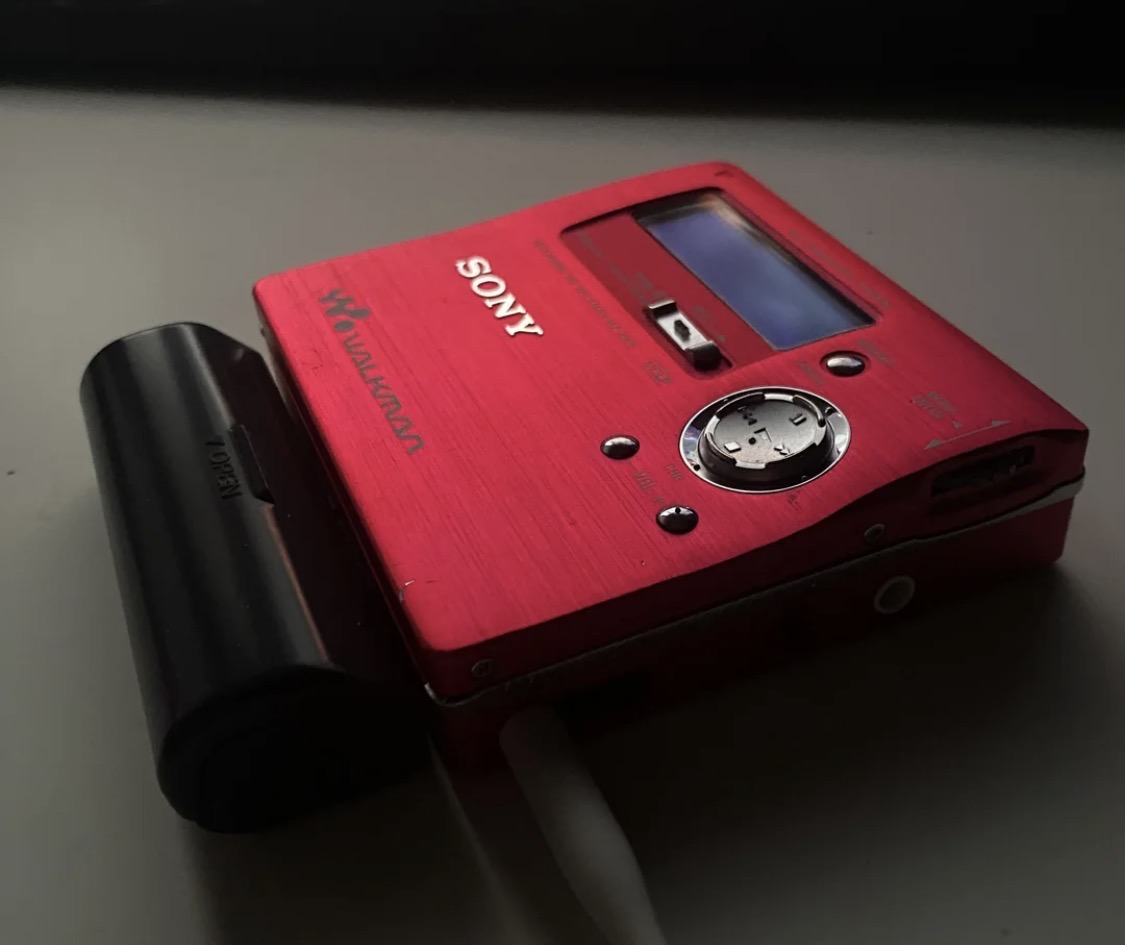
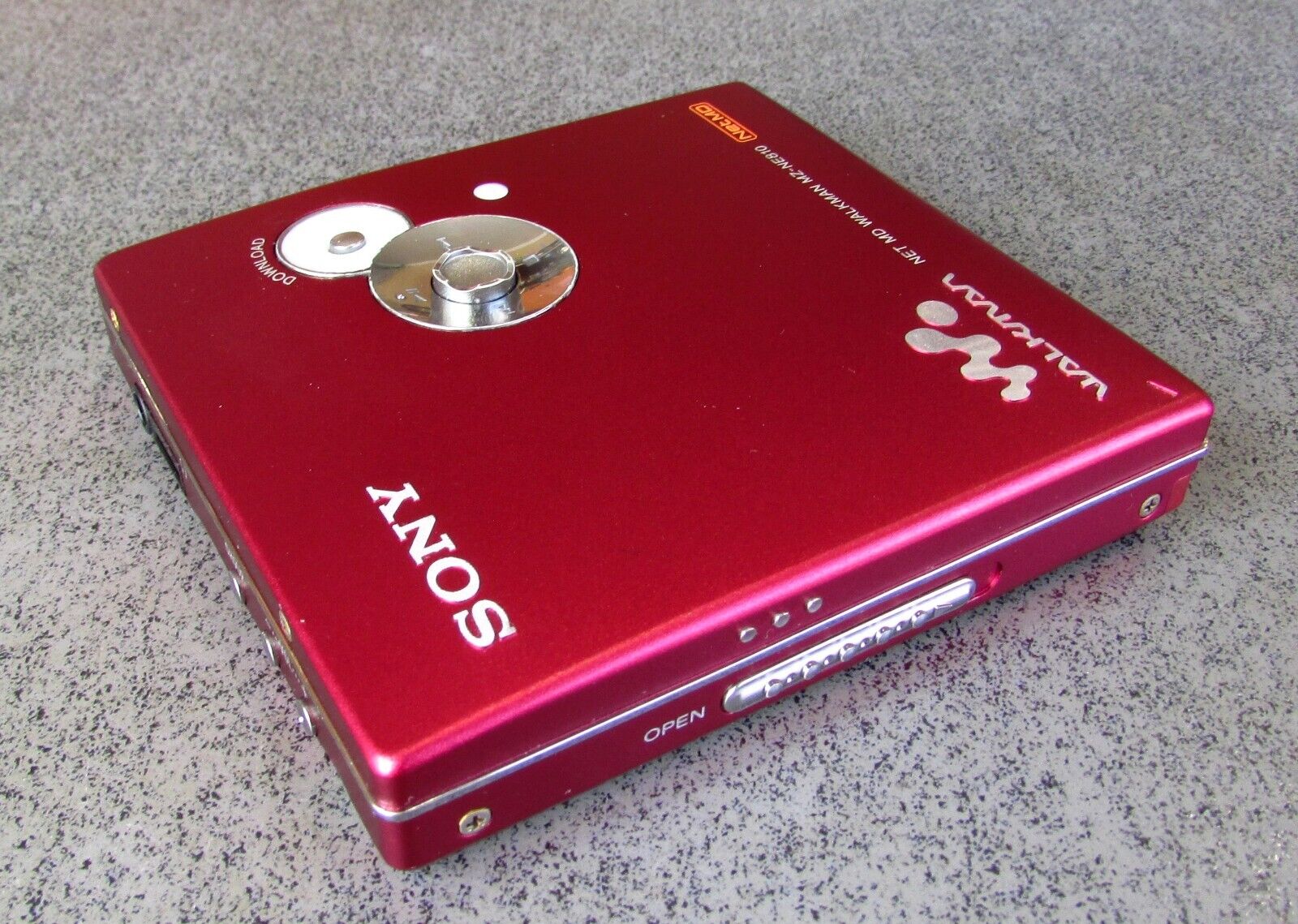
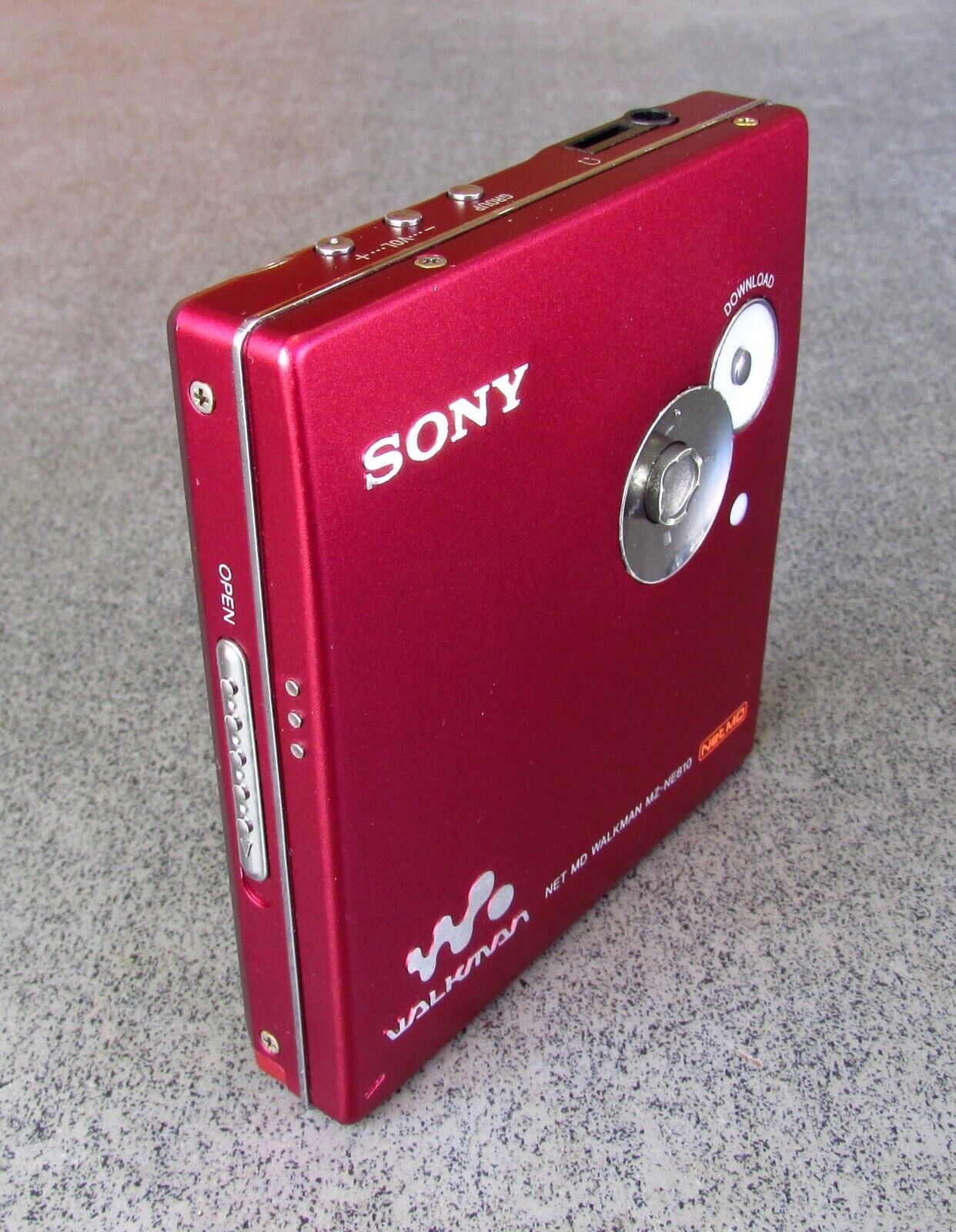
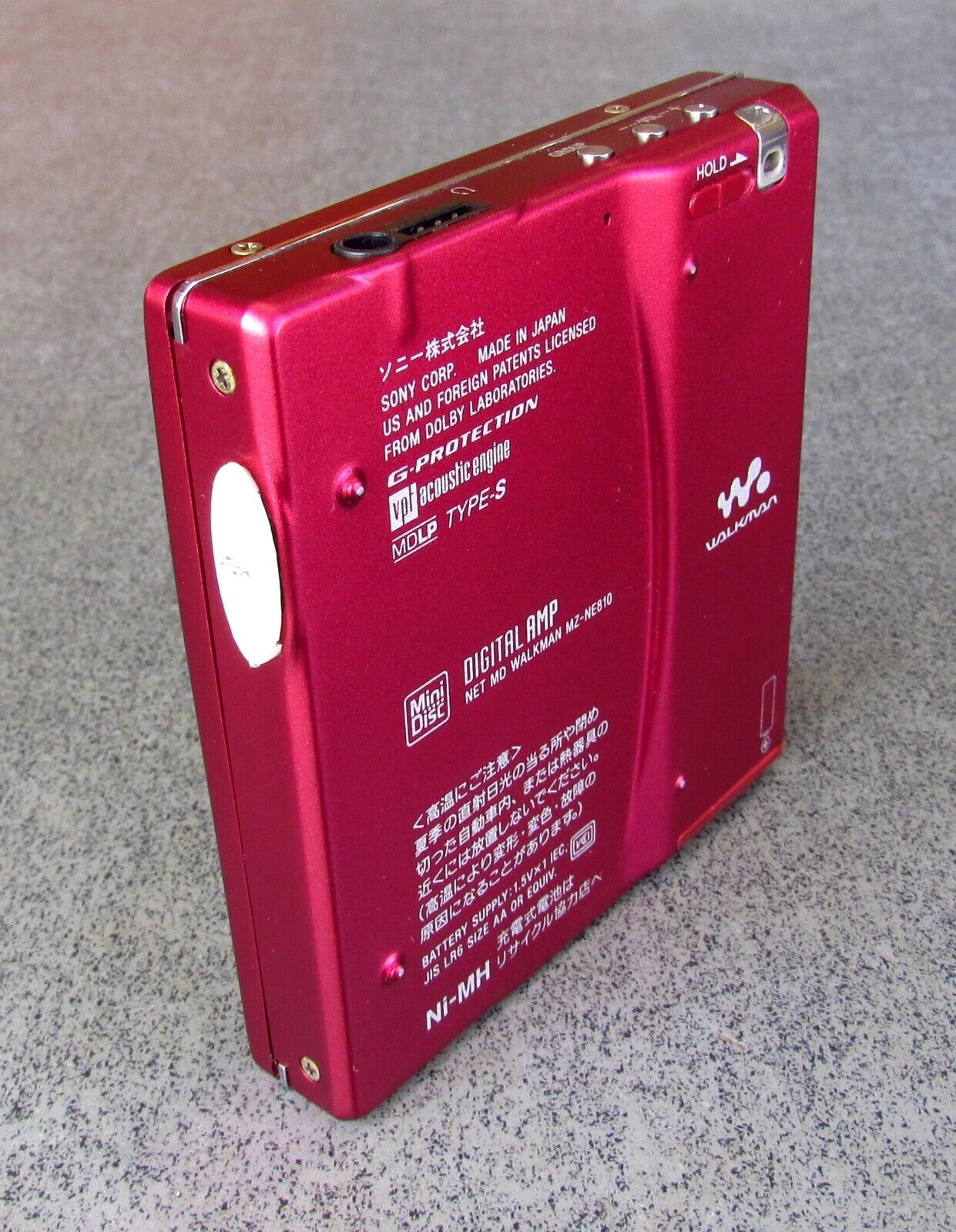
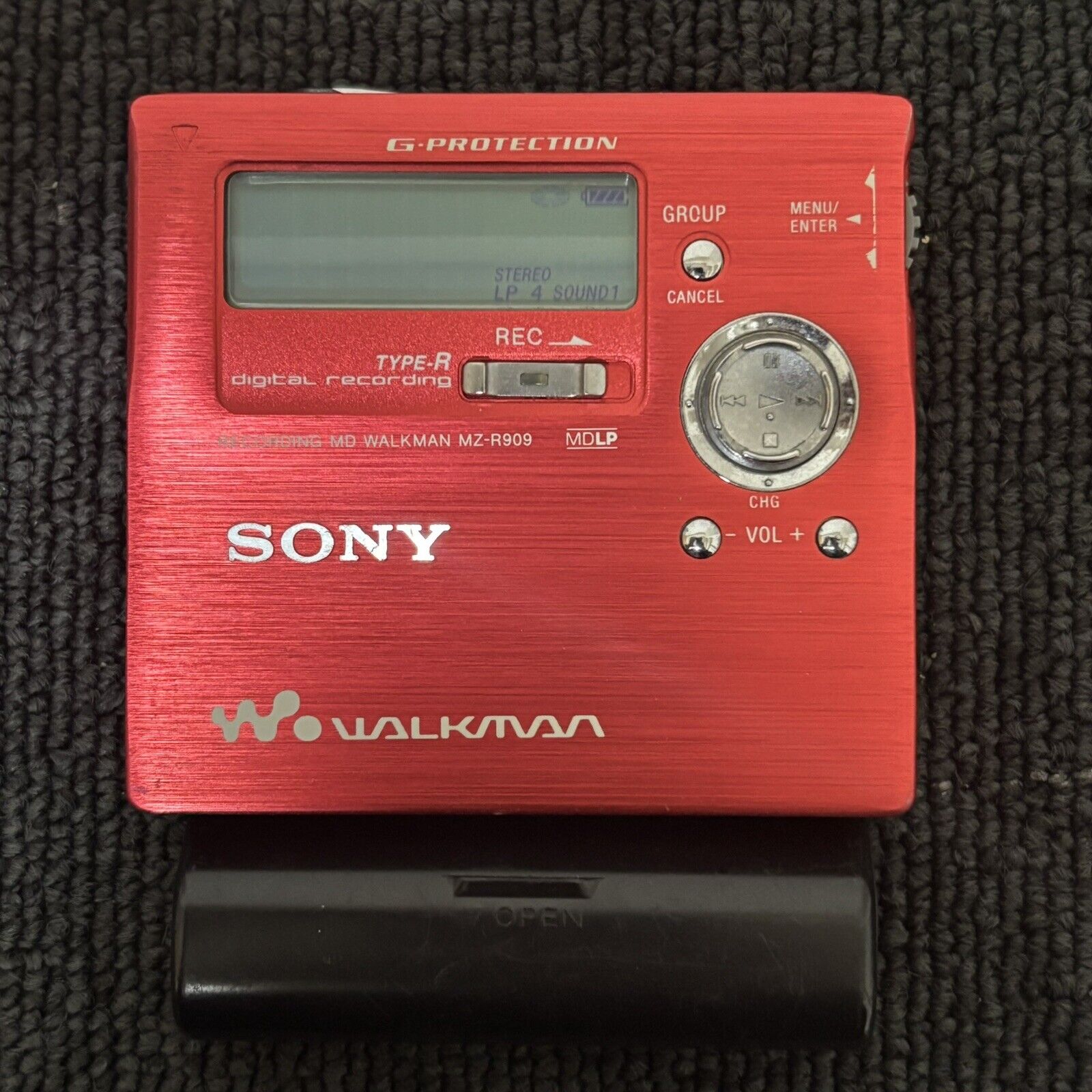
Not mine, but gorgeous nonetheless. As I’ve said many times before, Sony certainly knew how to do color back in the day and Apple could certainly take a lesson from that.
0 comments
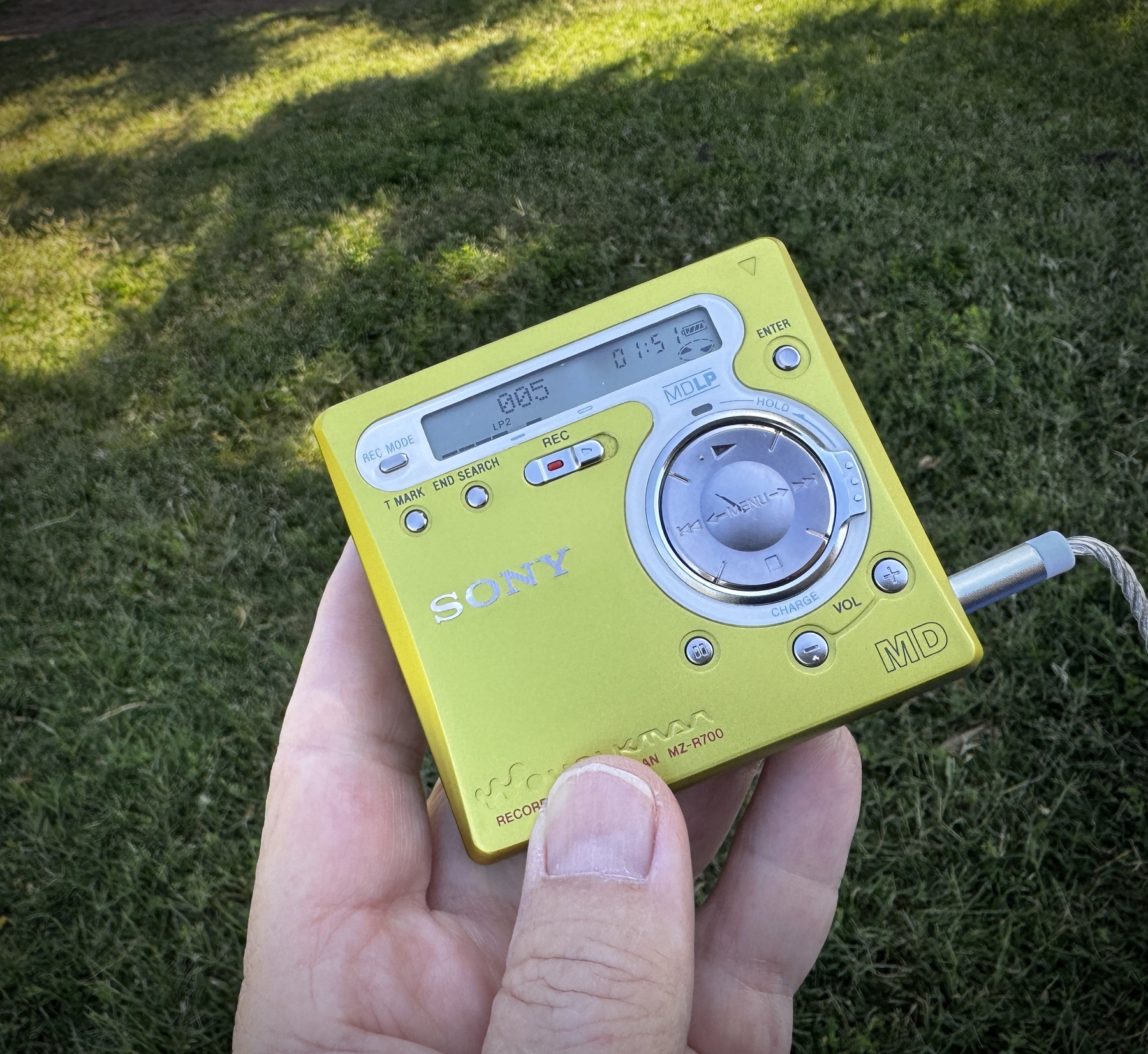
I’ll say this about Sony: back in the day they certainly knew how to do green…and blue…and red…and orange—something Apple could take a lesson or two from now.
0 comments
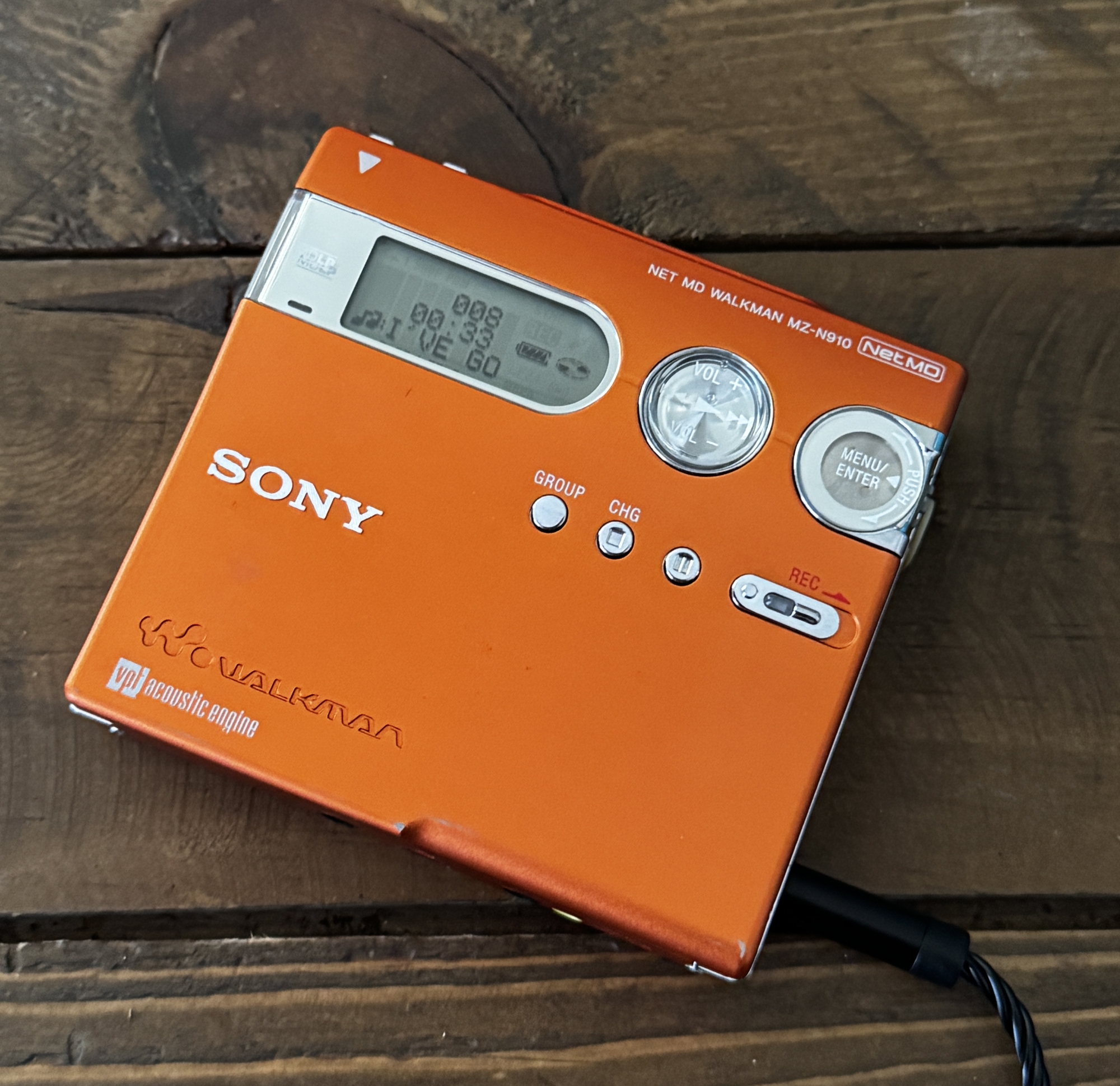
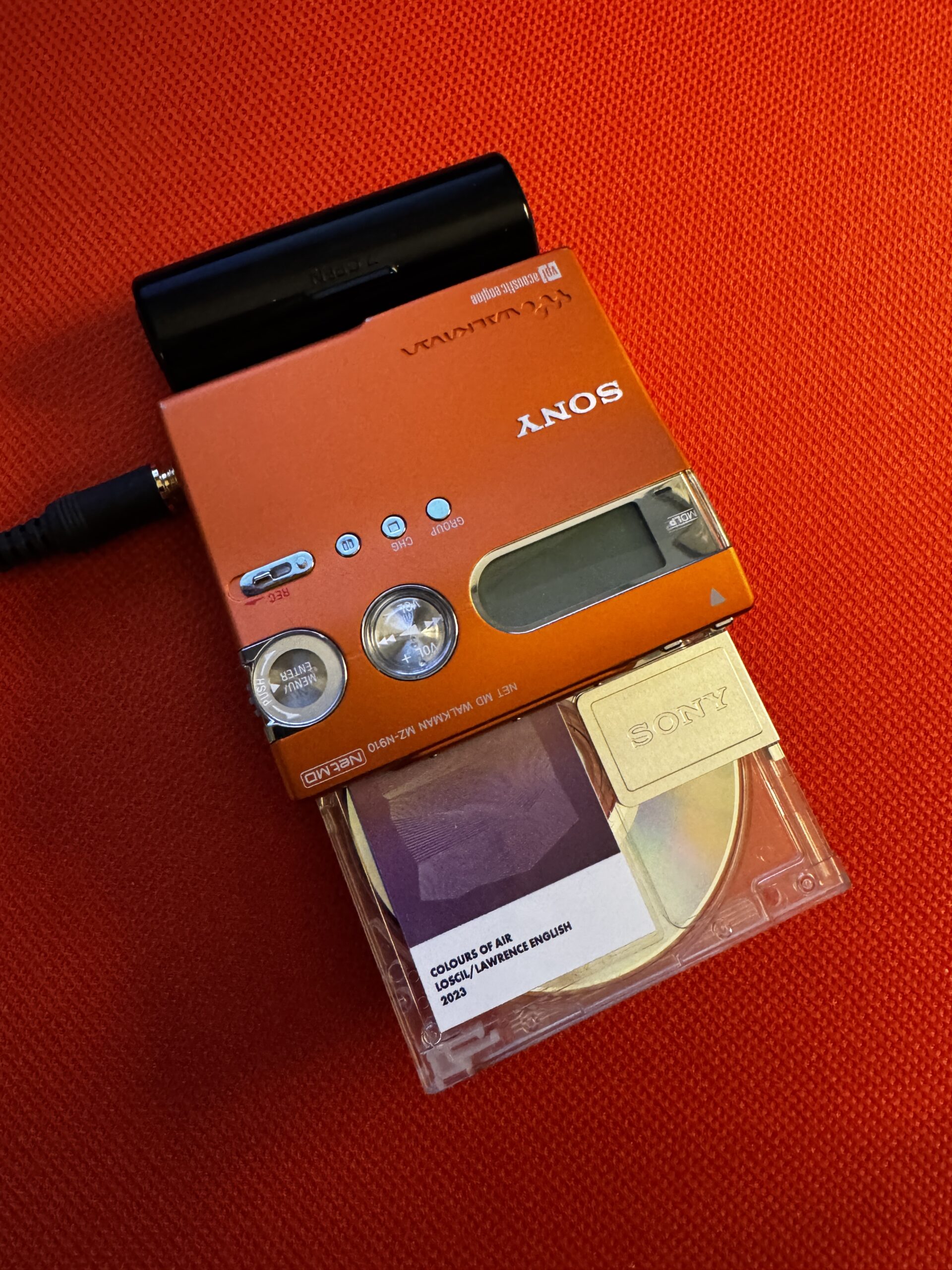
Very happy with my first foray into Japanese auctions! Upon arrival it powered up fine with an AA sidecar battery and/or power adapter, but wouldn’t recognize a perfectly good, fully charged internal gumstick battery—nor would it charge said gumstick. Even though the contacts on the external battery door looked okay, I knew there had to be corrosion inside, so after shining a flashlight in the battery compartment and confirming the internal contacts were caked with the infamous green corrosion, I gingerly removed the rear case. Armed with vinegar, an old toothbrush, q-tips, and isopropyl alcohol—and having watched numerous videos on how to do it—I set about removing the green gunk. Afterwards I put it all back together—and to my utter amazement, not only did it still work, but now it recognized the gumstick battery and even worked! And that color! Sony sure knew how to do orange!
0 comments
But I have a question…do adult twins who live together sleep in the same room? Do they shower together? Despite the “twist” ending, there seem to be a whole lot of homoerotic undertones to this. Or am I just projecting my own (admittedly not uncommon) fantasies onto those boys?
1 comments
0 comments
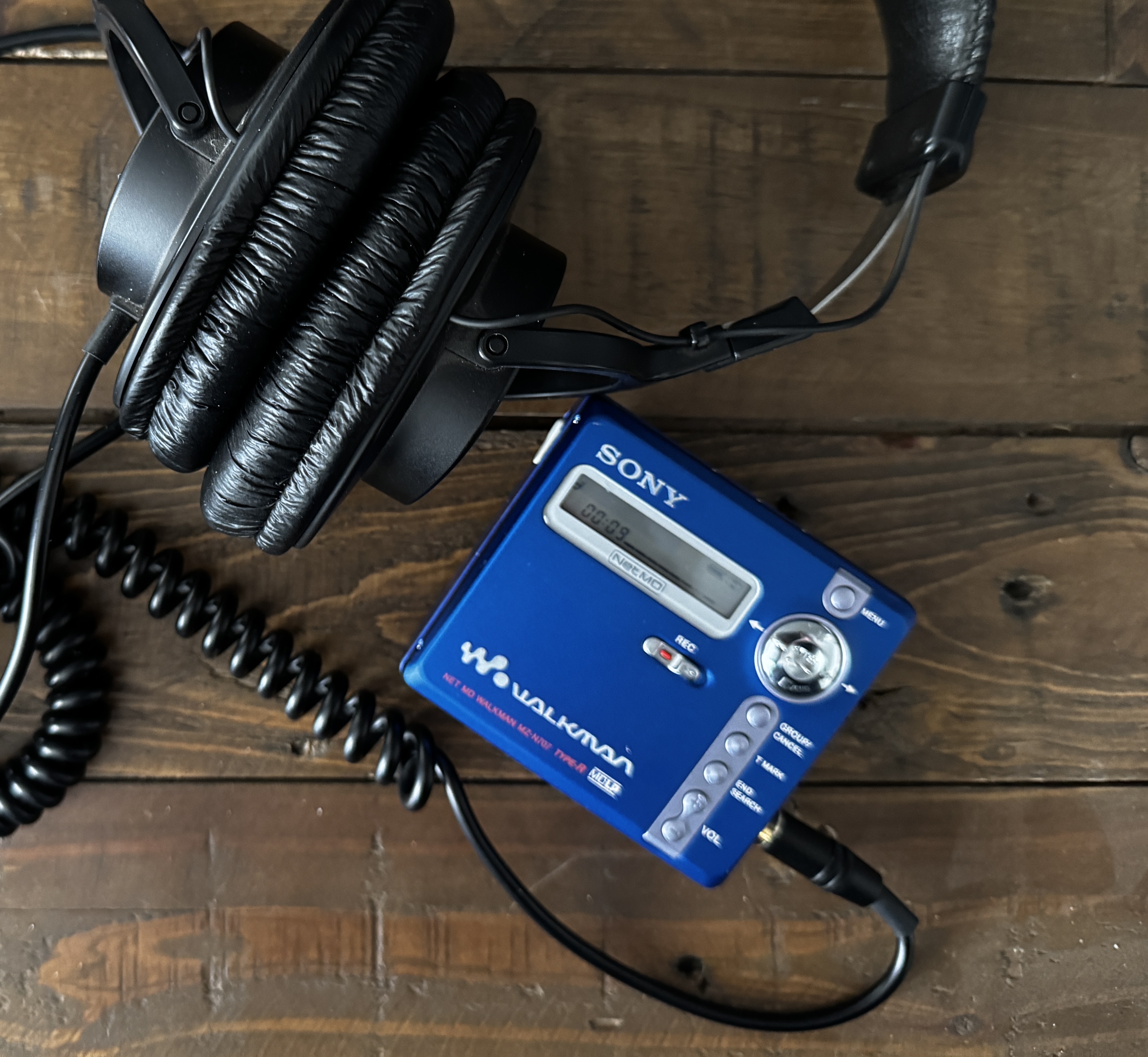
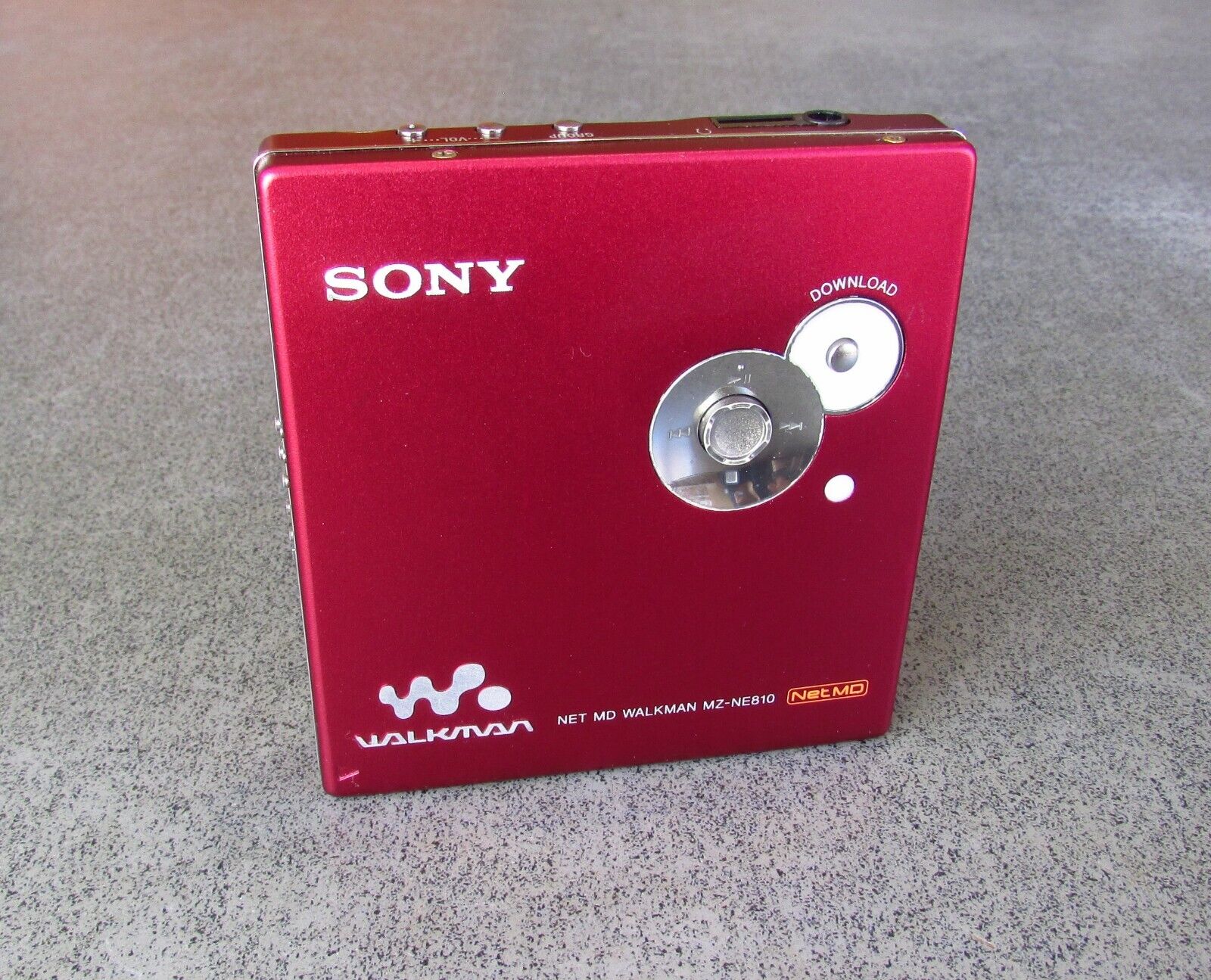
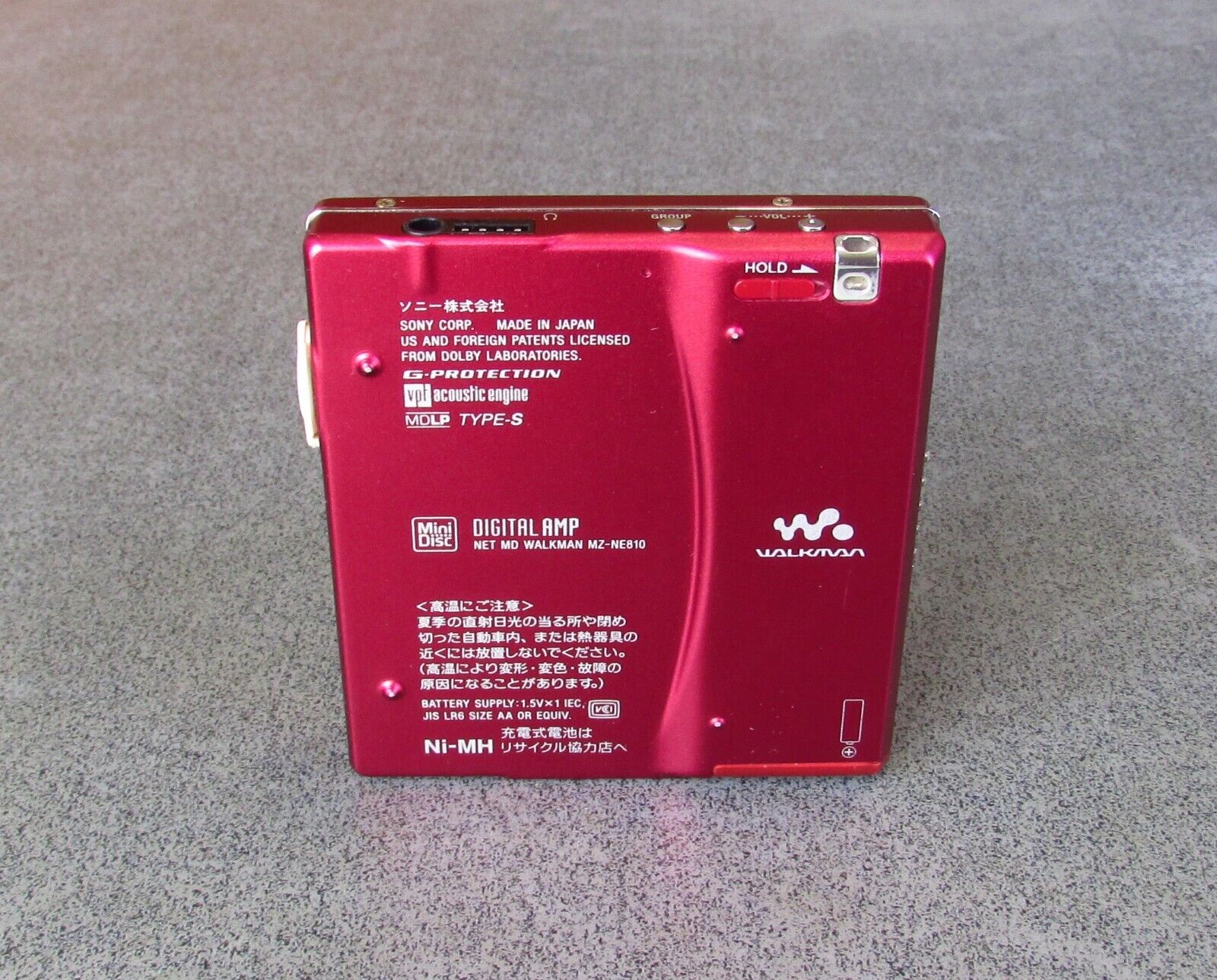
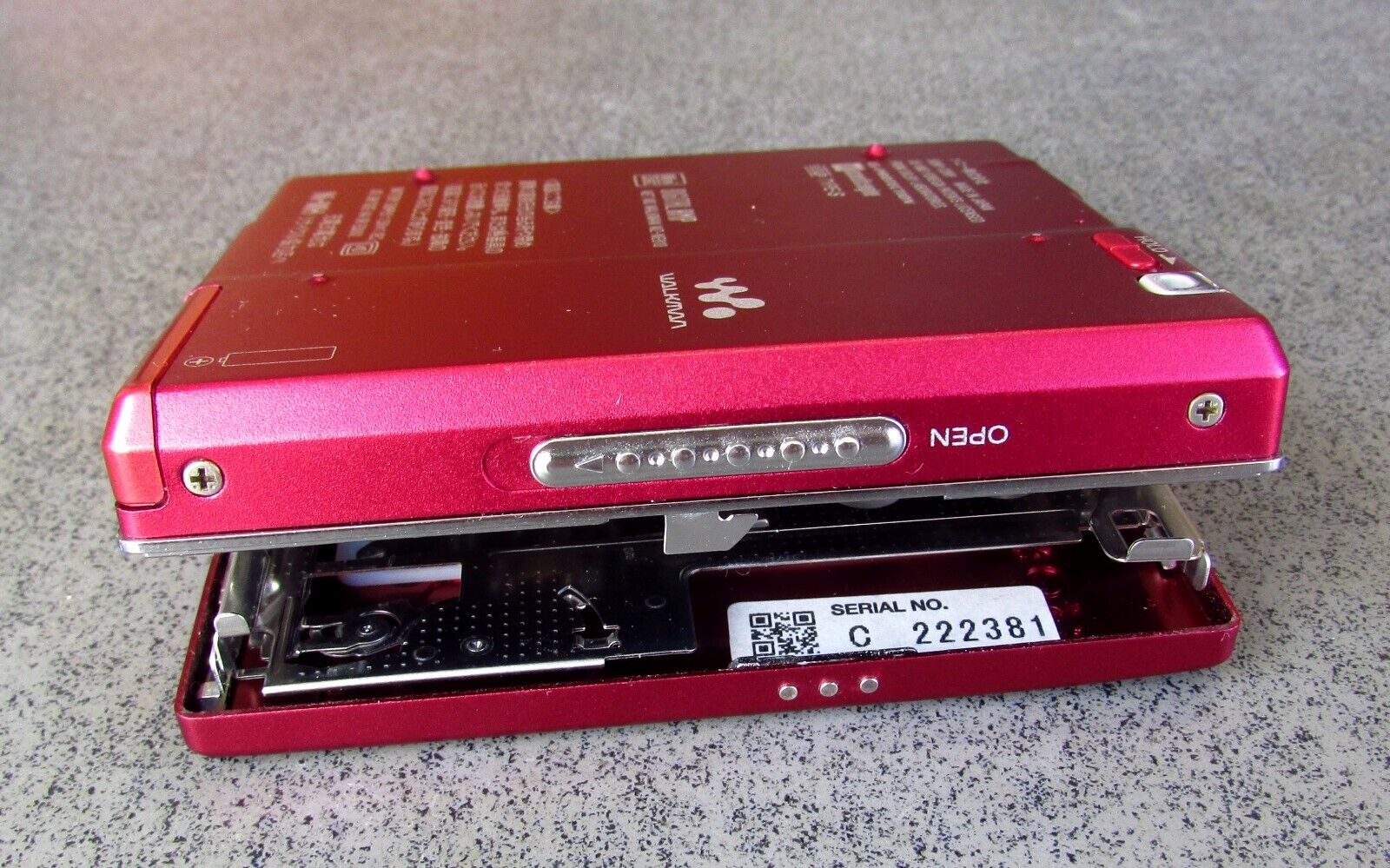
Why, you ask? Because the my other portable developed a very wonky disc release mechanism and stopped writing the TOC (table of contents) to the disc after editing it, rendering every disc (no matter what was recorded) as “BLANK DISC.”
When I reached the point I couldn’t deal with this any longer, there were no other decent MZ-S1’s showing up online, so I decided to try a different model. To be honest, it was the color that got me.
And wouldn’t you know, immediately after I hit the BUY IT NOW button, an auction for another pristine MZ-S1 showed up. I submitted the minimum bid, never expecting to actually win the auction. Of course, a week later, I did…
Both units arrived today.
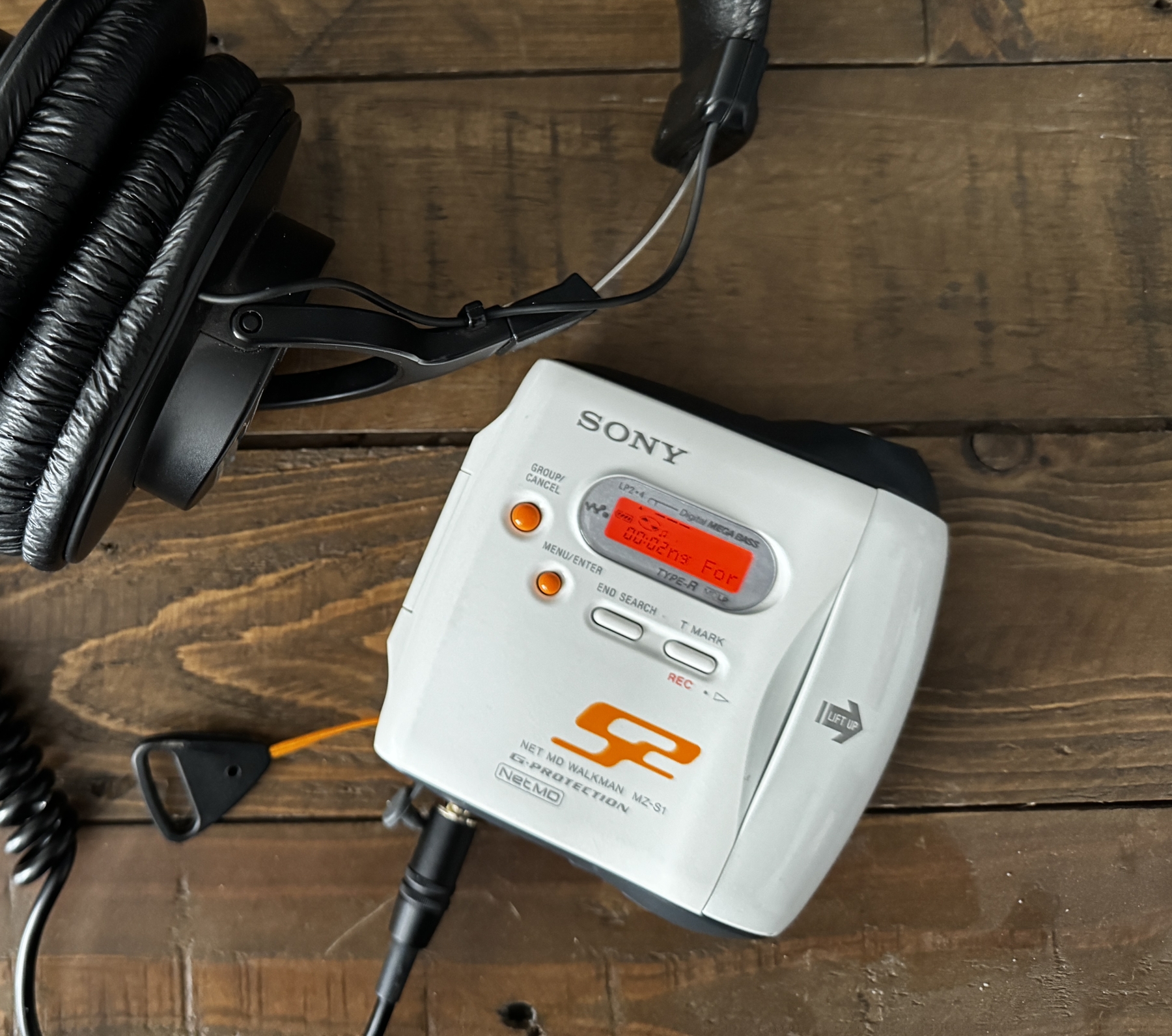
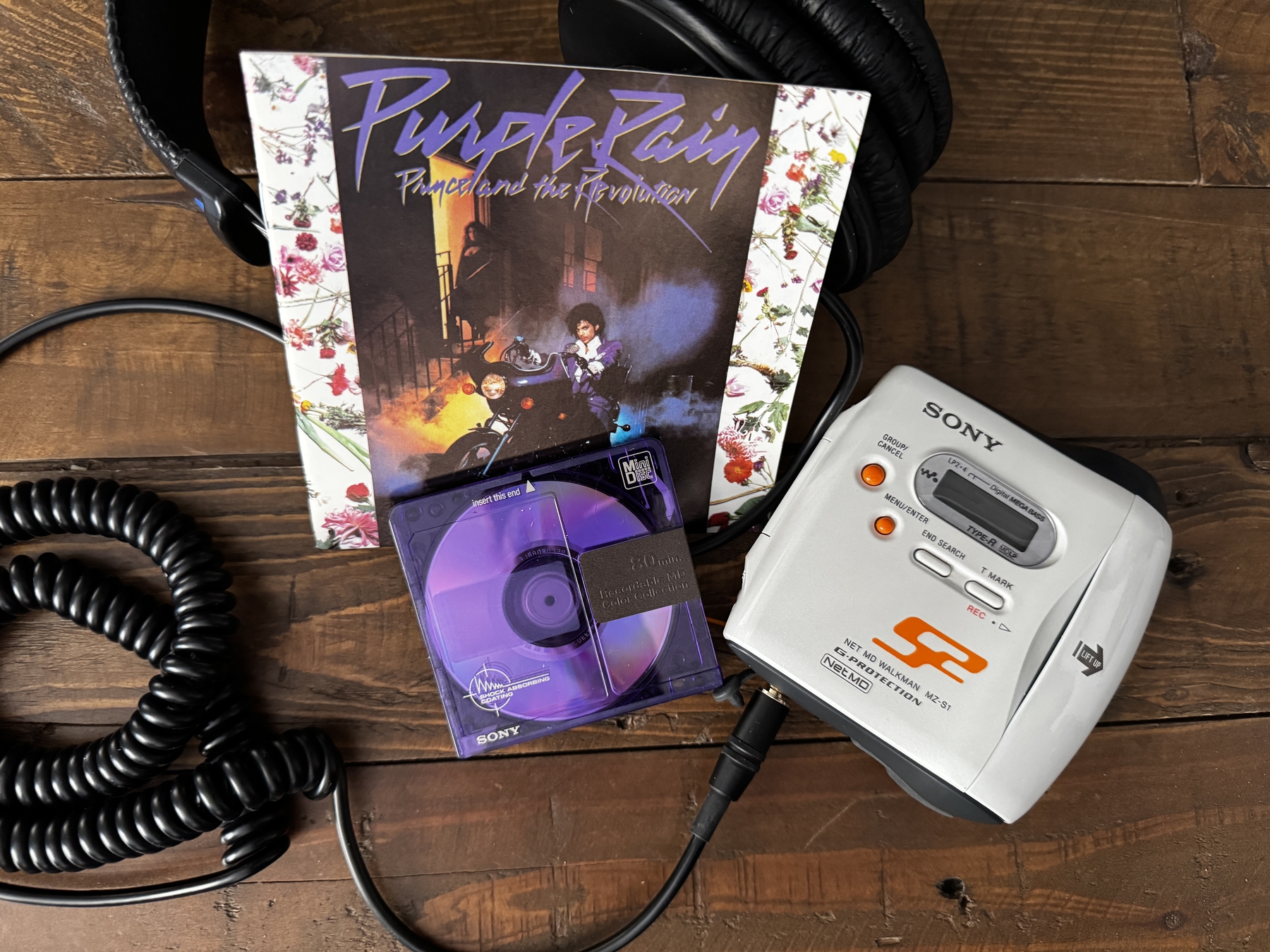
To be honest, it is nice to have a fully functional S1 again. The S1 has always been my favorite Minidisc portable, since I originally owned one in the early 2000s. While some MD connoisseurs decry its large, chonky design, I personally love it. See: Quirky.
One aspect of buying used Minidisc equipment that seldom gets mentioned is that oftentimes the sellers will throw in a few discs to sweeten the deal—or to just get them out of the house. Almost always they’ve got stuff recorded on them—not an issue since they can be easily erased and reused—but occasionally you find a gem hidden among them.
The first S1 (the one with the wonky release mechanism) came with an unlabeled disc with no disc name or track titles recorded. Before I summarily dismissed it and erased it, I thought I’d give it a listen. I really liked the funky jazz beat, so I took a chance that it was more than just YouTube-friendly royalty-free fodder (a lot of times seller post videos of their wares on YouTube), and fired up Soundhound. It immediately identified it: Ernest Raglin – Below The Bassline. It’s been one of my go-to discs to listen to while falling asleep since getting it.
I know all this shit is boring as fuck to most of my readers—OLD MAN REDISCOVERS AND FINDS JOY IN OBSOLETE TECHNOLOGY AND WAXES POETIC ON ITS COOL FACTOR AS WORLD SLIDES INTO DYSTOPIAN HELLSCAPE—so thanks for sticking around in spite of it.
2 comments
0 comments