
In those internal autobiographies, we all tell ourselves that we’re one of the good ones, that our presence on this planet is yielding something beautiful, something that will leave this place better than when we arrived. In those stories, we are the heroes, the helpers, the saviors, or at the very least, we’re decent people just doing our best.
That self-reverential story has a way of bleeding over into the place we call home, the nation we claim as our own. There is a poisonous exceptionalism that most of us were born into; a curated mythology inherited by our parents, our politicians, our pastors that convinced us that as a collective, we were good or godly.
Some of us live our entire lives believing we’re better than we are, that our nation is better than it is, until we are faced with irrefutable evidence to the contrary. Suddenly, we realize that we might be the villains, the terrorists, the monsters, the accomplices.
We all grew up in this country learning of the horrors of the Holocaust, reading stories of Hitler’s unthinkable brutality against the Jewish people. We stared in disbelief at the images of walking corpses, emancipated from the concentration camps at the very precipice of death. We nearly vomited seeing jittery black and white newsreels of naked, indistinguishable human beings, stacked like cord wood. We read of an unrelenting barbarism against an entire group of human beings, whose only crime was existing in their skin.
And when faced with this sprawling inhumanity that defied our ability to hold it all, invariably we all thought about the German people, and we all asked ourselves, “What kind of human beings would allow this?”
We wondered what kind of morally broken people could stand by and watch generations of mothers, fathers, and children eradicated from existence, their communities razed to rubble, their cultures erased, their very humanity discarded.
From the safety of hindsight and the buffers of our own false stories, we’ve interrogated ordinary Germans from eighty years ago, lamenting their silence and inaction in the face of such horrors; condemning them as, at best, gutless cowards, and at worst, willing collaborators.
With stratospheric arrogance, we’ve told ourselves that we’d never have consented to such evil, that we’d have pushed back against it, that the abject terror unleashed on the Jewish people would never have happened on our watch.
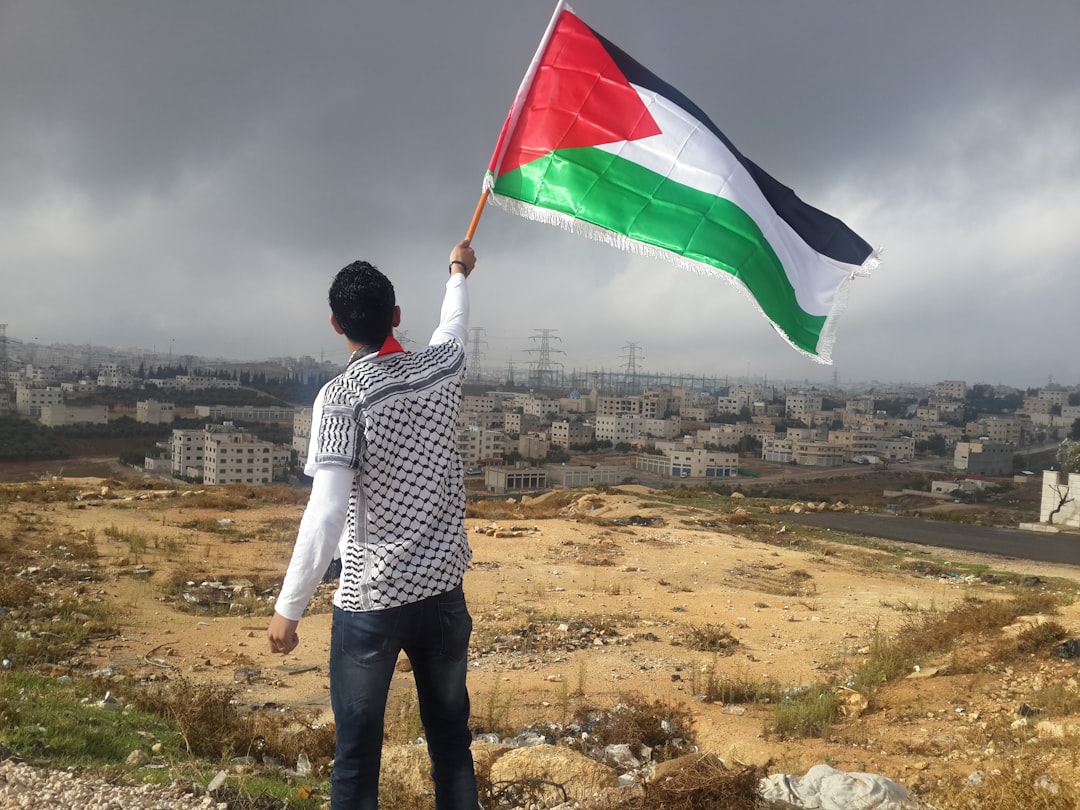
And yet, there is Gaza.
Day after day, she testifies against us, documenting our indifference, recording our apathy, inventorying our inaction. She lifts our hands in front of us and shows us that her blood is all over them. She burns up the fictions of our goodness. She reminds us how easy it is for a nation to abandon its humanity, silence by silence, justification by justification, averted eye by averted eye.
Gaza is indicting the American people, and Iran and Lebanon are joining her. They are holding a mirror up to us as a nation, revealing exactly who we are— the truth about what we believe, about what we will abide, and what we will not stand for— and we should be ashamed and driven to our knees in repentance.
It would be damning enough to declare that many Americans now are as reprehensible as many Germans in the 1940s, but that wouldn’t be accurate; we are far worse.
We have access to America’s and Israel’s every vile deed in the palm of our hands. Donald Trump’s and Benjamin Netanyahu’s sociopathy floods our timelines. With the swipe of a finger, we can traverse thousands of miles and see the annihilation of a people in real-time. Unlike the German people in the shadow of Hitler, we cannot even attempt to plead ignorance. Through tiny screens that we are rarely more than inches from, we are 24-7 bystanders to the slaughter of children, to the bombing of hospitals, to the systematic extermination of the Palestinian people. We know exactly where the money is going, the politicians whose empires have been funded by terrorism, and the scale of the mass murders our tax dollars are funding.
And we are culpable for all that we allow or refuse to oppose.
One day, eighty years from now, generations of children all over the world will ask what kind of people would have allowed the genocide in Gaza to happen.
And it should break our hearts and boil our blood to know that unless we alter our course immediately and fiercely, we will be that kind.
0 comments