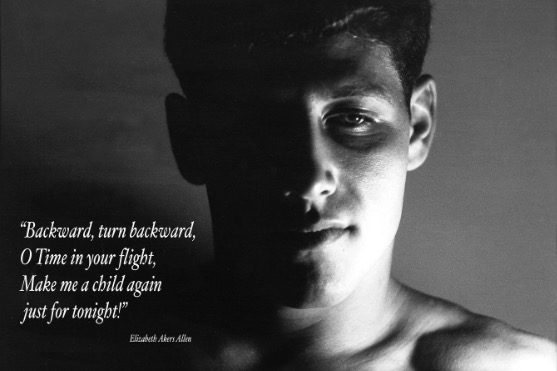
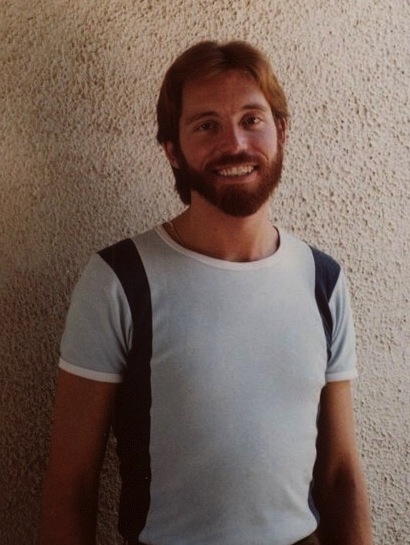
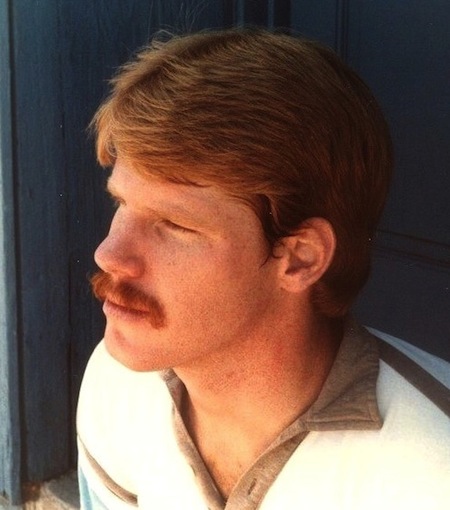
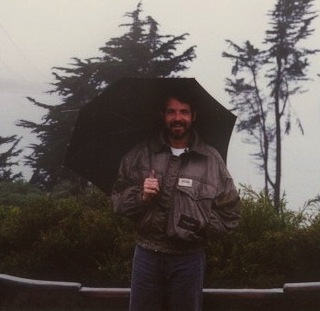
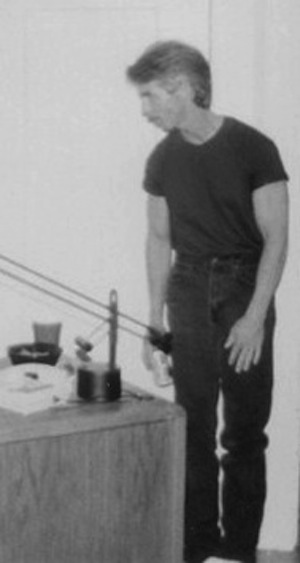
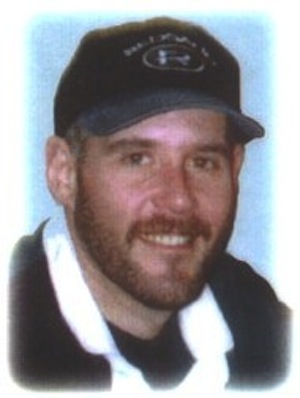
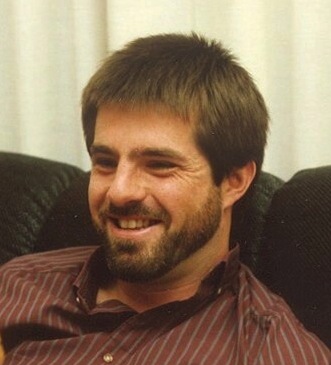
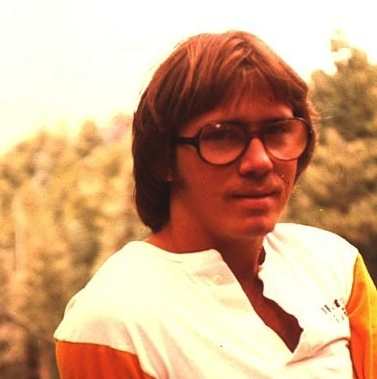
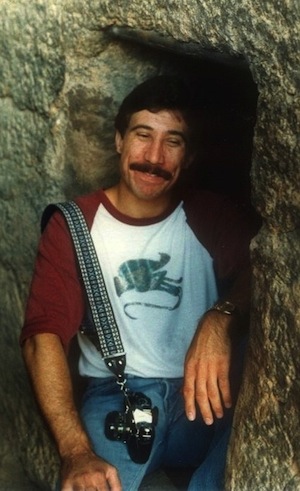
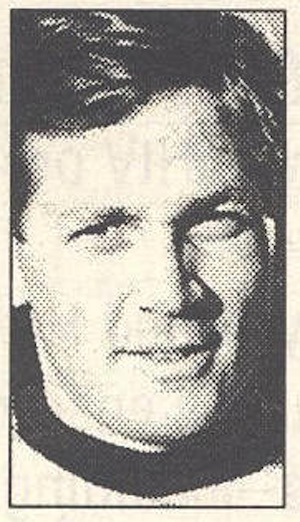
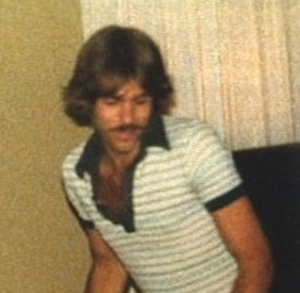
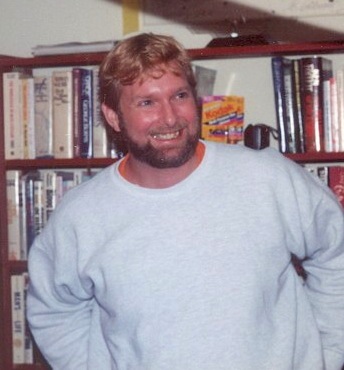
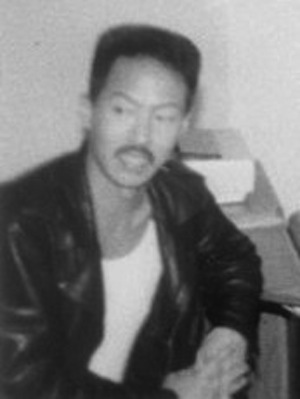
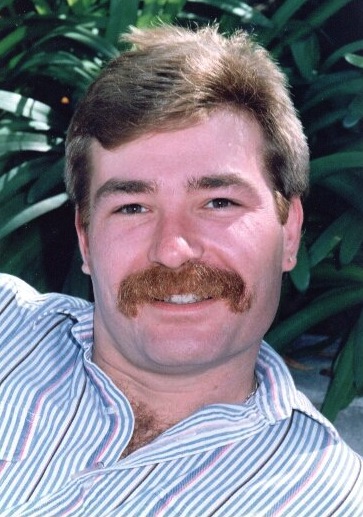
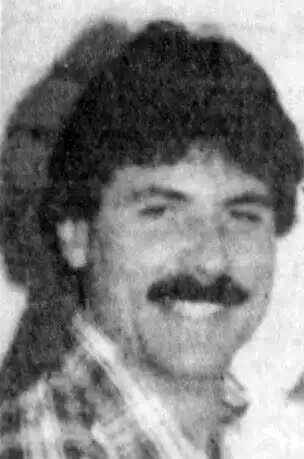
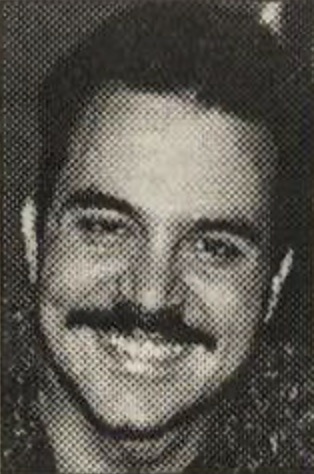
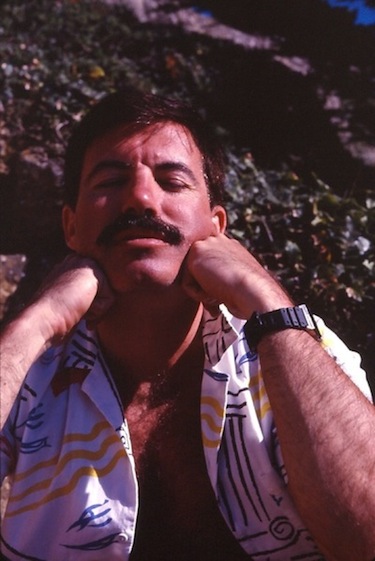
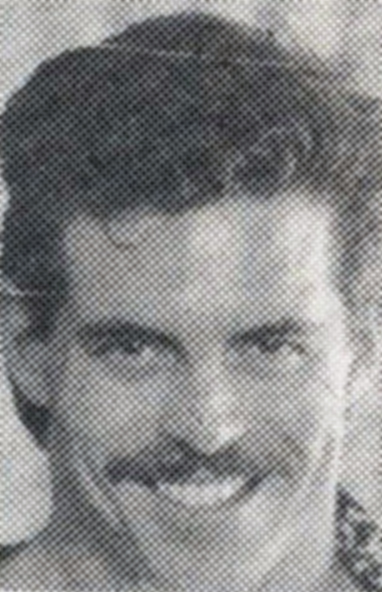
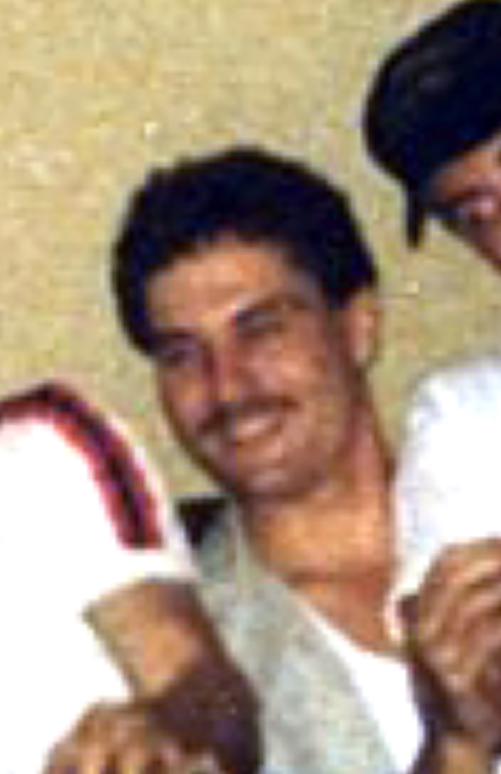
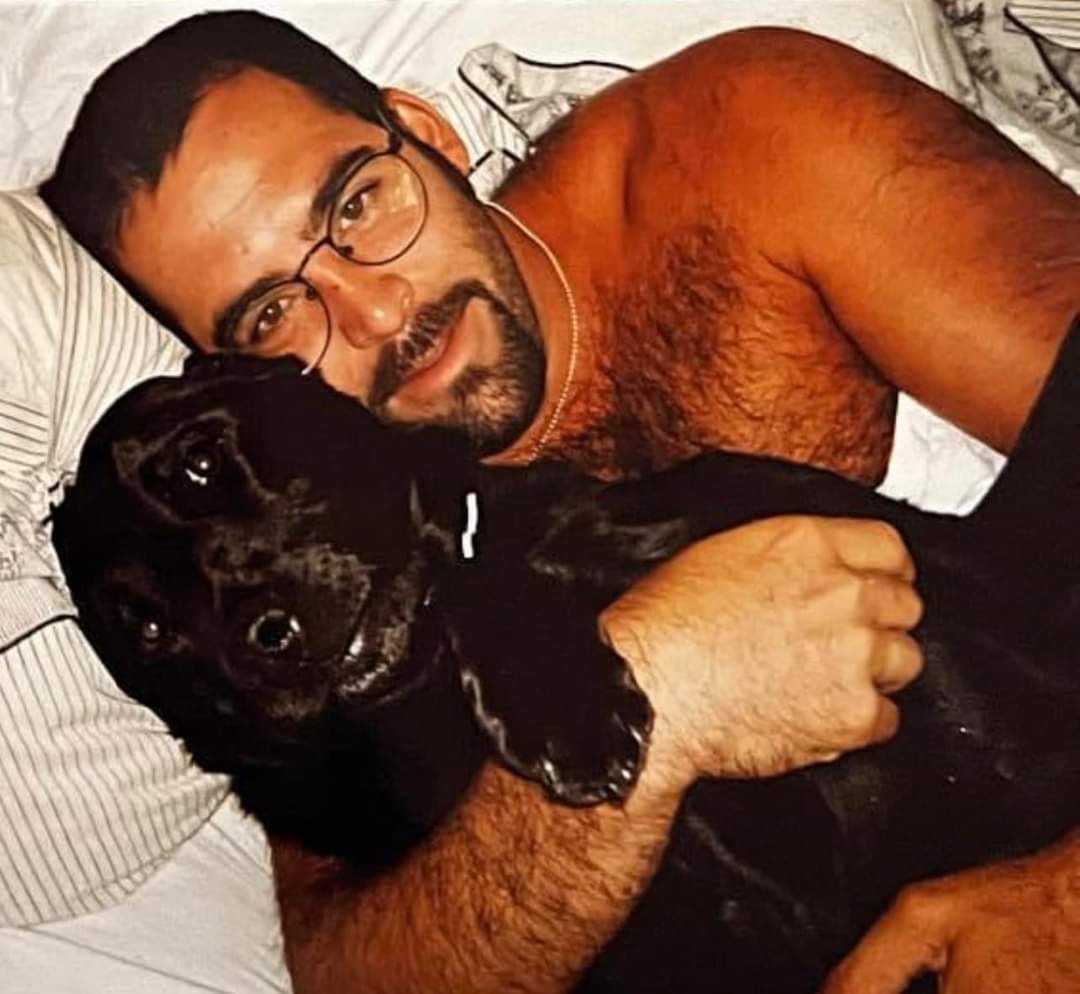
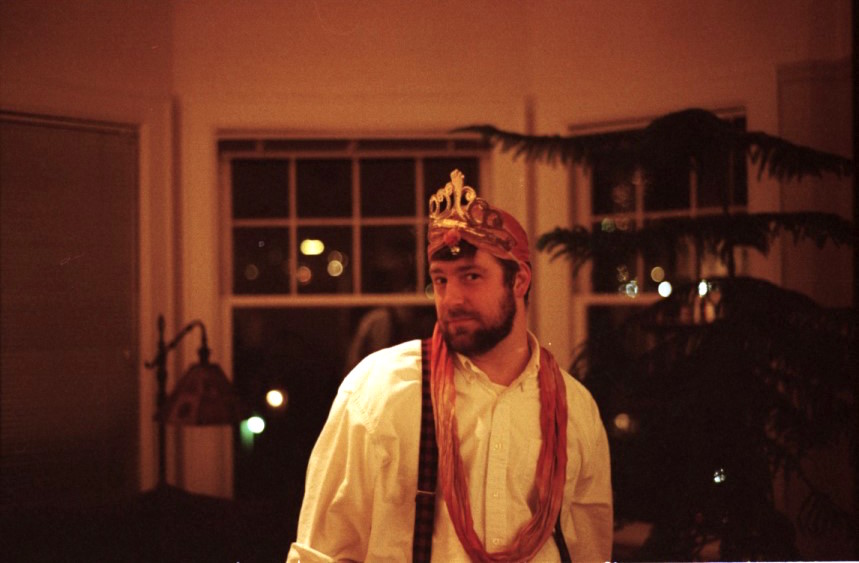
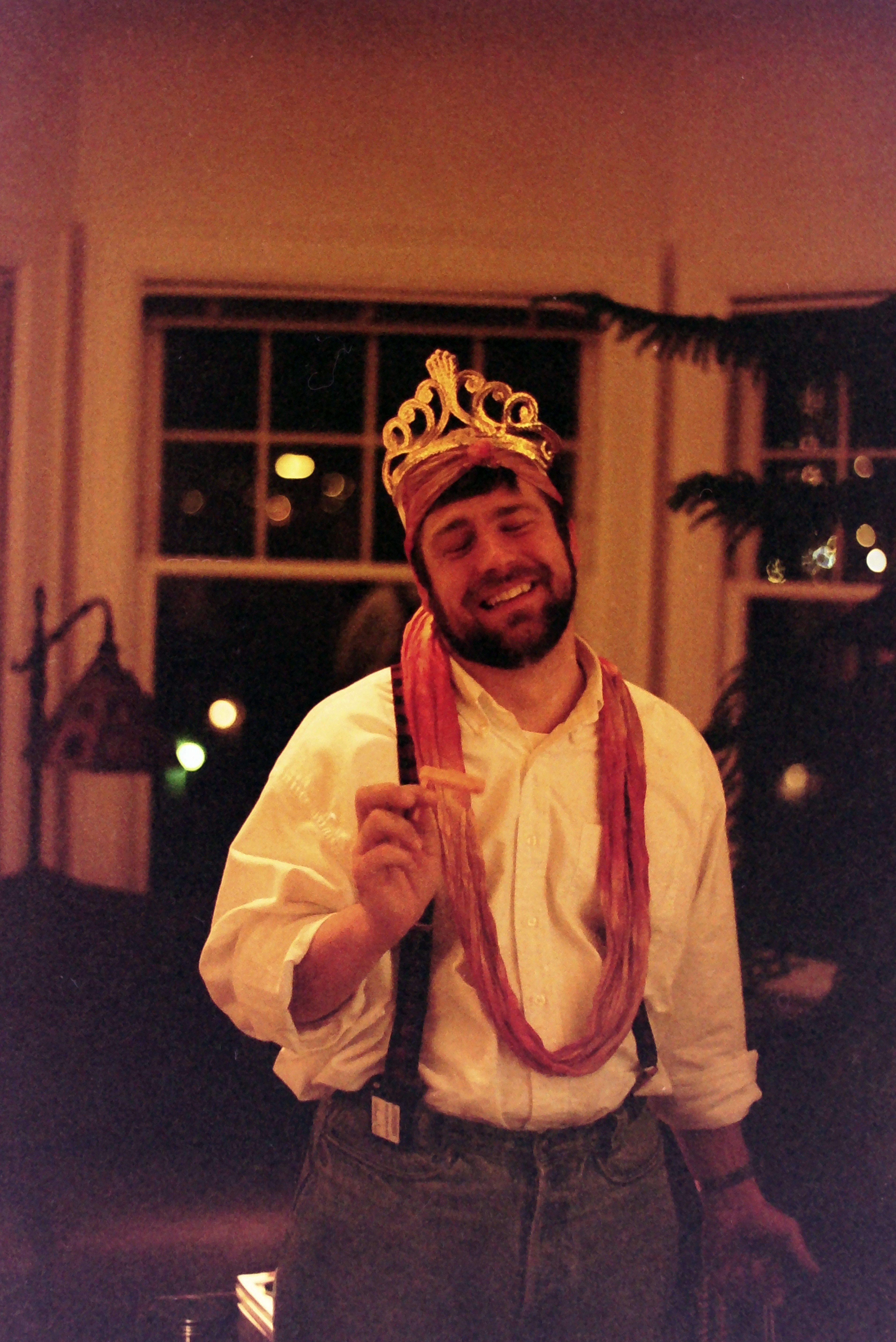
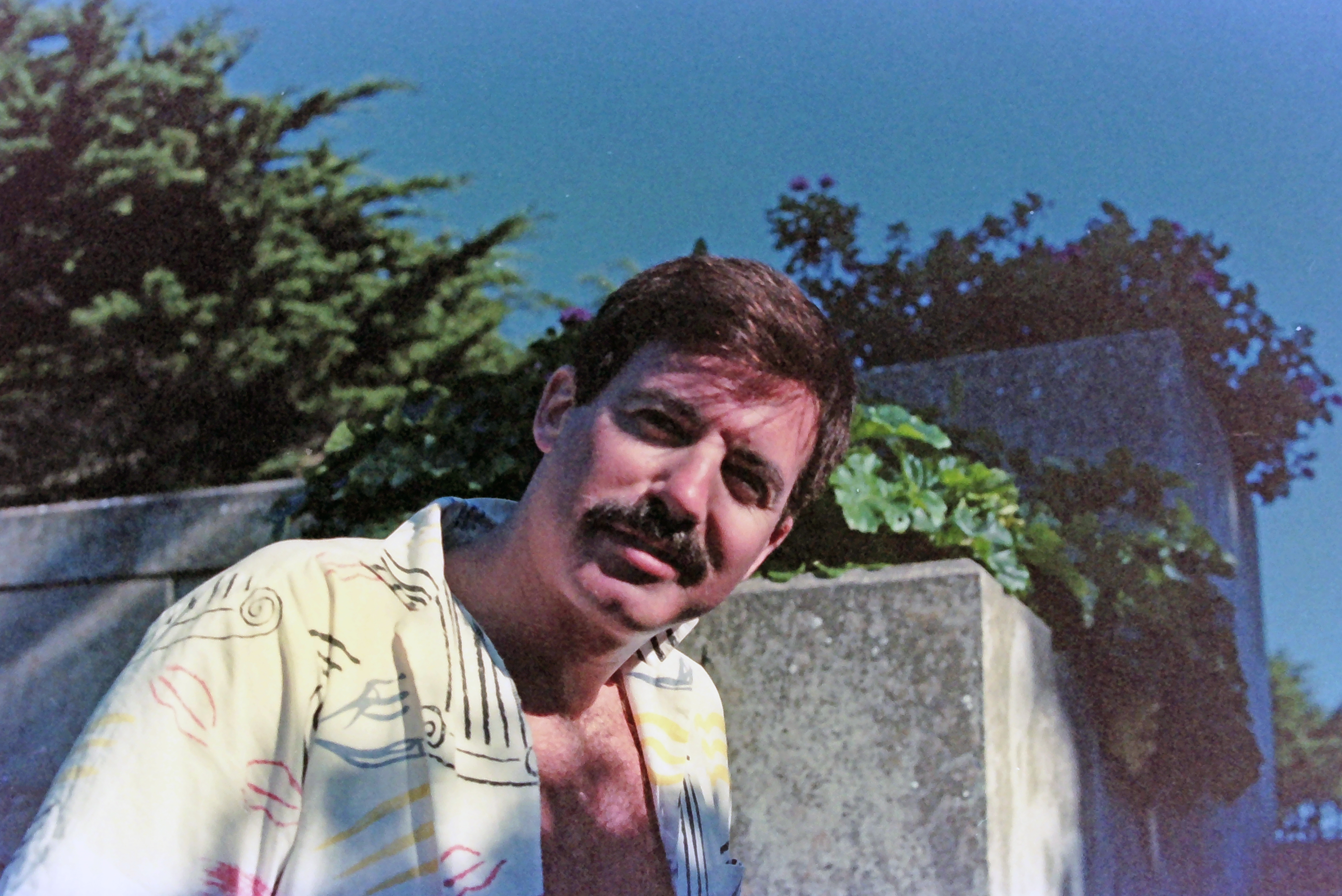
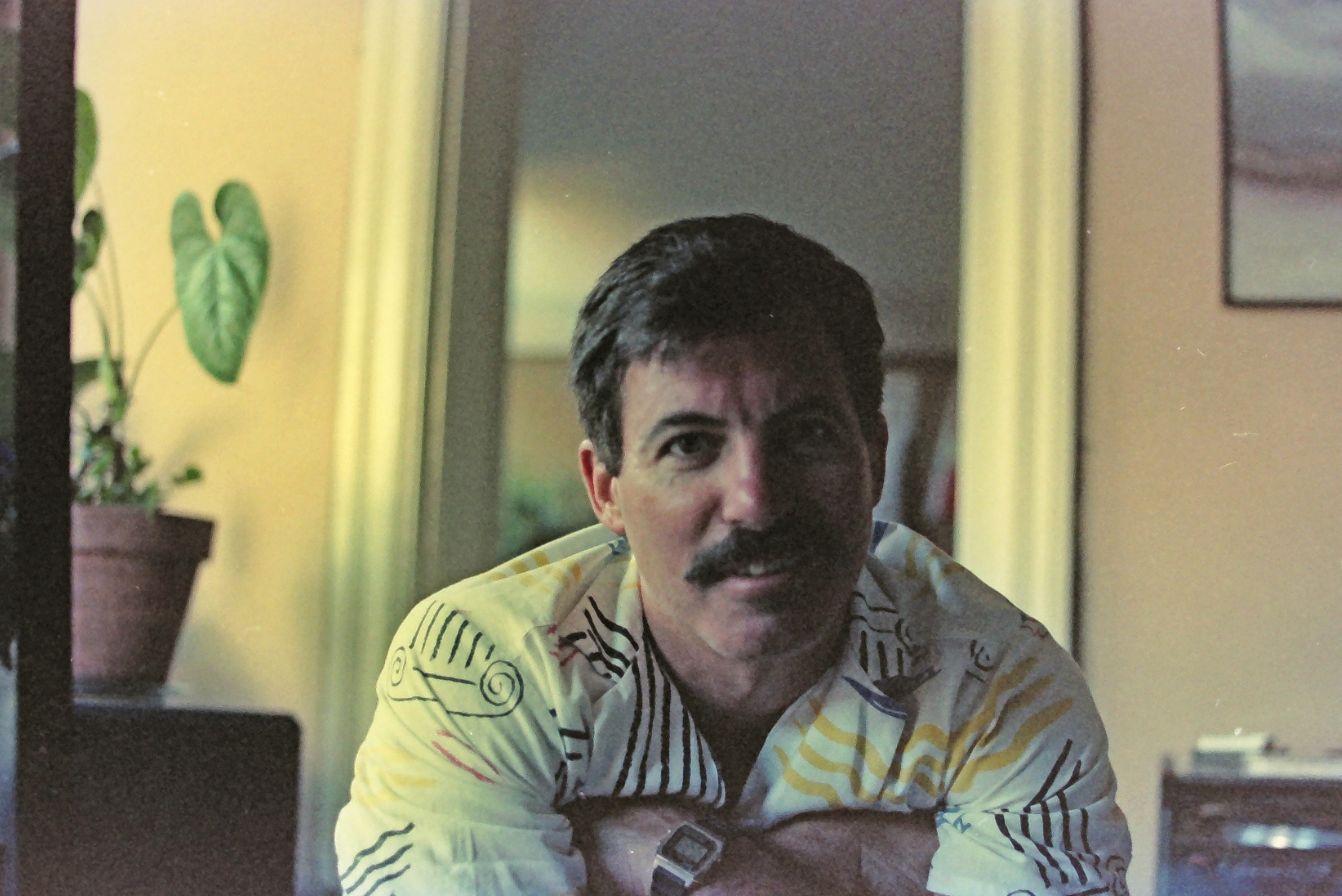
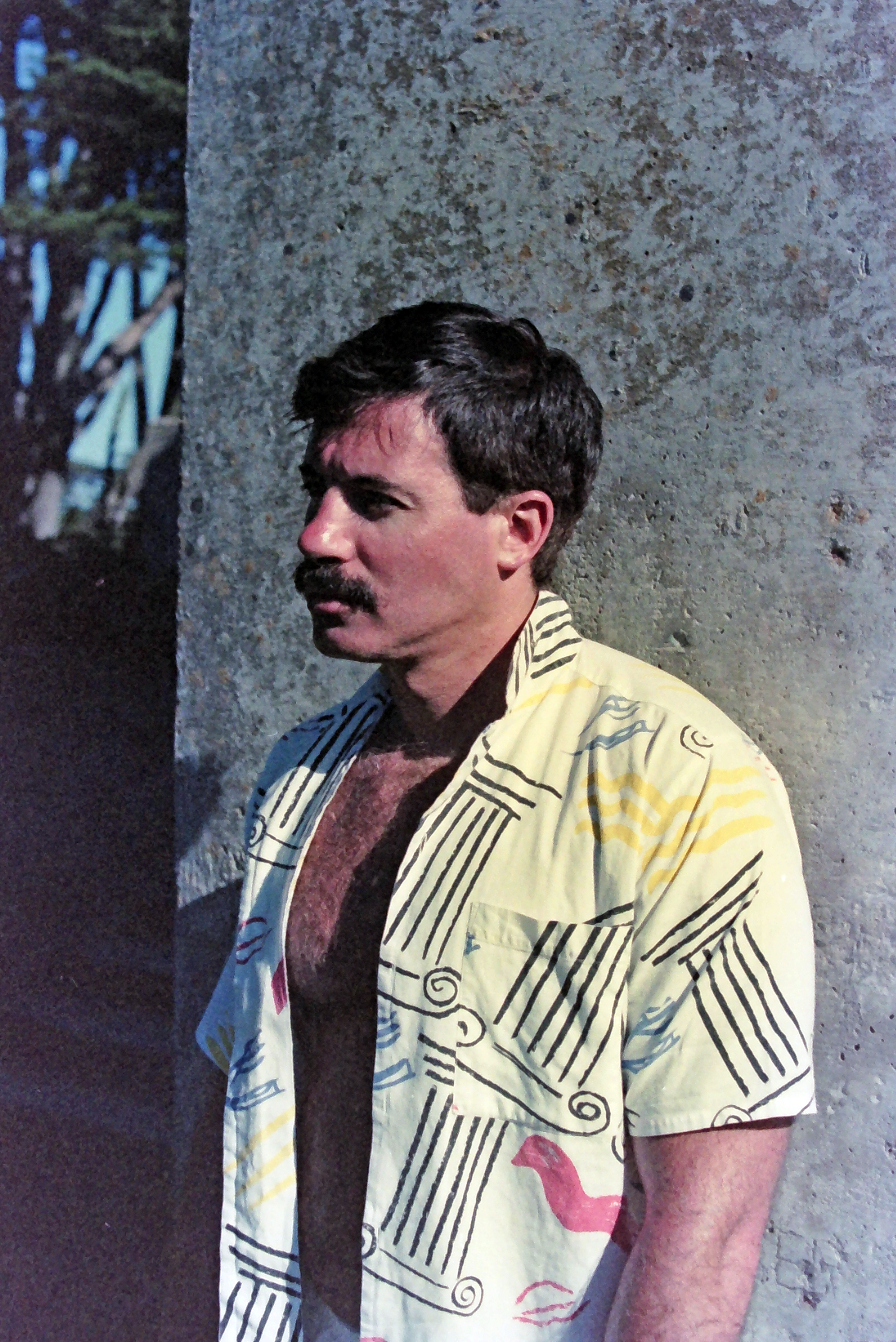
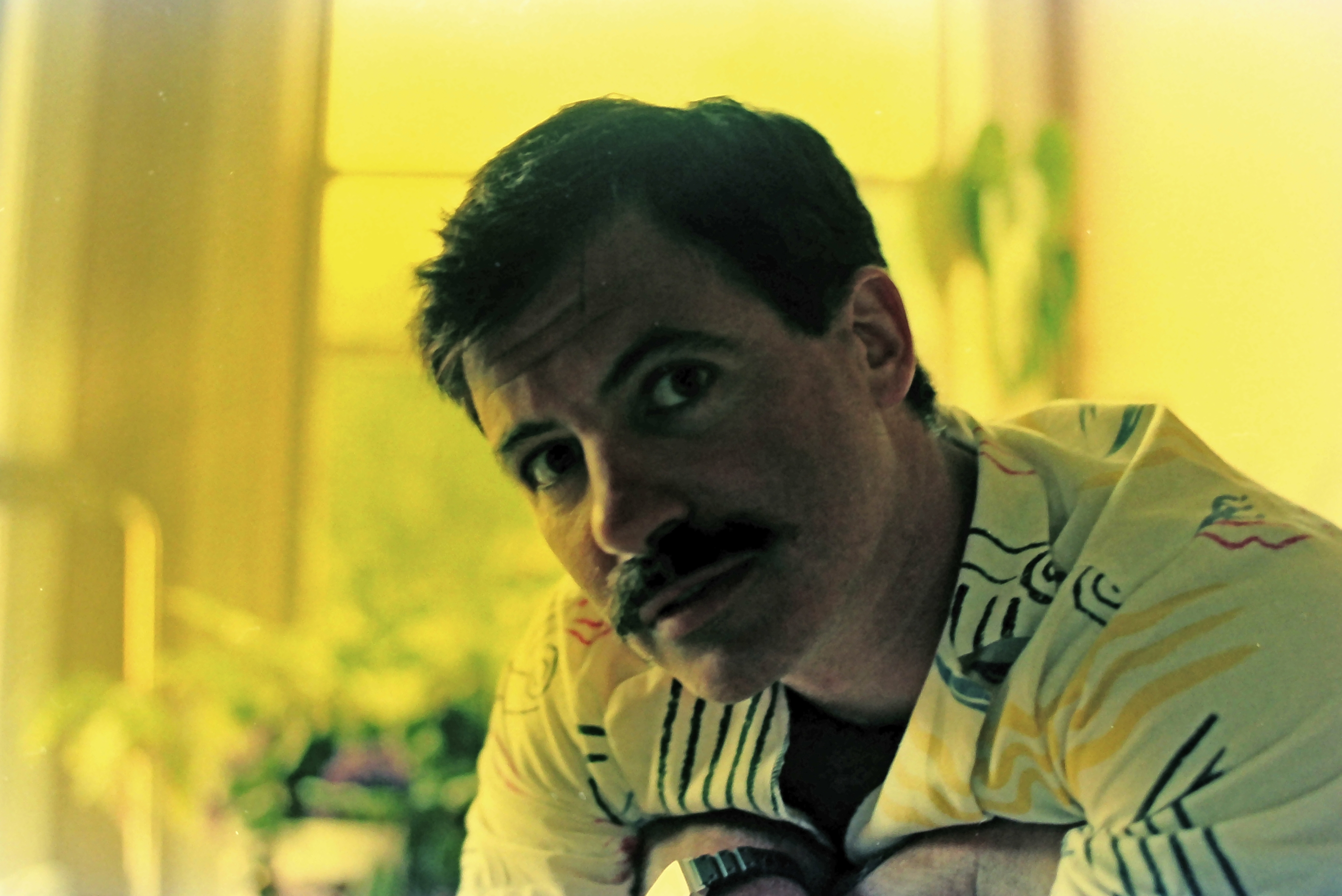
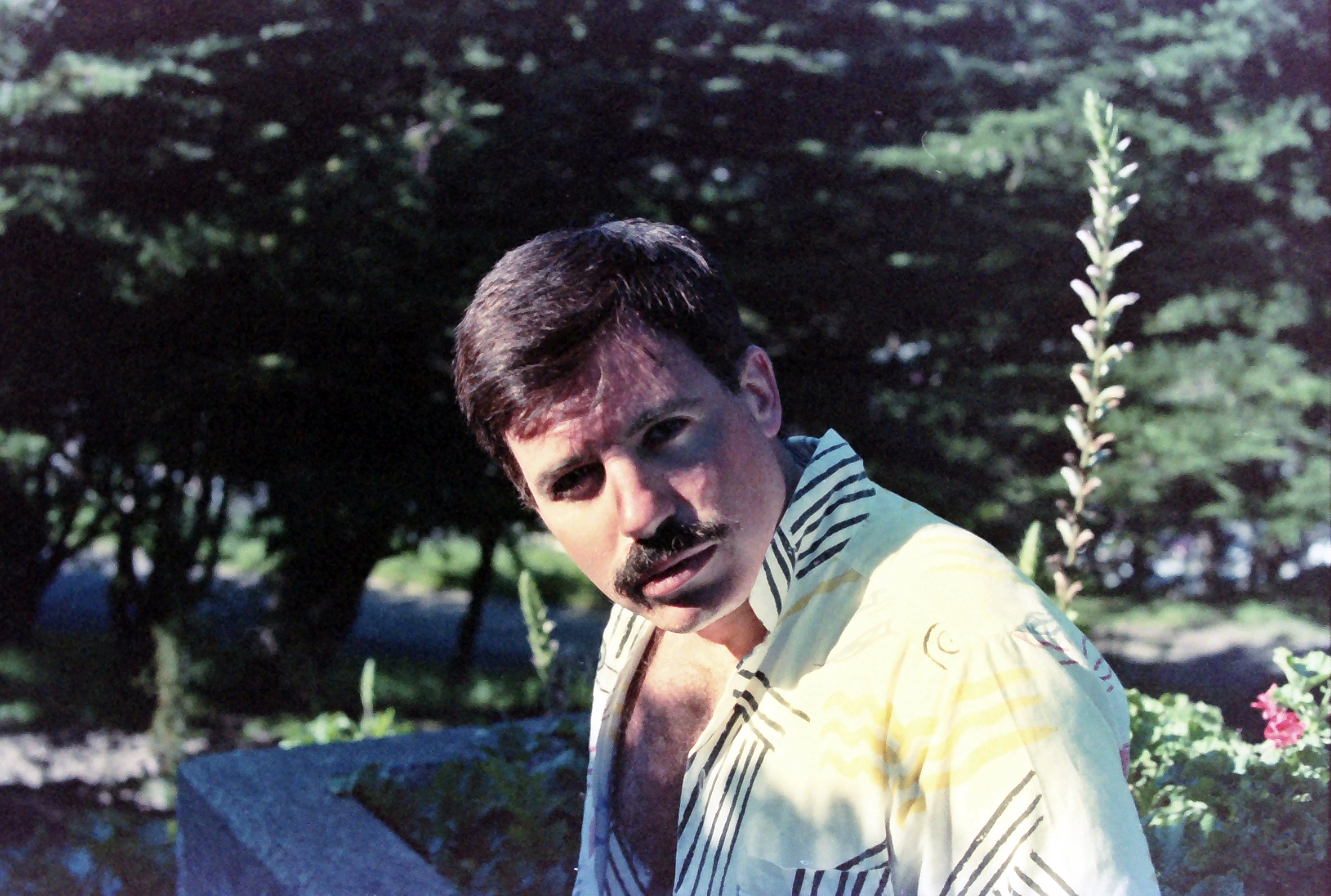
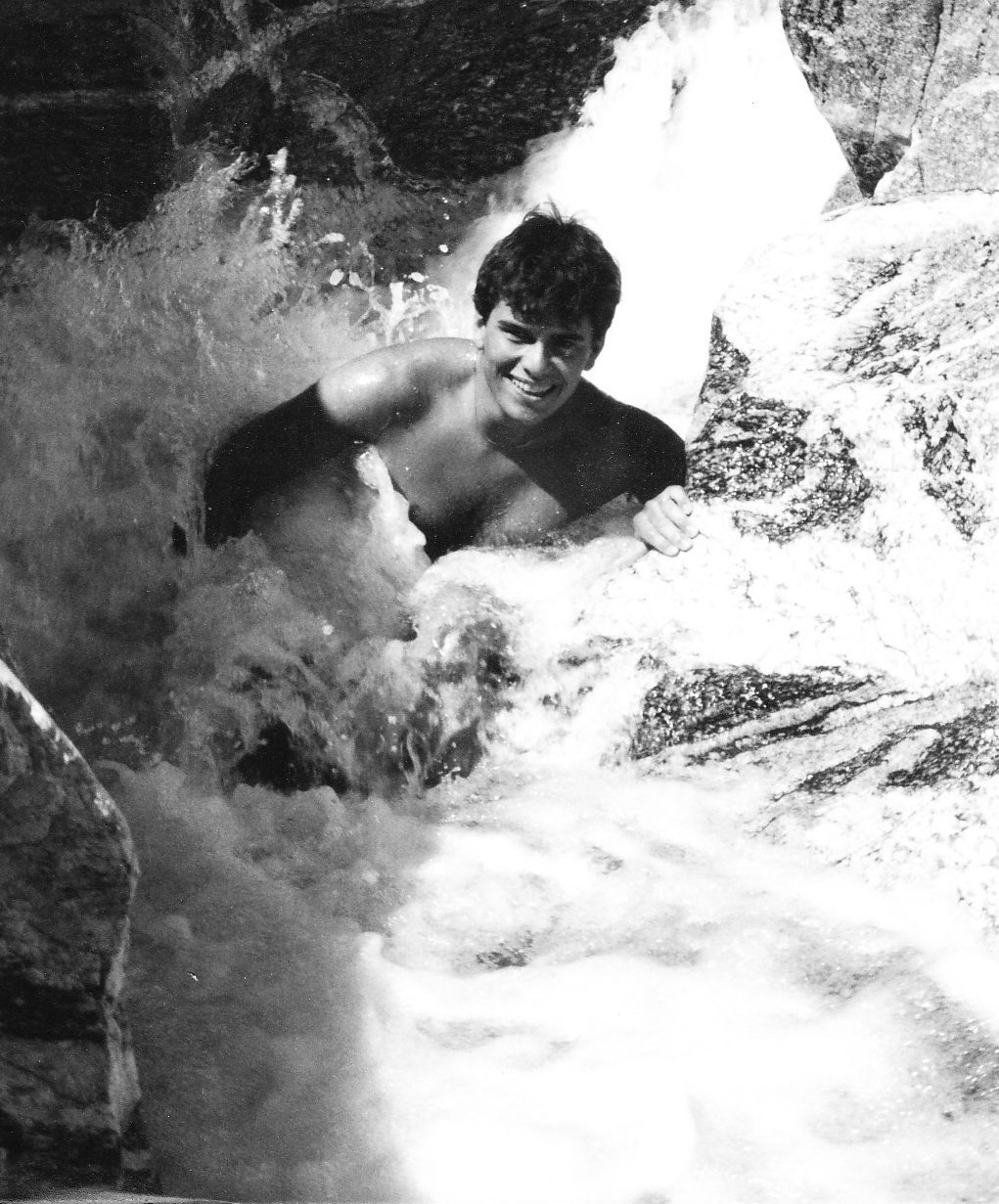
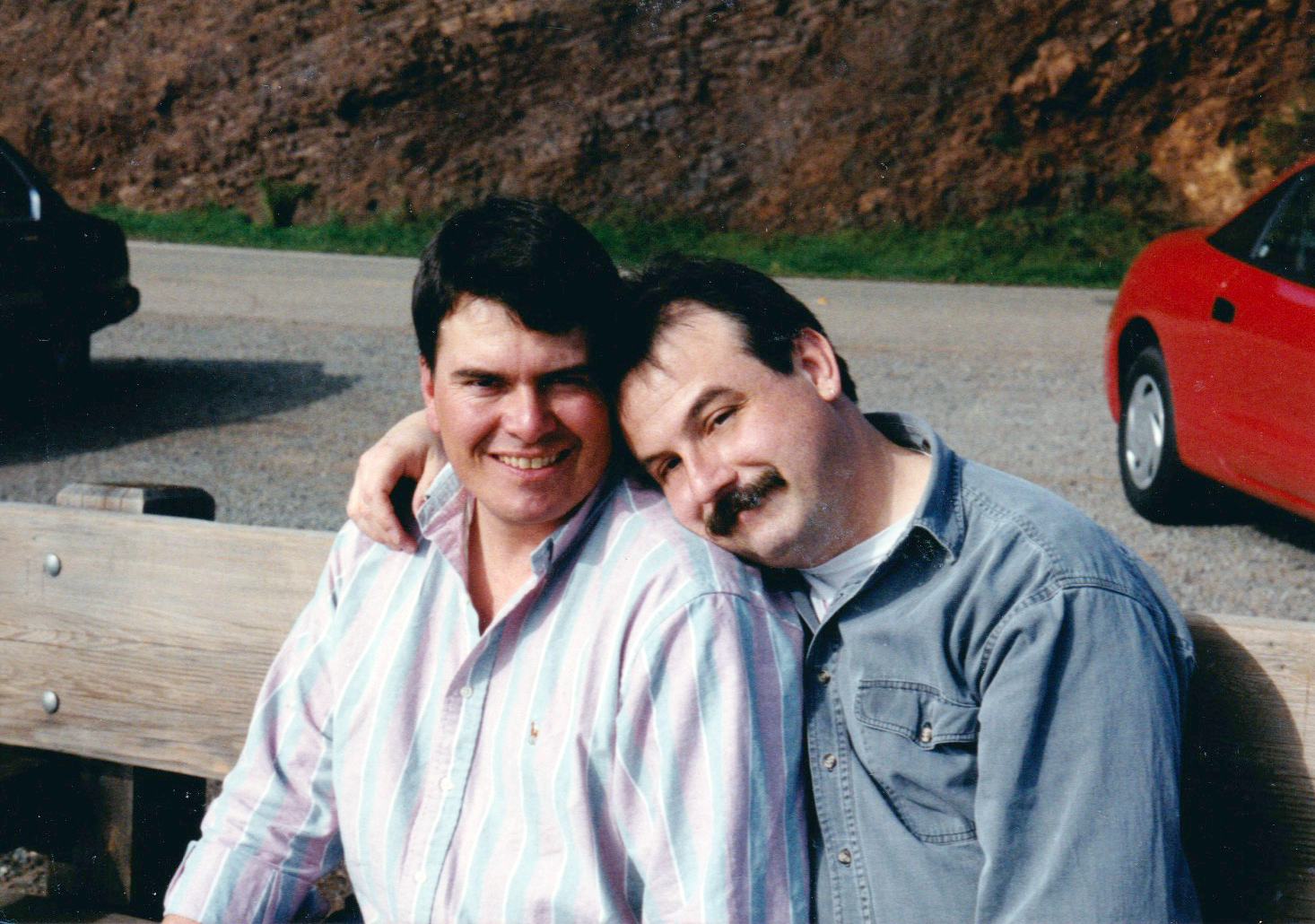
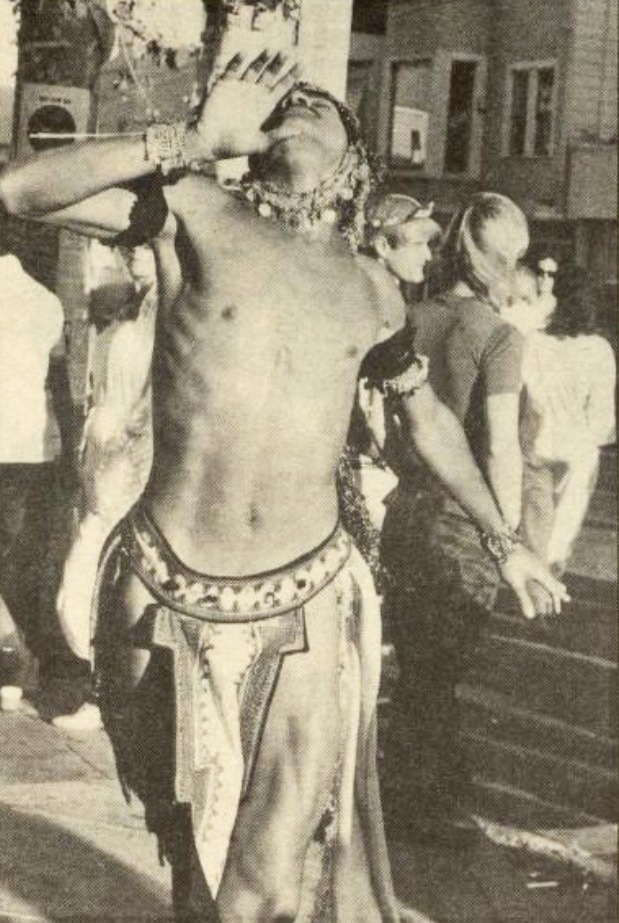
“I took this image of a Navy friend, Jim, at a house I was living back in 1984. Being a Navy photographer at the time, I would take more than just snapshots of friends. On this night, I took Jim with some harsh lighting. This being my favorite. He was not at a low point during his time in the Navy. He had been reflecting back to how much easier it was when he was a kid.
I was transferred overseas in early 1985, and lost touch with Jim. When I returned from overseas years later, I found out of his passing.
After my Navy career I was attending college. One of my electives was a photography class. During that class we had an assignment to put images together into a book. We could use any image we had taken during our lives. I put one of the images I had taken of Jim all those years ago in 1984. I was using Photoshop at the time so I added text to some of the images in my book.
To Jim’s image I added a quote from an Elizabeth Akers Allen poem titled “Rock Me To Sleep.”
“Backward, turn backward,
O Time in your flight,
Make me a child again
just for tonight!”
It seems he has been gone a lifetime. Rest in Peace Jim.” — by Chuck Cavanaugh
The only one I ever remember owning was Pet Shop Boys’ Very. (That link may give you an expired certificate warning if you visit but it appears to be a legit website.)
It startled the crap outta me the first time I played it…
To be filed under: Things I Wish I’d Never Gotten Rid Of
Nostalgia is a part of getting old, right?
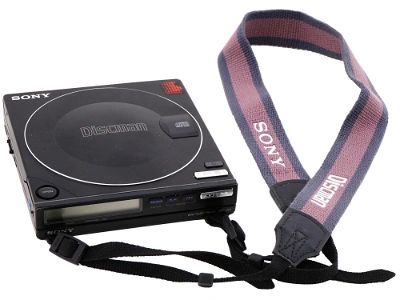
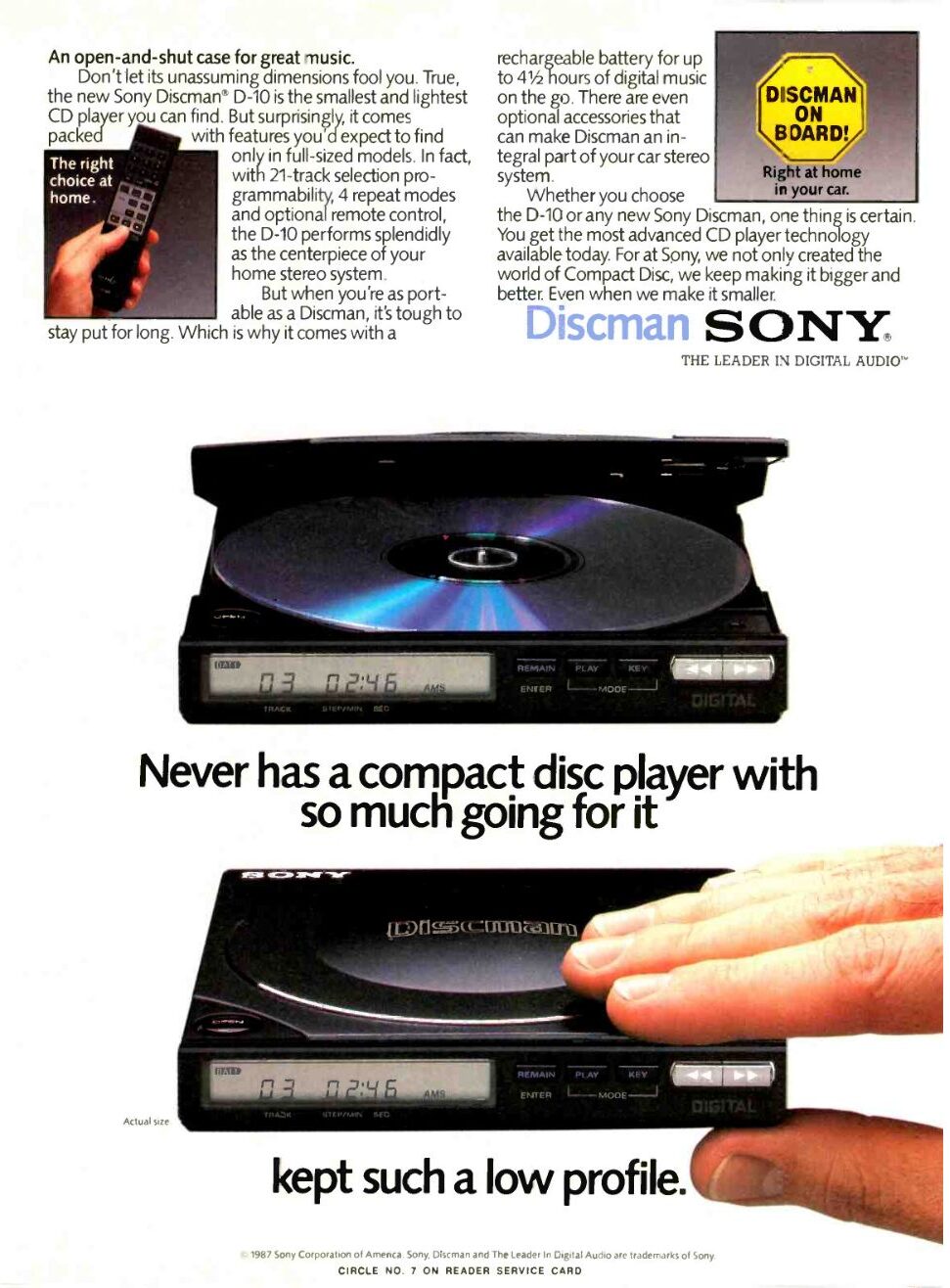
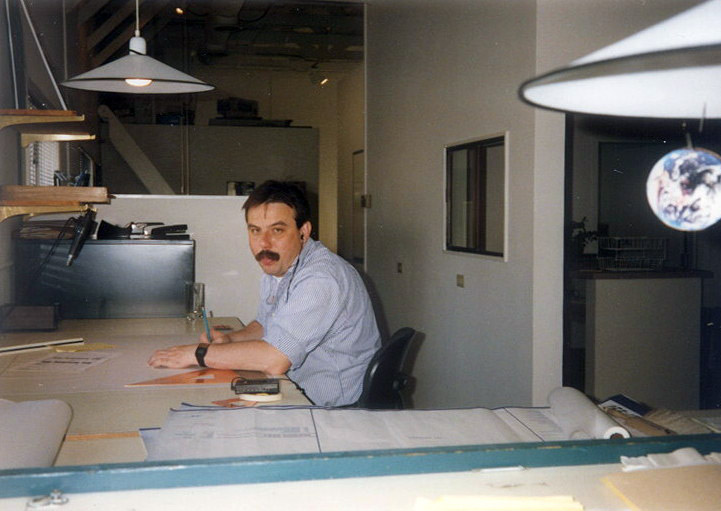
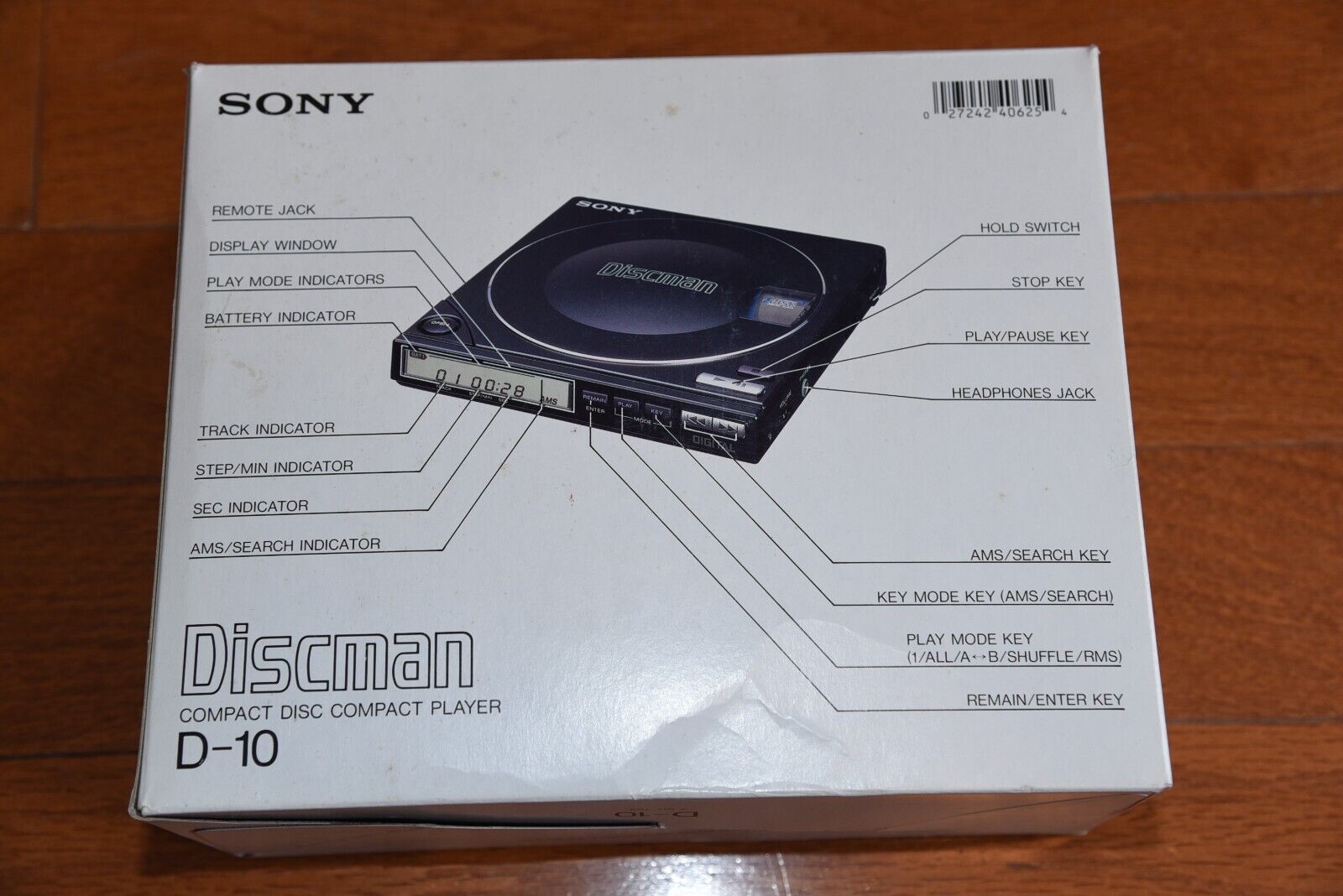
The Sony D-10 was the firstsecond portable CD player I owned. (The first was a D-7, and let me tell you that digging up that model number numerous trips to the dusty memory banks in my head, not to mention copious Google searches until I stumbled upon it.) Bought new in 1986 from Jerry’s Audio (now a mere shell of it’s former self) in Tucson, it went everywhere with me even though this was several years before anti-skip technology and it did tend to lose its mind when jostled too hard. Even without that tech, it still worked surprisingly well when casually walking, but anything more strenuous would send it into a tailspin. This basically relegated it to desk use at work while I was busy creating architectural drawings.
Not the D-10 (I think it was a cassette walkman at the time of the photo), but definitely me at work…
And it wasn’t cheap—somewhere north of $300 ($850 in 2024 dollars) as I remember. But damn, it was awesome—and in my mind totally worth it.CDs were still relatively new and just beginning to catch on so was the tech. The unit itself was also heavy; no cheap molded plastic case here; solid metal all the way. It came with a custom rechargeable battery the size of a standard CD case that clipped on the bottom of the device and made connection via spring-loaded gold contacts. Chef’s kiss.
As the years progressed, the only thing that proved problematic was the headphone jack. (Kind of an important part, when you think about it, and in all honesty I may be confusing this with the D-7.) The only thing that kept it in place was the jack’s soldered electrical connection to the circuit board and with the constant jiggling of the headphones through ordinary use, they’d often crack from the strain and come loose. I don’t remember how many times I removed the bottom cover to resolder those joints during ownership. I even shelled out the bucks for the optional remote control and pop-in infrared receiver since I did have it connected to my main stereo more often than not.
I don’t remember the circumstances under which I finally let it go, but whenever I see one on eBay these days it brings a tear to my eye and I toy with the idea of replacing it, even with it’s known limitations. Unfortunately, fully four fifths of the units up for sale at any given time are marked as “not working/parts only” and those that are working—or god forbid have been properly refurbished—are priced higher than I’m willing to pay for nostalgia’s sake. So I admire them from afar and simply enjoy my much more contemporary vintage D-171 that I bought in the late 90s.
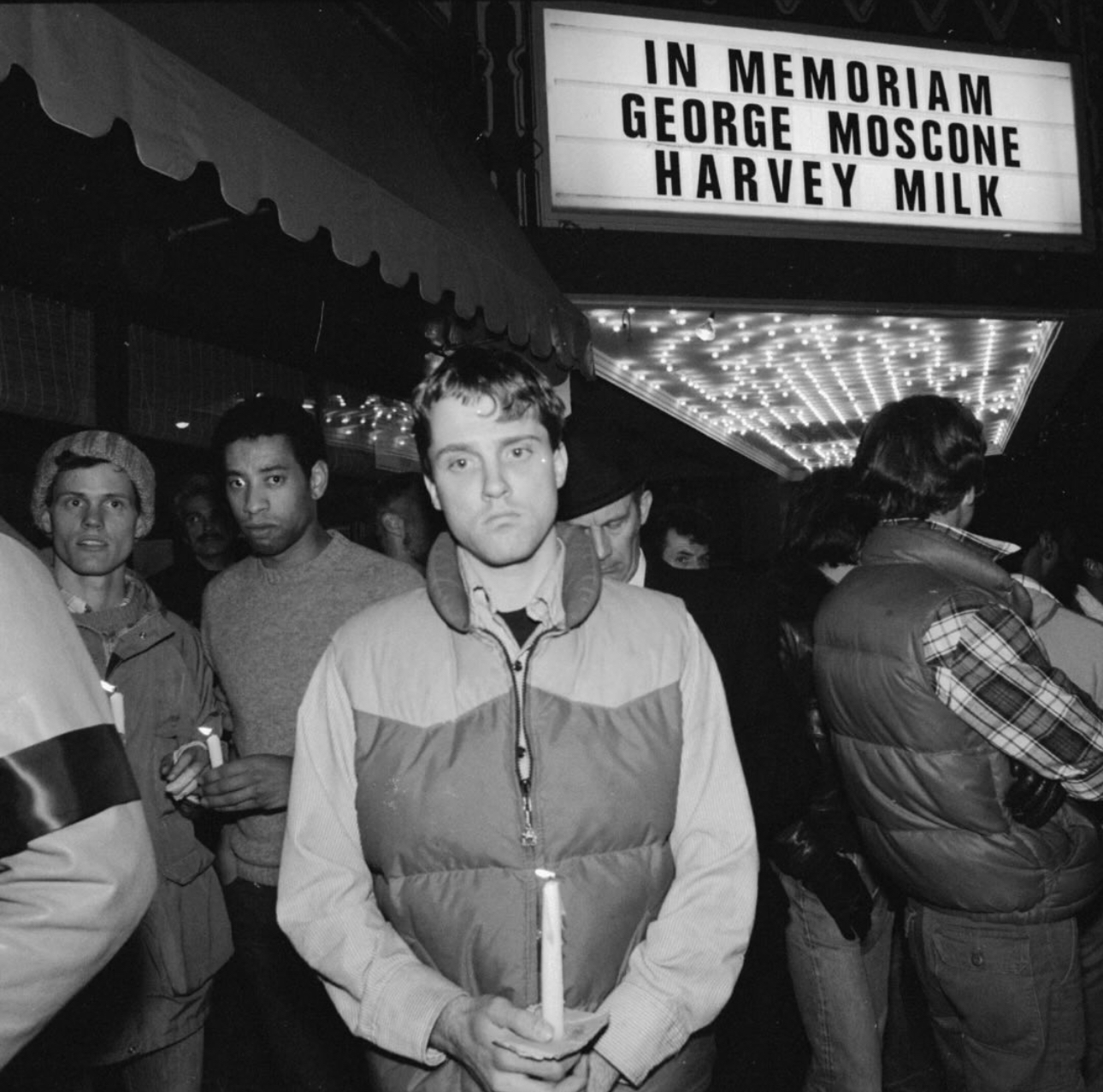
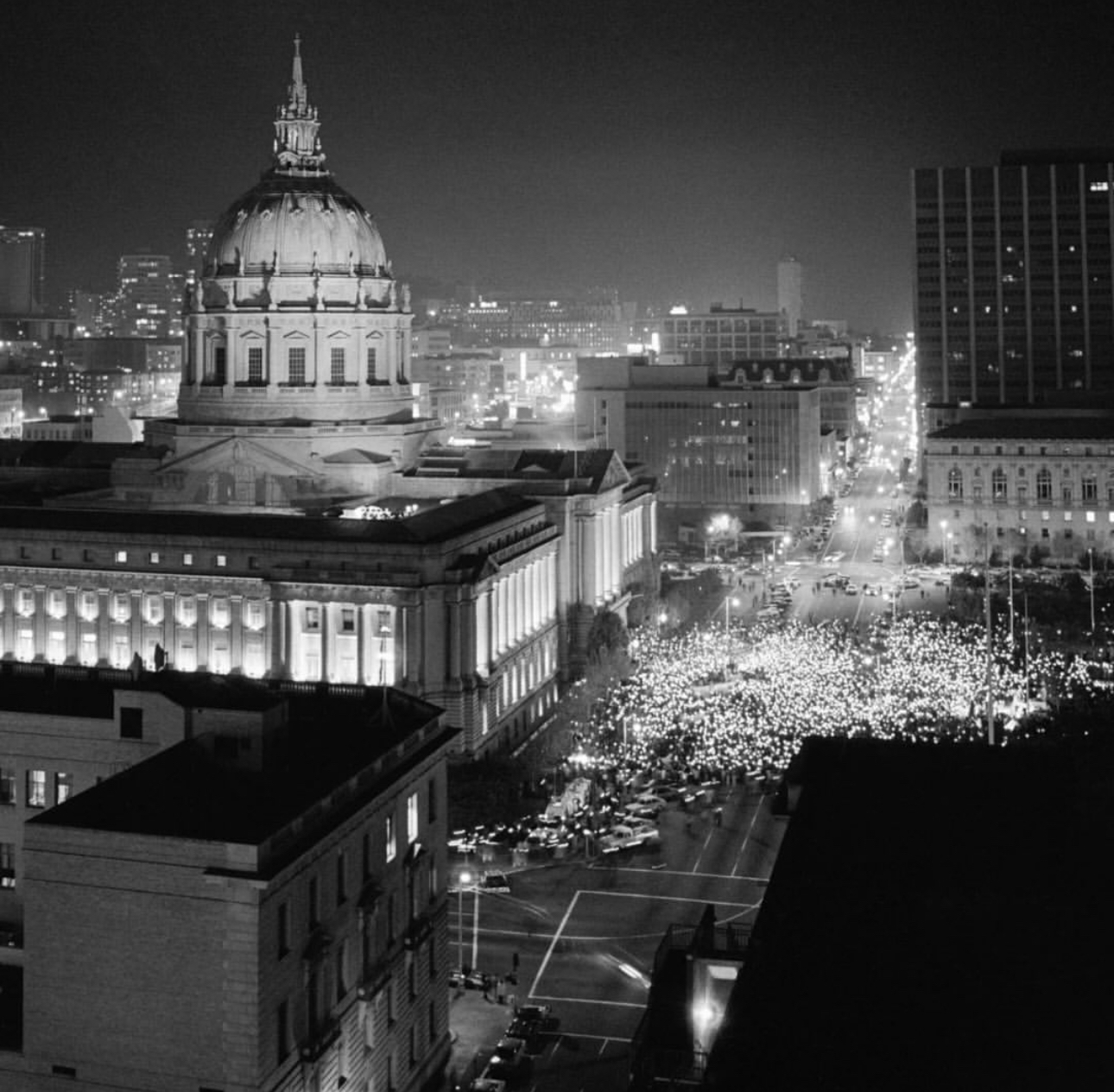
45 years ago today, SF Supervisor Harvey Milk and Mayor George Moscone were shot and killed inside city hall by former Supervisor Dan White. Milk was California’s first openly gay elected official and a pioneer in the struggle for LGBTQ+ rights worldwide. Moscone was a first-term mayor and former California state senator.
The shootings were a turning point in San Francisco politics, sparking widespread public outcry. Dianne Feinstein, who was then the president of the Board of Supervisors, was subsequently sworn in as the city’s first female mayor.
Dan White was charged with first-degree murder, but was ultimately convicted of voluntary manslaughter. This lesser sentence ignited public outcry anew.
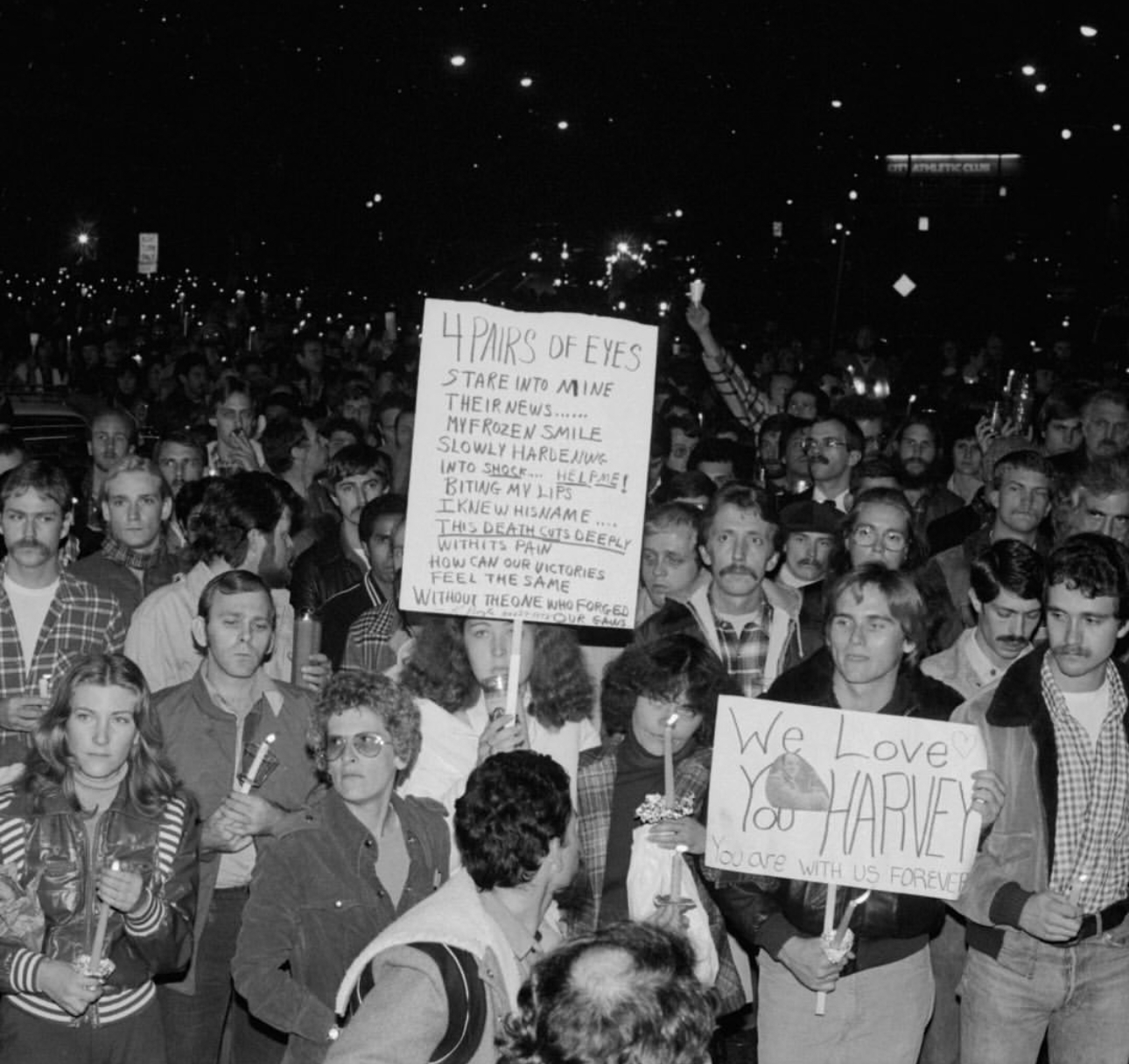
Below are captions for the above photos in order of appearance:
1. Mourners hold a candlelight vigil for Moscone and Milk.
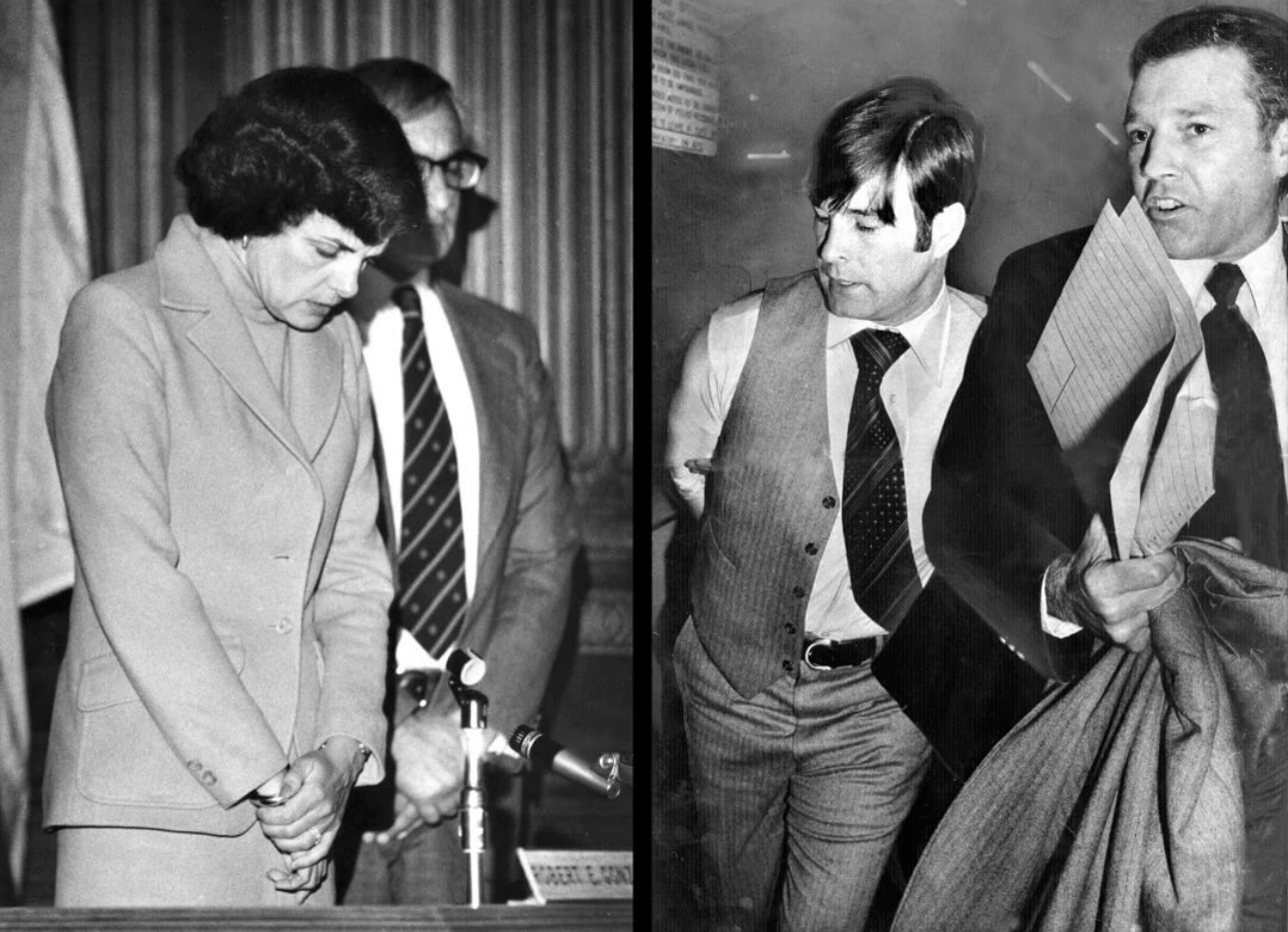
2. Left: Dianne Feinstein bows her head for a moment of silence. Right: Dan White is taken into custody by the SFPD.
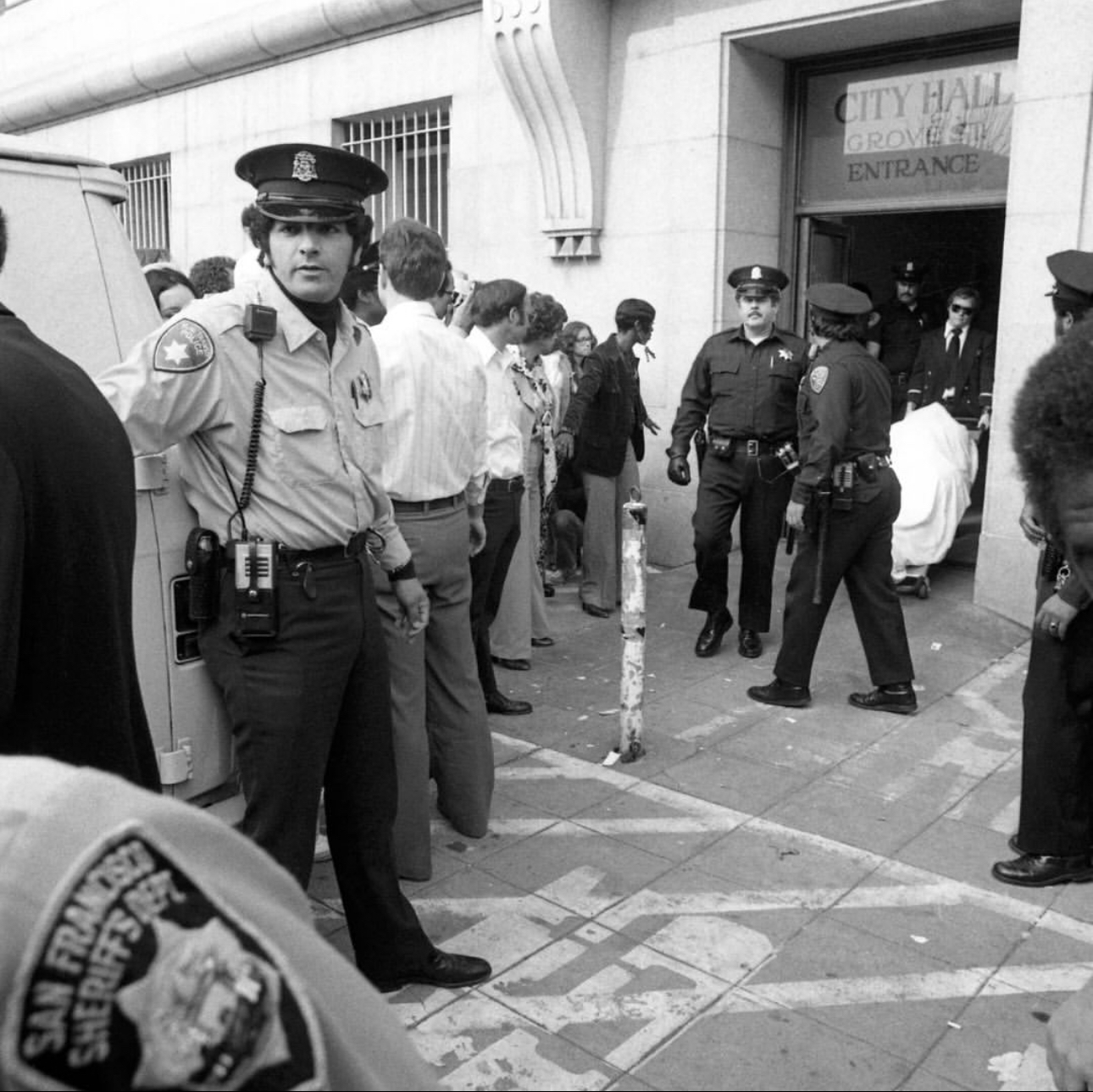
3. The body of Harvey Milk is carried out from city hall under a white cloth.
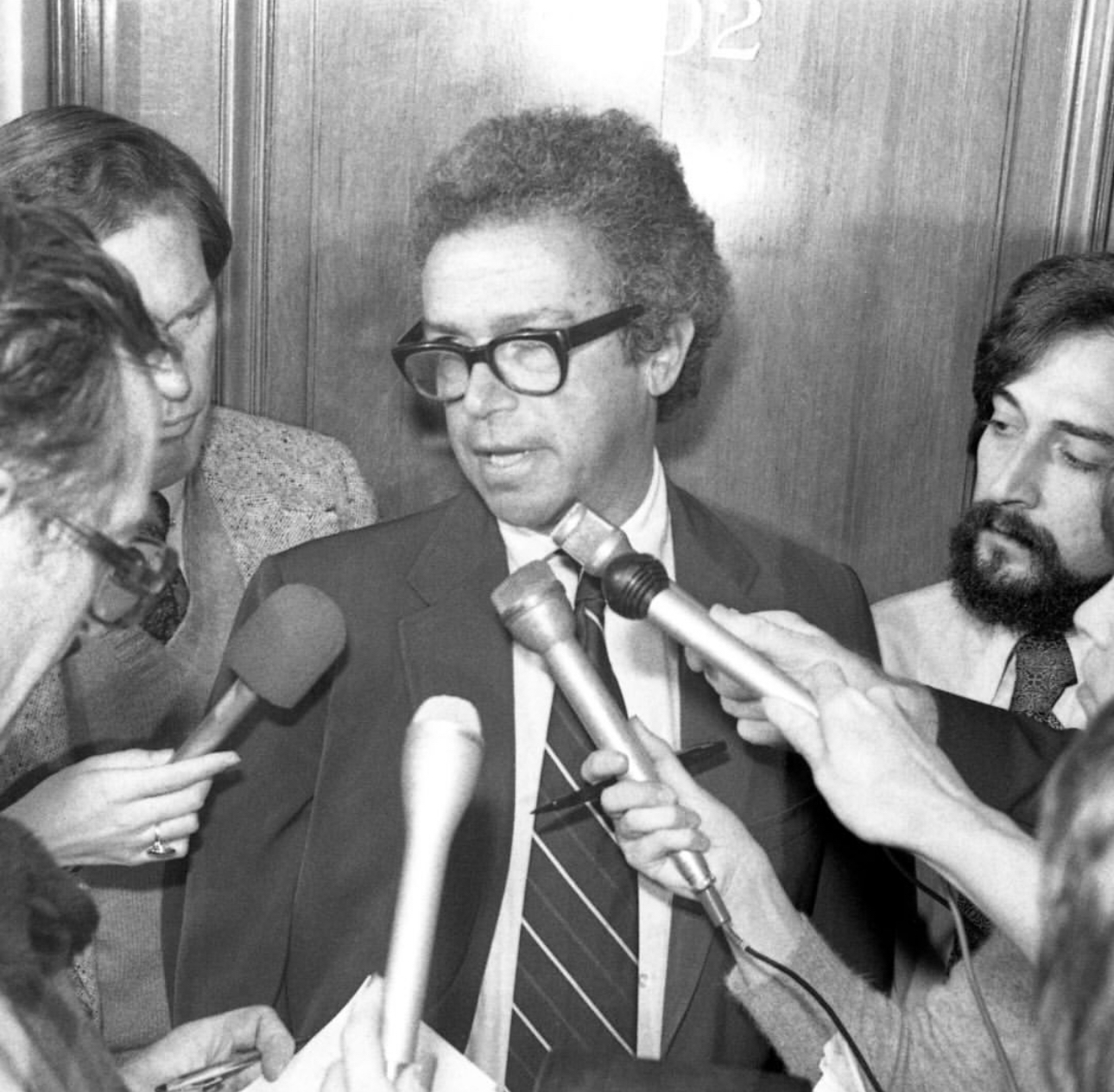
4. Mel Wax, press secretary for Mayor Moscone, announces to reporters that Moscone and Milk were shot and killed.
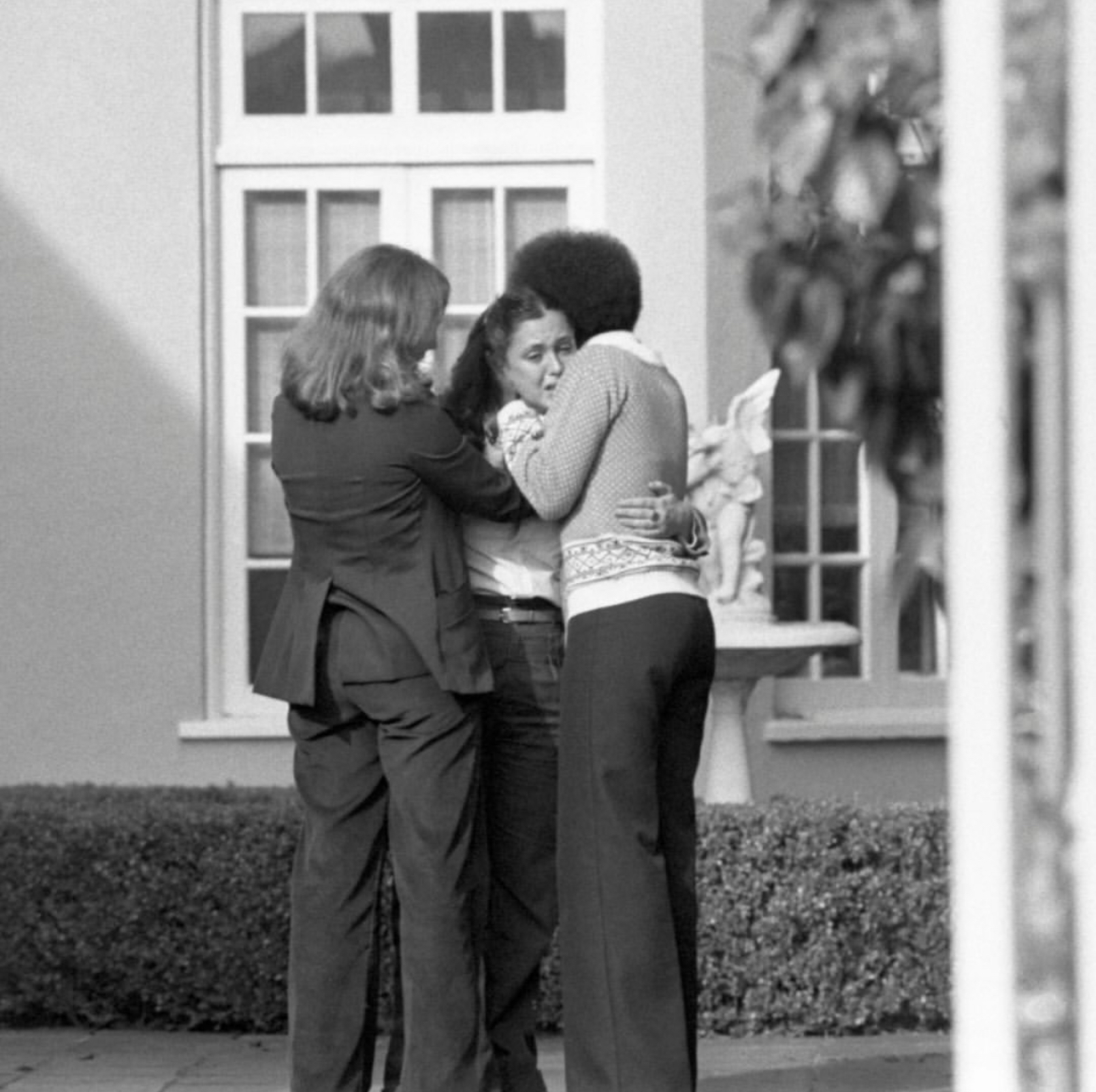
5. Rebecca Moscone is consoled by friends after learning that her father, George Moscone, had been killed.
6. Thousands gather with candles in front of SF City Hall for an impromptu vigil.
7. People hold signs and candles at a vigil.
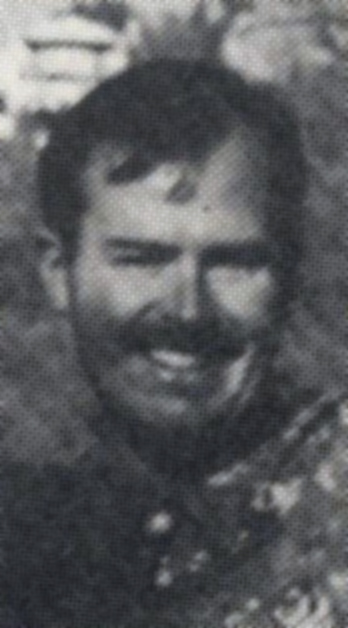
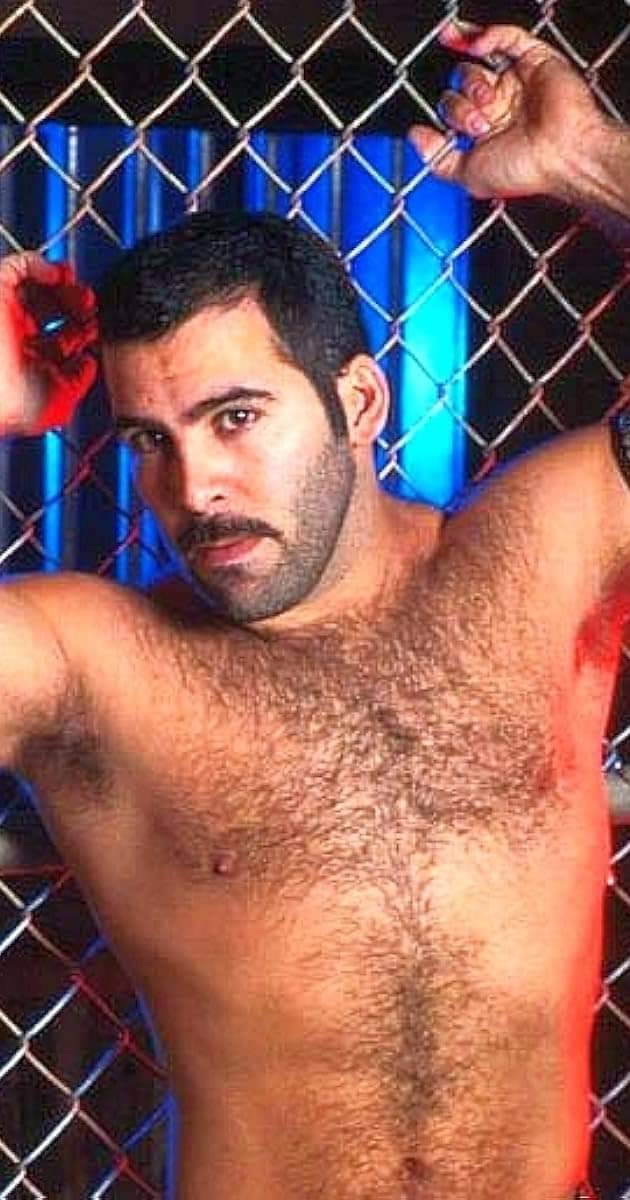
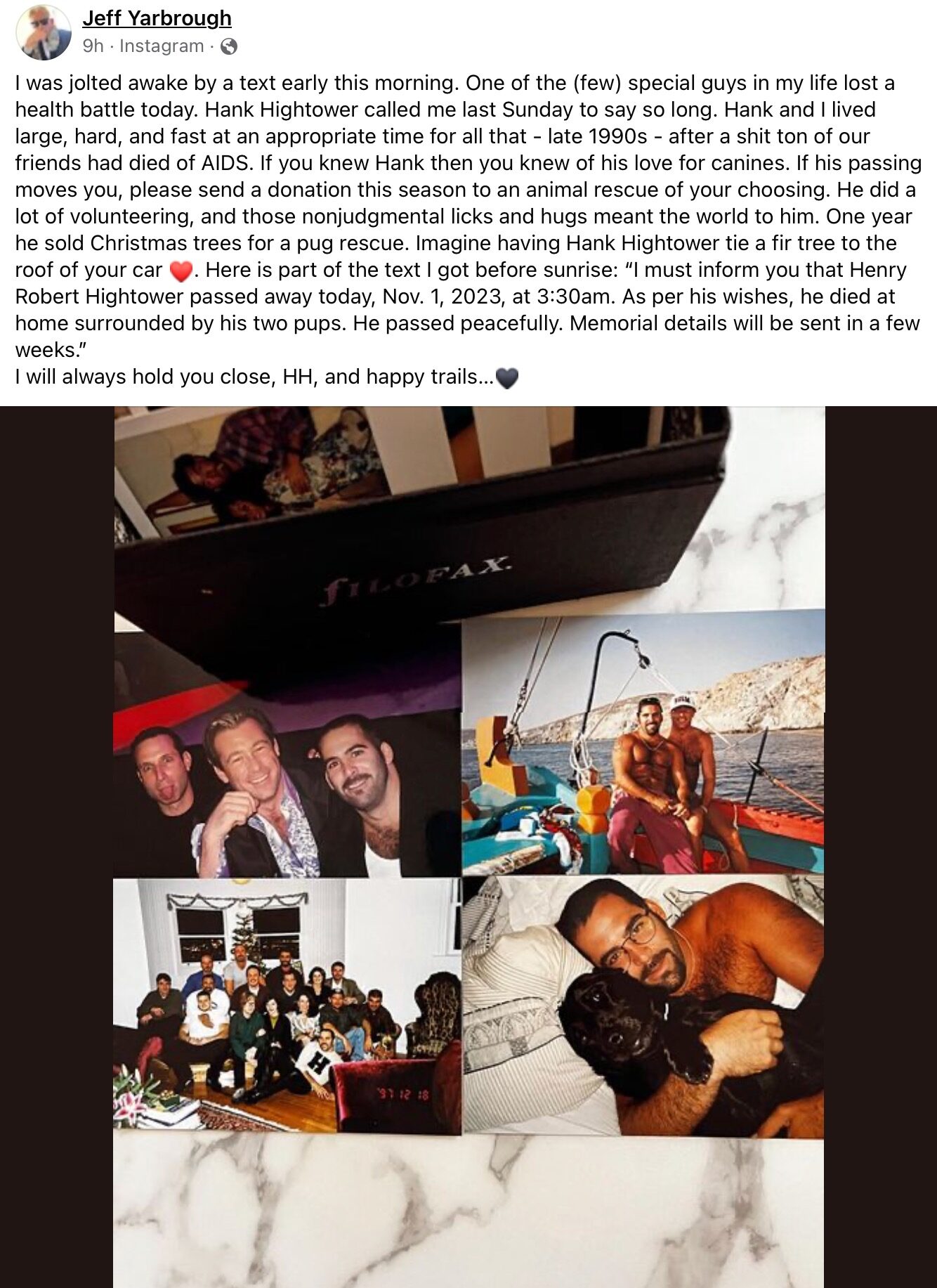
Hank Hightower, the bear porn star who became one of the most popular in his field in the ’90s, died today at 57. According to friends, he had endured a long health battle, and had time to bid his loved ones farewell.
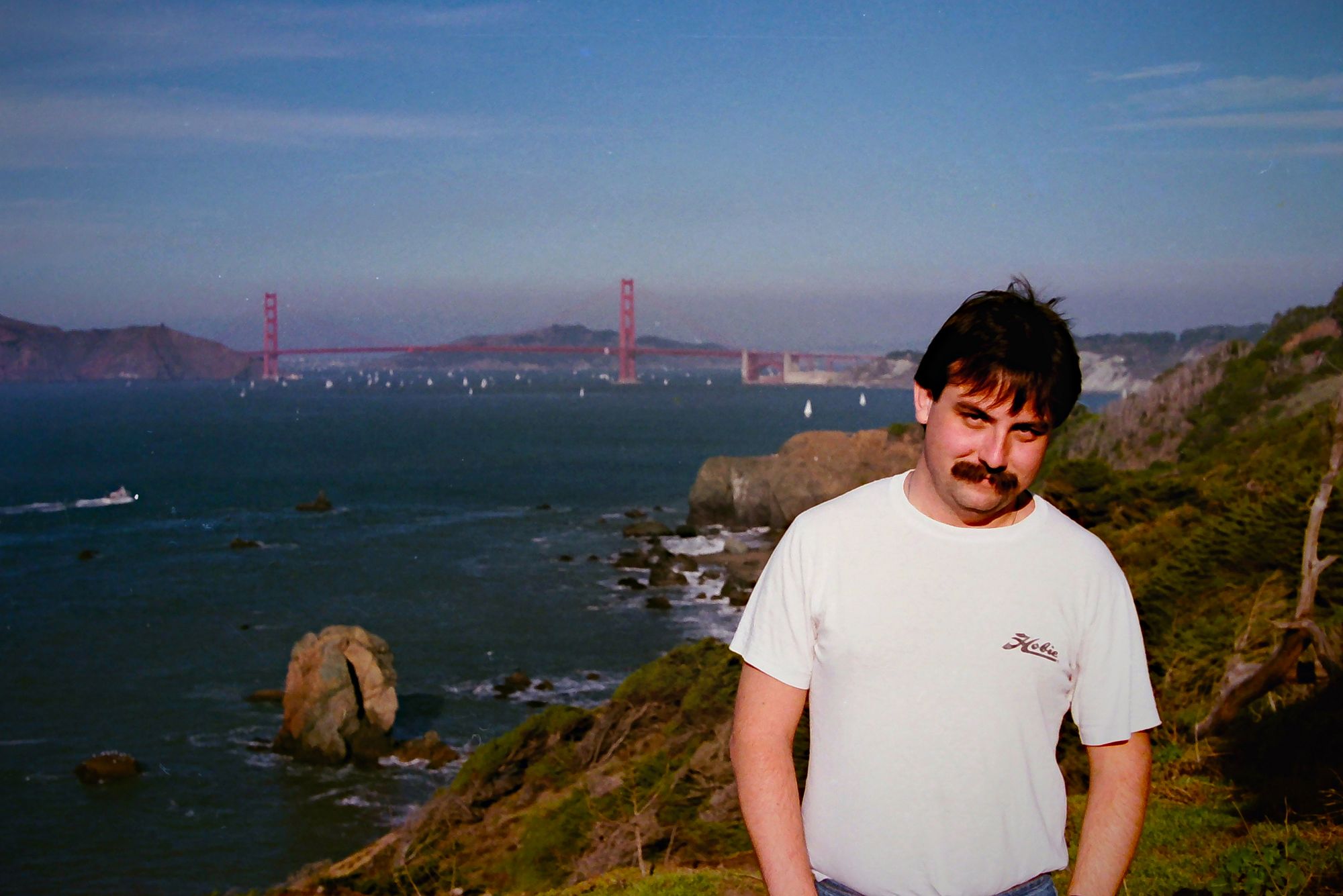
…but it’s probably my favorite photo from that time period.
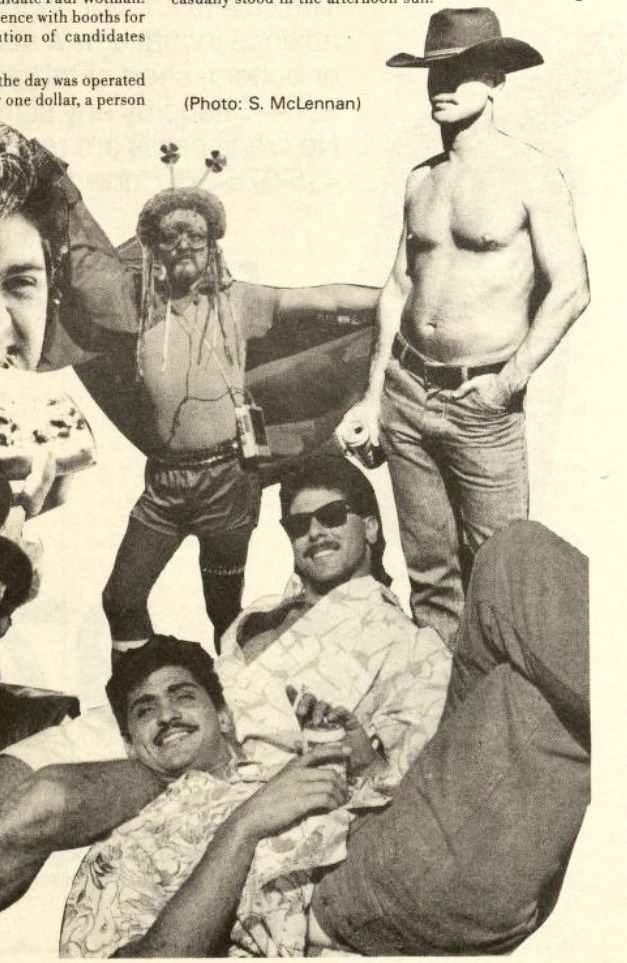
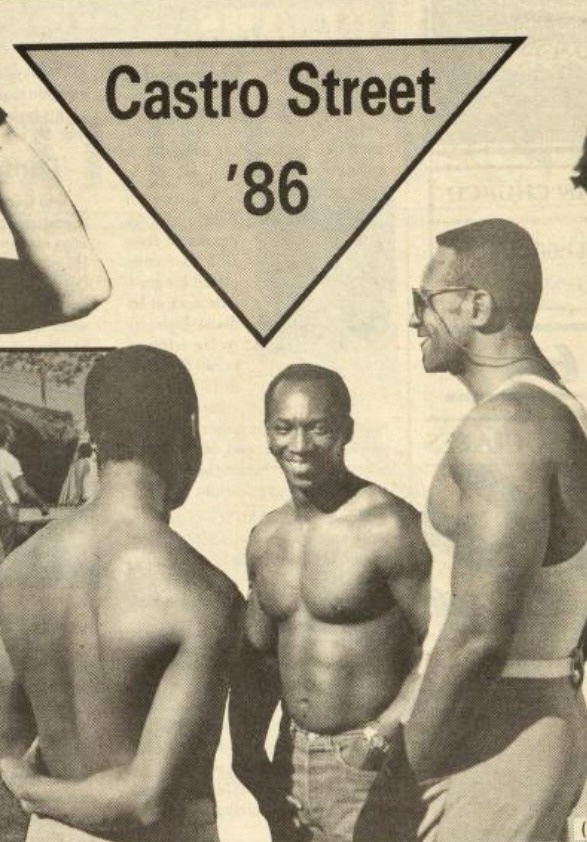
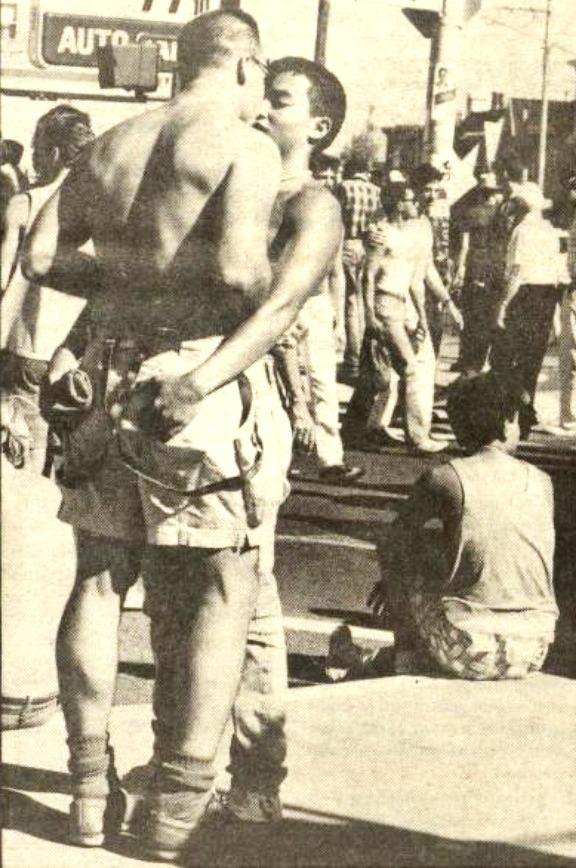
Despite the smirk, I did still have some innocence left. The City had not yet completely chewed me up and spit me out. It would take another twelve years and two aborted six-month absences to break away from its spell before that would ultimately happen.
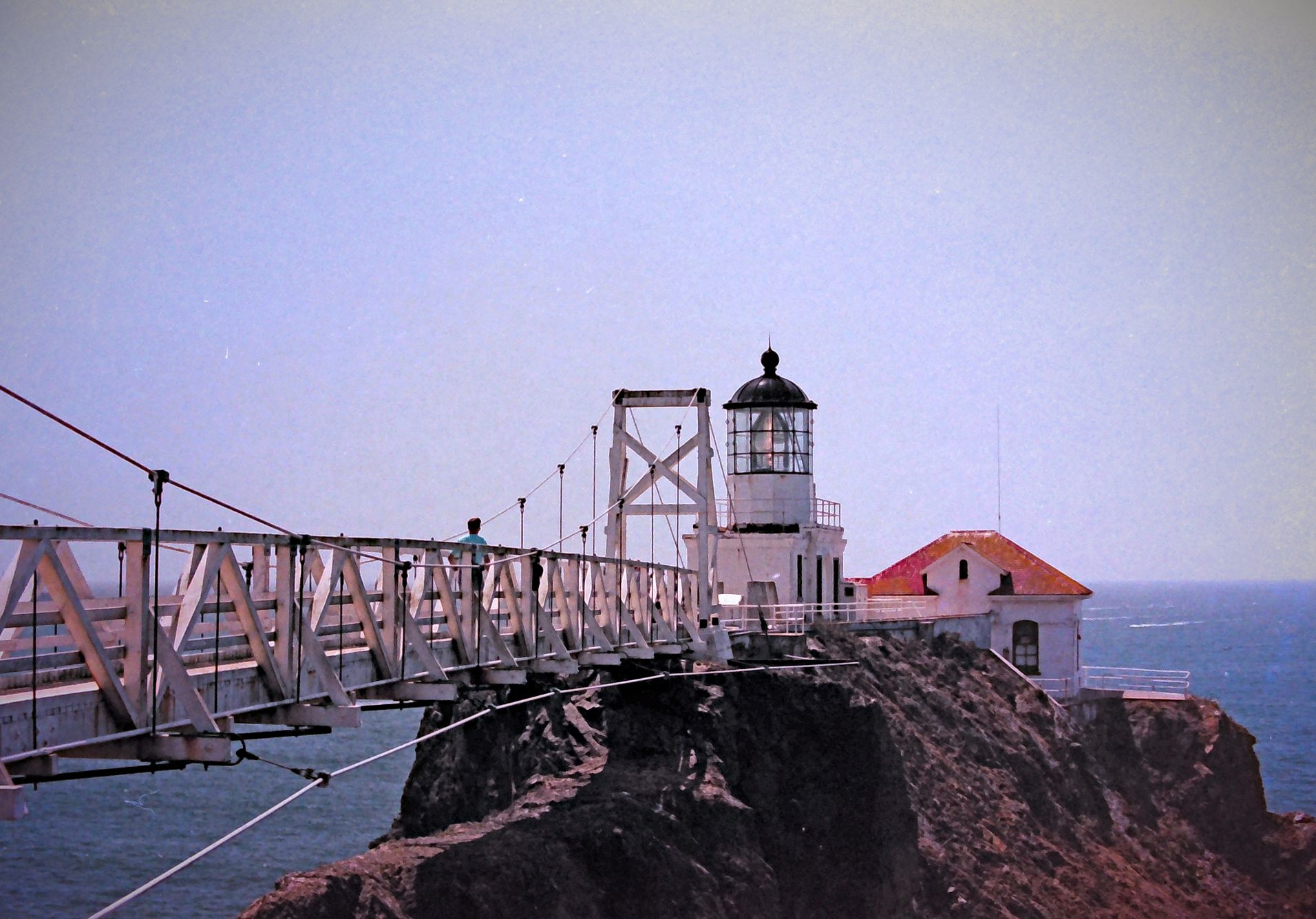
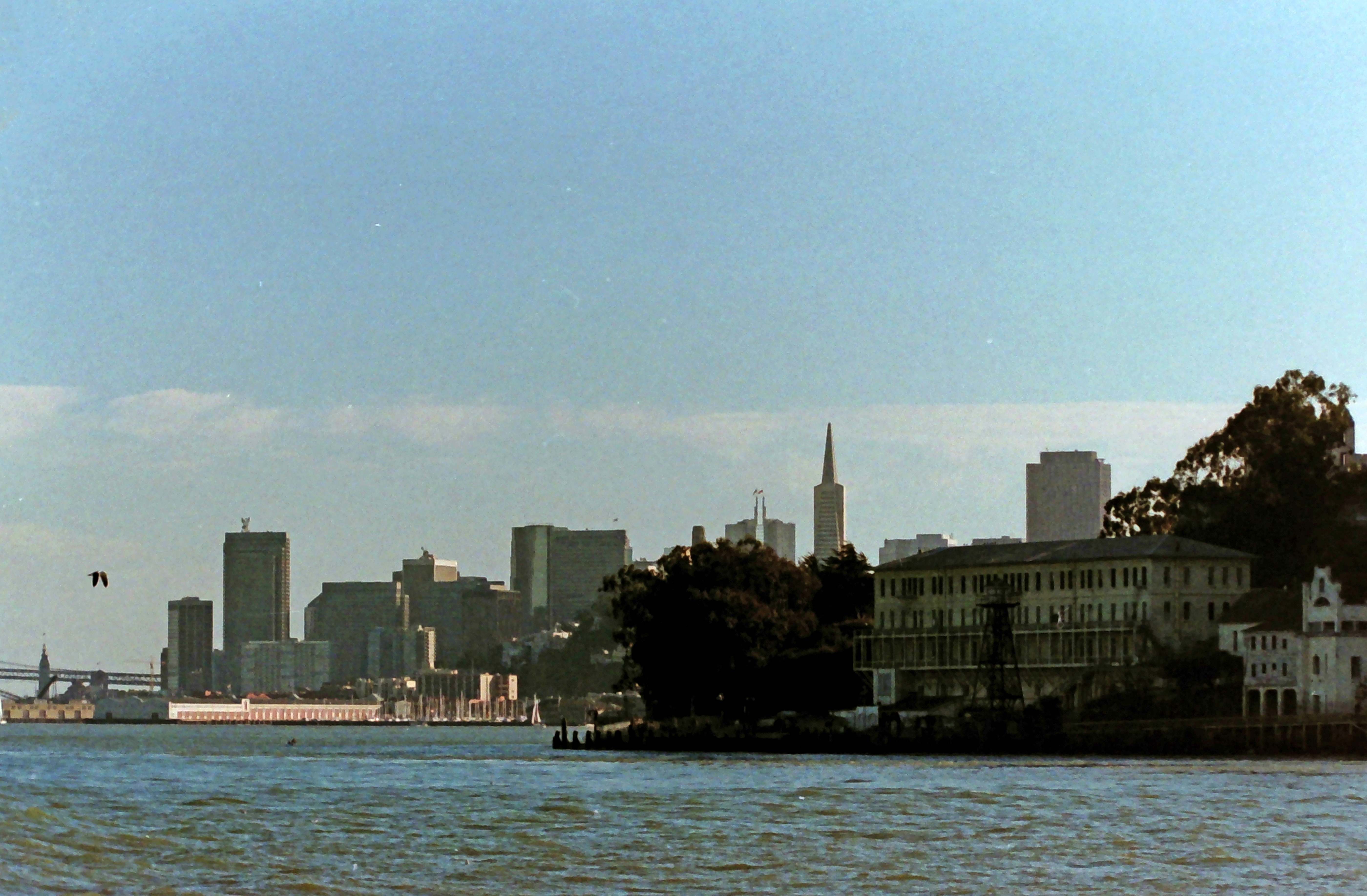
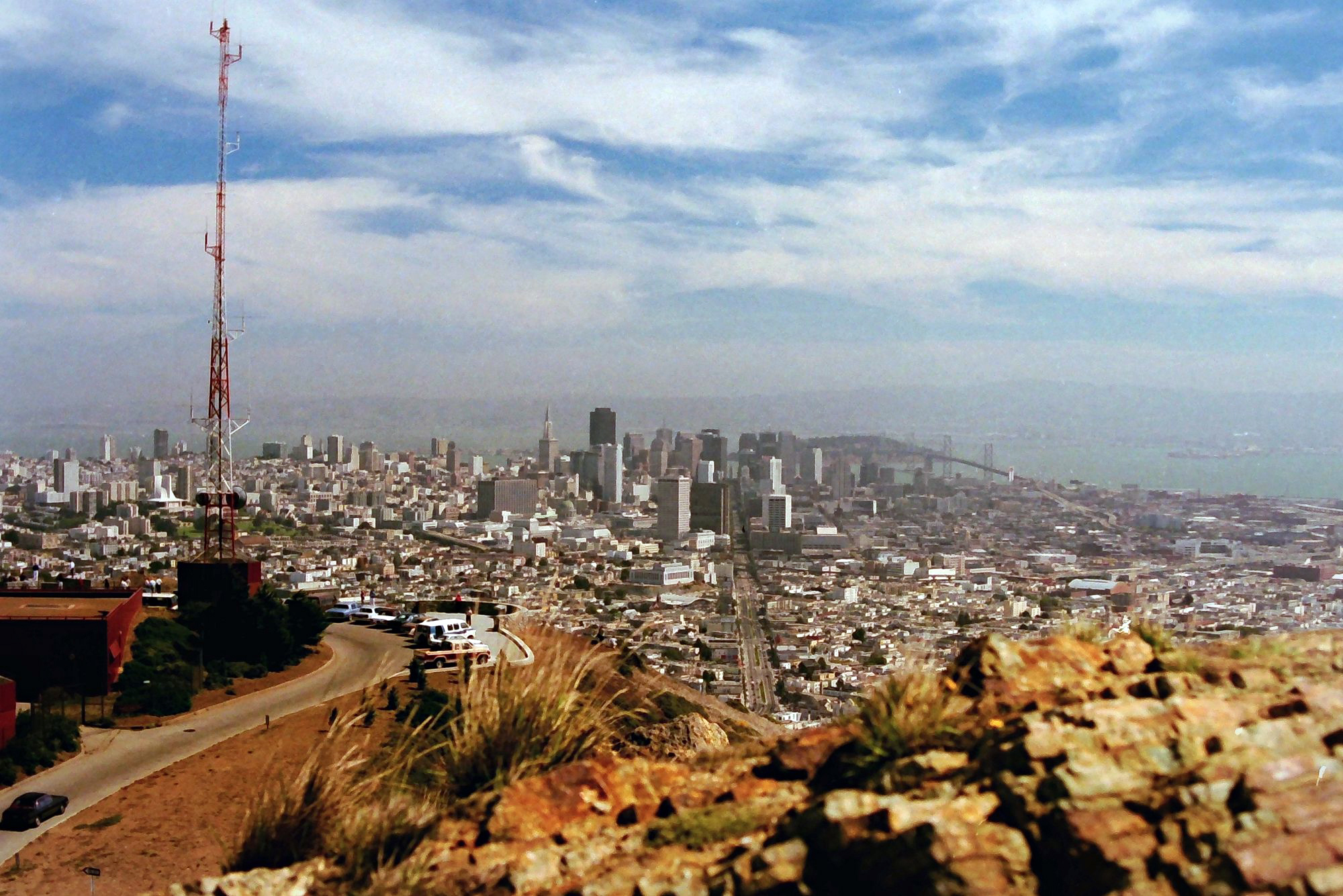
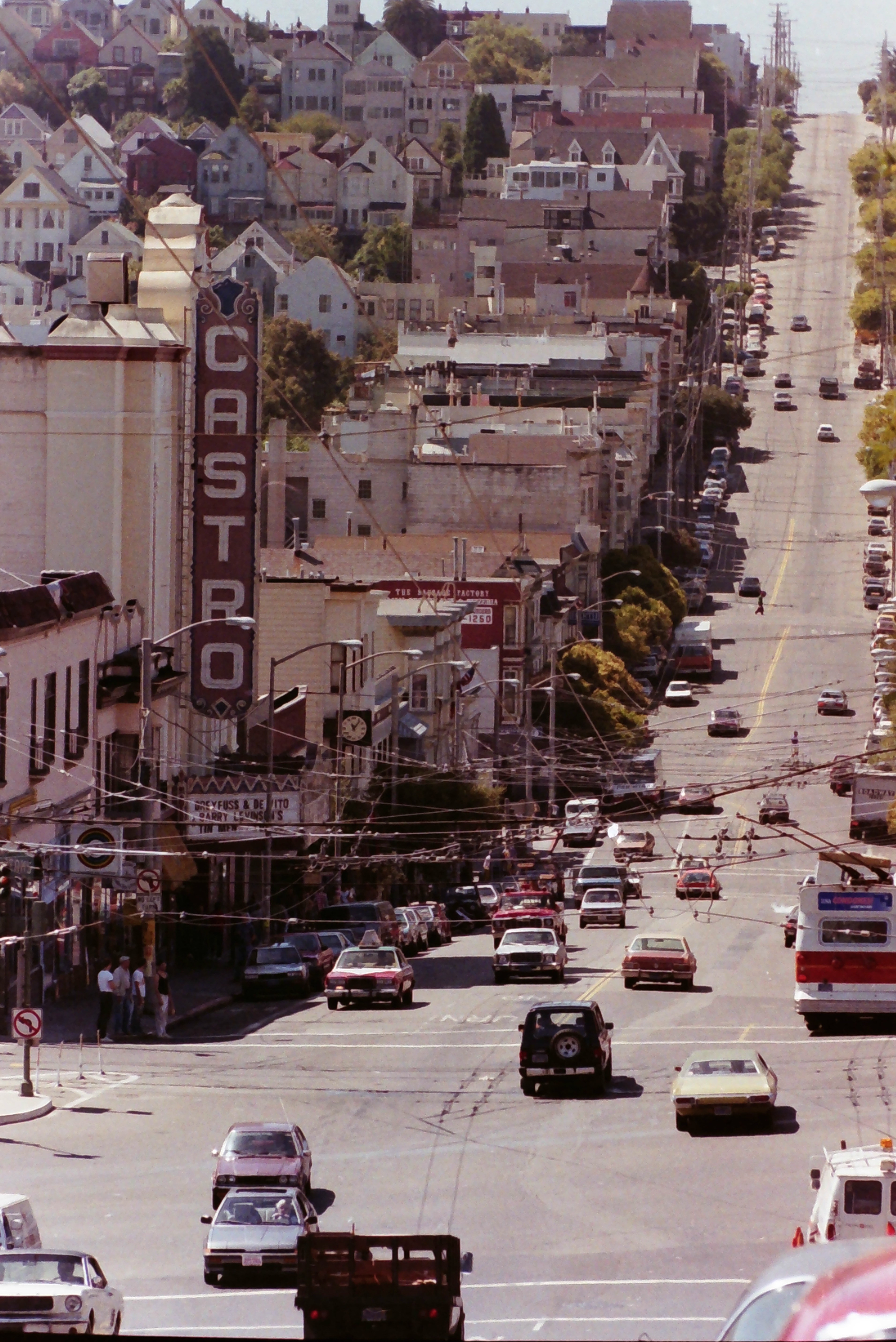
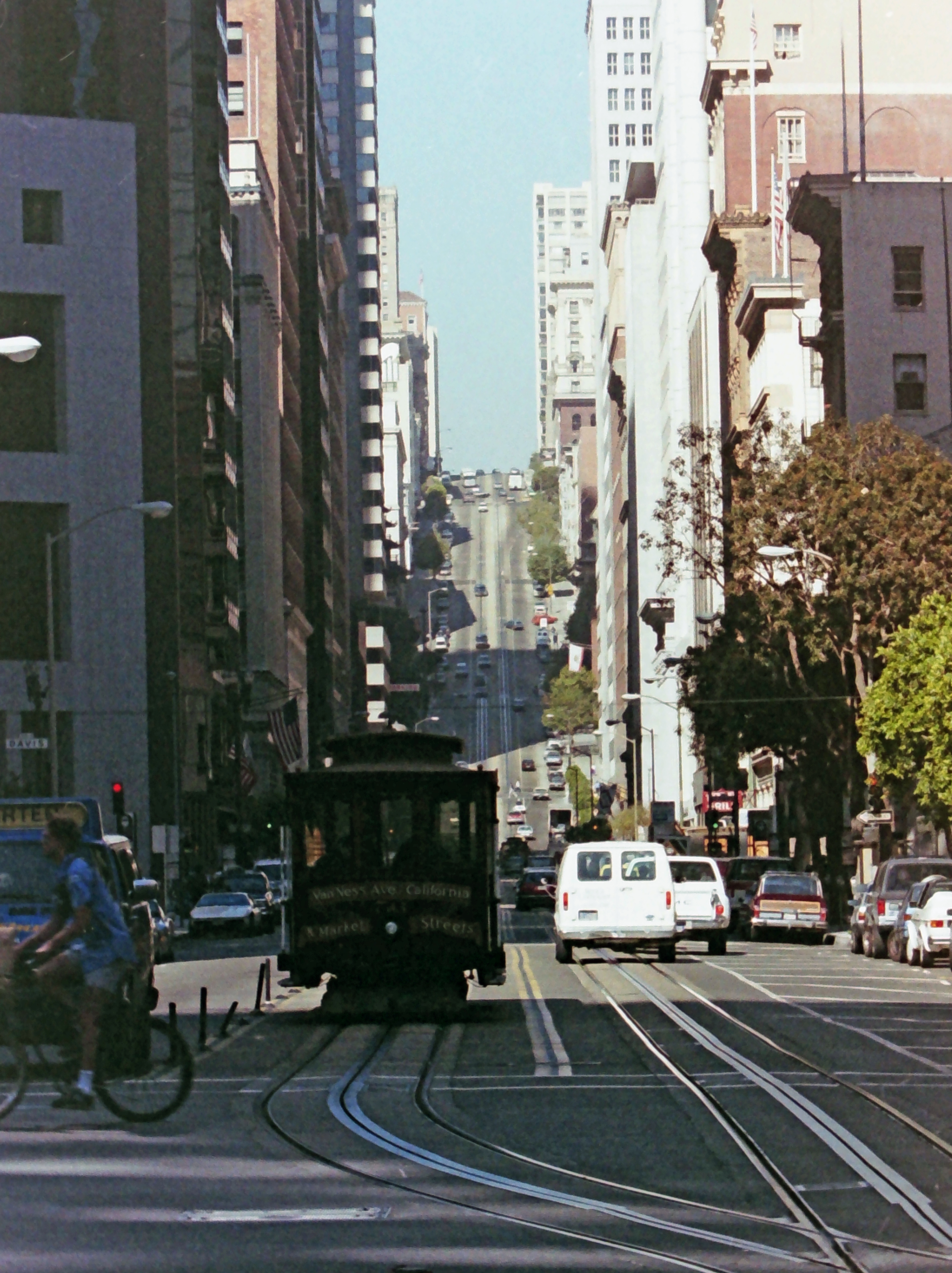
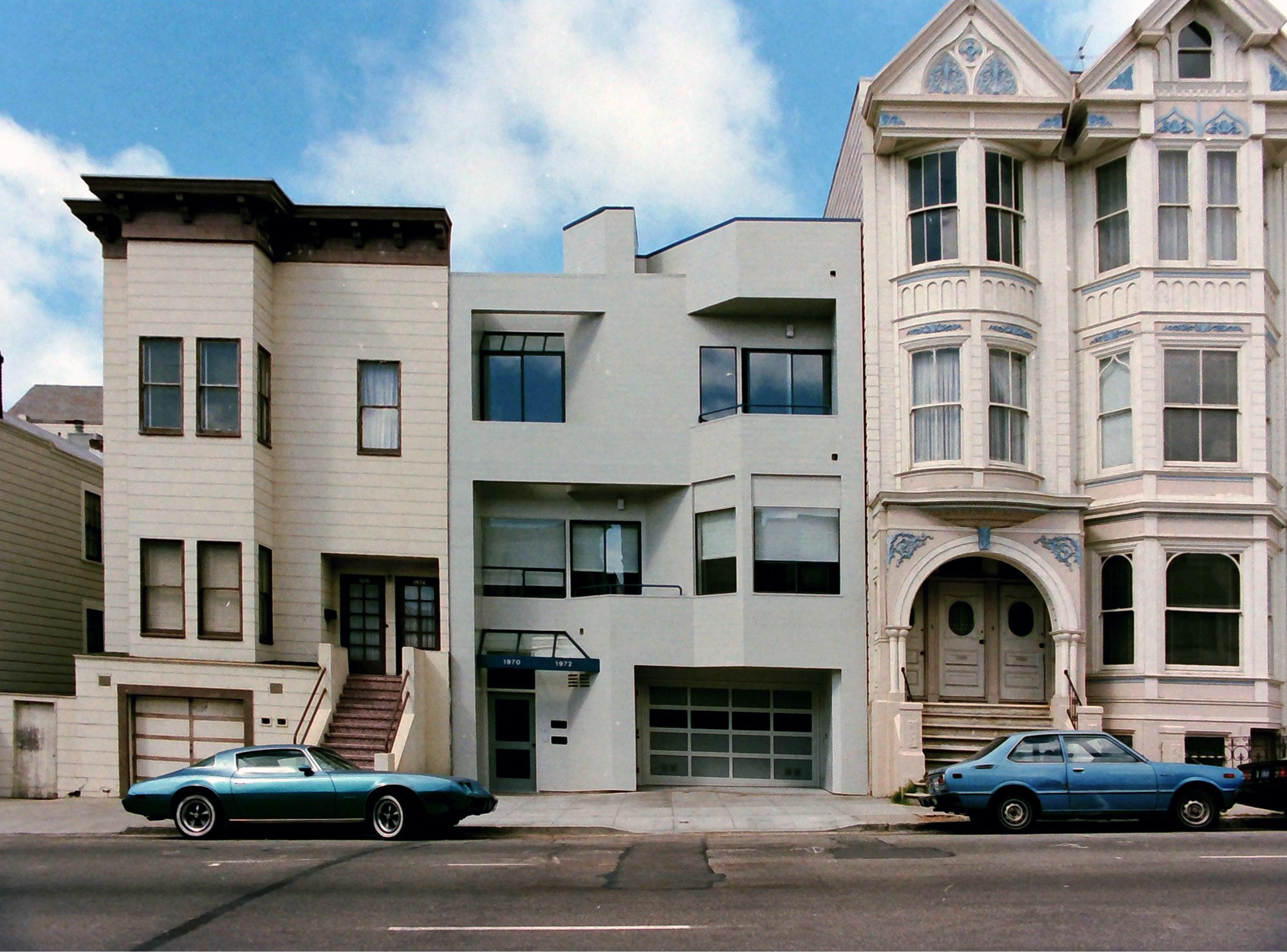
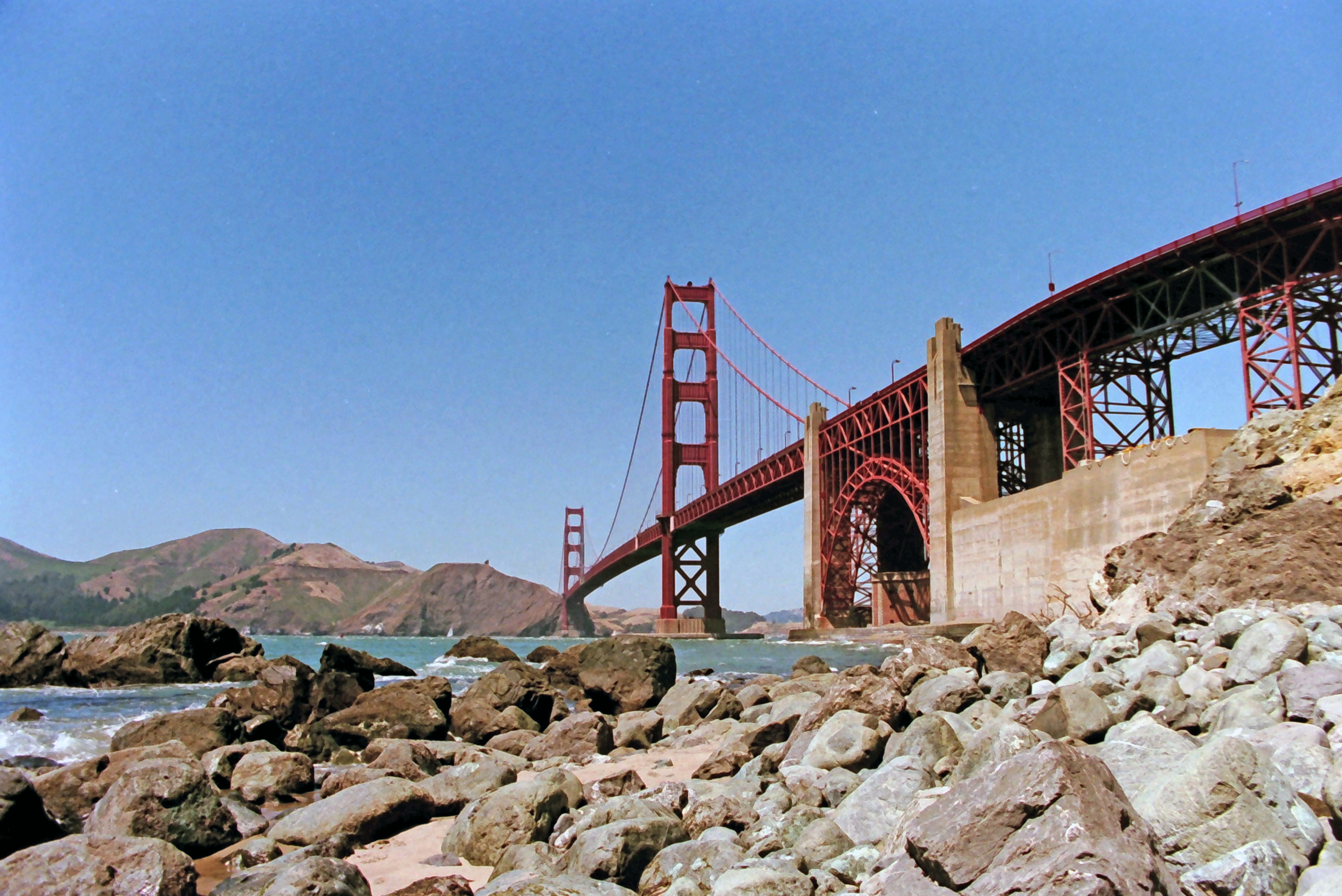
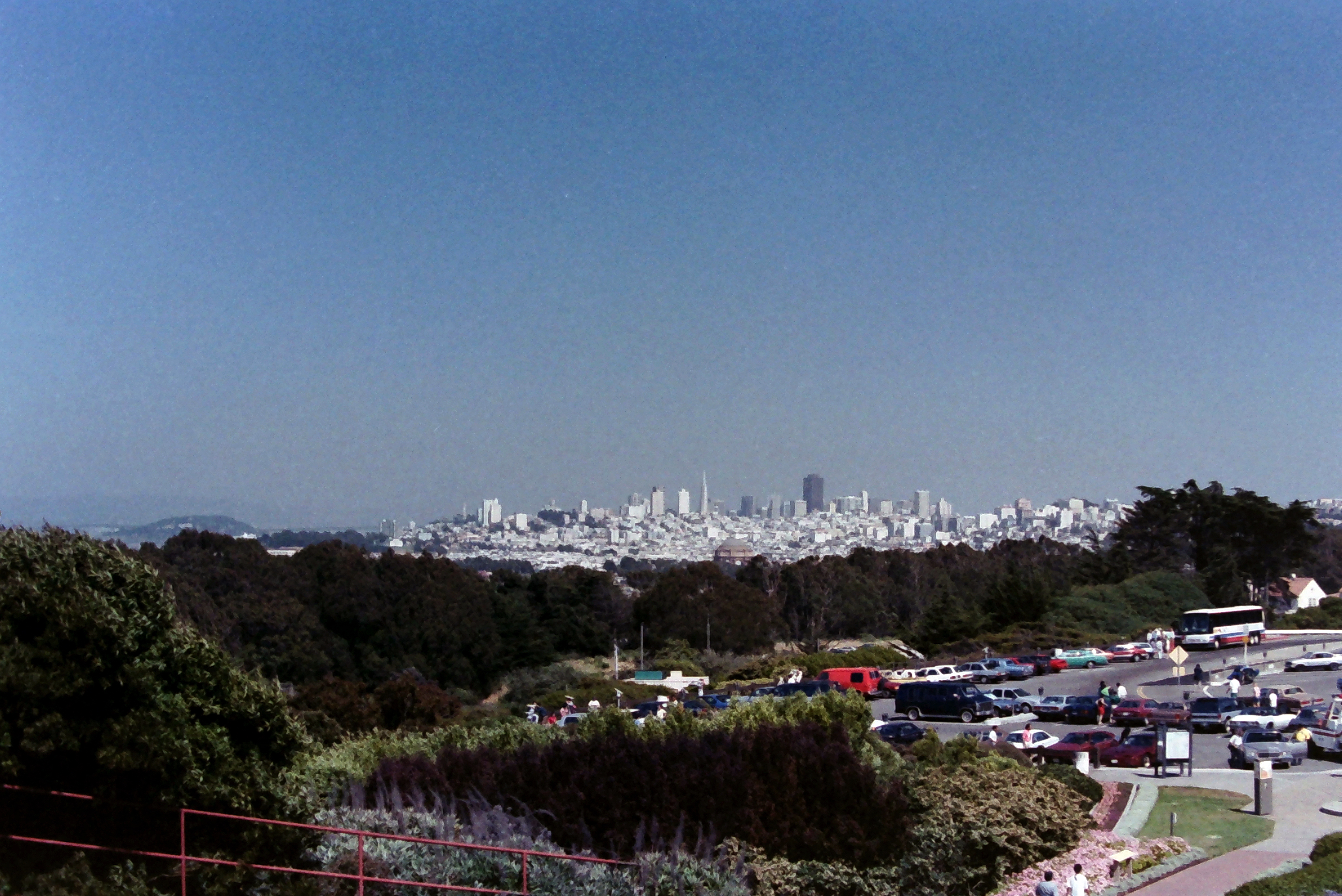
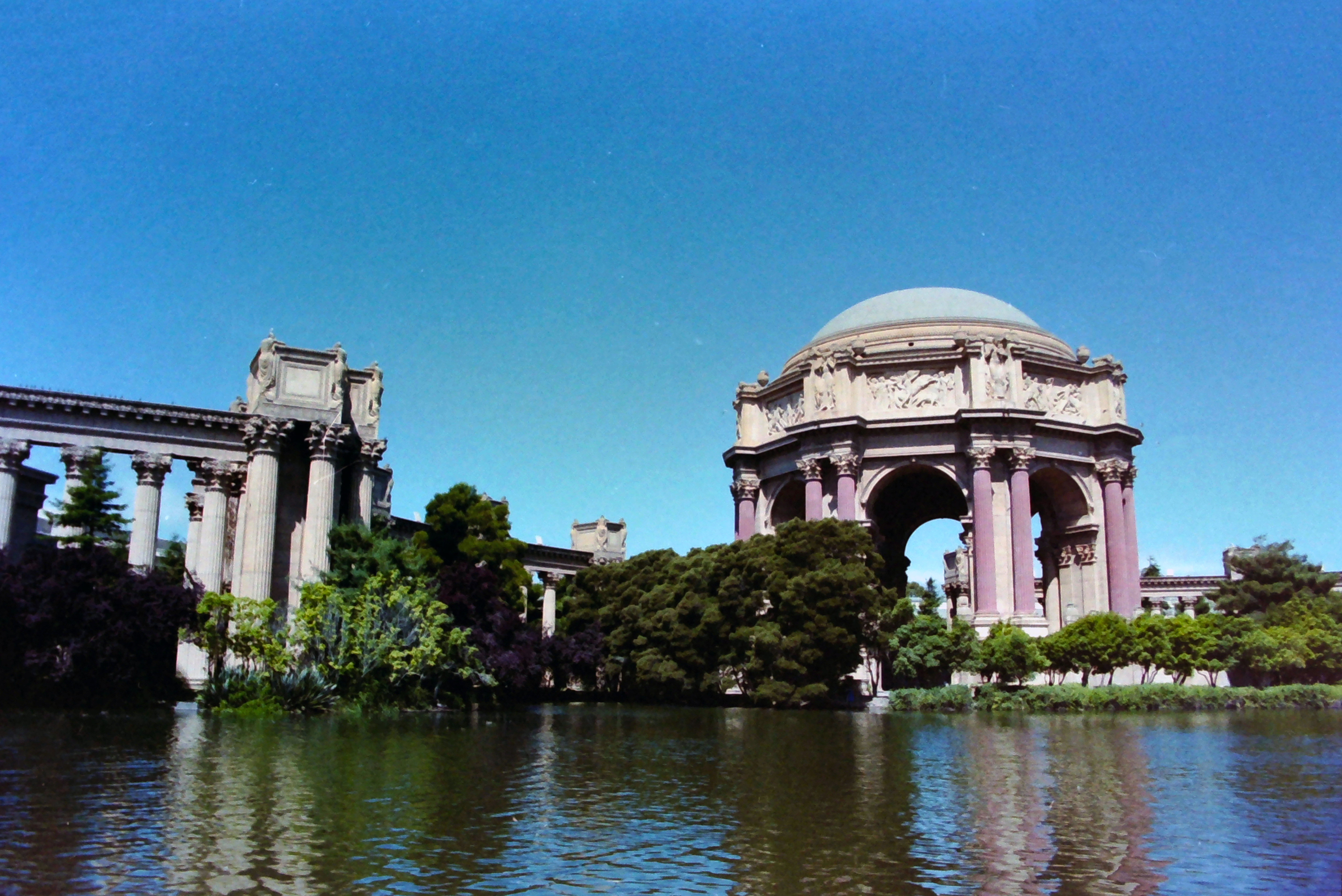
Point Bonita LighthouseDowntown SF from the Sausalito FerryDowntown San Francisco from Twin PeaksCastro Street looking south from just north of MarketAt the base of California StreetSomewhere in the Richmond DistrictThe bridge from Golden Gate BeachDowntown from the Golden Gate Bridge Visitor CenterPalace of the Legion of HonorGolden Gate Beach looking north toward Marin
It’s a sad commentary and a reminder that you’ve gotten old when your own photographs start looking like the shots you see in faded magazines.
And you may be wondering why I’m posting all these analog archives things. Well, I ran across a forgotten folder on my drive called “scans (to be sorted)” and it’s full of scanned slides that I’d created when I had a slide scanner (well before the fire and never replaced) with the intent of swapping out the poorer-quality scans in my virtual photo albums that I’d made from photo prints. Obviously life sidetracked me.
Forty six years ago today, during an October 14, 1977, press conference in Des Moines, anti-gay crusader Anita Bryant had a pie thrown in her face by gay rights activist Tom Higgins.
Bryant was a public face for Save Our Children, a political coalition aimed at overturning legal protections against housing and employment discriminations for LGBT+ people. She is known to have said “I will lead such a crusade to stop it as this country has not seen before.”
In retaliation, the gay community hit her in her wallet by boycotting Florida orange juice, for which she was the brand ambassador. Gay bars stopped selling screwdrivers (vodka and OJ) and instead sold Anita Bryants, made with vodka and apple juice, the profits from which went to a campaign to oppose Bryant. The boycott was successful, eventually causing her lucrative Florida Citrus Commission contract to lapse.
And I hope she disliked the flavor of that pie, too!
It’s been three years and I still think about him often. I’m reposting this from 2020 because I don’t think I could write anything better than I did then:
Floyd Meeks, 1958-2020
2020 just needs fuck right off.
Now.
Seriously.
Traditional wisdom says that you should be able to sense when a loved one has died.
I’m here to say that’s a lie.
I found out this evening that my dear friend Floyd passed last October. And before you ask, no, it wasn’t COVID. It was his heart, and he went in his sleep.
Floyd left behind his husband Ron, with whom he’d shared his life for the last 40 years and many grieving friends, myself among them.
Floyd and I met January 28, 1983. Despite it being a Friday night I wasn’t planning on going out. As I recall it had been an exhausting week and I wanted nothing more than to simply stay home and unwind.
But I stepped outside that evening, saw the most incredible full moon rising above the Rincon Mountains east of Tucson, and something told me in no uncertain terms to go out. There was, as they say, magic afoot.
My destination was The Fineline, a relatively new dance club on Drachman Street. I’d been there with my partner Dennis, numerous times, but since we’d split up a two months earlier and he took off for Austin, this was one of the first times I’d gone there by myself.
And hell, I was young and in a state of perpetual hormonal arousal, so why not?
I’d been working out (believe it or not) since Dennis left and I was feeling good about my body and the way I looked. I radiated a certain amount of confidence and it didn’t take long for Floyd and I to gravitate to one another. He was there with his partner, Ron, putting a damper on any thoughts of immediately scampering off to get nasty. But Floyd assured me they had an open relationship and while nothing would be happening between us that night, he was definitely interested in getting together. We exchanged phone numbers.
Later that same night I met Lee, a friend whom I’ve written about before, thus cementing the magic of that night in my life.
Floyd called me the next morning. We had phone sex. Floyd was a dirty, dirty boy and I loved it. We hung out a lot in the weeks that followed. As we discovered our shared taste in music and culture, a genuine friendship and affection bloomed between us. That’s not to say the physical attraction waned; if anything it remained constant, and over the years we became infrequent fuck buddies, all—somewhat surprisingly—with Ron’s blessing. Even during my San Francisco years we remained in touch, with Floyd traveling to The City numerous times on business.
Floyd and your host, Marin Headlands, 1993
After I returned to Phoenix and made it through the cancer ordeal, I started driving to Tucson to visit the guys on a semi-regular basis. I had a new car and if for no other reason I needed to reconnect with the friends who knew me best while putting my life back together.
Floyd and I called each other Dolly (from our shared love of Personal Services.) I’d call him up and say, “Dolly, I need to get out of town for a while. Are you and Ron free?” and depending on the answer, I’d hop in Anderson and make the 90 minute drive south. I remember one insane Saturday when I drove down to help with some computer issues, brought his PC back home to repair, and then returned it later that day.
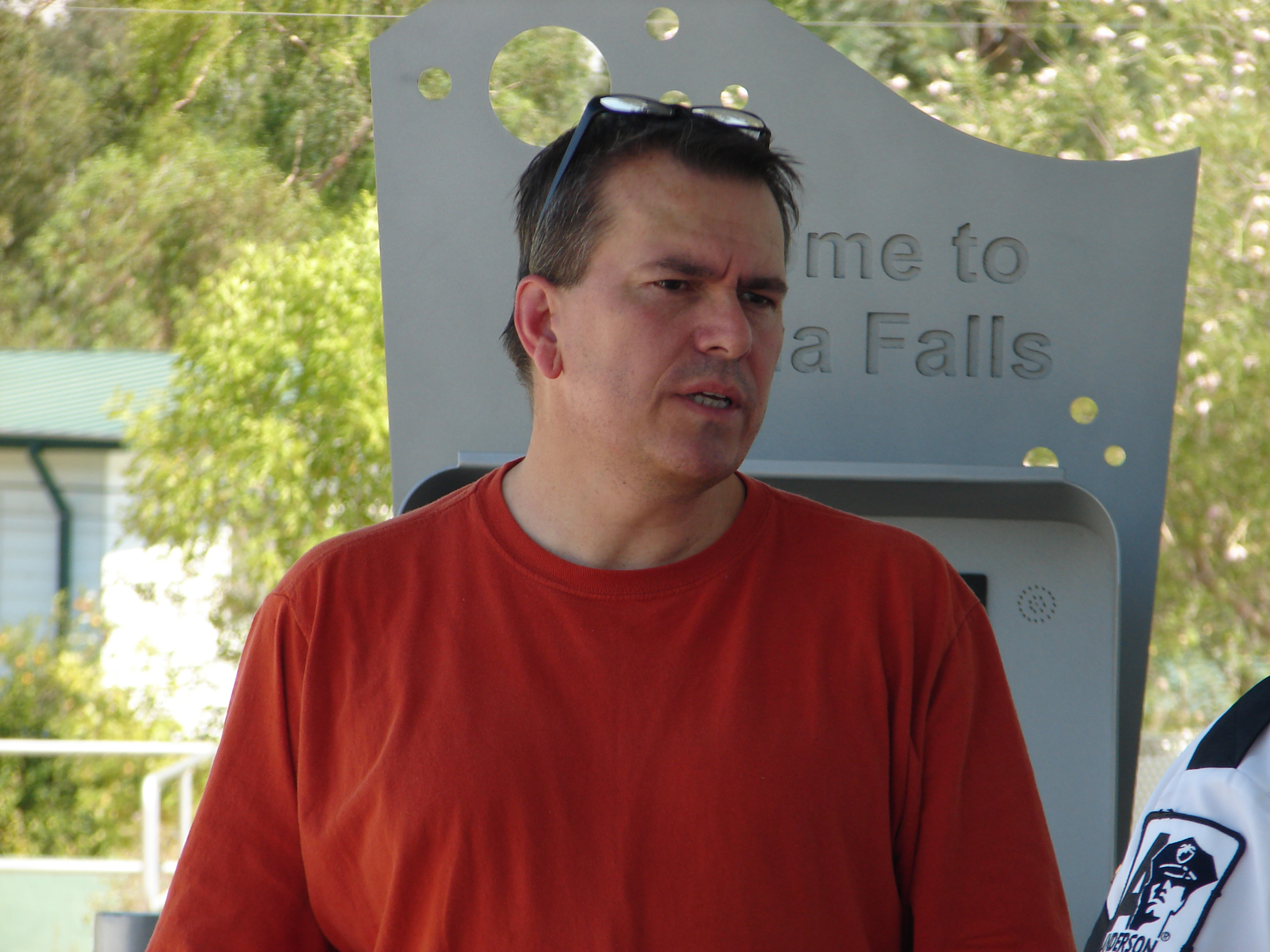
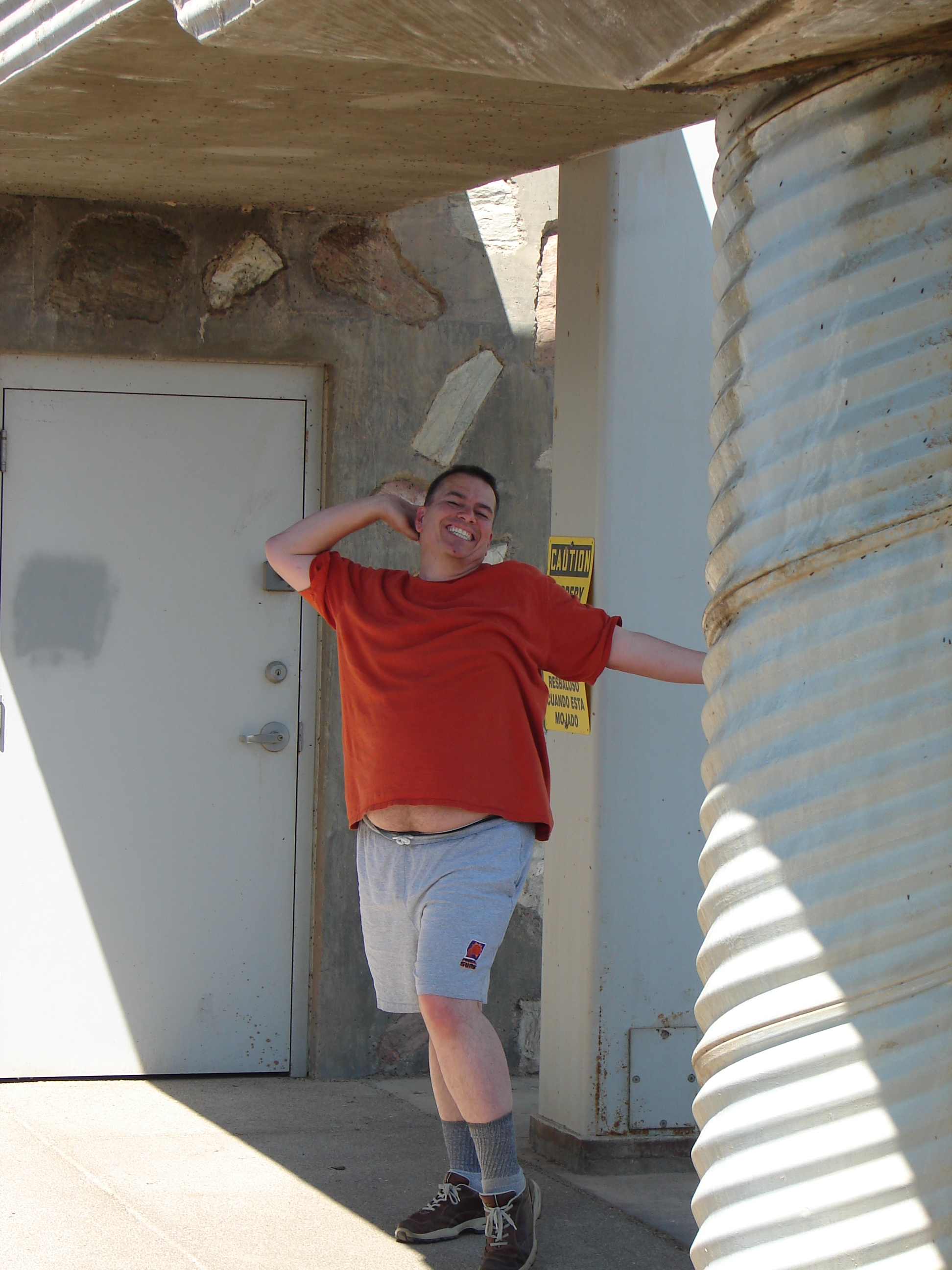
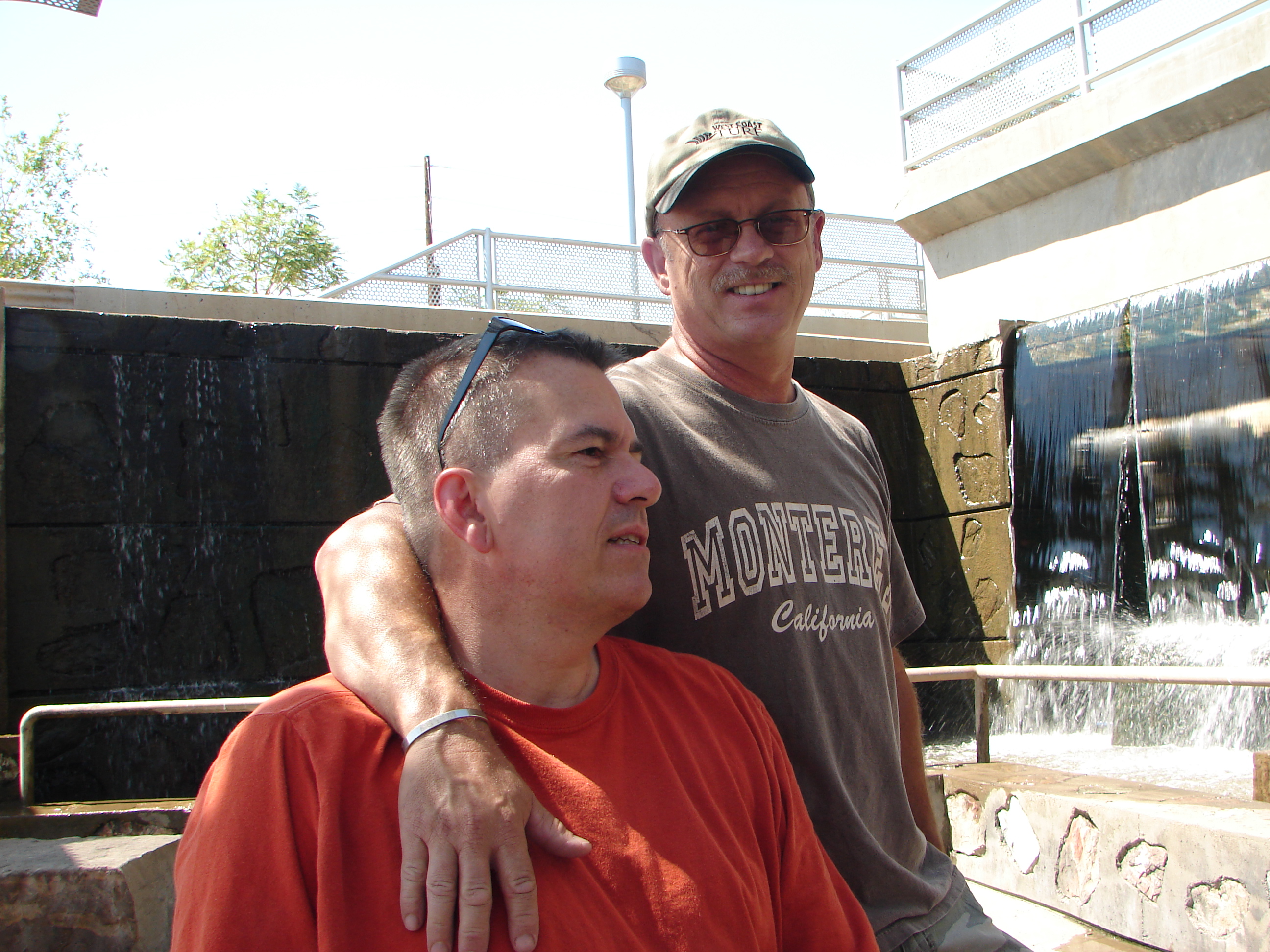
Floyd did the same sort of spontaneous trips north, and one of my favorite memories were the two separate times he (and a few weeks later with Ron) came up to Phoenix and we shot photos at Arizona Falls.
Floyd and Ron, Arizona Falls 2008
Shortly before Ben and I left for Denver, Floyd and Ron fell on some very hard times. They both lost their longtime jobs, were unable to find work, lost everything they’d built together, and were forced to move in with Ron’s sister. Through it all we stayed in touch, they stayed together, and when they’d gotten back on their feet and Ben and I moved back from Denver, talked of a weekend visit but it seemed life was continually getting in the way and one thing or another always prevented it.
When it finally seemed we were going to be able to coordinate a visit, COVID hit, killing our plans again. I last spoke with Floyd in September, when he called to tell me that Abe, a mutual friend from our University of Arizona days, had passed.
Floyd, Ron, Abe and I used to joke that when we got old and retired we’d buy a big house together and disgracefully spend our twilight years like the Golden Girls.
The best laid plans of mice, men, and queens…
Though we went through periods when we didn’t see each other, or even talk much other than an occasional text or email, Floyd was one of those people in my life I just knew would always be there…and now he’s not. I think that’s why this has hit me so hard. His impish grin, that devilish twinkle in his eye, and his extensive…vocabulary…will be so sorely missed. More than with any other death that’s hit my life (and yes, sadly that includes my parents and my first partner, Dennis), I feel like a part of me has been ripped out and there’s nothing but an empty hole remaining.
As I get older, it’s becoming more and more apparent to me that you need to tell the people you love that you love them every damn day, because they can be taken from you at any moment.
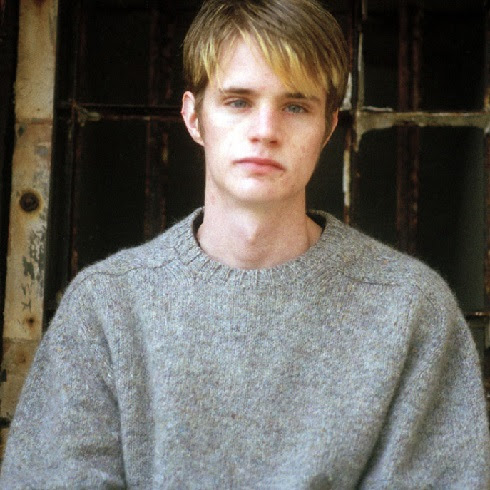
He was just a kid. A slight kid, a sweet kid. A gay. But it wasn’t the kid who got noticed on this day eleven years ago, it was his murder that caught us all, gay and straight, off-guard.
Matthew Wayne Shepard was a twenty-one-year-old college student at the University of Wyoming. And he was gay. And, for being gay, he was tortured and left to die near Laramie, Wyoming. His attack occurred on October 6, but Mathew didn’t die until almost a week later.
Matthew was born in Wyoming and grew up there. He spent his last high school year at The American School in Switzerland. After high school, he attended Catawba College and Casper College before he relocated to Denver and becoming a first-year political science major at the University of Wyoming.
Political science. Matthew might have been a politician, or a community organizer, or a gay rights activist. Or a teacher or a bartender or any number of other things which we’ll never know because he never got the chance to be anything else.
He was described by his parents, Judy and Dennis, as “an optimistic and accepting young man [who] had a special gift of relating to almost everyone. He was the type of person who was very approachable and always looked to new challenges. Matthew had a great passion for equality and always stood up for the acceptance of people’s differences.”
He might have done so much.
But Matthew knew he was gay, and so did many other people. And like so many in the LGBT community, he faced physical and verbal abuse all throughout his life, and death. In 1995, during a high school trip to Morocco, he was beaten and raped, leaving him withdrawn from friends and family and battling depression and panic attacks. But he soldiered on, went back to school and seemed to be coming out of his depression.
Then, just after midnight on October 7, 1998, Matthew met Aaron McKinney and Russell Henderson in a bar. McKinney and Henderson offered Shepard a ride in their car. They took him to a remote area, tied him to a fence, robbed, pistol whipped, tortured him, and left him to die. They also found his address and decided to rob his home as well.
Matthew Shepard was discovered 18 hours later by Aaron Kreifels, who mistook the beaten, dying young man for a scarecrow. Matthew was barely alive. And suffering.
There was a fracture from the back of his head to the front of his right ear. He had severe brain stem damage, which affected his body’s ability to regulate heart rate, body temperature and other vital functions. There were also a dozen or more lacerations around his head, face and neck. His injuries were deemed too severe for doctors to operate.
Matthew Shepard never regained consciousness and was pronounced dead on October 12, 1998.
Police arrested McKinney and Henderson shortly thereafter, finding the bloody gun as well as the victim’s shoes and wallet in their truck. The two men had attempted to persuade their girlfriends to provide alibis. They used the gay panic defense, arguing that they beat, tortured and killed Matthew Shepard because he came on to them. They even tried to say they only wanted to rob him, not hurt him.
But they hurt an entire community.
Russell Henderson pleaded guilty in April 1999, and agreed to testify against Aaron McKinney to avoid the death penalty; he was given two consecutive life sentences. The jury found Aaron McKinney guilty of felony murder, and as they began to deliberate on the death penalty, Matthew Shepard’s parents brokered a deal, resulting in McKinney receiving two consecutive life terms without the possibility of parole.
In a statement read to the court, Dennis Shepard told McKinney what the sentence means to him:
“You won’t be a symbol.
No years of publicity, no chance of commutation, no nothing—just a miserable future and a miserable end.
It works for me ….
Mr. McKinney, I give you life in the memory of one who no longer lives.
May you have a long life, and may you thank Matthew every day for it.”
He was just a kid. A slight kid, a sweet kid. A gay kid. And he could have been any one of us, but in death, Matthew did what hadn’t really been done before. He shone a light on hate crimes against the LGBT community. He gave us a face and a smile that needn’t have been snuffed out so readily.
He could have been any one of us. He is every one of us.
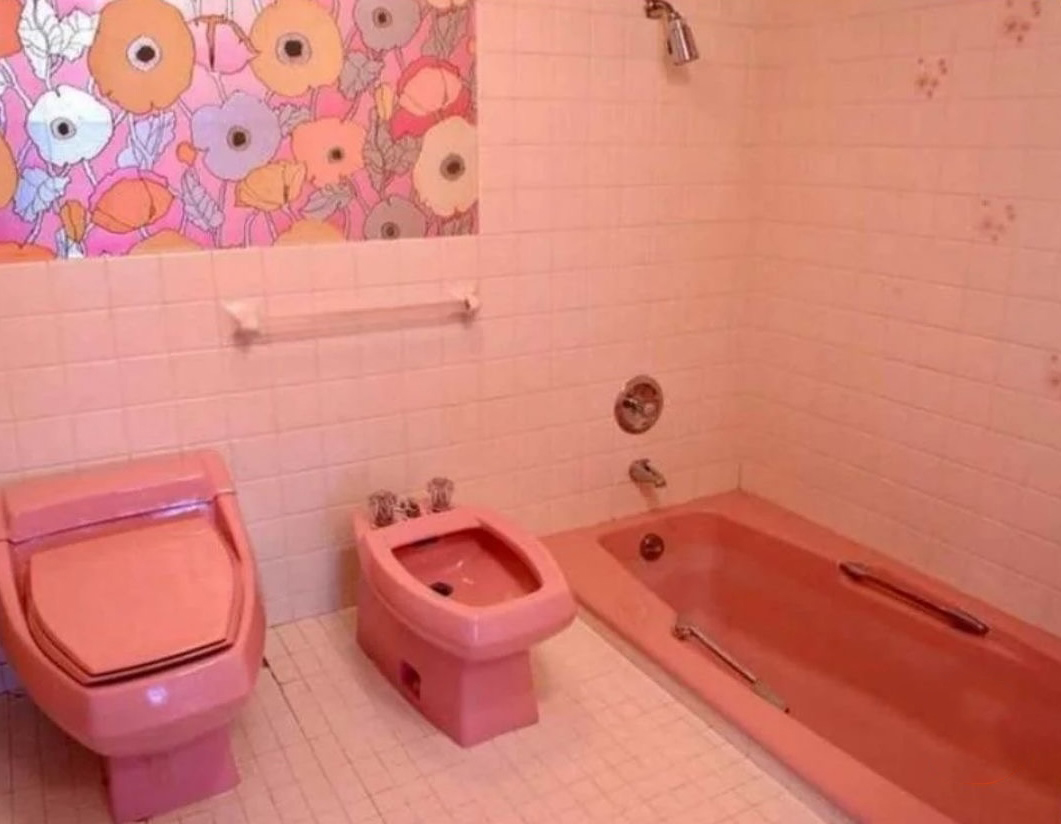
The 70s were wild. I remember the fixtures (Kohler) and the color, but I’d completely forgotten the fad of sunken tubs…
I remember back when I was a young thing designing dream houses that I always used the Kohler fixture template—vs. American Standard (manual drafting y’know)—because it seemed their designs were so avant garde in comparison…and available in colors American Standard could only dream of.
Picture it: San Francisco, August 1986. Before I was employed and settled into my own place, I was staying with some friends of my best buddy in a grand old Victorian on Haight Street, and one afternoon I was poking around in the guest room closet and ran across a cache of vinyl. Among the many records I hadn’t heard previously was this gem, Boom Boom by one-hit wonder* Paul Lekakis. I had no idea a video had ever been made, so stumbling across this on YouTube the other day was a surprise.
Okay, I know it’s not the greatest song in the world, but much like Sparks’ Music That You Can Dance To (that I also found in that same cache of vinyl) it is inexorably tied to my first few months as a San Franciscan.
*Further research via Discogs and Spotify indicate that Mr. Lekakis has put out work since the 80s, but after listening to (most of) it, I can’t honestly say I’ve heard any of it. (And quite frankly, none of that matches Boom Boom—with the possible exception of Fruit Machine, which has that same mid 80s energy.)