astrophileez: One of the biggest problems in modern cosmology just became harder to ignore.
Astronomers have two powerful ways of measuring how fast the universe is expanding, and they stubbornly refuse to give the same answer. Measurements of the nearby universe using Cepheid stars and supernovae indicate a faster expansion rate than predictions based on the early universe and our standard cosmological model. This disagreement is known as the Hubble tension.
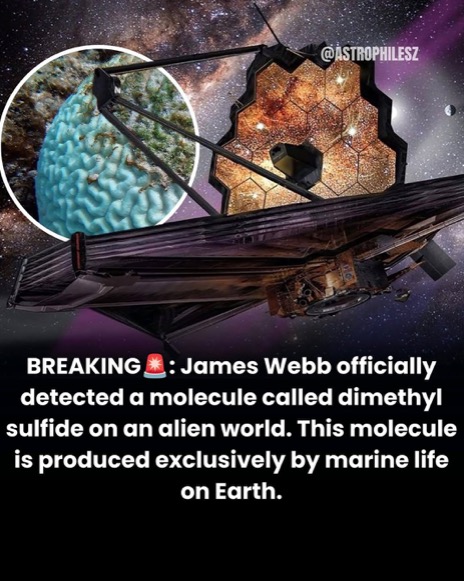
For years, one possibility was that subtle errors in Hubble’s measurements were creating the discrepancy. Then James Webb stepped in. Its much sharper infrared observations independently checked the same distance markers and confirmed that Hubble’s measurements were reliable.
That makes the mystery much more interesting. If the measurements are right, something may be missing from our current picture of the universe. Scientists have proposed possibilities ranging from unexpected behavior of dark energy or dark matter to unknown particles, new fields, or modifications to our understanding of gravity.
This does not yet prove that new physics exists. But it means one of cosmology’s most persistent discrepancies has survived observations from the most powerful space telescope ever built.
Sometimes the most exciting discovery in science isn’t finding the answer. It’s discovering that the universe refuses to behave the way our best theories say it should.
0 comments