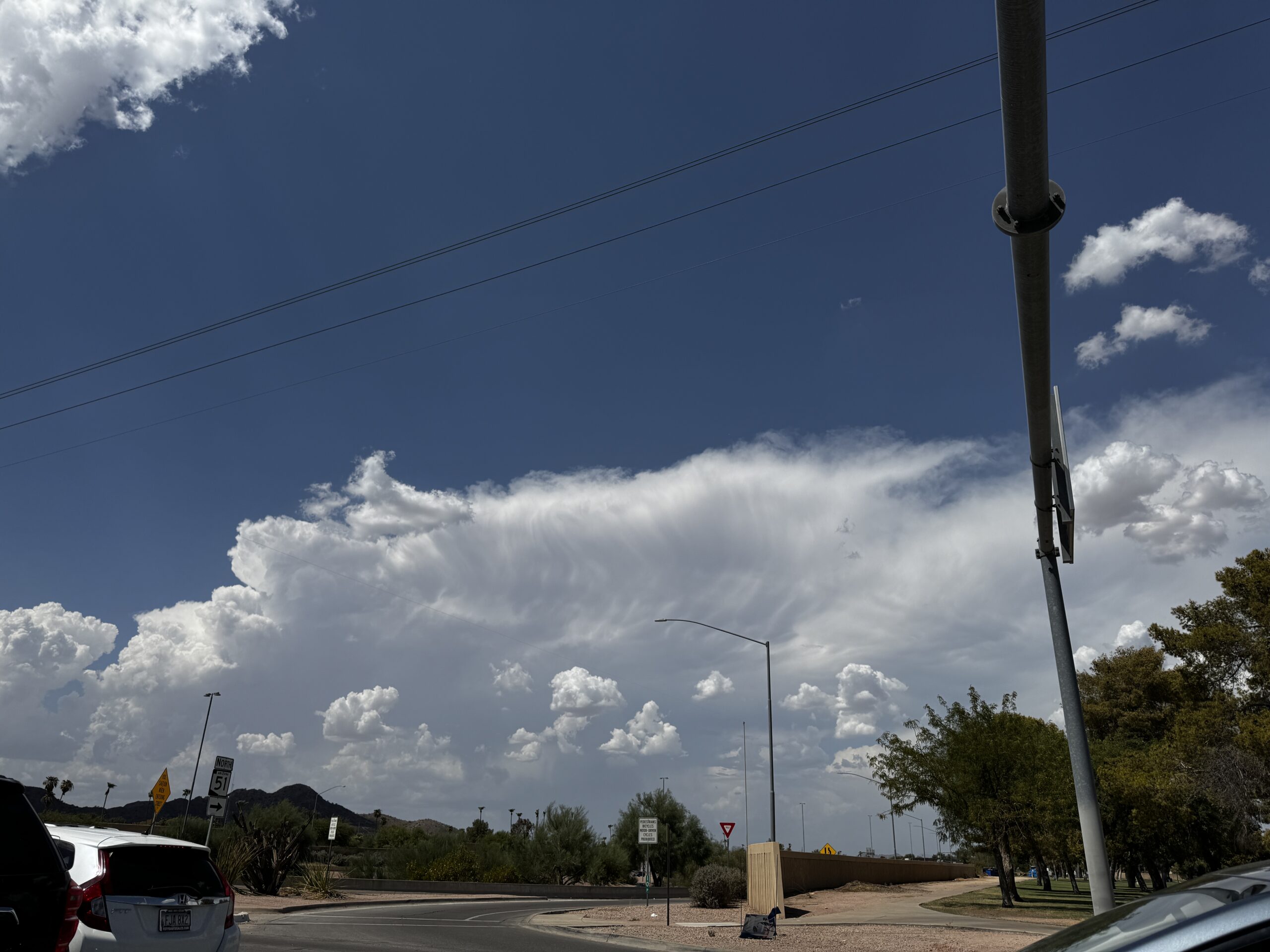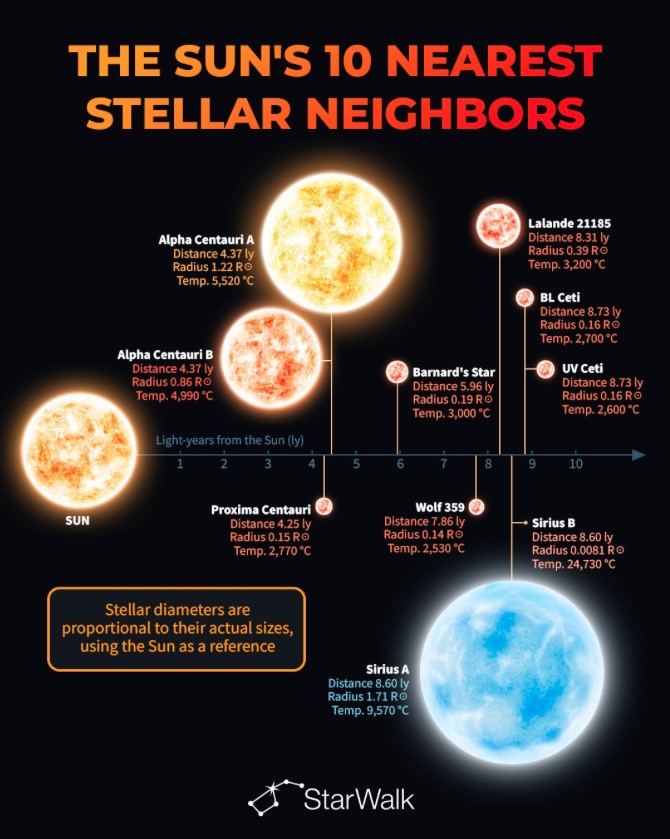
What were you doing in August 2018? That’s when the light you’re seeing from the star Sirius started on its journey to earth.
0 comments

Shitposting since 2005
What were you doing in August 2018? That’s when the light you’re seeing from the star Sirius started on its journey to earth.
0 comments
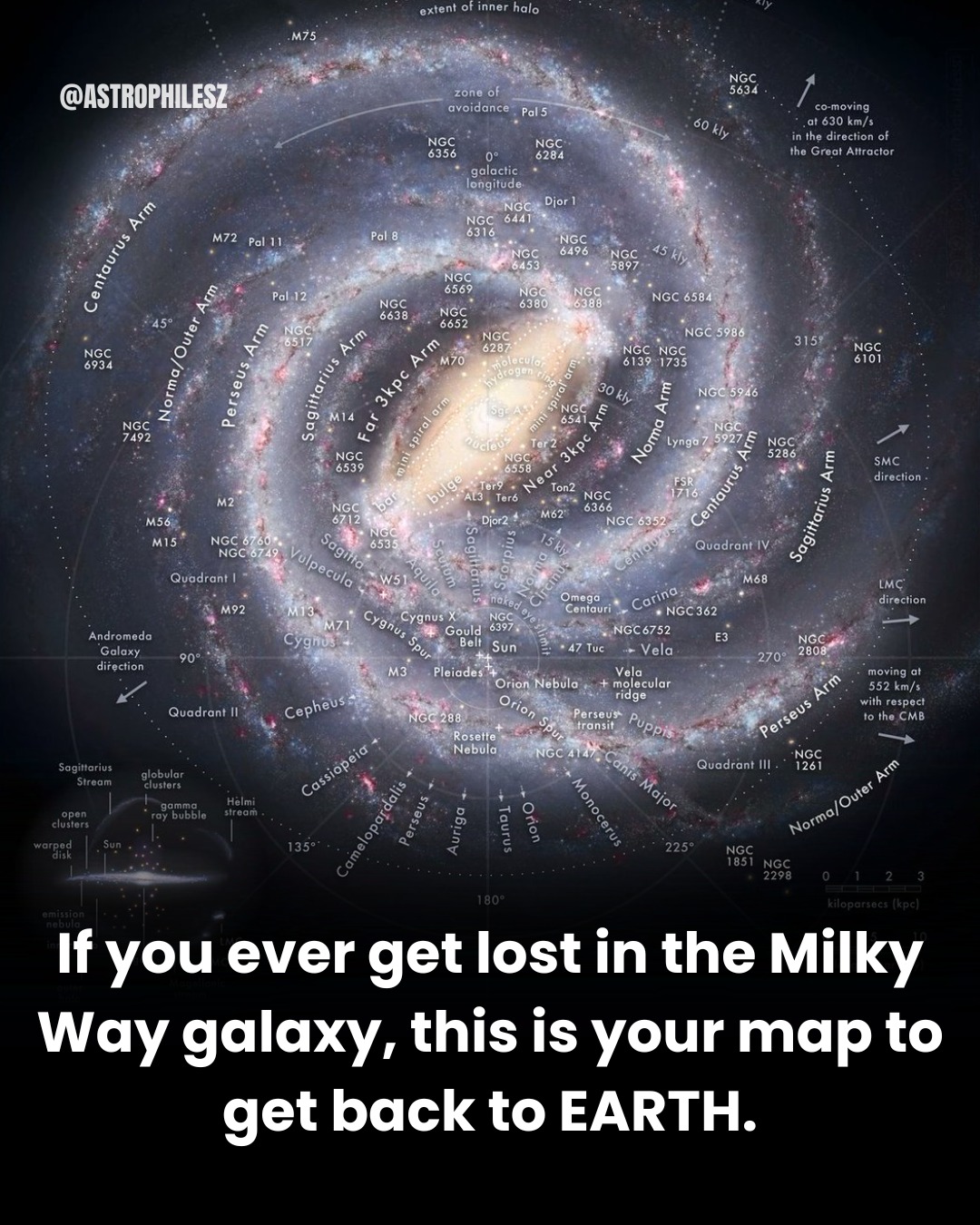
This is one of the most detailed attempts to map our home galaxy, the Milky Way, showing its spiral arms, star-forming regions, clusters and our own location inside it.
The Milky Way stretches roughly 100,000 light-years across and contains hundreds of billions of stars. Earth sits nowhere near the center — our Solar System lies in a smaller structure called the Orion Spur, between the Sagittarius and Perseus spiral arms.
At the center of the map is the galactic core, about 26,000 light-years from Earth. Hidden there behind enormous amounts of gas and dust is Sagittarius A*, the supermassive black hole at the center of our galaxy, with a mass around four million times that of the Sun.
The map also marks familiar objects such as the Pleiades, Orion Nebula and various star clusters, alongside the much larger spiral structures that organize the galaxy.
But there is an interesting catch: nobody has ever photographed the Milky Way from outside. Every spacecraft humanity has built remains deep inside our galaxy.
Maps like this are therefore reconstructions. Astronomers combine measurements of stars, gas clouds, radio emissions, distances and motions to infer what the Milky Way probably looks like from above.
So if you actually got lost somewhere across the galaxy, this map might tell you where Earth is — but reaching it could still require traveling tens of thousands of light-years.
[source]
0 comments
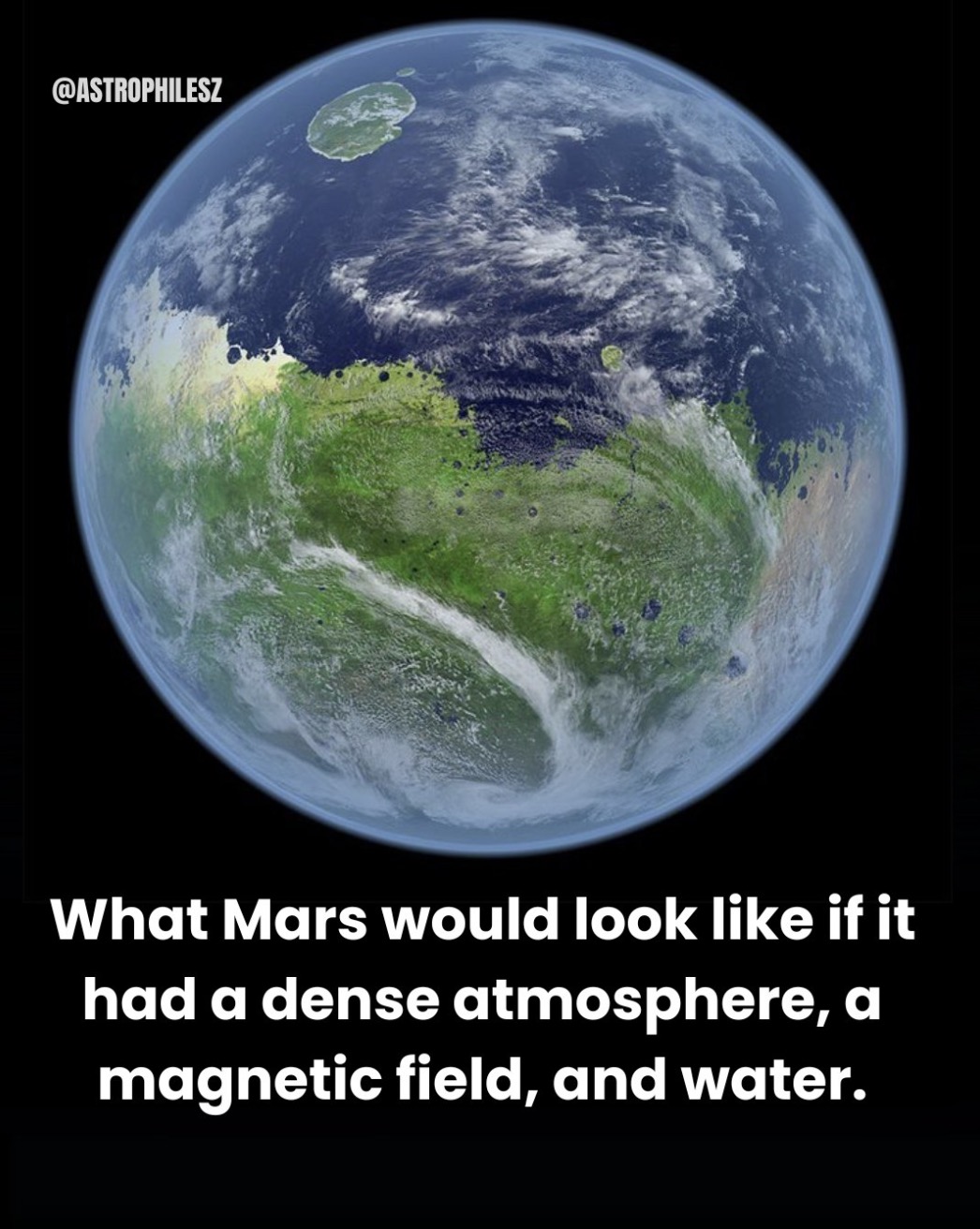
This is a visualization of what Mars might look like if it had a much thicker atmosphere, stable liquid water and conditions capable of supporting widespread vegetation.
Mars today is extremely different. Its atmosphere is about 100 times thinner than Earth’s and consists mostly of carbon dioxide. Average surface temperatures are around −63°C, and liquid water cannot remain stable across most of the surface for long.
But ancient Mars was much wetter. Spacecraft have discovered dried-up river valleys, lake beds, deltas and minerals that form in water, showing that billions of years ago liquid water repeatedly flowed across its surface.
Mars also once possessed a global magnetic field generated by its interior. That magnetic dynamo shut down billions of years ago. Without a global magnetic shield, the solar wind has helped strip atmospheric particles into space over immense periods of time.
If Mars somehow gained a thick atmosphere and became warm enough, water could potentially fill many of its enormous lowlands and ancient basins. Olympus Mons and other giant volcanoes would still rise far above the surrounding landscape.
[source]
0 comments
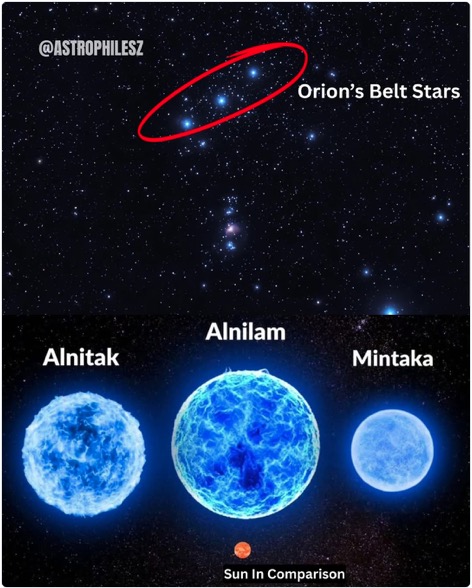
Those three bright points forming Orion’s Belt are Alnitak, Alnilam and Mintaka. They look like three neighboring stars from Earth, but they are enormous, hot stellar systems separated from us by hundreds to thousands of light-years.
All three are far hotter and more massive than the Sun. NASA describes the prominent Belt stars as blue supergiants, with older NASA educational estimates putting Alnitak and Mintaka at roughly 20 solar masses and Alnilam around 40 solar masses.
Their apparent alignment is mostly a matter of perspective. NASA places Alnitak at roughly 800 light-years away, Mintaka around 900 light-years away and Alnilam about 1,300 light-years away in one commonly cited set of estimates. They aren’t actually sitting side-by-side in space.
They’re also more complicated than three simple stars. Mintaka is a multiple-star system containing five stars, while Alnitak is itself a multiple system. What your eyes perceive as single points can therefore represent entire stellar systems.
These massive stars burn through their nuclear fuel much faster than the Sun. Stars this massive live comparatively short lives and are expected eventually to end through core-collapse supernovae, leaving behind neutron stars or black holes depending on their final masses.
The surrounding region is equally spectacular. Near Alnitak lie the famous Horsehead and Flame Nebulae, while below the Belt sits the Orion Nebula, one of the nearest major star-forming regions to Earth.
So when you find those three simple dots in the night sky, you’re looking toward some of the most massive stars visible to the naked eye—and into an enormous stellar nursery where new stars are still being born.
[source]
2 comments
0 comments
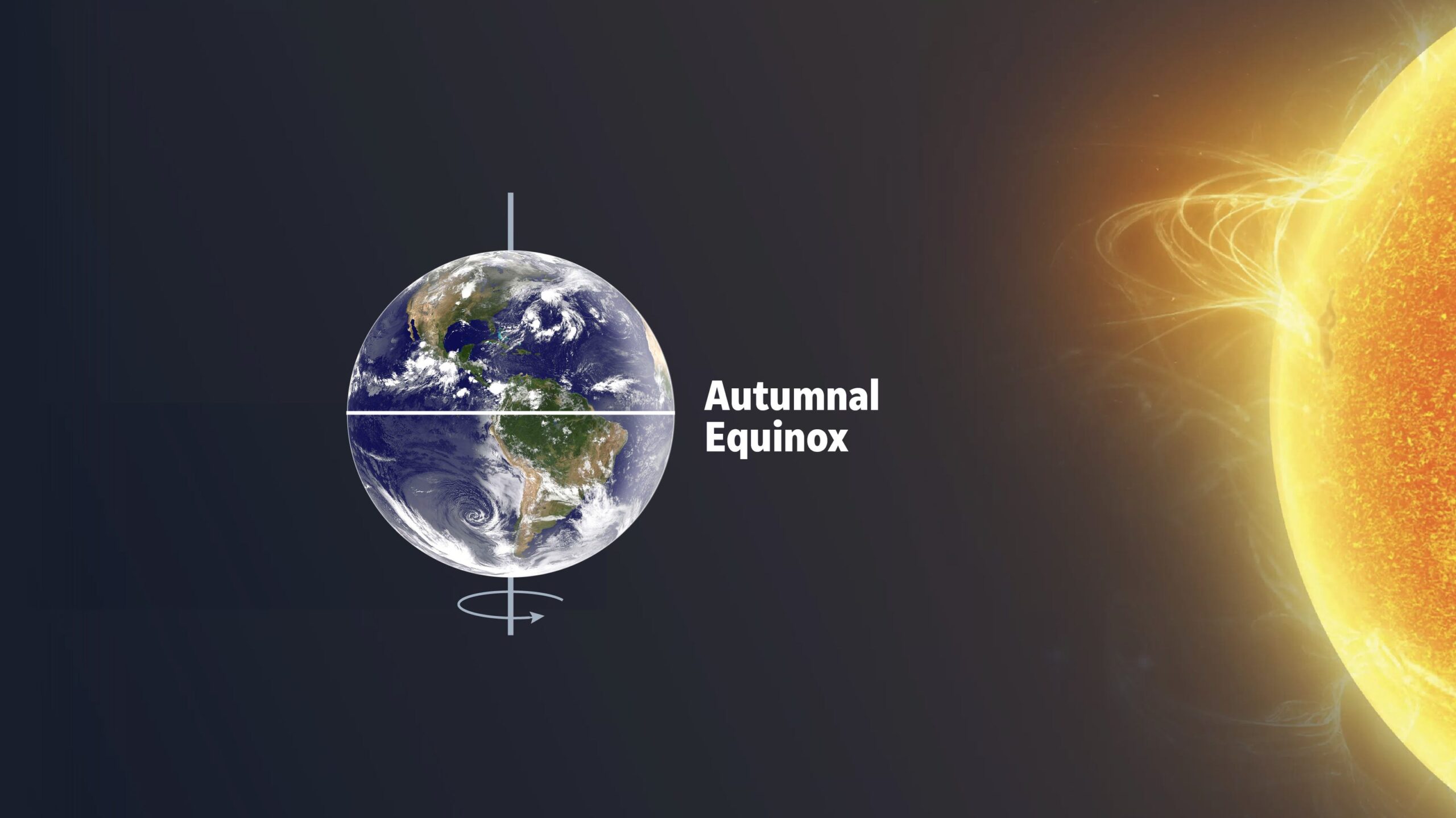


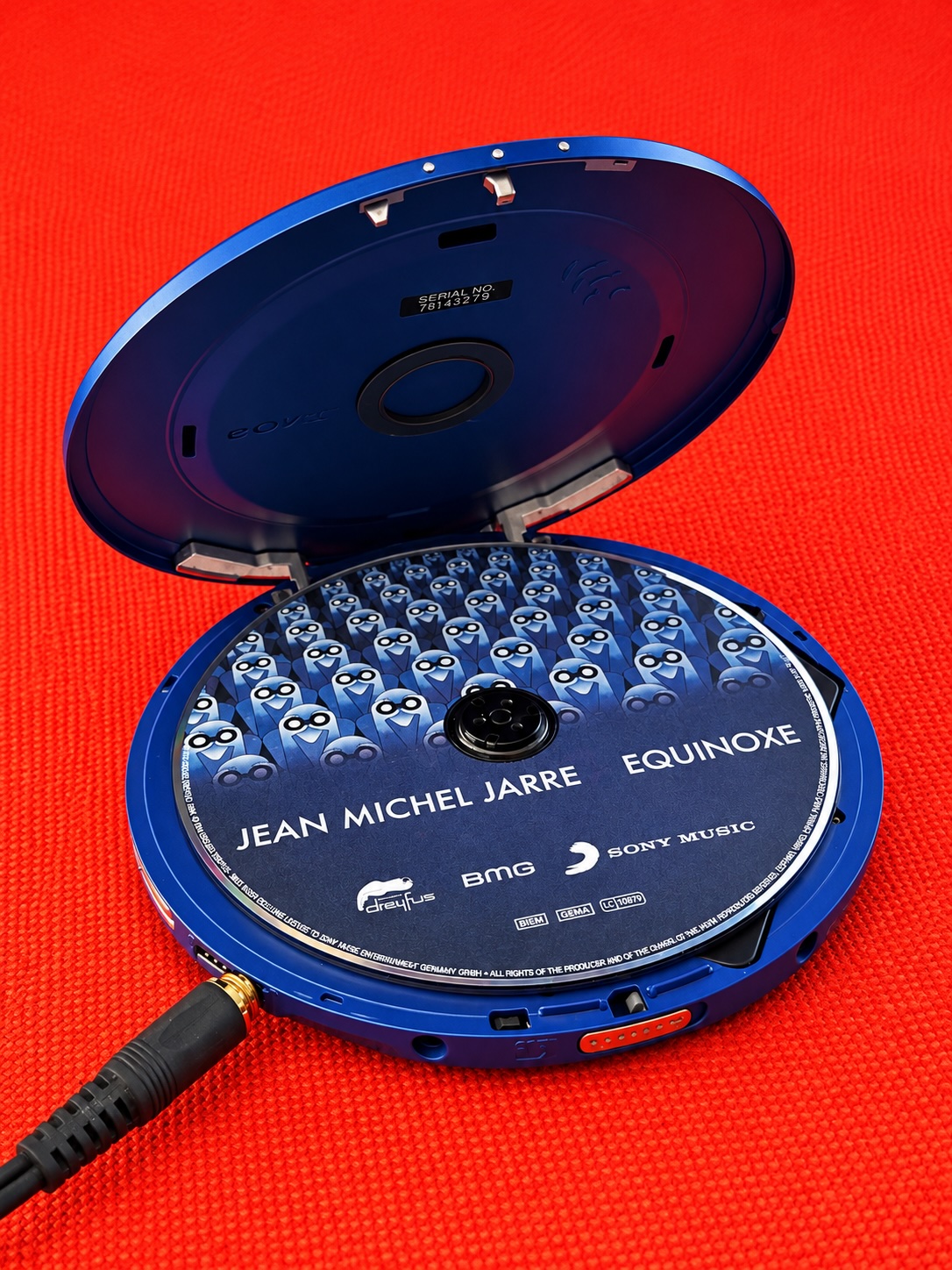
And in honor of the day, the morning soundtrack:
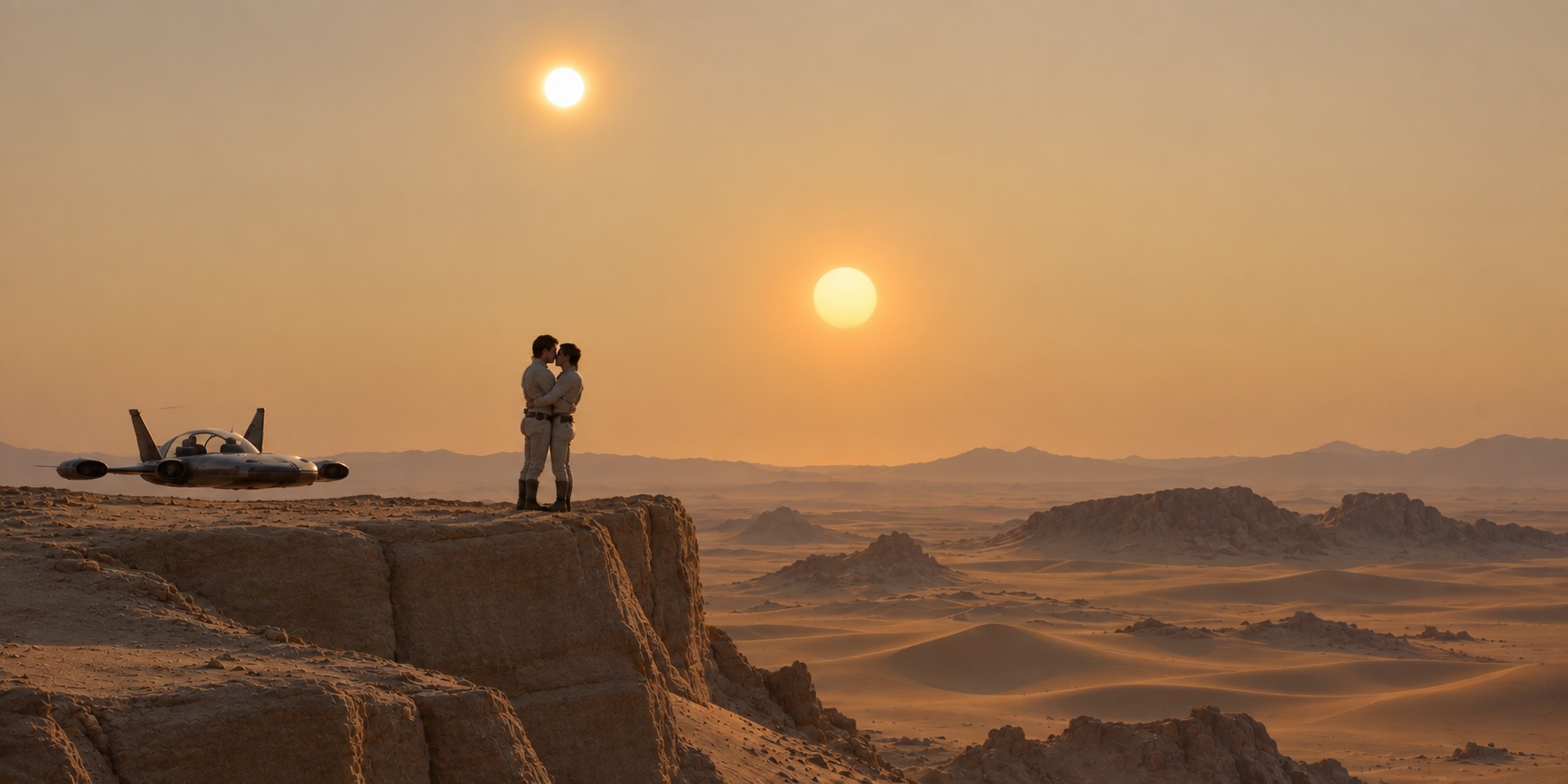
And once again I am twenty years old, skimming over a vast sea of golden dunes in my landspeeder under a double sun in a hazy, wheat-colored sky…
0 comments
astrophileez: One of the biggest problems in modern cosmology just became harder to ignore.
Astronomers have two powerful ways of measuring how fast the universe is expanding, and they stubbornly refuse to give the same answer. Measurements of the nearby universe using Cepheid stars and supernovae indicate a faster expansion rate than predictions based on the early universe and our standard cosmological model. This disagreement is known as the Hubble tension.
For years, one possibility was that subtle errors in Hubble’s measurements were creating the discrepancy. Then James Webb stepped in. Its much sharper infrared observations independently checked the same distance markers and confirmed that Hubble’s measurements were reliable.
That makes the mystery much more interesting. If the measurements are right, something may be missing from our current picture of the universe. Scientists have proposed possibilities ranging from unexpected behavior of dark energy or dark matter to unknown particles, new fields, or modifications to our understanding of gravity.
This does not yet prove that new physics exists. But it means one of cosmology’s most persistent discrepancies has survived observations from the most powerful space telescope ever built.
Sometimes the most exciting discovery in science isn’t finding the answer. It’s discovering that the universe refuses to behave the way our best theories say it should.
0 comments
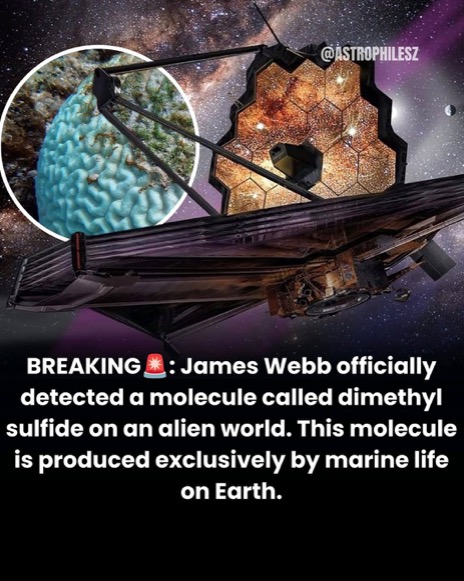
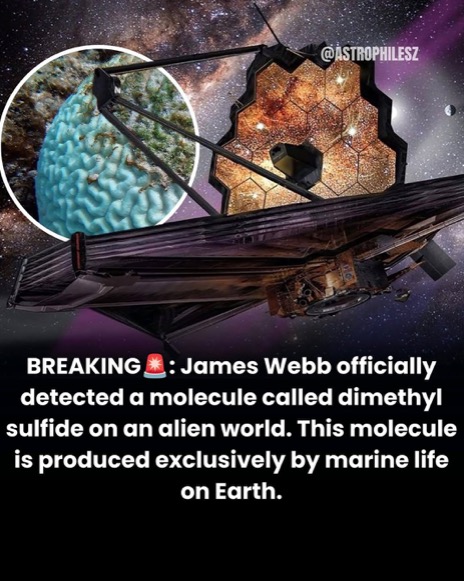
This could be one of the most intriguing clues in the search for life beyond Earth, but the evidence is not yet strong enough to call it a discovery of alien biology.
The planet is K2-18 b, located roughly 120 light-years away. Webb observations have revealed methane and carbon dioxide in its atmosphere, while researchers have also reported possible spectral signatures consistent with dimethyl sulfide, or DMS.
DMS is fascinating because on Earth, the overwhelming majority of it is associated with biological activity, particularly marine microorganisms such as phytoplankton. That makes it an interesting potential “biosignature”: a molecule whose presence might hint at life.
But there is an important distinction. Webb has not officially confirmed DMS beyond doubt, and DMS is not proven to be something that can only be produced by life under every possible planetary environment. The signal remains disputed, and scientists are investigating whether unfamiliar non-biological chemistry could create similar signatures.
K2-18 b itself is not unlike Earth. It is about 8.6 times Earth’s mass and orbits within its star’s habitable zone. But scientists have proposed that it could potentially be a “Hycean” world with a hydrogen-rich atmosphere and an ocean beneath, although that interpretation is also still being debated.
So we haven’t found alien life. But we may be reaching the point where telescopes can examine the atmospheres of worlds hundreds of trillions of kilometers away and search for chemistry that, here on Earth, is intimately connected with living organisms.
That alone is extraordinary.
[Source]
0 comments
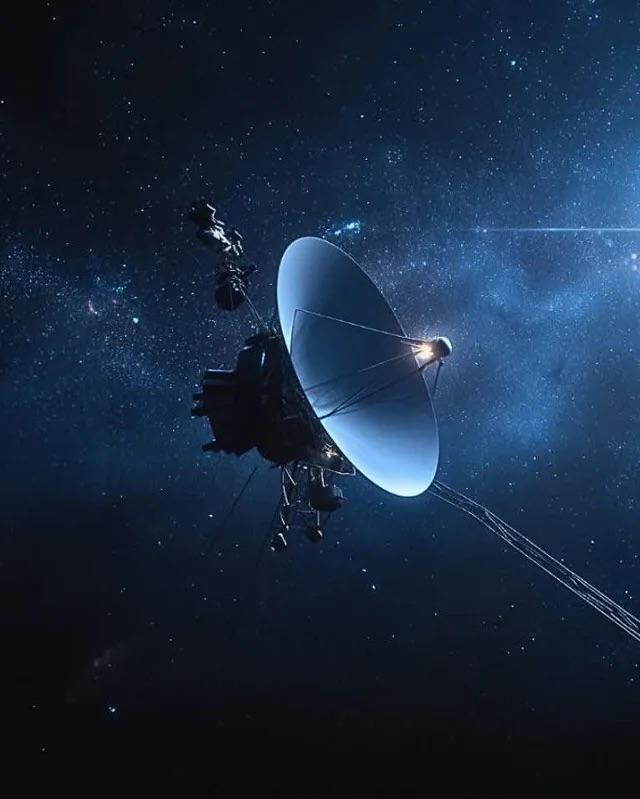
…and there will be no one left on Earth who will know or care.
Alternately, if we somehow manage to survive as a species and develop FTL travel, we’ll no doubt go out, capture it, and return it to Earth to put in a museum.
In any case, I think I can confidently say it will long outlive the civilization that created it.
0 comments

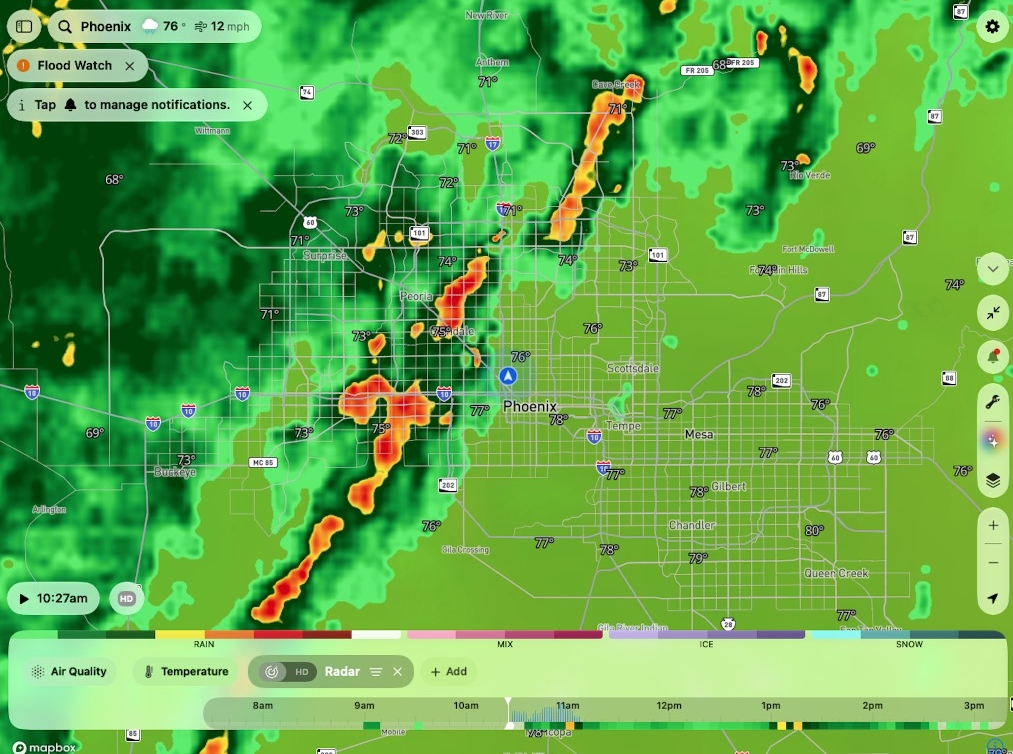
But the thing is, from past experience I can tell you once it gets hotter than 117 there’s not that much difference. It’s all the same from that point out.
I told you it was going to be a heavy post day.
And with that, I bid you all good-night.
0 comments
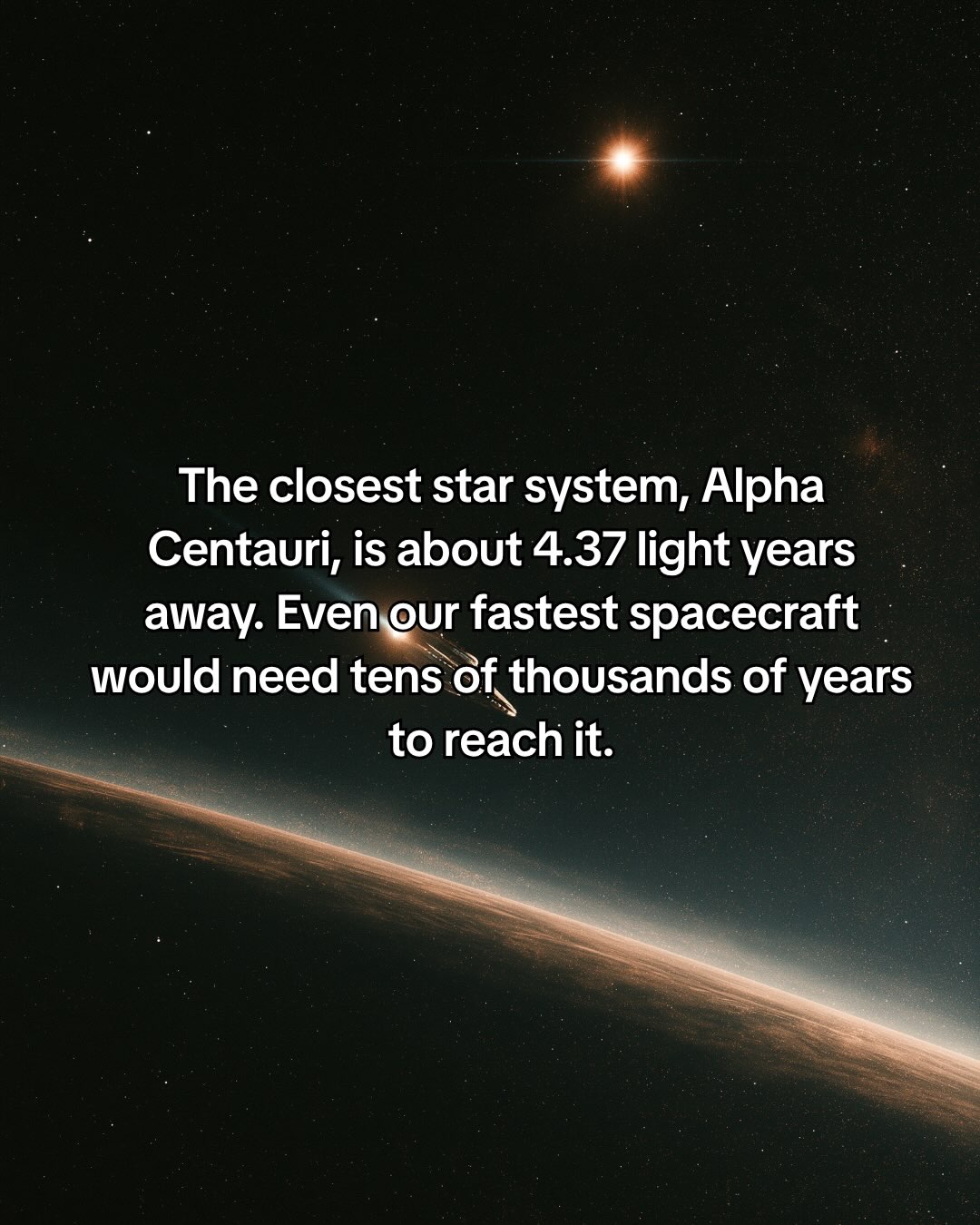
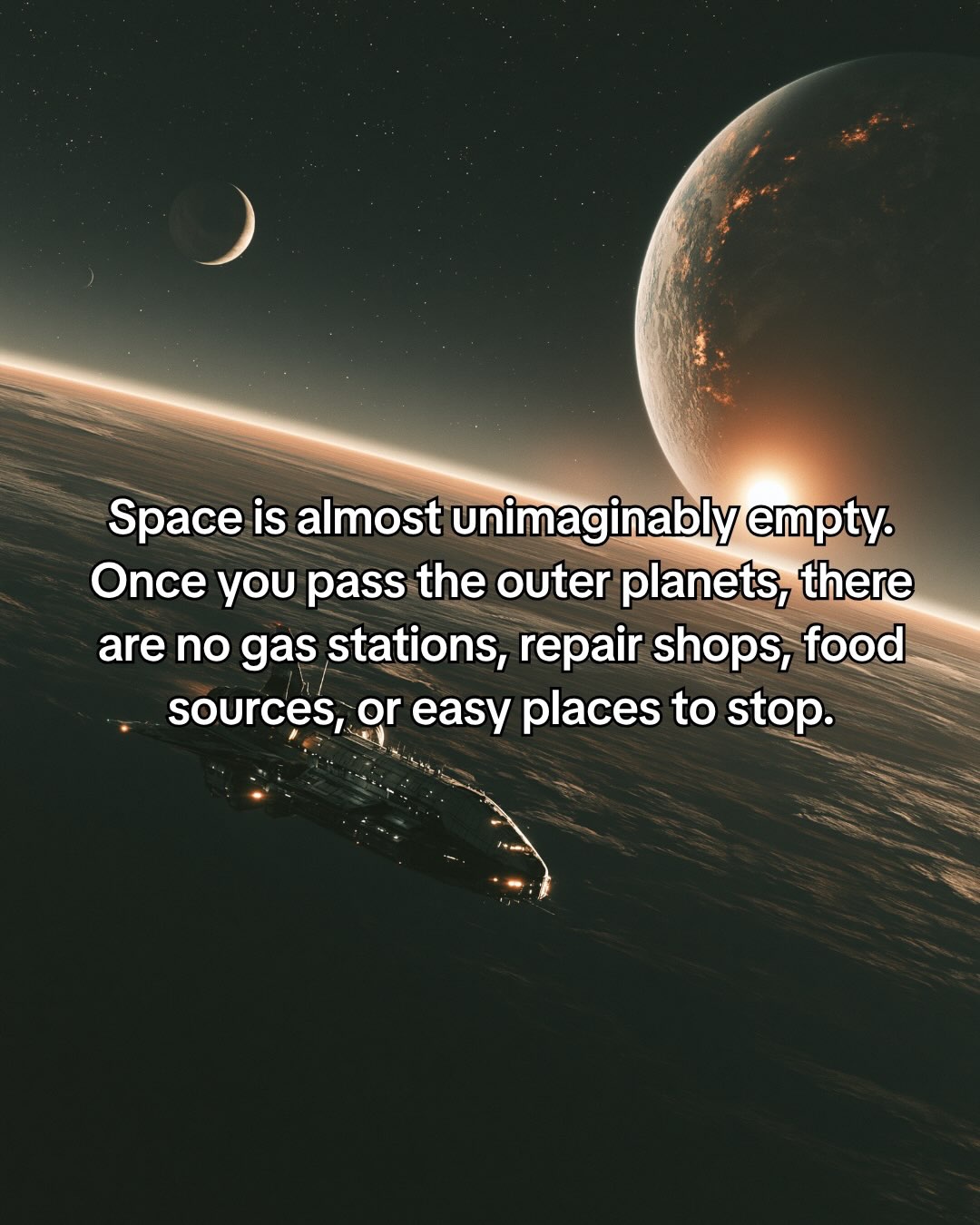

…perhaps considering our nature, it’s for the best.
Humanity is nowhere near a Star Trek level of maturity yet, and frankly we may never be.
0 comments
I was just listening to Only Music Survives and all of a sudden I was tingling with the familiar—and delightful—chills whenever I hear this song (even though I’ve known of it only a month or so). I was already on the computer, so I asked “Why do certain songs give us chills?”


Your favorite songs and audio gear are scientifically engineered to give you goosebumps.
The chills and goosebumps you get from music, known as frisson, connect directly to how our brains process sound. But it’s not just about the feels. This response also drives many choices in audio equipment design and music production.
Learning about frisson’s scientific basis helps explain why certain audio qualities matter and how they affect our listening experience.
Frisson is like your brain throwing a tiny celebration. It’s deeply tied to the reward system, where several interconnected regions team up to create an emotional and physical response.
A few key players in your brain make this magic happen:
A study by USC PhD student Matthew Sachs suggests that some people are practically wired for frisson.
Your personality also plays a part.
If you’re someone who scores high in “openness to experience” (the kind of person who loves diving into creative projects or gets lost in a book) you’re more likely to feel these intense moments of frisson.
However, the music itself does plenty of the heavy lifting. Certain elements seem tailor-made to stir something inside us.
]The drums kicking in during Phil Collins’ “In The Air Tonight,” or the way Adele’s voice soars in “Someone Like You” aren’t accidents. They’re carefully crafted emotional triggers.
Layer in rich harmonies and unexpected chord changes (like the ones that make Radiohead’s “Exit Music” so haunting), and you’ve got a recipe for full-body chills.
There’s also a fascinating evolutionary layer to this.
These music-induced chills actually hijack your body’s ancient alarm system.
The goosebumps from your favorite song share the same neural pathway as your ancestors’ response to danger signals like a twig snapping in the dark. But, music has transformed this survival response into something beautiful
Sure, a painting or poem might move you, but music seems uniquely gifted at pulling the strings on this physiological reaction.

Audiophiles spend thousands on high-end audio gear for one simple reason: to experience music at its fullest.
That’s why, audiophile-grade systems focus on revealing layers of music that standard setups simply can’t touch
Three key elements make these emotional peaks possible:
To really unlock these moments, formats, mastering, and the gear matter. These are all things audiophiles are looking for, whether they’re aware of it or not.
Sound designers and music producers work behind the scenes to create those goosebump moments in your favorite songs and movies. By leaning on psychoacoustic principles, they create experiences that connect on a deeper level, where sound isn’t just heard but felt.
To pull this off, they rely on a few key tricks of the trade:
For audiophiles, frisson serves as a real benchmark for testing equipment. When a pair of headphones or speakers can make the hair on your arms stand up, you know they’re doing something right.
Getting this reaction means the gear handles all the technical stuff well, like dynamic range and detail. But more importantly, it means the emotional core of the music comes through intact.
This marriage of technical precision and emotional impact drives the whole audiophile experience. It’s why we spend hours tweaking equipment settings and comparing different recordings of the same piece.
We’re not just chasing perfect sound. We’re chasing those moments when the music bypasses our analytical brain and goes straight for the heart.
1 comments

0 comments

0 comments
Not a Plant, Not a Sheep. It’s a Photosynthesizing Slug!

But it’s dressed like a plant… and powers itself like one, too.
Meet the Leaf Sheep (Costasiella kuroshimae) — one of the smallest and strangest marvels of the sea.
Barely the size of a grain of rice, this creature has black ear-like tentacles, bead-black eyes, and a back covered in tiny green “leaves.”
Those aren’t leaves at all — they’re cerata, filled with stolen chloroplasts from the algae it eats.
Through a process called kleptoplasty, the Leaf Sheep turns sunlight into energy, making it one of the few animals on Earth to photosynthesize.
[h/t to Rick]
1 comments
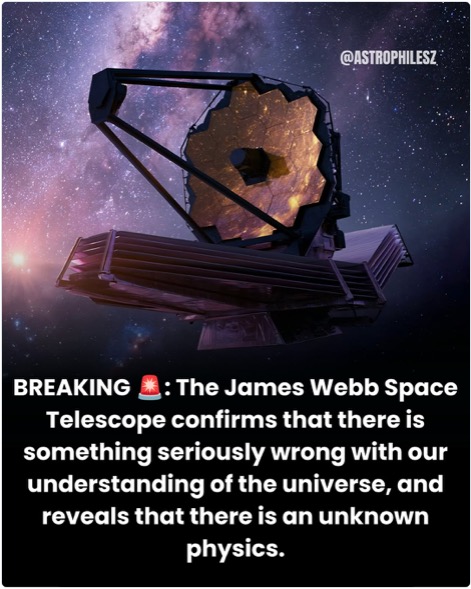
@astrophilesz: Astronomers used the James Webb and Hubble space telescopes together to confirm one of the most troubling conundrums in physics, that the universe appears to be expanding at different speeds depending on where you look. This is called the Hubble Tension. A study published in the Astrophysical Journal Letters used a triple check combining both telescopes to rule out the possibility of measurement error for good.
Lead author Adam Riess, who won the Nobel Prize in Physics for the 1998 discovery of dark energy, said that with measurement errors negated, what remains is the real possibility that we have misunderstood the universe.
Here is the contradiction in plain terms. Measurements from the local universe, taken using Cepheid variable stars, give one expansion rate. Measurements based on the cosmic microwave background, the afterglow of the Big Bang mapped by the Planck satellite, give a different rate entirely. The discrepancy holds steady no matter how the data is checked.
Researchers expanded the dataset to include 1,000 more Cepheid stars across five galaxies as far as 130 million light years away, and the disagreement remained exactly where it was.
A Nobel laureate physicist did not mince words about what this means. David Gross, a Nobel Prize winning physicist, said at a conference that this should not be called a tension or a problem. It should be called a crisis.
What makes this significant is what it is not. It is not a calibration error. It is not an instrument flaw. Two independent, repeatedly verified measurement methods are producing two different answers to the same fundamental question about how fast the universe is expanding. Cosmologists are now asking whether resolving this requires new physics altogether, something currently missing from the standard model of the universe.
The universe is not behaving the way our best equations say it should. Nobody currently knows why.
0 comments