


Can We Fix The Broken System?

Brian has some ideas:


When I saw this week that the Supreme Court had taken a hatchet to the Voting Rights Act, I was – depressingly – not surprised. Because of course they would. This conservative court has by now pretty much declared their fealty to Trump over the Constitution. So the ruling was – in my opinion – a foregone conclusion.

The reality is that this is just going to keep happening until we’re left with a hollowed out shell of a democracy. Even in an ideal scenario, where Democrats have full control of government and can finally pass a new Voting Rights Act, the Roberts Supreme Court will always be waiting in the wings with a machete to break down whatever Democrats build up.

But there is a solution. This is the clearest way I can explain it, in this excerpt from my book:

To restore democracy, to restore integrity to the judicial system, we urgently need to reform the Supreme Court. Those reforms need to be based on principle, not politics, to have any legitimacy or public support. The first order of a filibuster-free Congress should be reform of the Supreme Court. Not the second or the third or the fourth, or it will be too late to save the republic and our independent judiciary. If any subsequent reforms are to stand a chance at surviving, we cannot leave in place a rogue branch of government with the power to strike down anything that doesn’t comport with its far-right ideology.

The first reform should be to expand the Court, in line with the principles that determined the number of justices in the early years of the republic. The first Supreme Court had six justices, reflecting the six federal court circuits. The Court grew to seven justices in 1807, after a seventh circuit was added. It grew again to nine after two new circuits were added in 1837. Today there are thirteen federal court circuits but only nine Supreme Court justices. The Court should reflect the size of the country and the scope of its legal challenges, as it did more than a century ago.

The second reform should be to limit the term of new justices to eight years, allowing newly elected presidents to choose their own nominees regularly. This would reduce the opportunities for the kind of procedural delays that stymied Obama’s appointment of a justice in his final year in office. The regular flow of new appointments would help remove the national drama from each nomination by diluting the novelty of each new appointment. Once again, there is widespread public support for term limits for Supreme Court justices: 75 percent of Americans agree with term limits, according to a PRRI survey in 2025.

The third reform should be to establish an enforceable code of conduct, with a Supreme Court panel mandated to investigate allegations of wrongdoing and impropriety. The panel should have the power to force the recusal of justices in cases where they have personal ties and even force the removal of justices in cases of conduct unworthy of the Supreme Court. Public polling suggests that there is huge support for such reforms as well: 76 percent of Americans are in favor of a binding code of conduct, according to a USA Today poll in 2024.

The final reform should be to retire any justice over the age of seventy from the Supreme Court, regardless of who appointed them. The Constitution says that judges “shall hold their Offices during good Behaviour,” which has been interpreted as lifetime appointments. That is one way to interpret the phrase but by no means the only one. A retired Supreme Court justice could be moved to a lower court and still stay within a reasonable interpretation of the constitutional language.

In fact, there’s widespread public support for retiring all public officials over a certain age, and there’s a surprising degree of consensus on what that age should be. As many as 79 percent of Americans favor age limits for elected officials, and 74 percent favor them for Supreme Court justices, according to Pew Research Center. Polling by the Benenson Strategy Group showed that a clear majority, 63 percent of Democrats and 55 percent of Republicans, support an upper age limit of seventy for anyone to be sworn in as president. (The Constitution does not set any age range for the Supreme Court but does state that the presidency has a lower age limit of thirty-five.)

Mandatory retirement at seventy years of age would lead to four immediate vacancies on the Supreme Court: three conservatives and one liberal. Clarence Thomas and Samuel Alito would leave, along with Chief Justice John Roberts. So would Sonia Sotomayor, appointed by Barack Obama. All three Trump judges would remain, along with one Obama and one Biden appointee.

Ever since Franklin D. Roosevelt tried and failed to expand the Supreme Court, Washington has shied away from reforming the highest court in the land. However, FDR’s plan was the product of another political era, almost a century ago. The Court had struck down several pieces of his New Deal plan to revive the economy from the depths of the Great Depression. FDR also proposed to retire judges at age seventy, but if they refused to leave, he would be free to add an additional justice, potentially expanding the Court to fifteen. Congress defeated his plan, but FDR ultimately prevailed; within five years, seven of the nine justices were his own appointees.

Today’s Supreme Court has weakened itself by its political activism, repeatedly disregarding the Constitution and its code of conduct. It is populated by older justices at a time when the American people are yearning to reform the status quo. If we want to revive our democracy, we need to revive our Supreme Court. If that seems extreme, consider an alternative that is already upon us: a Court that undermines the very Constitution it’s supposed to uphold.

This week’s ruling was not a one-off. It’s the logical endpoint of a decades-long effort to disenfranchise minority voters and keep minority representation to an absolute minimum.

The three longest-serving conservative justices on the court right now have a combined 75 years on the bench. This is their pet project. They own it. And the other three conservatives, all Trump appointees, are comparatively young and spry. Gorsuch doesn’t even have a full decade under his belt. Without court expansion, we’re stuck with this right wing majority for another couple of decades at least.

We need to normalize ourselves to the idea of court expansion, so that when we have power, we don’t waste our time negotiating what we should be doing, but rather spend our time doing it.

0 Comments

0 comments


It’s been said that the definition of insanity is doing the same thing over and over again and expecting different results.

Right now, I’d say that it’s stepping into a new day and expecting Republicans not to do something horrible.

It happens to all of us.

We wake up in the morning, eventually check our phones or turn on the news, and are greeted by some new abomination: an unprecedented legislative assault on a central pillar of our Republic, the dismantling of long-established civil rights, a heartbreaking act of violence against the most vulnerable among us.

We encounter a legion of novel nightmares authored by the same people whose brutality from the previous day we’ve not yet recovered from, and we are somehow surprised.

Despite a decade of their daily atrocities, despite their prolific portfolio of inhumanity, despite their seemingly inexhaustible disregard for legal and moral law, their malevolence never fails to rattle our nervous systems and boggle our minds anew.

Each day, a sickening sense of deja vu sets in as we find ourselves freshly outraged, as if these moral abominations are out of character for these people, as if they might have reached their capacity for cruelty overnight, as if they’d suddenly had their sociopathy satiated and will magically relent.

Good people, we need to stop doing this.

This is who they have been; it is who they are. There is no moment of clarity coming, no soul awakening, no tearful repentance. They’ve long passed that possibility. To still be tethered to something as monstrous as this man and his movement is to have permanently abandoned the fundamental humanity required to feel empathy or possess self-awareness. We need to stop wasting time hoping his supporters will suddenly call upon their better angels, as they killed those off long ago.

Yesterday, a distraught member of our online community said over Zoom, “No matter what we do, no matter how much we fight, it seems like nothing gets better. Every day, things are worse.” I think she was hoping I would disagree with her.

I assured her that this wasn’t going to change anytime soon, because the people in power have no current external or internal obstacles in their path. They are not ethically bound by the Constitution and possess no regard for the rule of Law. They have commandeered the highest court in our nation and hold zero compunctions about violating the inalienable rights of other human beings.

They also realize that their time is incredibly short, despite appearances to the contrary. They’ve been paying attention to the elections over the last 16 months, and they know the public sentiment against them is rising swiftly. They live with the Sword of Damocles hovering overhead: the unforced errors of a sexual scandal that will not go away, a costly, unwinnable war, and an economy they have singlehandedly driven to life support.

There is no way back; there is only the way down. All they have left is destruction.

Right now, Americans need to make peace with the fact that the news is going to continue to be bad. We are going to witness an ever more desperate and violent descent into the depths of the malevolence human beings are capable of. These people are going to wake up every day, as in this one, singularly driven to damage as many people as possible as quickly as they can, and we should prepare ourselves by not being pulled into disbelief as they do.

We cannot waste a single second being shocked by their depravity, or hoping they will tire of violence, or expecting them to be anything other than who they have shown us they are.

Instead, our energy should be better spent keeping our heads down and getting on with the work before us, of building a broad coalition of resistance, of taking our stands where we can, of leveraging our economic power, of caring for those being targeted, and creating a compassionate community that curates decency and love for neighbor.

We need to stop being surprised by Republicans’ inhumanity and to go about the work of being human.

0 Comments

0 comments

On The Occasion Of What Would’ve Been His 60th Birthday

In Memoriam

Jeffrey Laughlin
1966-2011

I met Jeffrey in 1999, shortly after I’d started working at PG&E Energy Services (PG&E Corp’s answer to Enron, the unregulated energy experiment) in San Francisco.

Surprisingly, there weren’t that many out gay men working for the company, so Jeffrey and I immediately gravitated toward each other. Never mind that the boy was cute and smart and sexy as fuck. But nothing more than a friendship—despite the mutual attraction—developed because Jeffrey was hopelessly devoted to his long-term boyfriend, Leroy. Even when said boyfriend was found caught cheating on numerous occasions, Jeffrey (stupidly, IMHO) stood firmly by his side.

Like myself, Jeffrey was an inveterate techie. We were always discussing the latest hardware and software trends. He was very above board on software licensing issues, while I was more…flexible. He always purchased his software. I, on the other hand “obtained” a lot of it. (One of the perks of being in the business, I suppose.)  One day I finally convinced him to come over to the Dark Side by providing him something that he wanted but was otherwise unobtainable.

Even after PG&EES finally followed ENRON into the dustbin of history, and we went to different jobs, we still both worked downtown and managed to meet up for lunch several times a week. At his new place of employment, Jeffrey discovered the Mac and became an immediate convert, putting an end to all his Windows-based Dark Side adventures. (Just as I was forced to go legit once I joined the Church of Steve Jobs.)

Shortly after I’d returned to Phoenix in 2002, Jeffrey finally had enough of Leroy’s dalliances and they parted company. A little over a year later he told me he’d decided to move back to Texas and start his own business.

In 2004, we met up briefly as he was passing through Phoenix on his way to McKinney. This would be the last time I’d ever see him.

We exchanged a few more emails as he got resettled, but then life intervened and I lost touch. When I attempted to re-establish contact, none of his email addresses were active, and I had no phone number or old school physical address by which to contact him.

Over the years, I’d run cursory internet searches hoping to find him, but with such a relatively common name, I came up empty handed.

That is, until about 8 years ago.

And I almost wish I hadn’t. “Ignorance is bliss,” as they say.

Jeffrey died in 2011. No cause was given in the obituary, so I have no idea if it was AIDS, cancer, or some horrific accident. If he was HIV positive or otherwise sick, he never mentioned it. All I know is that yet another little hole opened in my life with that news and it will never truly be filled.

I’m glad I had the chance to know him.

Jeffrey Laughlin 1966-2011

0 Comments

0 comments

As A Lifelong Fan of FLW (And His Progeny), I Could Most Certainly Live There

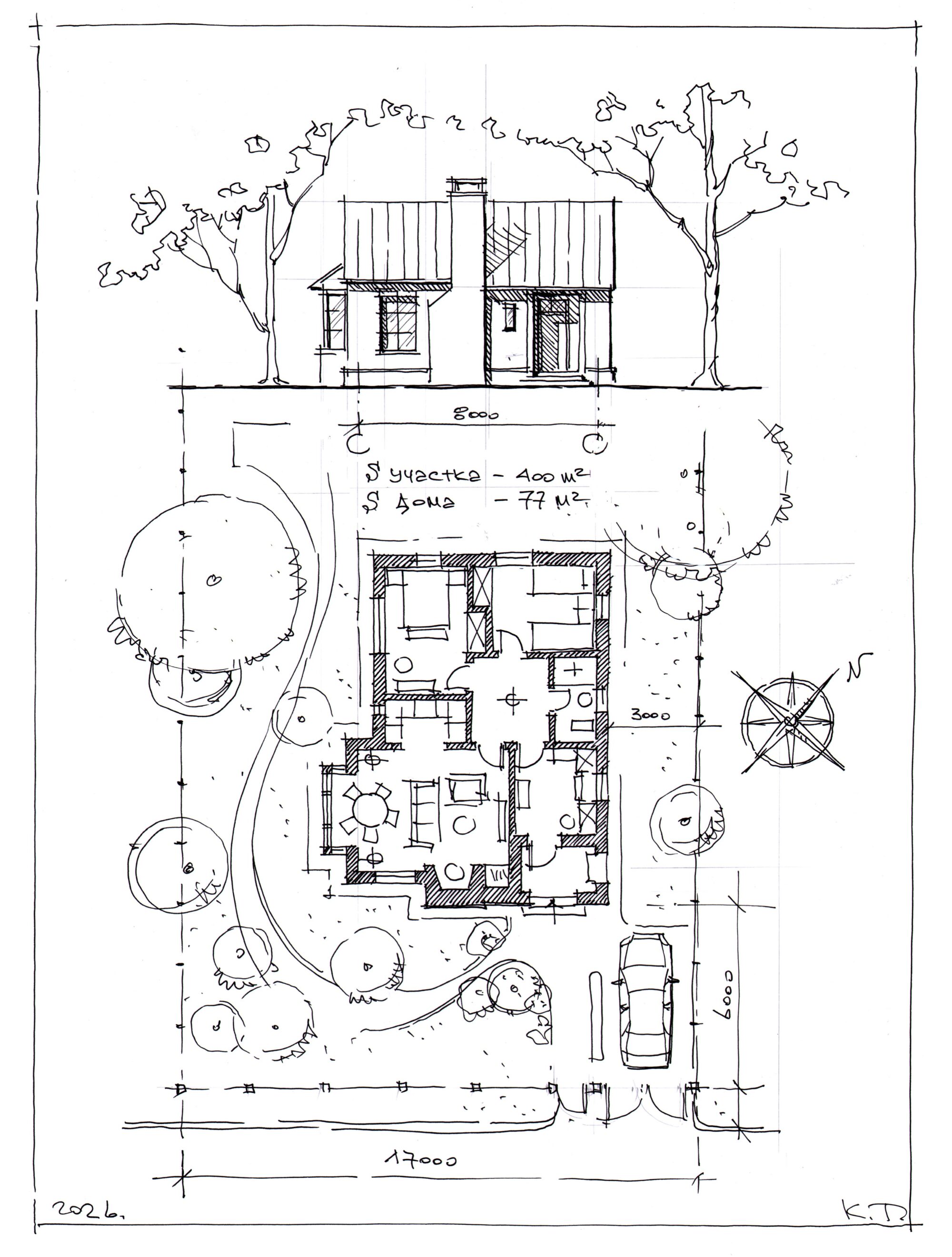
Located in West Hollywood the Olga & Llloyd Wright House & Studio designed by Lloyd Wright (Frank Lloyd Wright’s eldest son) in 1926. Designed in the Mayan Revival style the home is a signature example of Lloyd Wright’s architectural vocabulary, blending Art Deco with pre‑Columbian motifs. The home was added to the US National Register of Historic Places in 1987 and was restored by Lloyd Wright’s son architect Eric Lloyd Wright in the 1990’s.

[source]

0 Comments

0 comments

In 1974…

In 1974, John Waters’ **Female Trouble** was a blistering satire on American celebrity culture. As Dawn Davenport’s fall from a Christmas lunatic to a criminal celebrity, the film used Divine’s gender-bending performance to explore and subvert traditional conceptions of the family and sex roles. It helped to define the “Dreamlanders” style, which combined street realism in Baltimore with melodramatic camp.

For the mainstream audience of 1974, the film was largely treated as an assault on public decency. Though it found a rabid audience in the “midnight movie” culture with other avant-garde classics, established audiences and critics often reacted to it with both visceral disgust and cynical bewilderment. It was often dismissed as “amateurish” or “vile” by the critical establishment, which had trouble understanding Waters’ irony. This however functioned as an ironic achievement for the film, and eventually led to the film’s evolution from a shunned midnight movie to a cult masterpiece of independent cinema.

[source]

1 Comments

1 comments

$5000/Month?!? 🫪

WTF happened to my beloved city over the past twenty years?

Okay, it’s nice, but $5K a month?!

When I left SF in 2002, I was paying $1300 for a very nice 60s-era one bedroom place on Twin Peaks with a view of downtown, and even that was a stretch financially.

4 Comments

4 comments

How Long…

No, not that. Get your minds out of the gutter!

How long have you been visiting Voenix Rising? Are you an old-timer who’s been with me from the beginning (ca. 2005 or thereabouts)—including that horrific period when I lost my mind just after we moved to Denver and I wiped the previous ten years of posts—or are you fairly recent?

How did you find me initially?

Leave a comment. Inquiring minds want to know!

23 Comments

23 comments

Ben Is Going Through This Right Now

How a sinister manager slowly pushes you to quit:

Step 1 – I’d get a little cold. Less friendly, less supportive. You notice it but brush it off.

Step 2 – I’d stop noticing your work. No appreciation, no recognition. You’re getting slightly demoralized now.

Step 3 – You’re suddenly not in important meetings anymore. Things move without you. It hurts but whatever, I guess.

Step 4 – Your good work gets taken away. You’re left with random, low-impact tasks. You feel devalued. This feeling ruins your evenings.

Step 5 – You’re told to “do better” but no one tells you what that actually means?!?! This is turning into actual frustration.

Step 6 – Out of nowhere, “performance concerns” come up. You panic. “What am I doing wrong?”

Step 7 – You try to fix things… but the goalpost keeps changing. You just had your first anxiety attack.

Step 8 – They start watching everything you do. Small mistakes become a big deal. You’re constantly walking on eggshells now.

Step 9 – I’d become harder to reach. No guidance, but still judging your work. You’re feeling deflated.

Step 10 – Everything gets written down. Emails, notes, “just documenting.” You know they’re setting you up to fail.

Step 11 – You get put on a Performance Improvement Plan. It looks official, but it doesn’t have clear metrics. You’re angry.

Step 12 – You start hearing lines like “this might not be the right fit.” Subconsciously you’re prepared to leave and never look back.

Step 13 – Your workload gets weird. Either way too much or barely anything. You’ve started making applications elsewhere.

Step 14 – You feel confused all the time. You’re trying harder but it’s not landing. You can’t wait to get out of here.

Step 15 – I’d hint that leaving might be easier. You AGREE. Like, so much easier. Now, if only you had another back-up option.

Step 16 – You’re exhausted and your self-esteem has taken a major hit… and quitting starts to feel like the only way out, with or without a back-up option. You quit. They win.

Bad employers are very good at psychological pressure. As an employment lawyer, I’m trained to spot these patterns early and see what’s coming next. Follow along to learn.

2 Comments
2 comments

Underrated

Pet Shop Boys: Relentless  (1993)

I love this album, mainly because it was so different from what PSB had put out up until that point.

I will forever associate this disc with a little club I happened upon called The Playground in San Francisco in August of 1993 because it seemed they were always playing it.

I discovered The Playground after I had started boxing up my life to move back to Arizona—for the first time—after nearly a decade in The City. City life—and still pining over Rory—I knew it was time for me to cut my losses and start new.

Once I’d made up my mind to leave however—going so far as to give notice at work and on my apartment—as she is wont to do, The City pulled out all the stops to get me to stay. One evening I was out in front of my apartment building washing the car, and an absolutely gorgeous man happened by, struck up a conversation, and the next thing I knew we were upstairs doing the nasty. I started meeting guys left and right. And then my friend Rick came over one evening and started singing the praises of The Playground.

I was no stranger to sex clubs, having frequented the 1808 on a regular basis just after moving to San Francisco and spending many a rainy night wandering the halls of Mike’s Night Gallery many years later, but I’d drifted away from those venues because it was easy enough to find sex pretty much anywhere in the city if you really wanted it. So why pay for it?

In any case Rick’s full-throated (pardon the pun) endorsement of The Playground let me to check it out one night.

From the description in my Journal at the time:

There ís something very primal about the place, something that ís very much linked to our deepest (and yes, darkest) sexual fantasies. The owners have a gold mine in their hands, if they know how to keep the ambiance alive.

It s a converted warehouse on 17th Street between Folsom and Harrison. The building itself is at the back of a large parking lot. It’s all gray metal with yellow painted trim. At night there are two rotating yellow beacons located on the loading dock where you go in. When you first enter, to the right is the admission area. When you pass through that, you first enter the television and refreshment area. There are several sofas clustered about a lone TV. If you proceed back, slightly to the left, the next area you come to is the glory hole space. It’s a series of black painted cubicles surrounding a raised platform. Naturally, there are more than ample holes drilled between the cubicles and the platform. Immediately to the right of this area is what I’ve come to call “the drive-in.” There’s an English taxi (vintage unknown) parked there that faces a projection television that plays the same porn videos that are playing in the television area. If you continue back toward the rear of the building from the drive-in, you get into another area dominated by separate cubicles. These cubicles surround another, smaller room, and they have small holes drilled at eye-level, allowing you to look into the smaller room and see whatís going on. When you exit the peep-hole area and head again, toward the rear of the warehouse, you pass “the dungeon” on your left, where you’ll find a sling and various other equipment I could not identify. To your right is the restroom (and yes, people do have sex in there). Continuing back, down a set of stairs, are three more spaces: the jail, the infirmary, and off the infirmary, a small room with a bed and a single lone light bulb. There’s something very eerie about these two rear rooms, although exactly what it is, I haven’t quite been able to put my finger on. The jail, which opened only recently, is very hot. It consists of a large area surrounding four cells, complete with bunks and toilets.


I think this is the building (at least as it appears today). I can’t definitively verify that because gates on street view are blocking the view of the entrance.) The parking lot was much smaller with another building blocking it off to the right of the entrance gate.

After visiting The Playground several more times, combined with all the men falling out of the sky, I abruptly changed my plans to leave and ended up staying in San Francisco for another nine months. By then the downpour of eligible bachelors had ended and I was at wit’s end with the same aspects of city life that had initially prompted my thoughts of moving back to Arizona months earlier. It was then that I returned to Tucson for six months before the siren call of The City prompted my return.

0 comments